Cao Guimarães
Directing
Known For

Through deep examination, this documentary from Oscar nominee Petra Costa explores the profound impact of evangelism on Brazil's political landscape.
Apocalypse in the Tropics

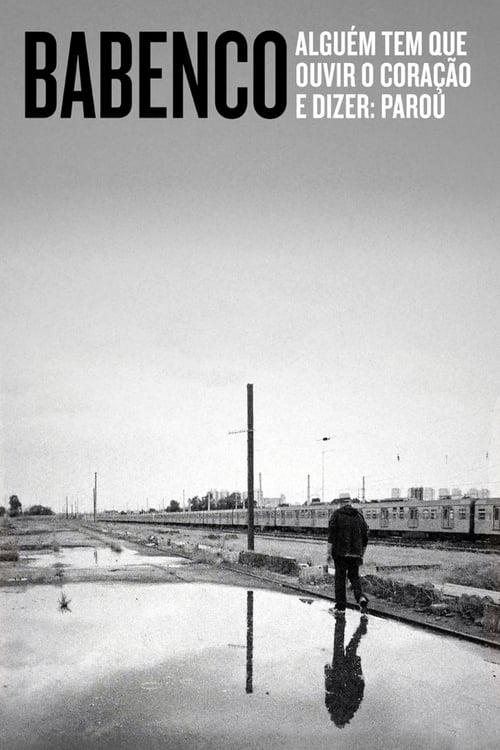
Besieged by cancer and nearing the end, the genius Argentine-Brazilian filmmaker Héctor Babenco (1946-2016) asks Bárbara Paz, his wife, for one last wish: to be the protagonist of his own death.
Babenco: Tell Me When I Die

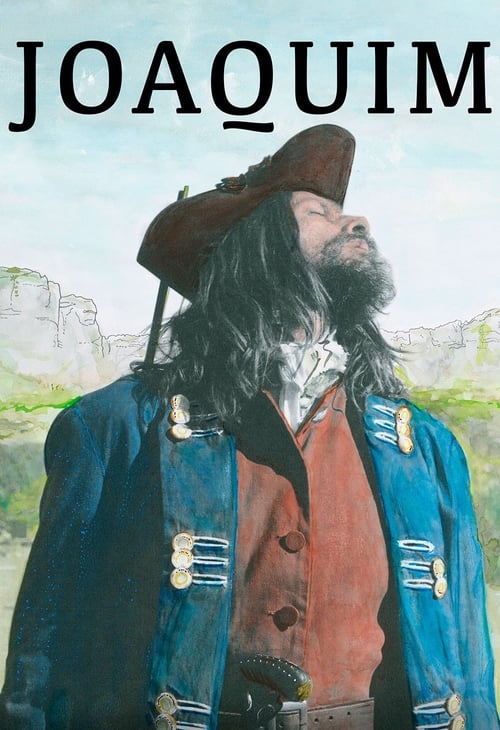
Brazil, 18th century. The colony of Portugal endures a decline in gold production. A Portuguese minority rules over a corrupt and autocratic society. Joaquim is an efficient soldier, famous for capturing gold smugglers. While waiting for his promotion to Lieutenant, he leaves for a risky mission in search of new gold mines - the only way to buy the freedom of Blackie, a slave he is in love with. Inspired by the true story of Tiradentes, the first leader of the Brazilian revolutionary movement.
Joaquim

Juvenal is a metro driver from Belo Horizonte. Margô, a station controller. Both live in a state of complete solitude – each in a particular way. Juvenal refuses to be alone and strolls through the streets of this metropolis taking comfort by mingling with the anonimous crowd. Margo seeks relief in the virtual world of social networks where she struggles to establish long lasting relations with real persons.
The Man of the Crowd

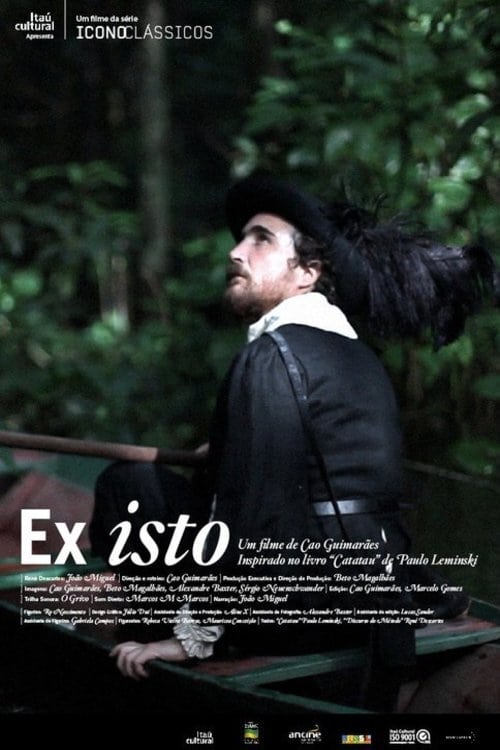
Freely inspired by the work Catatau, by Paulo Leminski, the plot begins with the historical hypothesis imagined by the poet from Curitiba: “What if René Descartes had come to Brazil with Maurício de Nassau?” The film materializes this hypothesis and joins the father of modern philosophy in his journey through the tropics. Under the effect of hallucinatory herbs, he investigates questions revolving around geometry and optics in the face of an absolutely strange world. Known for his famous sentence “I think, therefore I am”, Descartes faces his doubt towards phenomena reason doesn’t explain. René, Renatus, Re born.
Ex-It

The story of Santinho, a young man who has been exalted to the position of a saint in a remote riverine community of the upper Amazonas state, after performing a “miracle” upon the suicide of his own mother. The film seeks to be an intimate picture of those who are involved in this sect and of the infinite human capacity of “fabricating” faith and seeking some sense in the horrifying experience of death.
The Dead Girl's Feast

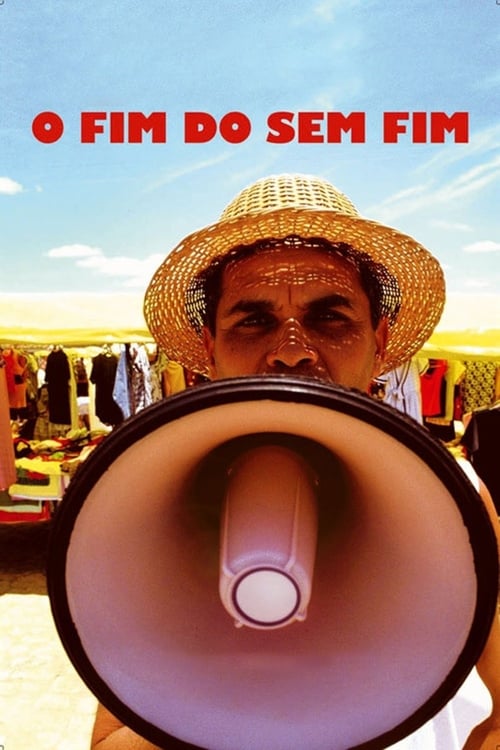
"Fim do Sem Fim" is a feature-length documentary that has as its backdrop the imminent disappearance of certain trades and professions in Brazil. Shot in 10 Brazilian states, the film is a dive into the inventiveness and resistance of men in the face of technological and cultural changes.
The End of the Endless

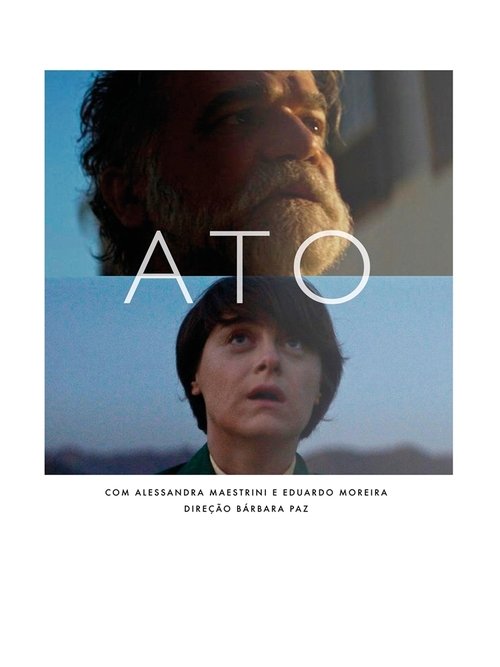
With the world in suspension Dante meets Ava, a woman who offers him her affection to facilitate his crossing over to the other side.
The Act

Two kids fighting outside the window
From the Window of My Room

No description available.
Amizade

No description available.
Santino

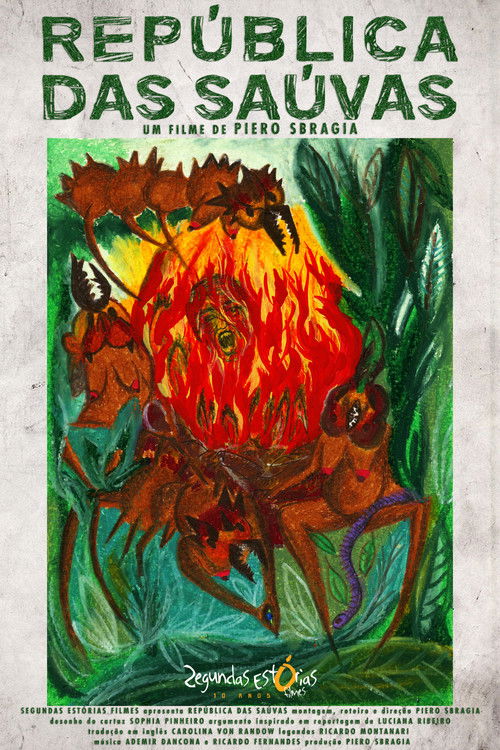
One of the greatest pests on the planet, the evil ants destroy the forest to protect their family. Memories of the covid-19 pandemic, eroded by ignorance and negationism. What's left in this great country of worms and viruses?
Republic of Evil Ants
2001 Duration: 8’00” Screening Format: DV Filming Format: Super 8 Original Soundtrack: O Grivo Photographed and edited by: Cao Guimarães Directed by: Cao Guimarães e Rivane Neuenshwander "Word/World" is a video about communication. The uncannily organised world of ants is faced with two strange objects/actions. To speak and to eat: everything goes through the mouth.
Word/World

Otto is a film that accompanies the process of pregnancy of my wife and the birth of my son. Instinctive and visceral as a gesture. Intimate and confident as a filmed diary. A celebration to life, a film of love.
Otto

Elvira Loreley Alma de Dragón accompanies the life of a Fortune Teller from Uruguay. The contrasts of a milenar labor that deals with the destiny of people, inserted into a contemporary society, in a hurry to obtain answers to everything.
Elvira Lorelay: Alma de Dragón

No description available.
Limbo

People who didn’t know each other, simultaneously exchanged houses for 24-hours. Each one brought a portable video camera and had total freedom to film whatever they wanted in the home of this stranger during this period. Each participant tried to elaborate a 'mental image' of the "other" while along with their personal objects and their homely universe. At the end of the experience, each one gave a personal report on how theyimagined the “other”. "Two way street" is a project that deals with the reality of the urban individual who lives alone. It is an attempt to disorganize a little bit these realities. Using a video camera the participants insert their personality (through sight perspective) into the personality of someone else that is absent. Solitudes confound themselves at some point in the flow of looking at and being looked at, of absent presence and present absence, and of identification and differentiation.
Two Way Street

Three lonely drifters follow different paths on the roads of northeastern Minas Gerais, Brazil. A film about the connections between walking and thinking, in which the ever-changing nature of things turns life into a place of mere passing.
Drifter

The Tenant follows the trajectory of a soap bubble as it floats through the empty rooms of a house under renovation. The bubble never bursts as it drifts from one room to the next in a permanent state of suspension.
The Tenant

"Sopro" expresses the relation between what's in and outside. The translucid form of an everchanging bubble shows the world to which it belongs and also that which is contained by it.