Directing
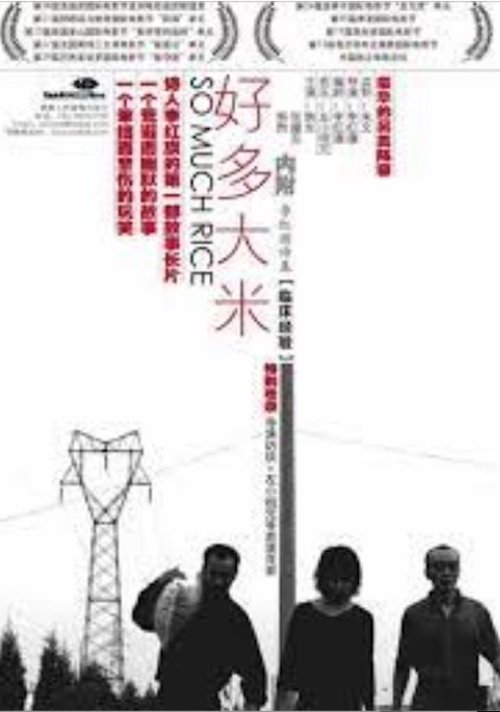
The film was shot in 2003 during the SARS period. Completed by one shot, including opening and closing credits. Unlike other long-take films, the technical content of this film is close to zero. As a "drama film" performed by actors, the emptiness of its plot is unprecedented. One of the two leads even fell asleep during the performance. Every ten years, I would seriously remake this absolutely incompetent film. So, this is both my first "movie" and will be my last "movie".
This deadpan experiment in "anti-narrative" functions as the husk of a story about a man named He, his acquaintance and lodger, Mao, and a woman named Zheng, the three of whom are involved in what may or may not be a love triangle.
A father takes his son to observe an empty field, and then to visit a neighbour, who is soon visited by other reticent characters, including a man who is a little violent, and another next-door neighbour who has fallen ill.
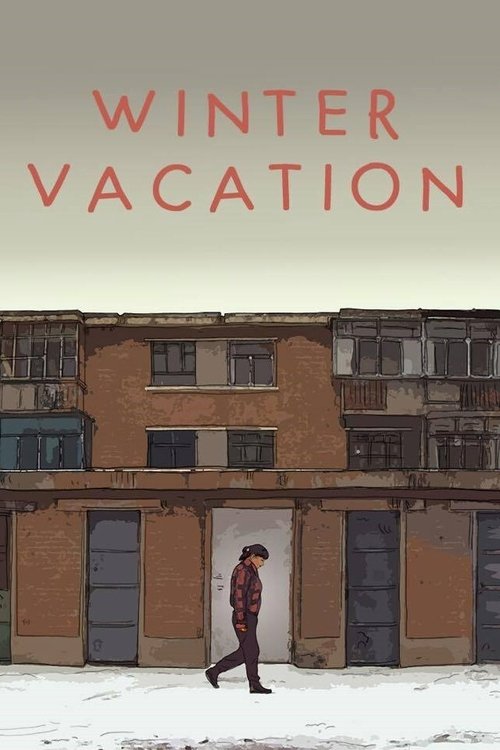
An ordinary village in Northern China, the last day of the winter vacation. Four idle, aimless adolescents gather at Zhou Zhixin's home, a friend who lives with his father, brother and nephew. Like most contemporary teenagers, these youths want to enjoy their last day of holiday and simply hang out in this place where nothing ever seems likely to happen. Their conversations are desultory and they sometimes seem to argue for argument's sake. One of them, Laowu, talks frankly with his girlfriend about how teenage love might affect their studies, while Laobao questions school's value and relevance to real life.
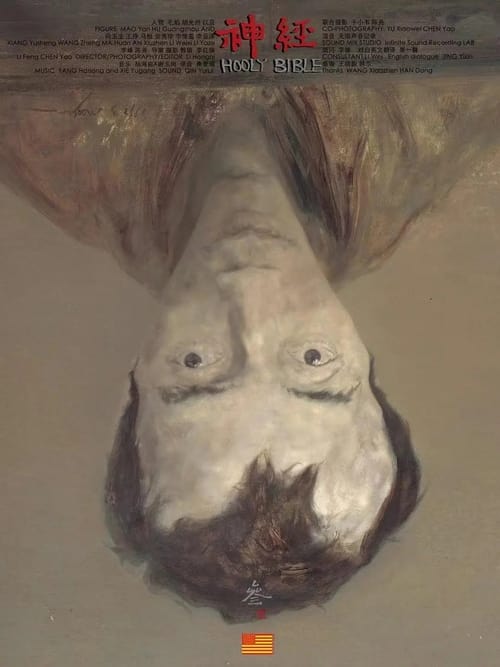
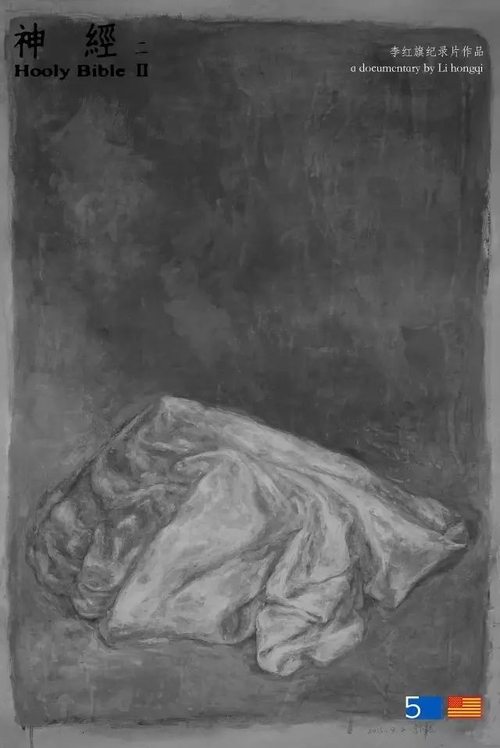
The third film in the "Hooly Bible" documentary series.
The Swedish artist Måns Månsson has placed a fictional character in a real environment to explore the fascinating new relationship that has arisen between Africa and China, where democracy is one commodity among many others. No dialogue was written in advance, and the minimal story about the worthless t-shirts is just a pretext to conduct a cinematic experiment set in the Chinese city, where tens of thousands of African migrants are in the process of establishing themselves and creating a new life, in a historical parallel to the exchange that has always taken place between East and West. But this time, the West is not invited to the party. However, the reference to the lost souls in the American photographer William Eggleston's film of the same name suggests a tragicomic and existential absurdity independent of time and place.
While in the process of making this documentary, I intended to use the words of Alexander Grothendieck—"Every one of us has the chance to rediscover exactly what it means to discover"—as the epigraph, but I finally gave it up. I don't feel like I understand the precise meaning of this sentence, but I've always been eager to understand it. -Li Hongqi
In this talk, Li Hongqi reviewed his transition from fine art to cinema, and his aesthetic and philosophical exploration from his early 'So Much Rice' to recent 'The The'. Dir. Li Hongqi also shared his strong anxiety of his existence(born with melancholia), his thought on cinema art (actually, I don't think there's any movie worth making), his epistemology, his religious view, his consideration on contemporary cinema, and what he learned about living in seclusion.
More than twenty years ago, Dazhang along with his three brothers came to Guangdong to work in a local quartz powder factory. However, a few years later, Dazhang was diagnosed with advanced staged pneumoconiosis. Returning to his hometown, the pneumoconiosis was gradually killing him every single day. The entire family was stuck in this seemingly endless suffering, while his children were still confused about what happened to their father.
Eight characters, trapped inside surreal spaces.
Loan sharks and female nightclub workers.
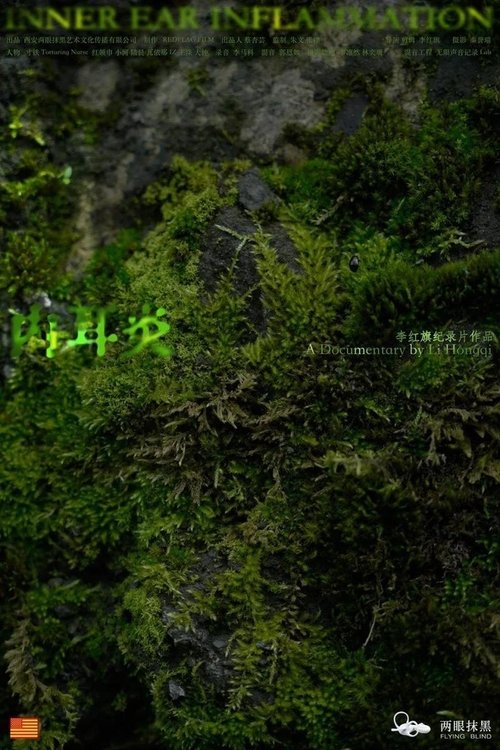
INNER EAR INFLAMMATION can be regarded as the answer to the title of my first music documentary, ARE WE REALLY SO FAR FROM THE MADHOUSE? Both films were shot on the spur of the moment; the difference between the two is that ARE WE REALLY SO FAR FROM THE MADHOUSE? was made specifically for Yang Haisong, whose music I had regrettably never used even though he had suggested it many times, while INNER EAR INFLAMMATION is 100% ruthless contraband. The shooting and production were completed in a very short period of time, but this doesn't mean it was sloppily done. In fact, INNER EAR INFLAMMATION is by far the least regrettable of all of my works to date, including the feature films. -Li Hongqi
Ostensibly a documentary or a music video chronicling influential post-punk Chinese group P.K. 14’s first national tour, Li Hongqi’s latest provocation becomes a rumination on existential ennui that takes place on endless highways as band members sit in their tour bus and anonymous hotels.