FEEL IT.STREAM
John Gielgud

John Gielgud

Acting

Biography

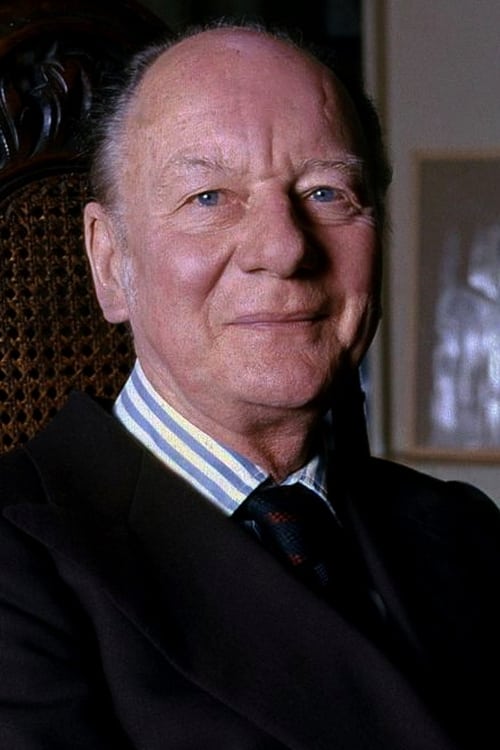
Sir Arthur John Gielgud, OM, CH, was an English actor, director, and producer. A descendant of the renowned Terry acting family, he achieved early international acclaim for his youthful, emotionally expressive Hamlet which broke box office records on Broadway in 1937. He was known for his beautiful speaking of verse and particularly for his warm and expressive voice, which his colleague Sir Alec Guinness likened to a silver trumpet muffled in silk. Gielgud is one of the few entertainers who have won an Oscar, Emmy, Grammy, and Tony Award.
Known For

Play for Today
6.6

Play for Today is a British television anthology drama series, produced by the BBC and transmitted on BBC1 from 1970 to 1984. During the run, more than three hundred programmes, featuring original television plays, and adaptations of stage plays and novels, were transmitted. The individual episodes were between fifty and a hundred minutes in duration.

Play for Today

1970
Great Performances
6.1

The best in the performing arts from across America and around the world including a diverse programming portfolio of classical music, opera, popular song, musical theater, dance, drama, and performance documentaries.

Great Performances

1971
The Dick Cavett Show
6.8

The Dick Cavett Show has been the title of several talk shows hosted by Dick Cavett on various television networks.

The Dick Cavett Show

1968
BBC Play of the Month
5.3

A BBC television anthology series featuring productions of classic and contemporary stage plays usually broadcast on BBC1. Each production featured a different work, often using prominent British stage actors in the leading roles. The series was transmitted from October 1965 to September 1983.

BBC Play of the Month

1965
Tales of the Unexpected
6.8

A British television anthology of stories, often with sinister and wryly comedic undertones, and a twist at the end. With early episodes written and presented by Roald Dahl, the series featured a plethora of big name guest stars.

Tales of the Unexpected

1979
Omnibus
7.2

Omnibus was an arts-based BBC television documentary series, broadcast mainly on BBC1 in the United Kingdom. The programme was the successor to the long-running arts-based series 'Monitor'. It ran from 1967 until 2003, usually being transmitted on Sunday evenings. During its 35-year history, the programme won 12 Bafta awards. Among the series' best remembered documentaries are Cracked Actor, a profile of David Bowie, and Rene Magritte, a graduate film by David Wheatley, 'Madonna: Behind the American dream', a film produced by Nadia Hagger, and a profile of the British film director Ridley Scott. For a season in 1982, the series was in a magazine format presented by Barry Norman. The series was replaced by 'Imagine' hosted by Alan Yentob.

Omnibus

1967
The Ed Sullivan Show
6.8

The Ed Sullivan Show is an American TV variety show that originally ran on CBS from Sunday June 20, 1948 to Sunday June 6, 1971, and was hosted by New York entertainment columnist Ed Sullivan. It was replaced in September 1971 by the CBS Sunday Night Movie, which ran only one season and was eventually replaced by other shows. In 2002, The Ed Sullivan Show was ranked #15 on TV Guide's 50 Greatest TV Shows of All Time.

The Ed Sullivan Show

1948
The Wednesday Play
5.2

An anthology series of television plays which aired on BBC1 from October 1964 to May 1970. The plays were usually written for television, although adaptations from other sources also featured.

The Wednesday Play

1964
Inspector Morse
7.9

Inspector Morse is a detective drama based on Colin Dexter's series of Chief Inspector Morse novels. The series starred John Thaw as Chief Inspector Morse and Kevin Whately as Sergeant Lewis, as well as a large cast of notable actors and actresses.

Inspector Morse

1987
Screen Two
7.1

Series of single made-for-television dramas.

Screen Two

1985
No image
7.5

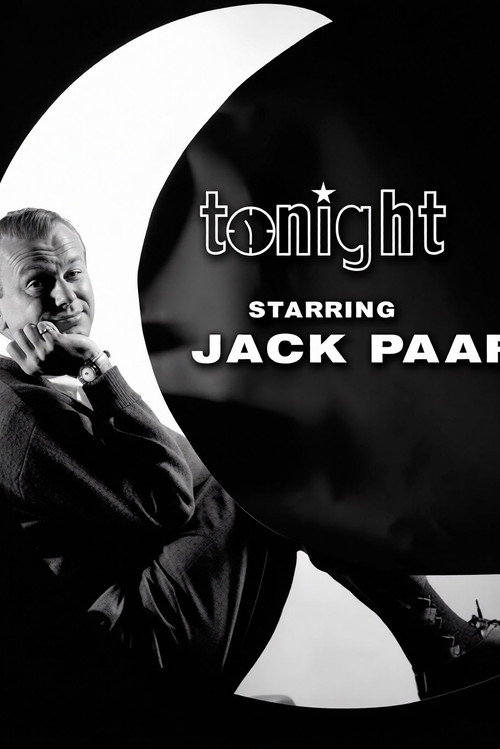
Tonight Starring Jack Paar is an American talk show hosted by Jack Paar under The Tonight Show franchise from 1957 to 1962. It originally aired during late-night. During most of its run it was broadcast from Studio 6B inside the RCA Building. The same studio would also host early episodes of The Tonight Show Starring Johnny Carson, and Late Night with Jimmy Fallon. Its theme song was an instrumental version of "Everything's Coming Up Roses", and the closing theme was "So Until I See You" by Al Lerner.

Tonight Starring Jack Paar

1957
ABC Afterschool Special
6.5

Dramatically presented situations, often controversial, of interest to children and teenagers. Several episodes were either in animated form or presented as documentaries. Topics included illiteracy, substance abuse and teenage pregnancy.

ABC Afterschool Special

1972
Lovejoy
7.4

The adventures of the eponymous Lovejoy, a likeable but roguish antiques dealer based in East Anglia. Within the trade, he has a reputation as a “divvie”, a person with an almost supernatural powers for recognising exceptional items as well as distinguishing genuine antique from clever fakes or forgeries.

Lovejoy

1986
Caligula
6.0

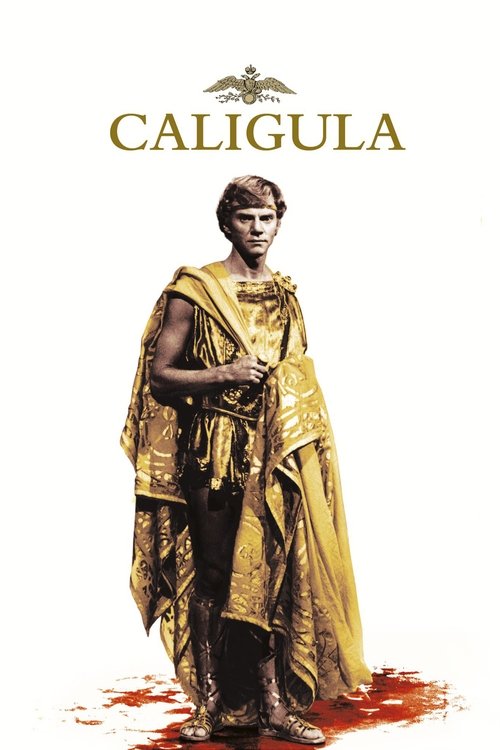
After the death of the paranoid emperor Tiberius, Caligula, his heir, seizes power and plunges the empire into a bloody spiral of madness and depravity.

Caligula

1979
Performance
6.3

An anthology series of various plays and dramatic performances.

Performance

1991
Second City Television
7.8

Second City Television is a Canadian television sketch comedy show offshoot from Toronto's Second City troupe that ran between 1976 and 1984.

Second City Television

1976
The Bell Telephone Hour
8.0

“The Bell Telephone Hour” was a musical variety show that aired on “NBC” TV from 12 January 1959 to 14 June 1968 that showcased the best in Broadway, Classical, Concert, Jazz and Popular music each week. The series had its’ own house band appropriately named the “Bell Telephone Orchestra”. The show also had its’ own theme song being the “Bell Waltz” composed by “Donald Voorhees” who was also the show's Orchestra conductor. Some of the greatest violinists of the 1960’s performed on this show that aired in the old “Black & White” format. Some of these great violinists included “Erica Mornin”, “Isaac Stern", "Michael Rabin", "Ruggiero Ricci", "Yehudi Menuhin" and "Zino Francesacatti". From time to time some of the great singers and bandleaders of the 1960’s would perform on the show as well. Some of these were “Bing Crosby”, “Gordon MacRae”, “John Gary”, “Leslie Uggams”, “Mary Martin”, “Nelson Eddy”, “Patti Page” and “Roy Rogers”. The TV show followed on the heels of its’ predecessor with the same name on “NBC” radio that aired from 29 April 1940 to 1958 on Monday nights at 8 PM. The name of the show was derived from its’ Major sponsor “Bell Telephone Laboratories”. The TV version began airing on Friday nights at 8:30 PM once a month. It later was given it’s same time slot now airing every other week alternating with another show on the other weeks such as News shows and specials. The show time slot changed quite often over the years. In September 1960 it aired at 9 PM and in September 1961 it moved to 9:30 PM. In October 1963 it moved to Tuesday nights at 10 PM, September 1965 it moved to Sunday night at 6:30 PM and in September 1967 it made its' final move back to Friday night at 10 PM.

The Bell Telephone Hour

1959
ABC Stage 67
6.8

ABC Stage 67 is the umbrella title for a series of 26 weekly shows that included dramas, variety shows, documentaries, and original musicals. It premiered on American Broadcasting Company on September 14, 1966 with Murray Schisgal's The Love Song of Barney Kempinksi, directed by Stanley Prager and starring Alan Arkin as a man enjoying the sights and sounds of New York City in his last remaining hours of bachelorhood. Arkin was nominated for an Emmy Award for Outstanding Single Performance By An Actor in a Leading Role in a Drama and the program was nominated as Outstanding Dramatic Program. Future programs included appearances by Petula Clark, Bobby Darin, Sir Laurence Olivier, Albert Finney, Peter Sellers, David Frost, and Jack Paar. ABC's effort to bring culture to the masses was a noble but unsuccessful experiment. Scheduled first against I Spy on Wednesdays and then The Dean Martin Show on Thursdays, the show consistently received low ratings. Its last production, an adaptation of Jean Cocteau's one-woman play The Human Voice starring Ingrid Bergman, aired on May 4, 1967. "Stage 67" was not actually a part of the primary ABC facilities in Los Angeles. It was produced at the old Monogram Studios backlot that was later sold to KCET.

ABC Stage 67

1966
Brideshead Revisited
7.9

Agnostic Charles Ryder is seduced by the allure of the Flytes, a wealthy aristocratic family. Although he finds himself at odds with their strong Catholicism, his ties to the family deepen for the decades between the two world wars.

Brideshead Revisited

1981
War and Remembrance
7.9

Following the attack on Pearl Harbor, the extended Henry and Jastrow families navigate thevpersonal, social and political impacts of World War II, including the Holocaust, the Battle of the Bulge, and the Pacific theater.

War and Remembrance

1988