FEEL IT.STREAM
Cao Fei

Cao Fei

Directing

Biography

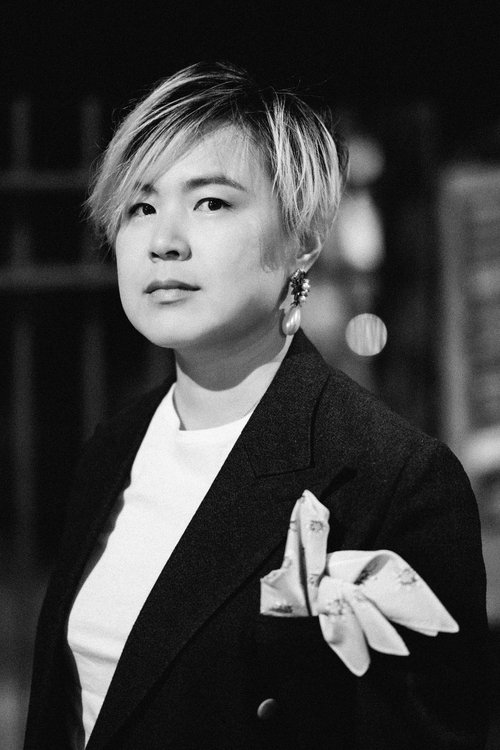
Cao Fei (Chinese: 曹斐; born 1978) is a Chinese multimedia artist born in Guangzhou. Cao's work, which includes video, performance, and digital media, examines the daily life of Chinese citizens born after the Cultural Revolution. Some of her work is owned and displayed by The Solomon R. Guggenheim Museum. Her work explores China's widespread internet culture as well as the borders between dreams and reality. Cao has captured the rapid social and cultural transformation of contemporary China, highlighting the impact of foreign influences from the USA and Japan. Above information from Wikipedia.
Known For

The Chinese Lives of Uli Sigg
5.7

Swiss collector Uli Sigg has played in the time of economic opening of China by Mao an essential role, which is still continuing. To better understand China, in 1980 as an entrepreneur and business expert to the country called Sigg art turns to and wears for years the most important collection of contemporary Chinese art together. THE CHINESE LIVES OF ULI SIGG granted for the first time a comprehensive insight into the exciting and extraordinary life of the entrepreneur, diplomat and art collector. Contemporary artists like Ai Weiwei, Zeng Fanzhi, Cao Fei, Fang Lijun Wang Guangyi or consider him a friend and mentor to whom they could entrust their works, to protect them against the arbitrary destruction of the authorities. The majority of them are over the Sigg museum M + in Hong Kong, which expected to open in 2019 and the works will be presented to the general public.

The Chinese Lives of Uli Sigg

2017Movie
Rumba II: Nomad

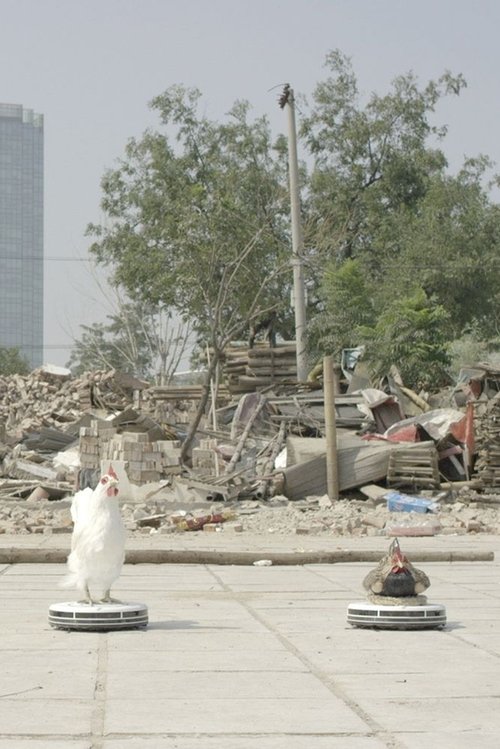
The urban fringe of Beijing is the loosen bricks from fragmented land. A result of urban development. The dynamic and complex urban system produced and blurred out the edges between cities and suburbs. The size, scale and land use of different areas are at constant conversion to each other, which becomes the foundation to China urban development and relative space of the society and the economy. In the video, several domestic vacuum cleaning robots are released at urban fringe. The robots navigate randomly in a demolishing area - a scene that we already witness and it could be found in different area under urbanization; a scene that is exciting and also being the norm in China. The robots - as the visitors from the outer space, arrive in our world. By taking in the dust and ashes at the urban fringe, the land reality is collected and made into a sample; a sample that conveys our all time obsession and celebration of modern contemporary.

Rumba II: Nomad

2015Movie
San Yuan Li
5.5

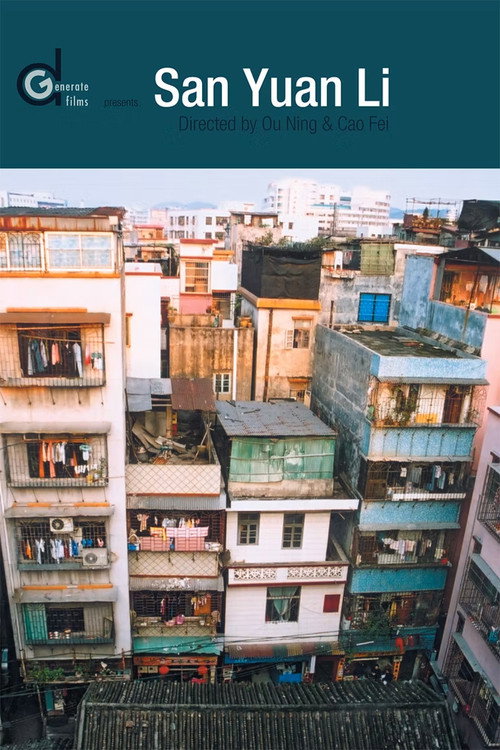
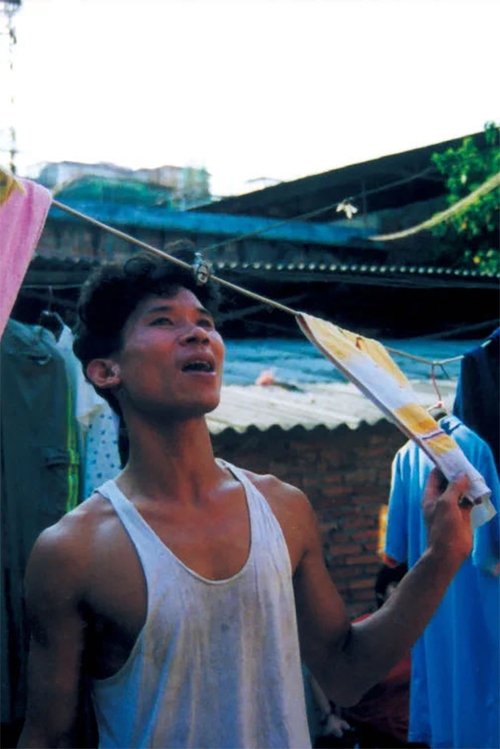
San Yuan Li, the collaborative project by Ou Ning, Cao Fei, and the members of U-thèque Organization, is a case study of the typical “urban village” phenomenon of Guangzhou in 1990s. Armed with video cameras, the crew penetrated San Yuan Li as “city flâneurs,” presented a highly stylized portrait of the village, attempting to rethink the debt of history, to document the confrontation and reconciliation between the newly urbanization and the patriarchal-clan-based traditional community, as well as the weird architectures and cultural landscape emerging from this previously rural area. At the end, all the colored footages were eidted into a piece of black-and-white video poetry. The project was exhibited in the 50th Venice Biennale for the first time, and then screened worldwide.

San Yuan Li

2003Movie
No image

Once the site of China's early tech industry, Jiuxiangiao is now a 'shanty area' slated for urban renewal. Residents recall how the area grew into an advanced electronics district in the 1950s, as part of the Chinese government's first Five-Year Plan for social and economic development. With support from the Soviet Union, factories began producing China's first home grown large scale computers and telephone switchboards. The Hongxia was built as part of a network of amenities including a ballroom and gaming arcade, all intended to enrich the cultural lives of workers. There were onsite nurseries at factories, free swimming pools and the cinema, where entry was free or five cents at most. As interviewees mourn the loss of these services, developers are knocking. 'To tear this place down and build skyscrapers - it makes my heart ache!' laments Wei Guotian, the theatre's former manager.

Hongxia

2019Movie