
Sut Jhally
Directing
Biography
Sut Jhally is Professor of Communication at the University of Massachusetts at Amherst and founder and Executive Director of the Media Education Foundation (MEF). He is one of the world's leading scholars looking at the role played by advertising and popular culture in the processes of social control and identity construction. The author of numerous books and articles on media (including The Codes of Advertising and Enlightened Racism) he is also an award-winning teacher (a recipient of the Distinguished Teaching Award at the University of Massachusetts, where the student newspaper has also voted him "Best professor"). In addition, he has been awarded the Distinguished Outreach Award, and was selected to deliver a Distinguished Faculty Lecture in 2007. He is best known as the producer and director of a number of films and videos (including Dreamworlds: Desire/Sex/Power in Music Video; Tough Guise: Media, Violence and the Crisis of Masculinity; and Hijacking Catastrophe: 9/11, Fear & the Selling of American Empire) that deal with issues ranging from gender, sexuality and race to commercialism, violence and politics. Born in Kenya, raised in England, and educated in graduate studies in Canada, he currently lives in Northampton, Massachusetts.
Known For
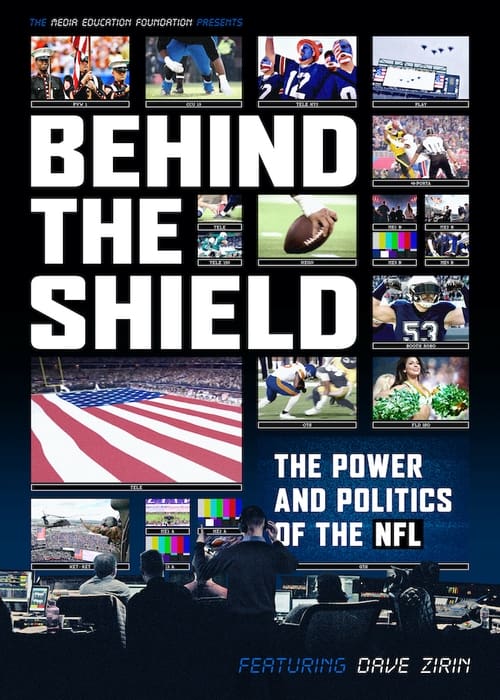
Celebrated author and Nation magazine sports editor Dave Zirin tackles the myth that the NFL was somehow free of politics before Colin Kaepernick and other Black NFL players took a knee.
Behind the Shield: The Power and Politics of the NFL

Over the past few years, Israel's ongoing military occupation of Palestinian territory and repeated invasions of the Gaza strip have triggered a fierce backlash against Israeli policies virtually everywhere in the world—except the United States. This documentary takes an eye-opening look at this critical exception, zeroing in on pro-Israel public relations efforts within the U.S.
The Occupation of the American Mind
Tough Guise systematically examines the relationship between pop-cultural imagery and the social construction of masculine identities in the U.S. at the dawn of the 21st century.
Tough Guise: Violence, Media & the Crisis in Masculinity
Arguing that advertising not only sells things, but also ideas about the world, media scholar Sut Jhally offers a blistering analysis of commercial culture's inability to let go of reactionary gender representations. Jhally's starting point is the breakthrough work of the late sociologist Erving Goffman, whose 1959 book The Presentation of the Self in Everyday Life prefigured the growing field of performance studies. Jhally applies Goffman's analysis of the body in print advertising to hundreds of print ads today, uncovering an astonishing pattern of regressive and destructive gender codes. By looking beyond advertising as a medium that simply sells products, and beyond analyses of gender that tend to focus on either biology or objectification, The Codes of Gender offers important insights into the social construction of masculinity and femininity, the relationship between gender and power, and the everyday performance of cultural norms.
The Codes of Gender
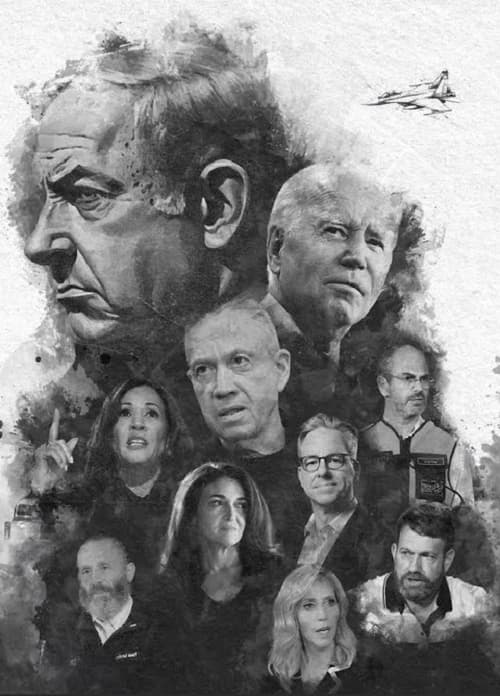
In an exclusive new documentary, Max Blumenthal rips the cover off the media deceptions and atrocity hoaxes Israel pushed after October 7 to create political space for its gruesome assault on the Gaza Strip. Blumenthal exposes the US mainstream media's role as a megaphone for the Israeli government, introducing new lies even after their initial ones were debunked. Atrocity Inc raises serious questions about the official narrative of October 7, while revealing how Israel's army has consciously engaged in the same hideous atrocities which it falsely accused Palestinian militants of committing.
Atrocity Inc.
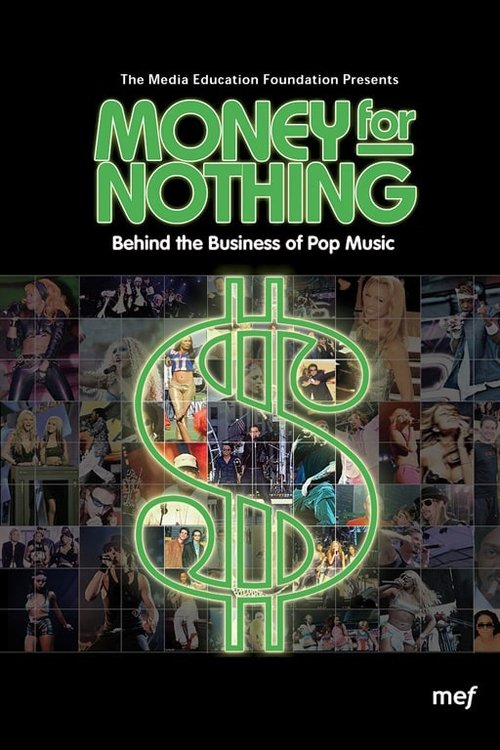
The hallmarks of popular music - artist independence and diversity of voices - are threatened by a contracting marketplace of record companies, radio ownership and playlists, as well as increased use in advertising. Big-name artists, historians and economists explain how popular music is produced and marketed and critique its current state.
Money for Nothing: Behind the Business of Pop Music

The line between sexual consent and sexual coercion is not always as clear as it seems -- and according to Harry Brod, this is exactly why we should approach our sexual interactions with great care. Brod, a professor of philosophy and leader in the pro-feminist men's movement, offers a unique take on the problem of sexual assault, one that complicates the issue even as it clarifies the bottom-line principle that consent must always be explicitly granted, never simply assumed. In a nonthreatening, non-hectoring discussion that ranges from the meanings of "yes" and "no" to the indeterminacy of silence to the way alcohol affects our ethical responsibilities, Brod challenges young people to envision a model of sexual interaction that is most erotic precisely when it is most thoughtful and empathetic.
Asking For It: the Ethics & Erotics of Sexual Consent
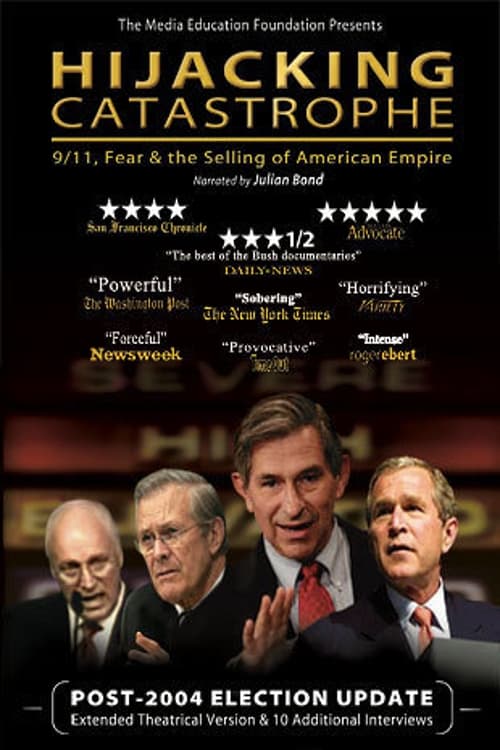
This documentary places the Bush Administration's original justifications for war in Iraq within the larger context of a two-decade struggle by neo-conservatives to dramatically increase military spending while projecting American power and influence globally by means of force.
Hijacking Catastrophe: 9/11, Fear & the Selling of American Empire
Hollywood movies are rapidly becoming vehicles for the ulterior marketing and advertising motives of studios and their owners, rather than entertainment in their own right. Behind the Screens explores this trend toward "hypercommercialism" through phenomena such as product placement, tie-ins, merchandising and cross-promotions. It combines multiple examples taken directly from the movies with incisive interviews provided by film scholars, cultural critics, political economists, and an Oscar-nominated screenwriter. Behind the Screens presents an accessible argument designed for school and college-age audiences-- precisely the demographic most prized by both Hollywood studios and advertisers alike. It features examples drawn from movies such as Wayne's World, Forrest Gump, The Lion King, Summer of Sam, and Toy Story.
Behind the Screens, Hollywood Goes Hypercommercial
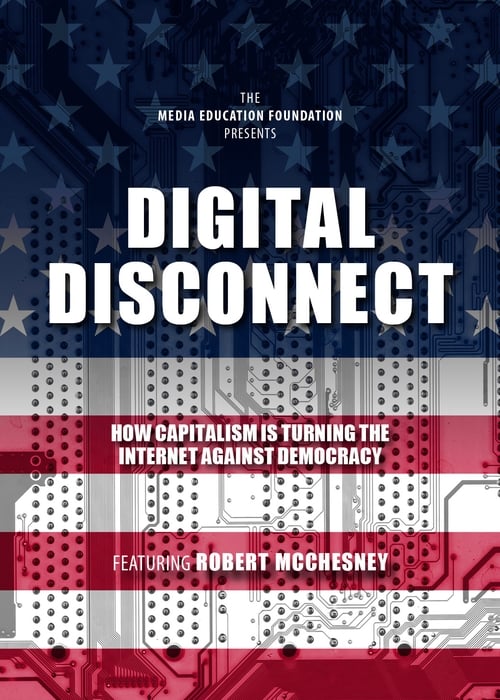
In this era of Facebook privacy breaches, "fake news" and filter bubbles, this essential film trains its sights on the relationship between the internet and democracy. Tracing the internet's history as a publicly funded government project in the 1960s to its full-scale commercialization today, the film traces how the revolutionary, democratizing potential of the internet has been radically compromised by the growing and unaccountable power of a handful of telecom and tech monopolies.
Digital Disconnect
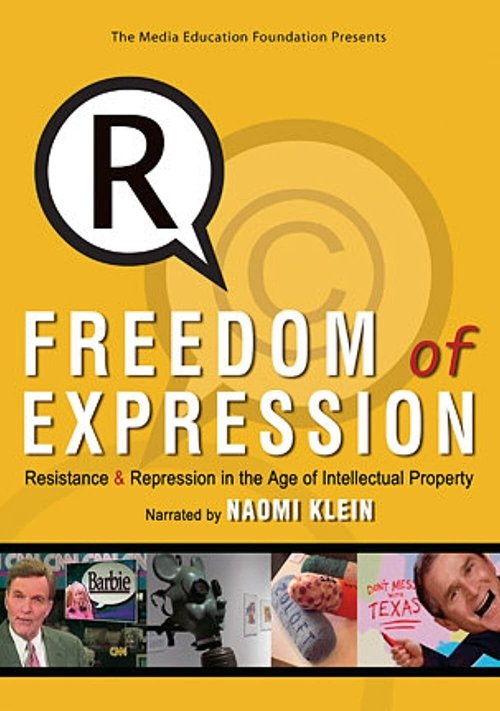
In 1998, university professor Kembrew McLeod (Associate Professor of Communication Studies at the University of Iowa) trademarked the phrase "freedom of expression" - a startling comment on the way that intellectual property law restricts creativity and expression of ideas. This provocative and amusing documentary explores the battles being waged in courts, classrooms, museums, film studios, and the Internet over control of our cultural commons. Based on McLeod's award-winning book of the same title, Freedom of Expression charts the many successful attempts to push back this assault by overzealous copyright holders. Freedom of Expression is an essential tool for educators, activists, filmmakers, students, artists, librarians, and more.
Freedom of Expression: Resistance & Repression in the Age of Intellectual Property

This documentary dissects a slanderous aspect of cinematic history that has run virtually unchallenged form the earliest days of silent film to today's biggest Hollywood blockbusters. The film explores a long line of degrading images of Arabs--from Bedouin bandits and submissive maidens to sinister sheikhs and gun-wielding "terrorists"--along the way offering devastating insights into the origin of these stereotypic images, their development at key points in US history, and why they matter so much today.
Reel Bad Arabs: How Hollywood Vilifies a People
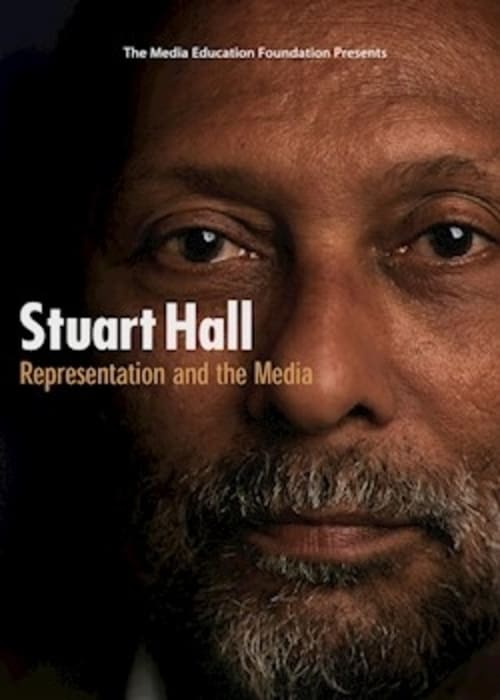
Cultural theorist Stuart Hall offers an extended meditation on representation. Moving beyond the accuracy or inaccuracy of specific representations, Hall argues that the process of representation itself constitutes the very world it aims to represent, and explores how the shared language of a culture, its signs and images, provides a conceptual roadmap that gives meaning to the world rather than simply reflecting it. Hall's concern throughout is the centrality of culture to the shaping of our collective perceptions, and how the dynamics of media representation reproduce forms of symbolic power.
Stuart Hall: Representation & the Media
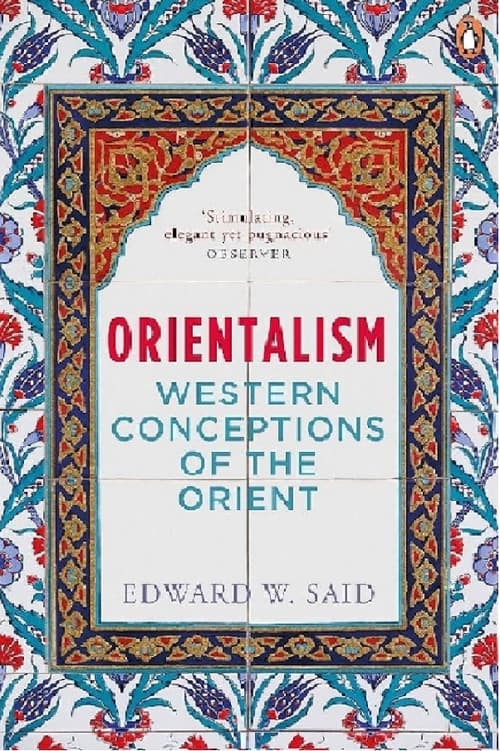
Edward Said's book Orientalism has been profoundly influential in a diverse range of disciplines since its publication in 1978. In this engaging and lavishly illustrated interview he talks about the context within which the book was conceived, its main themes, and how its original thesis relates to the contemporary understanding of "the Orient" as represented in the mass media. "That's the power of the discourse of Orientalism. If you're thinking about people and Islam, and about that part of the world, those are the words you constantly have to use. To think past it, to go beyond it, not to use it, is virtually impossible, because there is no knowledge that isn't codified in this way about that part of the world." -Edward Said
Edward Said On Orientalism: "The Orient" Represented in Mass Media
Robert McChesney lays the blame for the US's current state of affairs squarely at the doors of the corporate boardrooms of big media, which far from delivering on their promises of more choice and more diversity, have organized a system characterized by a lack of competition, homogenization of opinion and formulaic programming.
Rich Media, Poor Democracy

This video shows how the foreign policy interests of American political elites-working in combination with Israeli public relations stratgies-influence US news reporting about the Middle East conflict. Combining American and British TV news clips with observations of analysts, journalists and political activists, Peace, Propaganda & the Promised Land provides a brief historical overview, a striking media comparison, and an examination of factors that have distorted U.S. media coverage and, in turn, American public opinion.
Peace, Propaganda & the Promised Land
The #MeToo movement has shined much-needed light on the pervasiveness of sexual harassment and abuse and created unprecedented demand for gender violence prevention models that actually work. THE BYSTANDER MOMENT tells the story of one of the most prominent and proven of these models - the innovative bystander approach developed by pioneering scholar and activist Jackson Katz and his colleagues at Northeastern University's Center for the Study of Sport in Society in the 1990s.
The Bystander Moment: Transforming Rape Culture at its Roots
Dreamworlds 3 examines the stories contemporary music videos tell about girls and women, and encourages viewers to consider how these narratives shape individual and cultural attitudes about sexuality. Illustrated with hundreds of up-to-date images, Dreamworlds 3 offers a unique and powerful tool for understanding both the continuing influence of music videos and how pop culture more generally filters the identities of young men and women through a dangerously narrow set of myths about sexuality and gender. In doing so, it inspires viewers to reflect critically on images that they might otherwise take for granted.
Dreamworlds 3: Desire, Sex, and Power in Music Video
Wrestling with Manhood is the first educational program to pay attention to the enormous popularity of professional wrestling among male youth, addressing its relationship to real-life violence and probing the social values that sustain it as a powerful cultural force. Richly illustrating their analysis with numerous examples, Sut Jhally and Jackson Katz - the award-winning creators of the videos Dreamworlds and Tough Guise, respectively - offer a new way to think about the enduring problems of men's violence against women and bullying in our schools.
Wrestling with Manhood
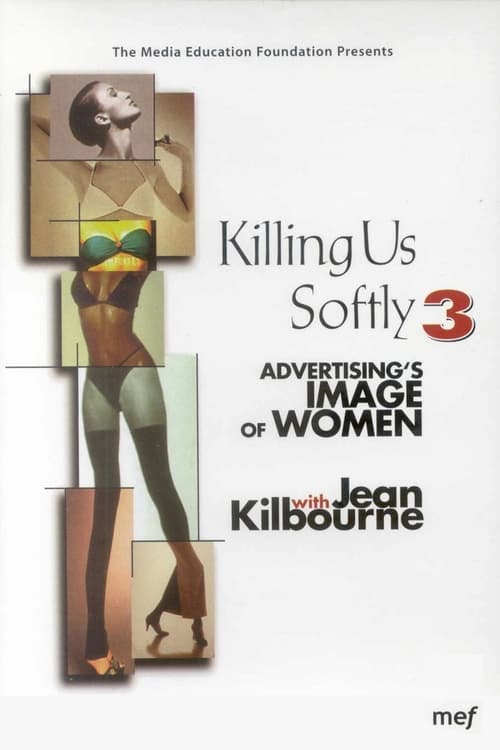
Jean Kilbourne's pioneering work helped develop and popularize the study of gender representation in advertising. Her award-winning Killing us Softly films have influenced millions of college and high school students across two generations and on an international scale. In this important new film, Kilbourne reviews if and how the image of women in advertising has changed over the last 20 years. With wit and warmth, Kilbourne uses over 160 ads and TV commercials to critique advertising's image of women. By fostering creative and productive dialogue, she invites viewers to look at familiar images in a new way, that moves and empowers them to take action.