Acting
Polizeiruf 110 is a long-running German language detective television series. The first episode was broadcast 27 June 1971 in the German Democratic Republic, and after the dissolution of Fernsehen der DDR the series was picked up by ARD. It was originally created as a counterpart to the West German series Tatort, and quickly became a public favorite.
Der Staatsanwalt hat das Wort was an East German television series.
No description available.
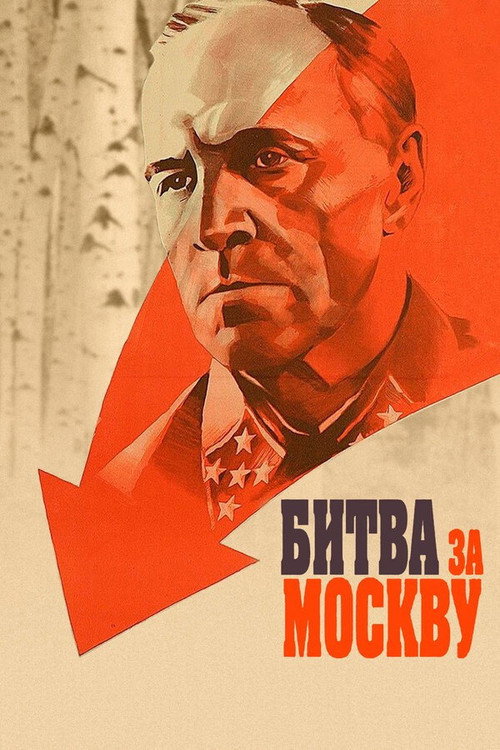
The Battle of Moscow is a 1985 Soviet multi-part war narrative, presenting a dramatized account of the 1941 Battle of Moscow and the events preceding it. The battle was the first major defeat of German Wehrmacht in the Second World War.
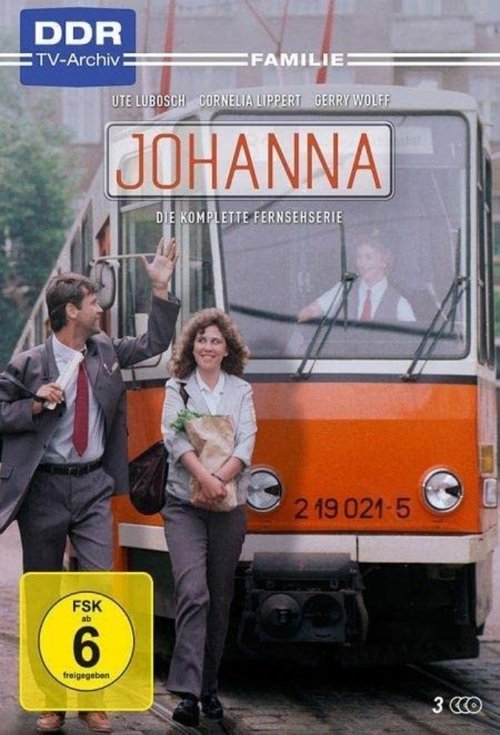
Johanna is a German television series.
The film is set in 1939, just before the outbreak of World War II. Alfréd Gontrán is a bar dancer and silk boy who, in the course of his adventurous and dubious life, tries out many different ways of making a living and earning a living, until he is finally found to be a reliable gentleman in a country drifting towards fascism, and is given the honour of representing the new order.
A young blacksmith, searching for happiness in a series of dreams, realizes that he must find a rejected princess and hold her hand. A fairytale after the Brothers Grimm.
Fairytale teleplay based on the fairytale "The Water of Life" by the Brothers Grimm. The wizard, ruler of the black forest, can be defeated if someone manages to draw water from the spring containing the water of life. The princess sets off to find the water of life for her terminally ill father. The sorcerer transforms the girl into a dragon. A fairy gives the king new courage to face life. He defends himself against the sorcerer. He is supported by the blacksmith, who takes up the fight and defeats the wizard.
The main character Otto, the "best man", is a copy of the illustrious Mister Bean. He takes on an apprenticeship as a building-worker, which makes him a member of a building brigade. At the same time Otto tries to start a love affair, which he handles even clumsier. Never the less Otto makes progress with the lady in question, a single mother, who apparently doesn't mind. Actually he wanted her sister, but a retired Leninist party member changes his mind. This gives him the courage to persevere in his work, albeit with the helping hand of the obligatory retired party member. And behold, in the end Otto invents a new method of building, which saves the brigade many hours of work.
Vera Urban is on a ski holiday with her children. Her two admirers - the sailor Winter and Savings Bank leader Martin - travel enthusiastically in the snow to finally conquer the heart of their worshiped in a relaxed holiday atmosphere. There are also times to use unfair means to cut out the side buhler. But the two competitions get unimagined: Vera's ex-husband Georg also spends holidays in the same hotel. Does old love flare up again?
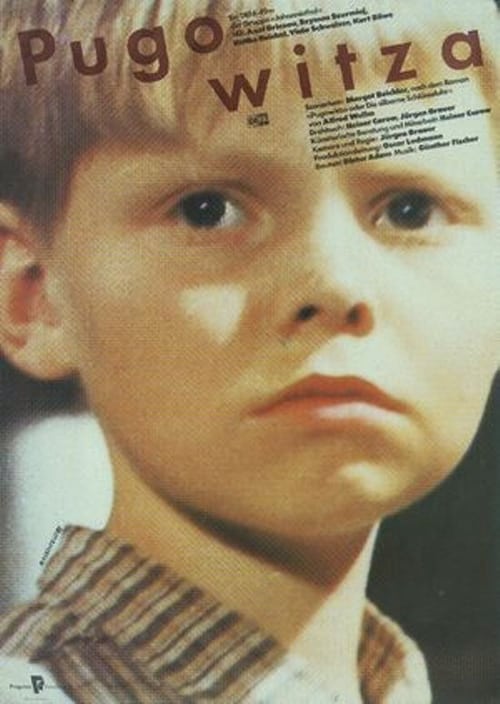
World War II is over and Heinrich, a young German boy, influenced by the Russians, starts to act according to Communist principles in a small German village.
He could have had women, he could have climbed the ladder of his accountancy career, and he could have stood on the podium next to the highest in the land. If only he had wanted to! But Farssmann, shaken by divorce and unwilling to better himself, wants to remain what he is: an ordinary bookkeeper like you and me. And so the dollar deal with Mr. Osbar from Utah (USA) is not the first time he comes into conflict with the very palpable unreality of a country called the German Democratic Republic.
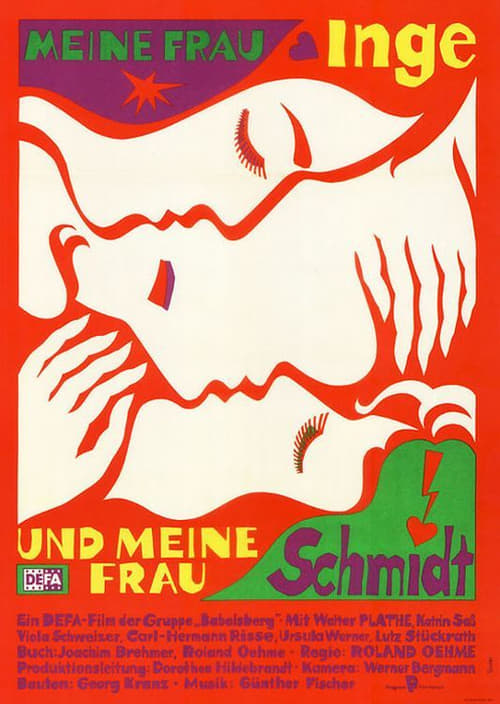
One day, the happily married Karl Lehmann is asked by his single colleague, Mrs. Schmidt, for an unusual service: She wants a child. Lehmann is willing to help. His wife Inge and Mrs. Schmidt have a child at the same time, and since the women like each other, they make an agreement. They share Karl Lehmann. One week Inge gets him, one week Mrs. Schmidt - always alternating. It could be nice if it weren't for the prudish, shocked or even envious people around them. However, some see it in a positive light. A Mr. Schmidt is interested in Inge's week off and a colleague Lehmann is interested in Mrs. Schmidt's week off. And it's not long before Mr. Karl Lehmann is booted out and seeks refuge with a waitress.
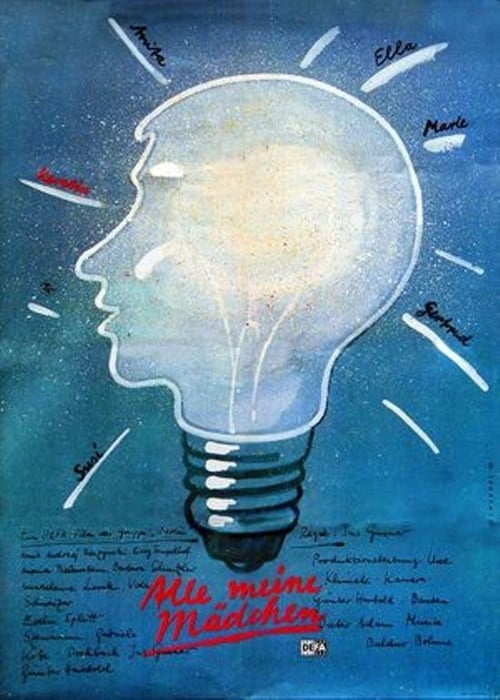
Ralf Paeschke is a film student who has to make a documentary film about a group of women working in a lamp factory. There is brazen Susie, mischievous Kerstin, lonely Anita, single Ella, withdrawn Gertrud and the imposing forewoman. When Kerstin is suspected of stealing, tension among the women mounts. Ralf demands that things be clarified, and his film plays an unexpected role in the matter.
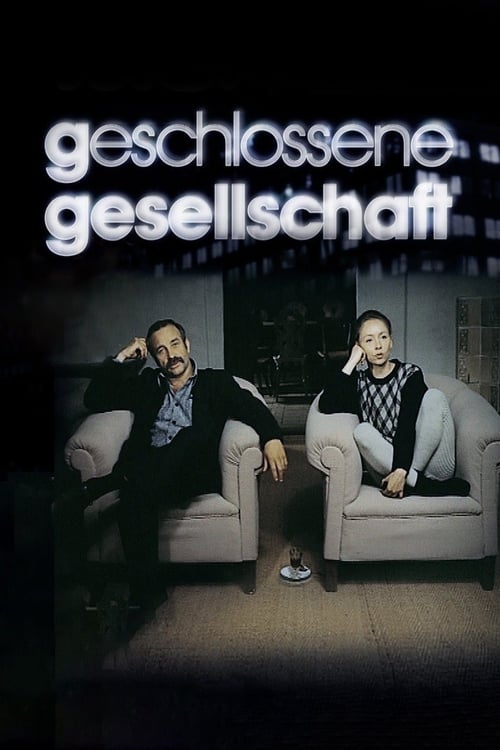
Three couples want to spend a short break together. Some have a traffic accident, the others are prevented professionally. So the designer Robert and the youth helper Ellen are forced to spend the days in a remote farmhouse alone with her young son. The previously suppressed marriage crisis breaks open. Allegations, confessions, charges, self-accusations are in the room. Painfully, they come to the realization that only their own happiness is responsible for their happiness. With the old landlord, each of them finds himself. In the end, Robert and Ellen want to try a new beginning.