Anne Teresa De Keersmaeker
Crew
Biography
Anne Teresa, Baroness De Keersmaeker, born 1960 in Mechelen, Belgium, grew up in Wemmel) is a contemporary dance choreographer. The dance company constructed around her, Rosas (dance ensemble), was in residence at La Monnaie in Brussels from 1992 to 2007.

Known For

No description available.
Alleen Elvis blijft bestaan

A short film based on the work of choreographer Anne Teresa de Keersmaeker.
Rosa

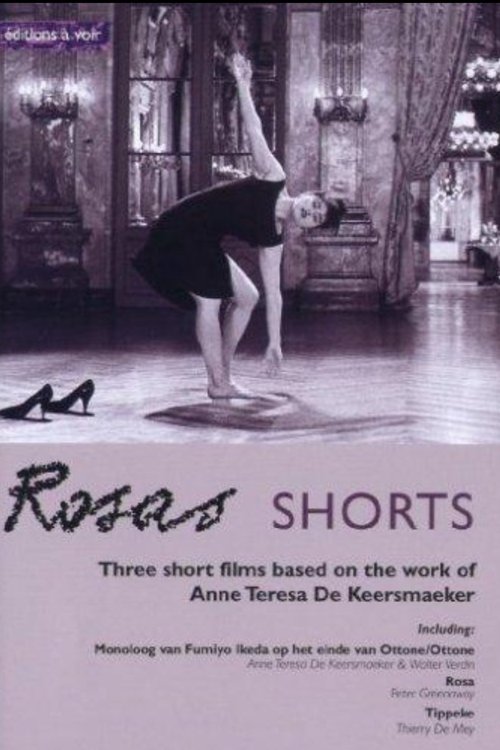
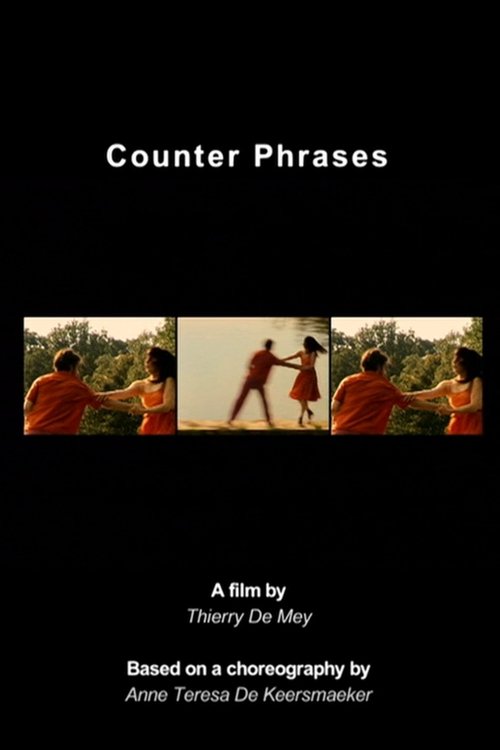
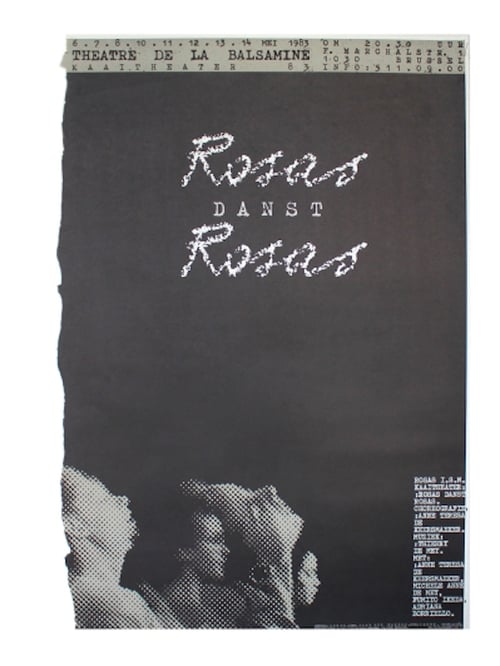
Thierry De Mey filmed Rosas danst Rosas in the former technical school of architect Henry Van de Velde in Leuven. The film version is much shorter than the show itself. In his film Thierry De Mey opts for a heavily ‘inter-cut’ version in which, apart from the cast of four dancers from 1995 and 1996, he also has all the other performers from the long history of the show dance along. He makes maximum use of the geometrical and spatial qualities of the Van de Veldes building. Incidentally, the building was thoroughly renovated straight after the film was made, making it one of the last testimonials to the original architecture. The film was shown on all of the major European television channels and also had a cinema career in the ‘art house circuit’.
Rosas Danst Rosas

No description available.
Dialogue avec Bach

The mavericks whose radical ideas created modern dance in the 20th century.
Dance Rebels: A Story of Modern Dance

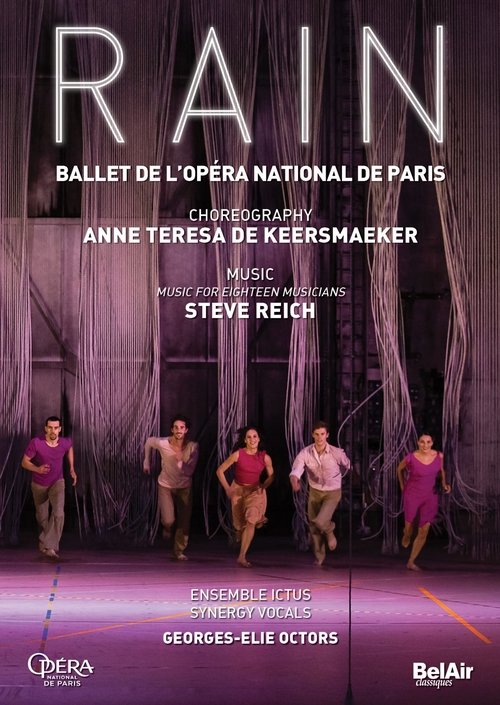
Recording of a performance by Ballet de l'Opéra national de Paris of the ballet on Music for 18 Musicians by Steve Reich, choreographed by Anne Teresa De Keersmaeker.
Rain

Prompted by Don Alfonso, a cynical old philosopher, two young idealists decide to put their lovers’ fidelity to the test. But love will teach them a bitter lesson: those who believe themselves phoenixes and goddesses will discover the desires of the flesh… In 1790, one year after the French Revolution, in what would be their final collaboration, Mozart and Da Ponte conduct a scientific investigation of love. With six singers doubled by six dancers, Anne Teresa De Keersmaeker depicts the desire which unites and separates human beings, like the interactions between atoms that, once broken, make new bonds possible
Mozart: Così Fan Tutte

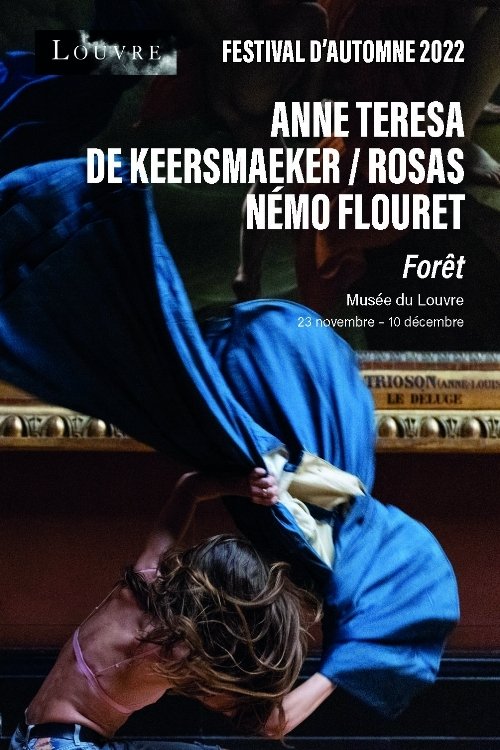
Whirlwinds, burning forests, erased cities – the centuries-old artworks housed in the Louvre strongly resonate with our present time. Forêt follows a new generation of Rosas dancers moving amidst these artworks, bridging past and present. Choreographed by Anne Teresa De Keersmaeker and Némo Flouret in 2022, the performance was designed for the Louvre’s Grande Galerie and its famed 'red rooms,' home to Italian masterpieces and 19th-century French Romantic art. Evi Cats captured this performance, with a camera that moves almost imperceptibly between the dancers and the audience, alternating between intimate close-ups and wide shots of the imposing scenery.
Forêt

Episode of the Belgian Flemish Television (BRT) program Het Gerucht on the development of Anne Teresa De Keersmaeker's choreography "Bartók/Aantekeningen" (in English: "Bartók/Annotated"), created in 1986 for four dancers from the company Roses . "Bartók/Aantekeningen" is the fifth work by Anne Teresa De Keersmaeker, after "Ash" (1980), "Fase, Four Movements to the Music of Steve Reich" (1982), "Rosas danst Rosas" (1983) and "Elena's Aria". "(1984).
Het gerucht - Bartók/Aantekeningen
Tippeke began as an impulse by Anne Teresa De Keersmaeker and Thierry De Mey in 1996 to experiment with some leftover 16mm film. A nursery rhyme that De Keersmaeker used to recite to her son almost daily during the period formed the starting point, together with a movement sequence that she had recently worked out. The enthusiasm after the first film rushes ensured that the project gradually began to take more serious form. Tippeke was initially a part of the show Woud, three movements to the music of Schönberg, Berg & Wagner. The music was performed live in the show and some dancers from the company also danced synchronically in front of the screen. Tippeke was also released onto the market later as a short film.
Tippeke

A short documentary about the creation process of Rosas danst Rosas, the performance that forced Anne Teresa De Keersmaeker’s international breakthrough and has become a benchmark in the history of postmodern dance. This documentary, directed by Stefaan Decostere for the BRT cultural programme Het Gerucht [The Rumour, ed.], uses fragments of rehearsals and interviews with De Keersmaeker and composer Thierry De Mey, offering a glimpse of the choreographic creative process in which repeated abstract movements play a key role.
Het Gerucht: Rosas danst Rosas

A video essay about the rehearsal process of the dance performance Mozart / Concert Arias, un moto di gioia, a choreography by Anne Teresa De Keersmaeker and Rosas, which premiered at the Festival d’Avignon in July 1992.
Mozart Material
Almost ten years after Zeitung, Anne Teresa De Keersmaeker and the musician Alain Franco started off with those same building blocks to create Zeitigung. Against the backdrop of a changing world, and channeled through the bodies of eight young dancers, Franco and De Keersmaeker offer an updated version of their own earlier work. As a part of their strategy they invited the young choreographer and dancer Louis Nam Le Van Ho to confront his own writing with De Keersmaeker’s choreography; his contribution builds a bridge to a new generation of creators and choreographers, providing a different perspective on De Keersmaeker’s and Franco’s ongoing examination of the essence of dance and composition. Franco joins Rosas’s dancers on stage, performing the piece live on the piano. In a broad historical gesture, the music of Johann Sebastian Bach, Johannes Brahms, Arnold Schönberg, and Anton Webern stretches across the geometric principles and improvised sections of the choreography.
Zeitigung

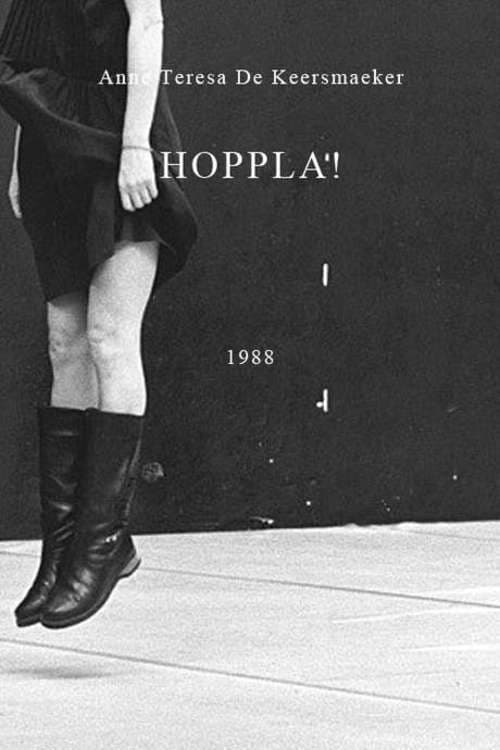
In Hoppla!, two choreographies by Anne Teresa De Keersmaeker are brought together and performed to the music of the Hungarian composer Béla Bartók: Mikrokosmos, seven short works for two pianos, and Quatuor no. 4, Bartók’s fourth string quartet. The reading room of the Ghent University library, designed by the renowned architect Henry Van de Velde, serves as location.
Hoppla!
For Cesena Anne Teresa De Keersmaeker and Rosas worked closely with Björn Schmelzer and his graindelavoix ensemble. This new production might almost be called the counterpart to its predecessor, En Atendant. Whereas in that piece the twilight merged almost imperceptibly into night, this piece heralds the start of the day. The stage is shared by 19 dancers and singers who explore the limits of their ability. Dancers sing and singers dance, once again in dialogue with the wilful 14th-century scores of the Ars Subtilior. For the third time, Ann Veronica Janssens has collaborated with Rosas for a set design, providing a sculpture of passing time, of the constant transformation of what is around us and of what only becomes visible in the course of time. The start of a new day, or a new look at a distant past.
Cesena
"Fase" consists of three duets and one solo dance, choreographed to four repetitive compositions by the American minimalist musician, Steve Reich: Piano Phase, Come Out, Violin Phase and Clapping Music. Reich allows his tones to gradually shift in rhythm and melody and between the instruments. The choreography applies the same phase-shifting principle. The purely abstract movements are executed so perfectly that they seem almost mechanical and yet affect us in a strange way.
Fase

Rain, set to Steve Reich's Music for 18 Musicians (1976), is one of Anne Teresa De Keersmaeker’s most characteristic performances. With this vibrant choreography, De Keersmaeker returned, in 2001, to two of her great loves: pure dance and the minimalistic music of Steve Reich. Accompanied by the pulsating tones of his music, for an hour and ten minutes ten dancers occupy the stage, delineated by a curtain of fine strings, displaying an impressive succession of virtuoso dance phrases. The mathematical figures, the sustained repetition, the geometric occupation of the space, the art of continuous variation – everything that had gradually become the choreographer’s signature was pushed to the extreme in Rain.
Rain
No description available.
Anne Teresa De Keersmaeker & Némo Flouret : Forêt

In Violin Fase, Eric Pauwels twirls the camera around the body of dancer and choreographer Anne Teresa de Keersmaeker. Through this process, Pauwels creates a new relationship between camera and dancer, but also between body and dance, dance and cinema. Consisting of a geometrical and minimalist choreographic structure filmed in four uninterrupted takes, the artist’s camera captures a woman dedicated to exploring the boundaries of physical exhaustion.
Violin Fase
As of 9 October 2020, Rosas will be restaging Drumming (1998). These will be the first performances of Drumming since the last tour, which ran between 2012 and 2016. This revival will be danced alternately by the company’s repertoire group and a new cast of young dancers.