Sound
'Dyn Amo' is a 'drama' exploring the distinction between a person's self and his projection of that self to others; and it's a 'horror movie' tragically suggesting how a projection can become more substantial than the self behind it. Its subjects are role-playing (especially sexual role-playing), and the masochism of playing a role that conforms to others' exploitative interests.
Trixi is Dwoskin’s most convulsive version of his recurrent theme: the confrontation of a solitary girl with the camera. Shot in one continuous 8-hour session. Trixi records Beatrice Cordua’s responses to the situation, from initial shyness, fear and withdrawal through teasing and posturing to naked surrender and final exhaustion …. The camera is highly mobile; often confronting the girl in extreme close-ups, sometimes swooping down from overhead, sometimes searching to “recapture” her …. The camera itself is the object of erotic desire, [in] the sense of giving a performance shifting imperceptibly in a helpless self-exposure in response to its constant stare. Clearly, the form of the film was dictated by the response of the performer. Beatrice Cordua proves Dwoskin’s most expressive subject to date, and the film is correspondingly “open,” the camera having been willing to choose its tactics as direct responses.
The supremely world-weary Lemmy Caution, last seen in Godard's "Alphaville" (France/1965), has several strange encounters while trying to make his way from the former East Germany to "the west."
To Tea, made in Holland (at the house of the Dutch avant-garde filmmaker Franz Zwartjes), is a slowed ‘Alice in Roomland’.A guide to sensual contact between two women. Their contact is arrived at through an arrangement of slow tactics. As the light of day goes the bodies come closer, and the piano melody floats in a distant hall. Once my Hungarian art teacher said: “If you exaggerate the objective lines you reach a stronger subjective expression.” So here the strange tea party gives over to touch. – S.D.
An experimental dance film featuring members of the Ballet Rambert, one of the world’s most renowned dance companies, performing to the music of Gavin Bryars.
An unfulfilled man renders himself to the unrealized sensuality of four women. In his drifting search, he fails and fades in the same loneliness as the women.
Filmed in New York in 1964, completed in London 1967.
A group of strangers explore their fantasies over a period of five days.
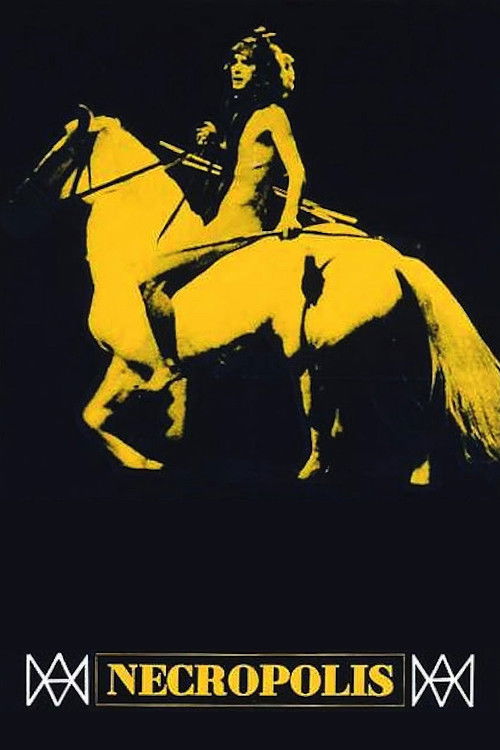
Frankenstein's monster gropes towards the awareness that his mind is a universe; Attila, naked on a white horse, liberates his people from their ignominy; the ultra-caustic Viva bemoans the frustrations of married life and drifts into the elegiac persona of the Bloody Countess Bathory; Louis Waldon is a hip American tourist searching for the (missing) Mona Lisa.
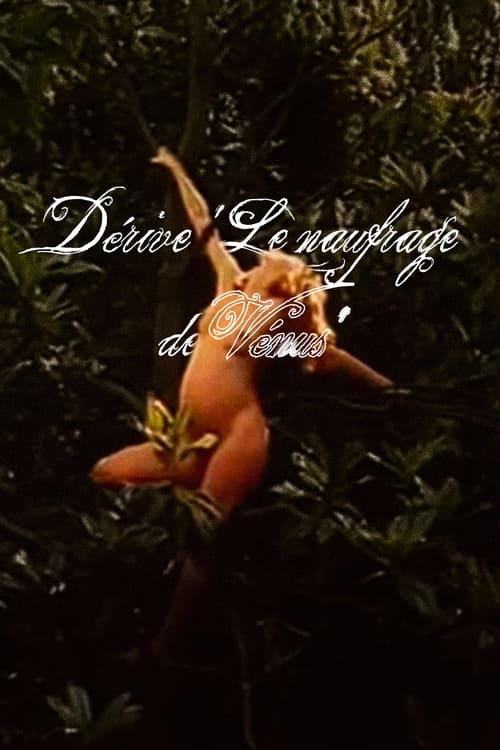
Botticelli's Venus emerges from the waters, that of Yvan Lagrange, is she shipwrecked?...
A portrait of a relationship between a physically disabled man and an able-bodied woman.
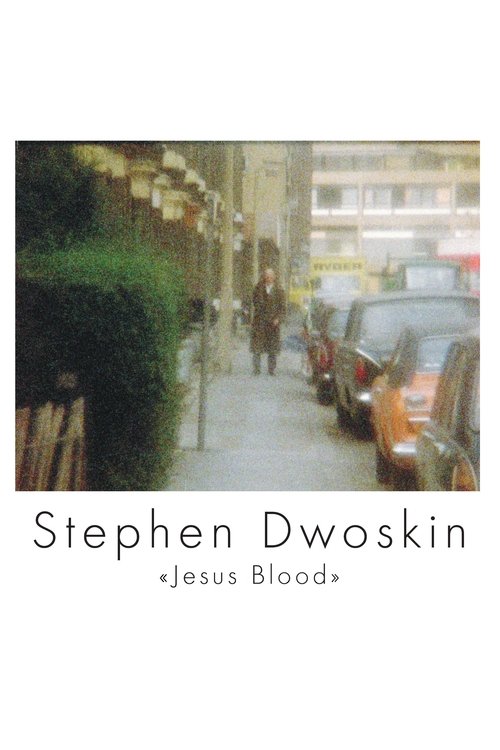
A man walks towards the camera down the end of a street to the sound of 'Jesus’ Blood Never Failed Me Yet', a composition by Gavin Bryars based on a loop of an anonymous homeless man singing the song. The man’s voice is progressively intensified by an instrumental accompaniment, which increases in density and richness, before the whole thing gradually fades out. Dwoskin’s film was produced to be shown during the premiere of Jesus' Blood Never Failed Me Yet at the Queen Elizabeth Hall, London in December 1972. For Dwoskin, it represents “… the singing voice of the last days of a London drunk (anonymous) as the orchestra raises him to heaven. The faint ghost image of a figure swims gradually to you through the grains of film low light…”
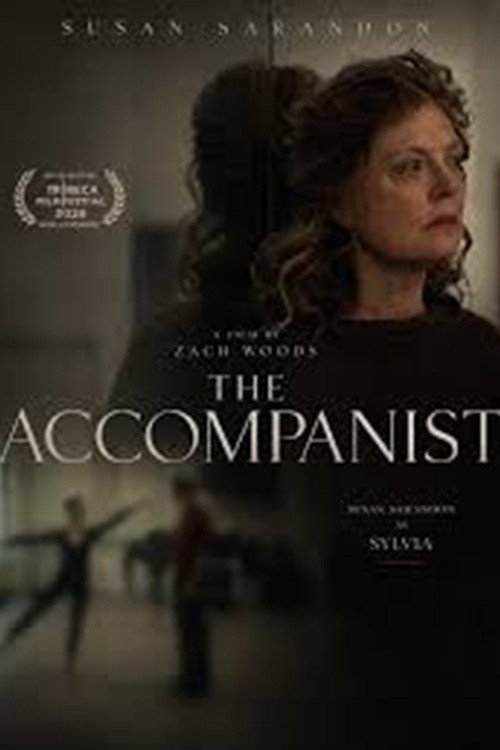
Emily accidentally tells her school nurse that her dementia-stricken grandpa almost got them killed, a rookie child-welfare agent is sent to their house to investigate. A botched extraction ensues and Emily is taken and placed with Sylvia, a new foster parent.
Life of an ordinary fisherman changes when a young mai-mai fish sees him and falls in love!... Set to original music by composer Gavin Bryars, the film tells a romantic story of the transforming power of love - even without a happy ending.
Robert Wilson and the Civil Wars is an in-depth documentation of Robert Wilson’s ambitious attempt to stage an epic, twelve-hour, multinational opera for the 1984 Summer Olympics. Filmmaker Howard Brookner follows the avant-garde theatre director as he confronts a hectic work schedule, funding difficulties and relentless international travel in attempt to complete his preparations. The film examines Wilson’s unique theatrical style during The Civil Wars: A Tree Is Best Measured When It Is Down, which involves the continual creation of evocative stage sets, owing to a unique juxtaposition of movement, sound, text and image. Known for his precise, painterly images Wilson’s work derives more from visual art than the orthodox literary traditions of theatre. As a result, Wilson often challenges actors to perform in a boldly minimalist style, as well as collaborating with non-actors, such as young autistic poet Christopher Knowles in Einstein on the Beach.
Moscow, summer of 1953. Tanya, an eleven-year old girl, meets a boy, Mitya. Mitya and his family have just returned from exile in the Russian Far East. Tanya learns that Mitya had to leave behind his best friend, a dog called Hector. Mitya is eager for Hector to join him in Moscow, but the adults declare it impossible - a large city is no place for a dog. In an attempt to prove the adults wrong and convince them to bring over Hector, Mitya and Tanya decide to create the perfect home for him - a dog's paradise in an empty sealed room they find in the building...
No description available.
Evolves around the rooms of a house as one of the main characters, Lisiska, is waiting and is studied in depth as she prepares herself for a meeting. The film attempts to display sexual barriers and misconceptions, and about the role-playing and the confusion around the whole question of sexual and sensual involvement. The essence is the confrontation with self-deception, lies and the real fear of contact with both sexes.
Troubled teen Lisa can't seem to find the joy in everyday things. Lashing out desperately, she falls in love with her mother's junkie boyfriend, which can't end well.
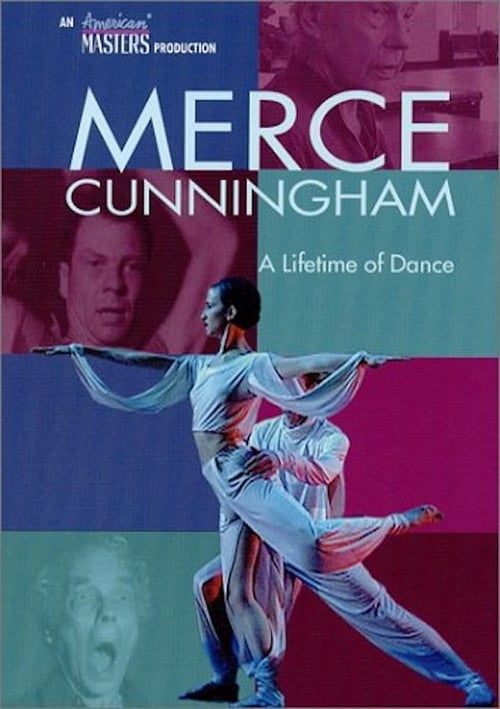
A history of the work of Merce Cunningham.