FEEL IT.STREAM
John Marshall

John Marshall

Directing

Biography

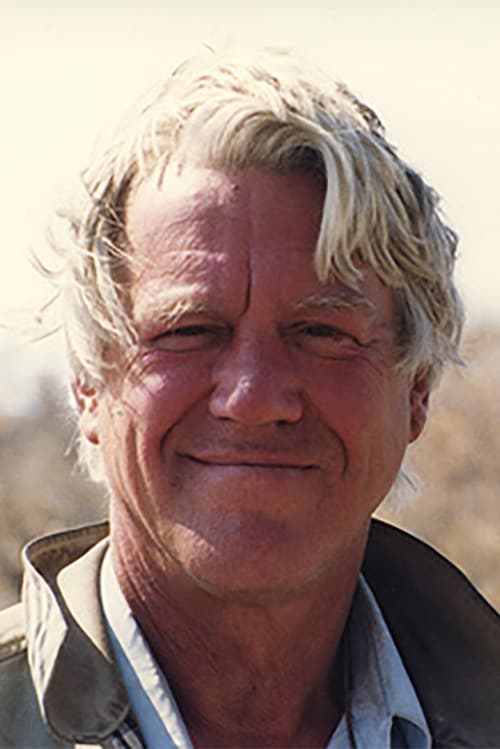
John Kennedy Marshall (November 12, 1932 – April 22, 2005) was an American anthropologist and acclaimed documentary filmmaker best known for his work in Namibia recording the lives of the Ju/'hoansi (also called the !Kung Bushmen). Marshall first traveled to the Kalahari Desert and met the Ju/'hoansi of the Nyae Nyae area in 1949 on a trip initiated by his father. Throughout the 1950s and 1960's members of the Marshall family returned to the Kalahari Desert numerous times to conduct an ethnographic study of the Ju/'hoansi. From 1950-1958 Marshall filmed the hunting and gathering life of the Ju/'hoansi. His first edited film, The Hunters, was released in 1957 and was an almost instant classic of ethnographic film. During the 1960s and 1970s, Marshall produced many short films about the Ju/'hoansi of Nyae Nyae and pursued other film projects in the United States. He was the cinematographer and co-director for Fred Wiseman's first documentary film, Titicut Follies. In 1968-1969, he shot, edited and directed the ground-breaking Pittsburgh Police series of short films. In 1968, Marshall and Tim Asch founded Documentary Educational Resources, a non-profit organization dedicated to facilitating the use of cross-cultural documentaries in the classroom. Marshall became involved in grassroots organizing and development in Nyae Nyae in the 1980s, forming a foundation that would become the Nyae Nyae Development Foundation of Namibia and devoting himself to advocating on behalf of the Ju/'hoansi. In 2003, the Society for Visual Anthropology bestowed on Marshall a lifetime achievement award for his work among the hunter gatherer society. Marshall's documentary footage and edited films and videos of Ju/'hoansi are held at the Human Studies Film Archives, Smithsonian Institution. Known officially as the John Marshall Ju/'hoan Bushman Film and Video Collection, 1950–2000, the collection was added to UNESCO's Memory of the World Register for documentary heritage of world importance in July 2009.

Known For

Titicut Follies
7.2

A stark and graphic portrayal of the conditions that existed at the State Prison for the Criminally Insane at Bridgewater, Massachusetts, and documents the various ways the inmates are treated by the guards, social workers, and psychiatrists.

Titicut Follies

1967
No image
N/A

This film depicts a moment of flirtation between N!ai, the young wife of /Gunda, and her great-uncle /Ti!kay. The two share a "joking relationship," a Ju/'hoan kin relationship which provides opportunities for casual intimacy, emotional release, and support.

A Joking Relationship

1962
No image
N/A

A five-part series documenting 50 years in the lives of the Ju/'hoansi of southern Africa, from 1951 to 2000. These once independent hunter-gatherers experience dispossession, confinement to a homeland, and the chaos of war.

A Kalahari Family

2001
No image
N/A

Investigation of a Hit and Run follows two officers as they investigate a hit-and-run accident from initial reports to the questioning of witnesses and the interrogation of the suspect, an eighteen-year-old boy nicknamed Pumpkin, along with his girlfriend and brother. A number of factors complicate the case: the suspect was without a driver's license; he reported the car stolen to cover himself; he could not be persuaded to confess; and the girlfriend is pregnant. The police use considerable pressure on the girl, and treat her eventual statement as though it were a confession.

Investigation of a Hit and Run

1972
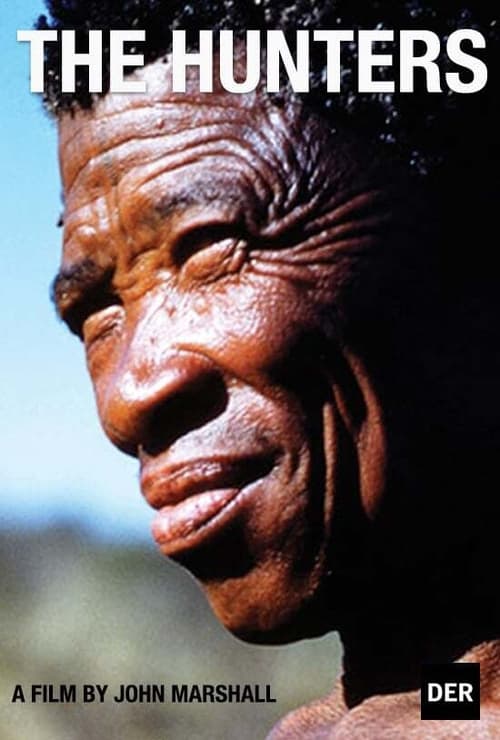
The Hunters
6.5

An ethnographic documentary following four Ju/’hoansi (!Kung) men during a multi-day giraffe hunt in the Kalahari Desert, filmed during the Smithsonian–Harvard Peabody expedition of 1952–53.

The Hunters

1957
No image
N/A

Tchai is the word used by Ju/'hoansi to describe getting together to dance and sing; n/um can be translated as medicine, or supernatural potency. In the 1950's, when this film was shot, Ju/'hoansi gathered for "medicine dances" often, usually at night, and sometimes such dances lasted until dawn.

N/um Tchai: The Ceremonial Dance of the !Kung Bushmen

1969
No image
N/A

Women from three separate Ju/'hoan bands have gathered at a mangetti grove at !O to play an intense game in which under-tones of social and personal tensions become apparent.

N!owa T'ama: The Melon Tossing Game

1970
No image
N/A

Police search for drugs in a house where they arrest a group of boys who return from a basketball game and are accused of having a loud party and sniffing glue.

After the Game

1973
Margaret Mead: A Portrait By a Friend
9.0

Jean Rouch filmed this loving and humorous portrait of anthropologist and filmmaker Margaret Mead in September 1977 while he was a guest of the first Margaret Mead Film Festival. As both a friend and colleague, Rouch reveals a glimpse of the legendary Mead in her later years.

Margaret Mead: A Portrait By a Friend

1978
No image
N/A

In this film, a group of women and children gather sweet, fresh /ole berries and sha roots. The younger women, led by N!ai, bait a nest of wasps. As the day wears on, Debe, N!ai's youngest son, grows restless. Di!ai asks N!ai to take Debe home, but she refuses, and walks off to join the younger women. The film explores the interactions between these women as they engage in their everyday pursuit of food. It is a companion film to Debe's Tantrum.

The Wasp Nest

1972
No image
N/A

An installment in the Pittsburgh Police series. A number of short sequences show some of the events and people in the daily lives of several policemen: their intervention in domestic quarrels, the handling of a hit-and-run case, the approaches taken toward loitering youths, a drunk and disorderly charge being made in Magistrate's Court, and the interrogation of a burglary suspect. Police force candidates are shown being interviewed by members of the police department. They discuss their reasons for wanting to be policemen and their thoughts about themselves and their jobs, placing the film in the context of the community from which the department draws its personnel.

Inside Outside Station 9

1970
No image
N/A

Between 1950 and 1958, John Marshall made four expeditions to film the Ju/'hoansi (a group of !Kung Bushmen) of the Nyae Nyae region of Namibia (then South West Africa). During this time, Marshall shot over 300,000 feet of 16mm film (157 hours). He later produced a total of 23 films exclusively from this footage. In this short film, children tempt fate by playing with scorpions.

Playing with Scorpions

1972
No image
N/A

FIRST FILM was edited and narrated by Lorna Marshall and is comprised of footage shot in 1951 on the second Marshall family expedition to the Kalahari Desert. It is intimate in style, very carefully filmed, with a wealth of practical information about the material culture and structure of Ju/'hoan (!Kung Bushmen) hunter-gatherer society. The film allows viewers to see some of John Marshall's earliest film footage and provides an interesting comparison with the more sophisticated shooting found in his later work.

First Film

No image
N/A

Ju/'hoan women often share an intimate sociability and spend many hours together discussing their lives, enjoying each other's company and children. In this short film, Ju/'hoan women rest, talk and nurse their babies while lying in the shade of a baobab tree. This film is a good illustration of "collective mothering" in which several women support each other and share the nurturing role.

A Group of Women

1961
No image
N/A

In Nyae Nyae, water often remains in open pans. Sometimes if the rains have been heavy, water stays in these pans, like small lakes, all year. In this film five Ju/'hoan men visit Nama pan. /Ti!kay washes the clothes he acquired on his trip to rescue his band's wives from a farm (as shown in An Argument About a Marriage). The other men bathe. The men use the opportunity to exchange sexual jokes with pleasure and hilarity. This film provides an interesting comparison with A Group of Women.

Men Bathing

1973
N!ai, The Story of a !Kung Woman
6.8

This film provides a broad overview of Ju/'hoan life, both past and present, and an intimate portrait of N!ai, a Ju/'hoan woman who in 1978 was in her mid-thirties. N!ai tells her own story, and in so doing, the story of Ju/'hoan life over a thirty year period. "Before the white people came we did what we wanted," N!ai recalls, describing the life she remembers as a child: following her mother to pick berries, roots, and nuts as the season changed; the division of giraffe meat; the kinds of rain; her resistance to her marriage to /Gunda at the age of eight; and her changing feelings about her husband when he becomes a healer. As N!ai speaks, the film presents scenes from the 1950's that show her as a young girl and a young wife. The uniqueness of N!ai may lie in its tight integration of ethnography and history. While it portrays the changes in Ju/'hoan society over thirty years, it never loses sight of the individual, N!ai.

N!ai, The Story of a !Kung Woman

1981
No image
N/A

This film treats the problem of "loitering." In a number of sequences, police warn youths, police administrators discuss enforcement of loitering laws, officers are insulted, and several youths are arrested.

You Wasn't Loitering

1973
No image
8.0

Children and teenagers throw sticks, berries, and leaves at each other from perches in a large baobab tree.

Baobab Play

1974
No image
N/A

This film, shot in 1952-53, documents the scarification ceremony called "marking" which was traditionally held for Ju/'hoan boys after they had killed their first large animal. Here, /Ti!kay, a boy of thirteen, shoots his first wildebeest with an arrow. /Ti!kay's father, Kan//a, and Crooked /Qui help the young hunter track, skin, and butcher the animal. After the meat is brought back to the village, a scarification ceremony takes place, symbolizing the importance of hunting and /Ti!kay's passage into social manhood. He is now considered an acceptable son-in-law by the parents of the girl to whom he has long been betrothed.

A Rite of Passage

1972
No image
N/A

In this film, an argument arises between two bands when an antelope killed by a hunter from one band is found and distributed by a man from another band. The film illustrates conflict mediation in traditional Ju/'hoan society and the Ju/'hoan leaders' ability to settle disputes without violence and without formal political organization.

The Meat Fight

1974