Acting
No description available.
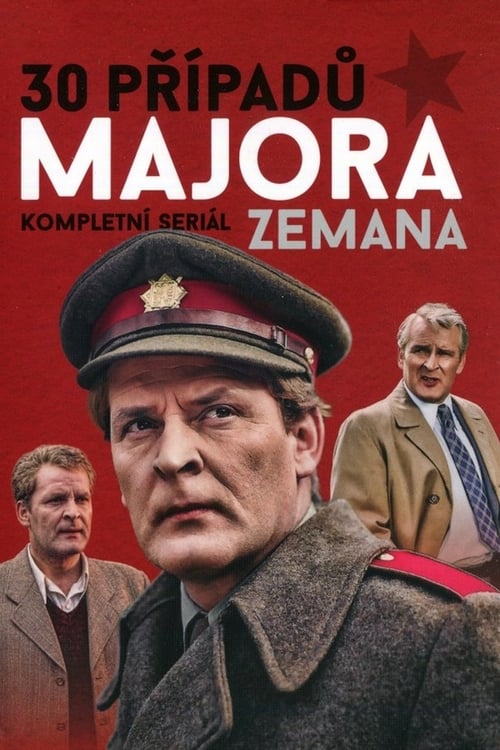
Thirty Cases of Major Zeman is a Czechoslovak action-drama television show intended as a political propaganda to support the official attitude of the communist party. The series were filmed in the 1970s. Each episode encompasses one year, and investigations are stylized to that year. Most are inspired by real cases. The series follows the life of police investigator Jan Zeman during his career from 1945 to 1975.
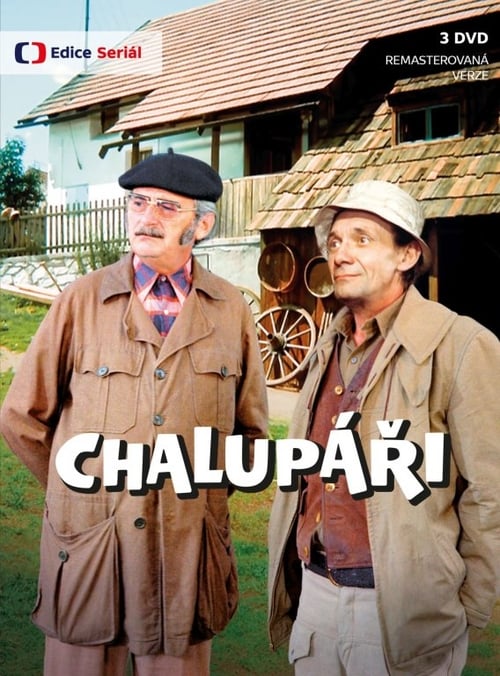
Chalupáři is a Czechoslovak comedy TV series filmed in 1974 and 1975 by František Filip.
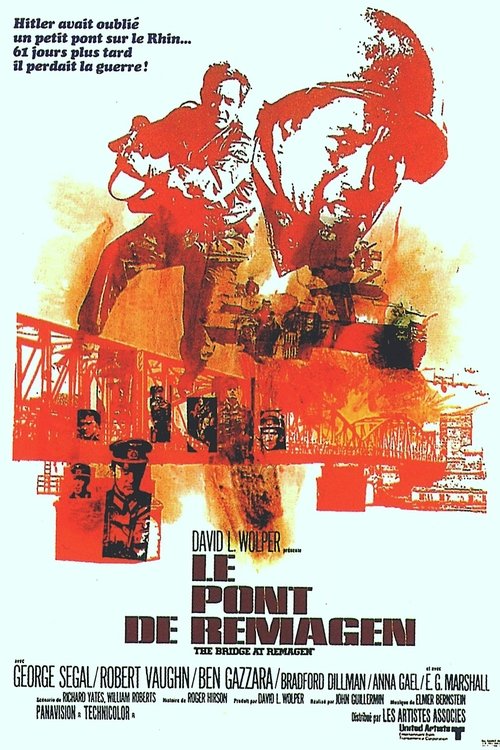
In March of 1945, as the War in Europe is coming to a close, fighting erupts between German and American troops at the last remaining bridgehead across the Rhine.
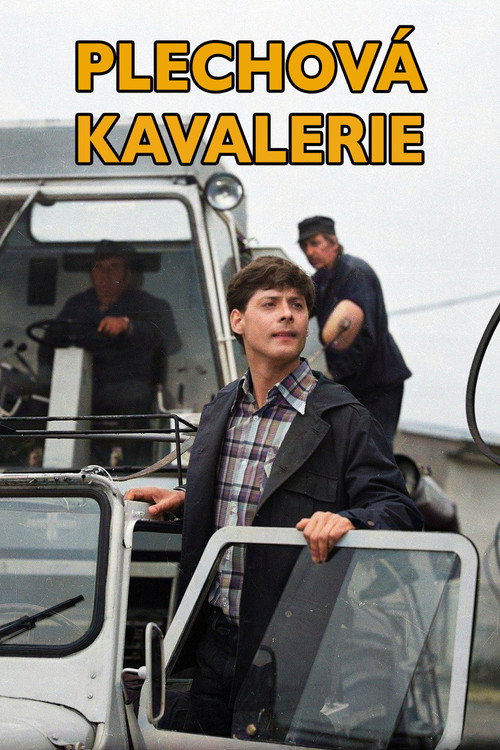
Plechová kavalérie is a Czechoslovak/Czech TV series about combine operators filmed by Jaroslav Dudek.
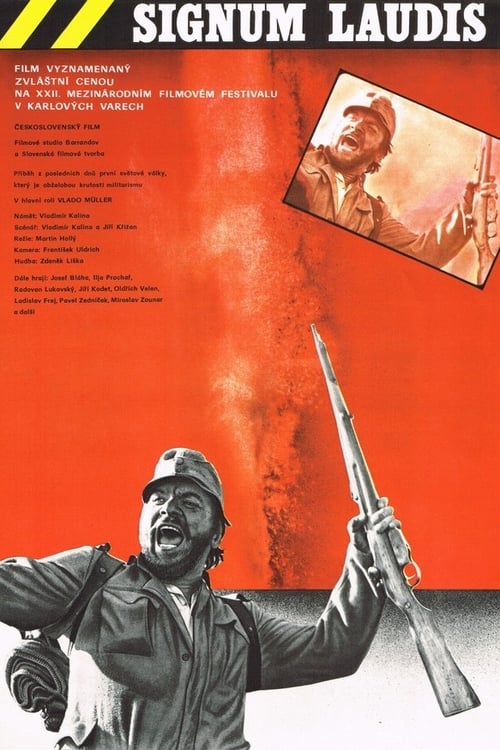
The trenches of World War I provide for a captivating backdrop to the drama of Corporal Hoferik. In his devotion to the Habsburg Monarchy, he fanatically carries out his military orders, but he ultimately suffers the Empire's disfavor.
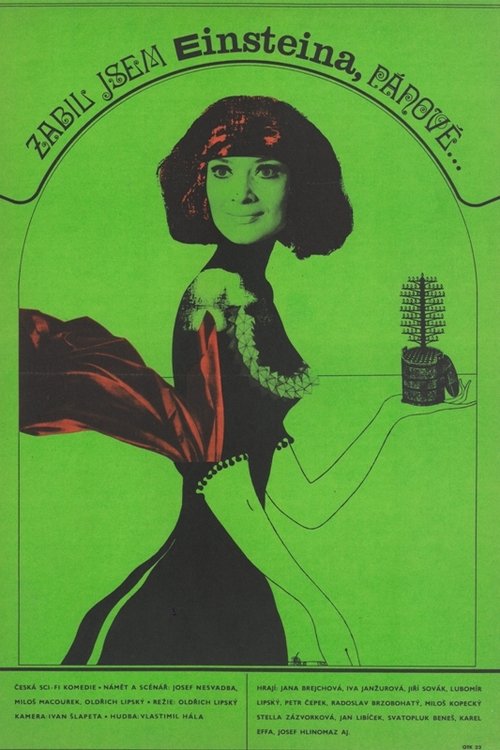
This futuristic science fiction comedy features an atomic bomb blast that causes women to grow beards and lose the ability to have children. A summit meeting is held at the United Nations, with the proposed solution of building a time machine. The decision is made to travel back in time and murder Einstein, with the hopeful result being that without the noted mathematician's research there will be no atomic bombs.
A military base. An awkward soldier. A statue of Bach. And suddenly all guns in the area change into music instruments. Great mystery is immediately found by TV station. And soon the military base becomes a stage for huge TV show.
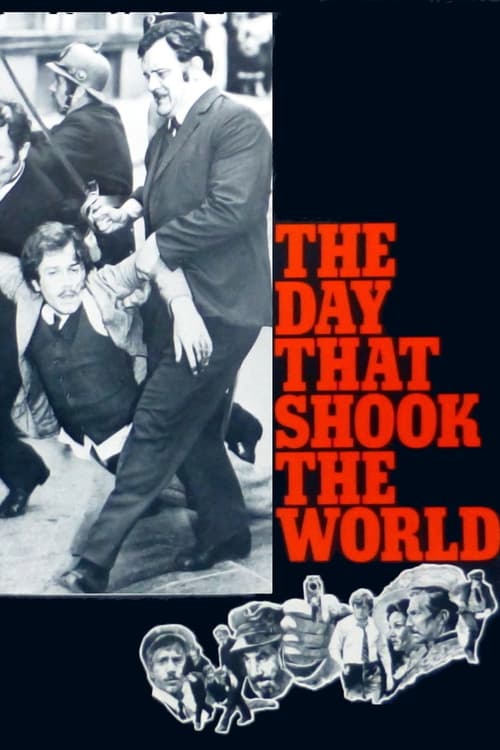
An historical depiction of the events preceding the political murder of Archduke Franz Ferdinand, would-be emperor of the Austro-Hungarian throne, in Sarajevo on June 28th, 1914.
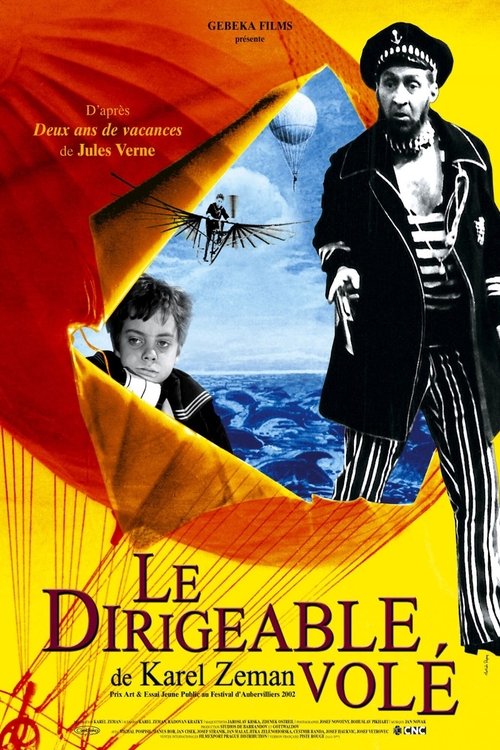
Five young people take off in a lighter-than-air machine at the Prague Centennial Exhibition. A live-action/animated film based loosely on Jules Verne's novels Two Years' Vacation and The Mysterious Island. The film in Art Nouveau style consists of live-action scenes, generally shot in black and white, as well as hand-drawn, stop-motion, and cutout animation. Various live-action and animated elements are often composited into the same scene.
Like a fairy tale, King Henry and King Good-thought decided long ago that their only children should marry and so prevent war arising between their kingdoms ever again. But the young prince is wary of marrying anyone he doesn’t know.
There are still water spirits among us. One group lives in Prague, led by Mr. Wassermann, who is using his wife's family as a servants. All they need is their old house near the river. But the house is to be demolished. They have to stop it. And the only way is to drown Dr. Mrácek, who is responsible for the demolition. But he falls in love with Wassermann's niece Jana. He changes to fish, is mistaken for water spirit from Germany, is drowned and revived again. The other problem is the flour with ears... and so on...
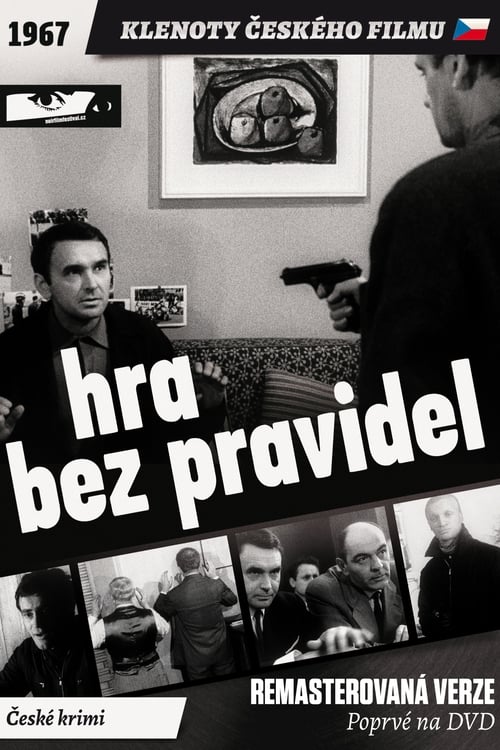
A robbery in a Prague jeweler's shop results in the shop manager Kubát and his deputy Litera being shot and wounded. The culprits take the jewelery away in a stolen car and that very night hide the loot tens of kilometers outside Prague in a forest. Then the three robbers part with each other. One of them, Burian, leaves in the same car, the other two, Duda and Hovorka, take to flight in another car, which soon ends up in a car crash. Hovorka dies in the accident, but Duda survives and hides in an abandoned cottage. Burian is arrested, Duda is traced out by a police dog. Duda confesses to the robbery to the criminologist Málek, but refuses to say where is the jewelery. The robber then begins to shoot and Málek kills him in self-defense. The court fails to prove Litera's involvement in the robbery and the only one convicted is Burian. The disappointed Málek leaves the police and begins to work as a cab driver.
On 20th of April 1945 the Soviet army launches its attack on Berlin. The end has come for Nazi Germany and Hitler decides to commit suicide. In Prague K.H. Frank (Nazi Secretary of State and Chief of police in the Protectorate of Bohemia a Moravia) discusses with his commanders how to transform the city into an impregnable fortress, but the Praguers do not intend to wait any longer. From the early hours of 4th of May people start assembling in the streets and tearing down German signs. On the next day, the 5th of May, the uprising begins.