Acting
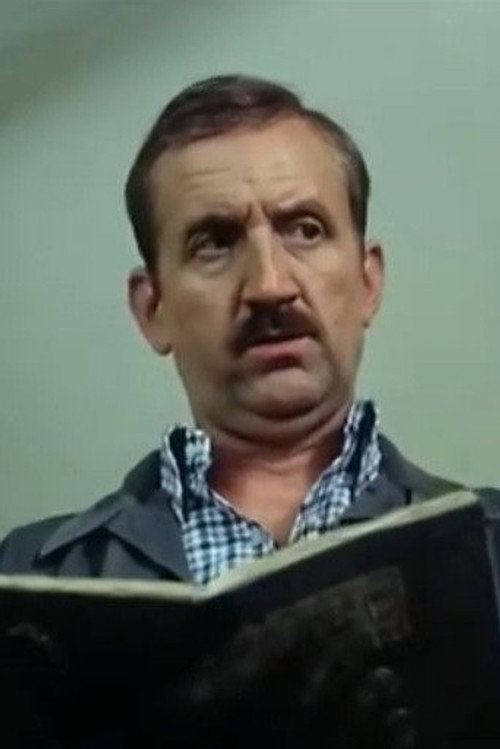
Eugen Jegorov was a Czech film and television actor and jazz musician.
No description available.
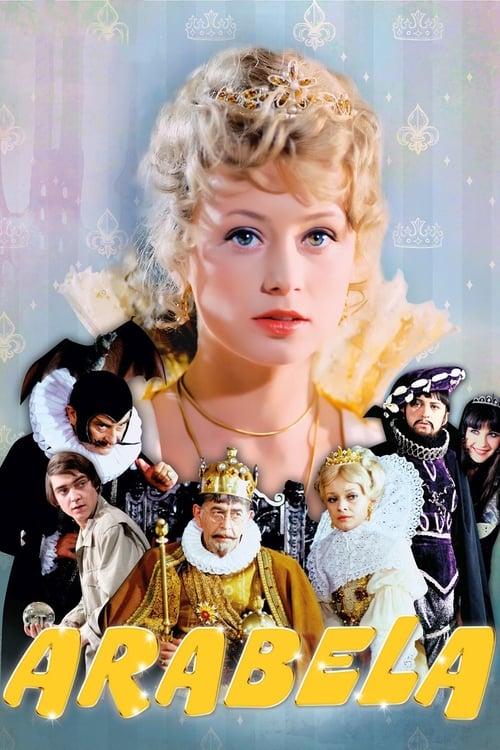
Arabela was a children's television series produced in Czechoslovakia which aired from 1979 to 1981. The series has 13 episodes and is in the Czech language.
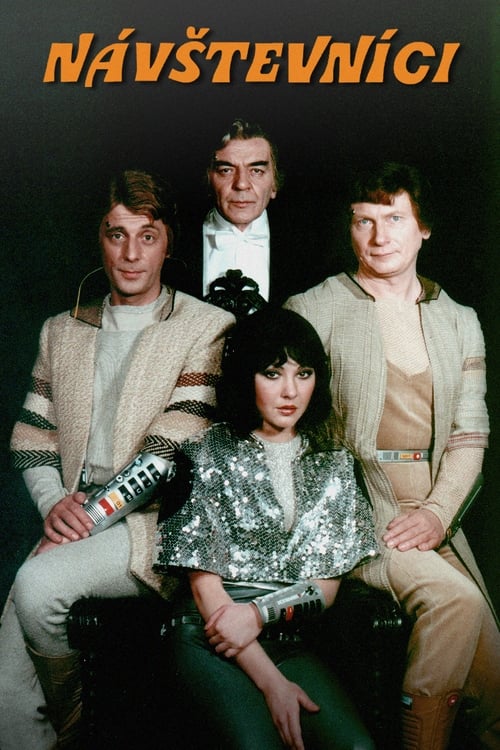
It's the year 2484 and the Earth is threatened by a rogue comet which could fatally change its orbit. The solution is surprising - Adam Bernau, the greatest genius of 20th century developed 500 years ago an ingenious formula for easy transporting of continents and even worlds. Unfortunately, he made this discovery at the age of 11 and the exercise book containing it was destroyed in the fire. But this is not a challenge to Academic Filip who decides to send an expedition back in time to retrieve the precious exercise book from the fire. But everything is not so simple as it seems...
A military base. An awkward soldier. A statue of Bach. And suddenly all guns in the area change into music instruments. Great mystery is immediately found by TV station. And soon the military base becomes a stage for huge TV show.
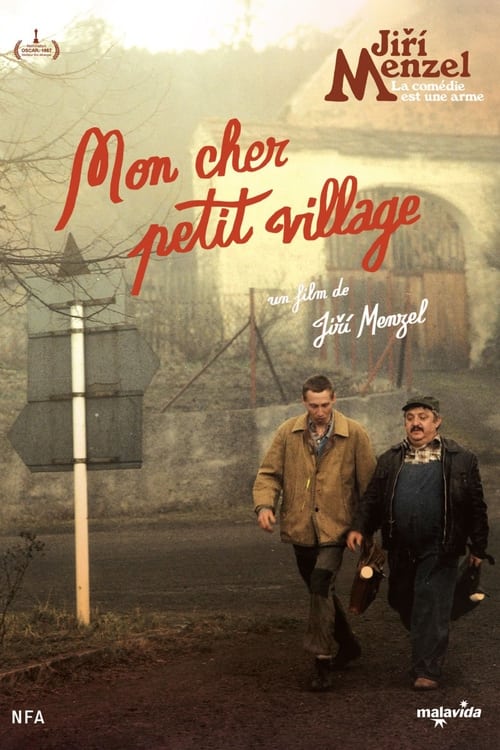
The movie's main storyline follows the life of Otík, a young man, in a tight-knit village community. The sweet-tempered Otík works as an assistant truck driver with Mr. Pávek, his older colleague and practical-minded neighbor. Pávek's family takes care of Otík, whose parents are dead. However, the two coworkers become at odds over Otík's inability to perform even the simplest tasks. Pávek demands that Otík be transferred to assist another driver, who happens to be a choleric and suspicious man named Turek (Turk in Czech). Rather than work with Turek, Otík decides to accept an offer of employment in Prague, but finds he does not fit in to the city life. After discovering that the transfer of Otík to Prague was a trick by a crooked politician to get a deal on Otík's large inherited house, Pávek agrees to give Otík a second chance and retrieves him from the city to resume their work together.
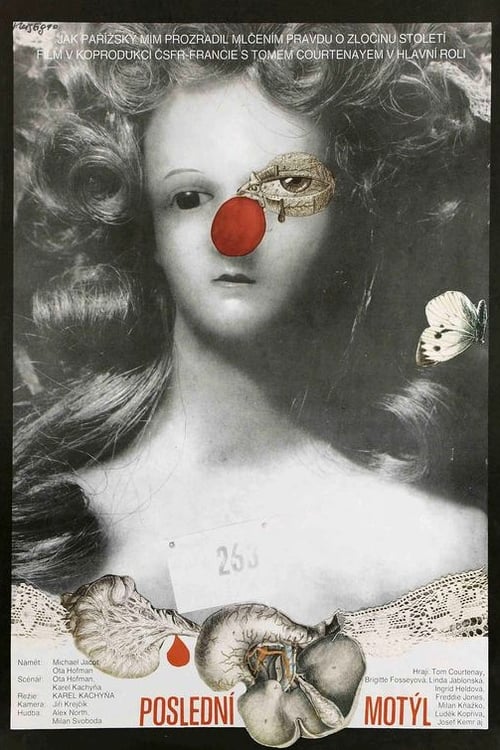
Stage mime Antoine Moreau is compelled by the Gestapo to put on a performance for the children of Terezin, a "model" concentration camp, to convince the Red Cross observers that the camp is truly what it seems. Reluctant at first, Moreau slowly learns the true nature of the camp, including the meaning of the "transports" on which people leave. With a world-class orchestra (made up of people interned in the camp) and a cast of children, Moreau stages a show to end all shows.
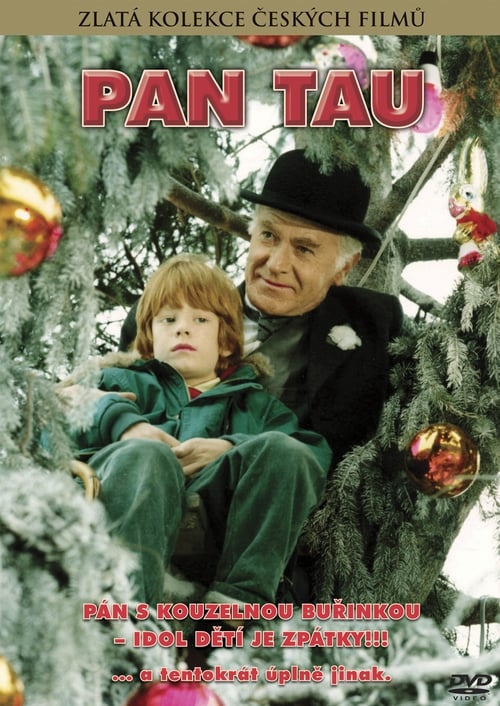
Pan Tau, the friend of all children, now also helps the adults. A movie producer is in trouble and decides to shoot another Pan-Tau movie. But the old Pan-Tau actor Karasek is no longer young enough to walk the almost weightless walk of Pan Tau. Mr. Novak turns up - he resembles Pan Tau like a twin brother. He succeeds every pirouette. And as if by magic, he solves all the problems between people! Who is Mr. Novak? Is he really ...?
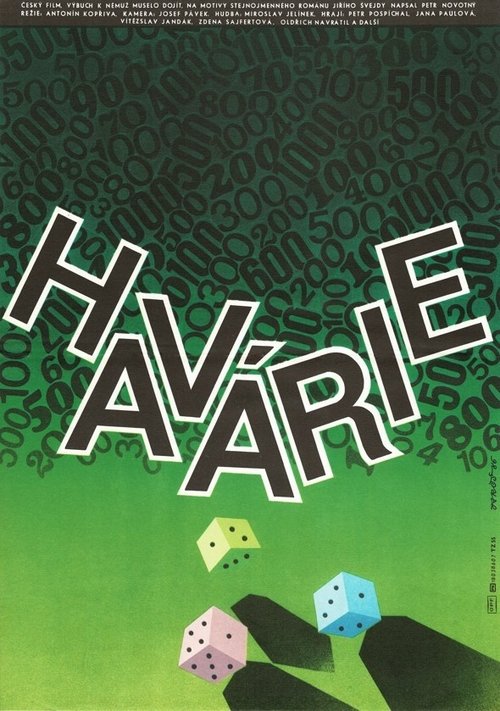
In the 1980s, the building themes were transformed into bipolar moral dilemmas involving overly ambitious individuals who wanted to excel at any cost. The hero is the head of a demolition crew that demolishes large buildings, initially a sympathetic young man who, in the pursuit of career and accolades, begins to transgress the boundaries of what was then called socialist morality and legality. He gradually finds himself at odds with the principles of ordinary but honest people. The narrative's bland, proclamatory film is closely connected to its time of creation, and there are hardly any more timeless insights to be found.
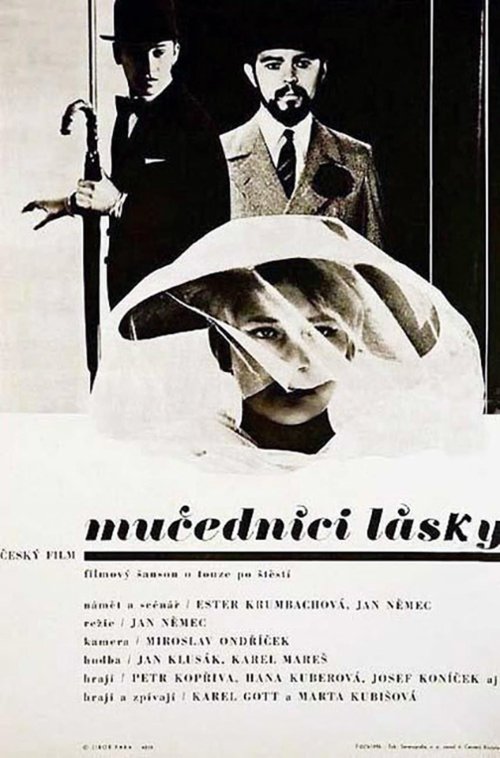
Three loosely-connected tales that represent different aspects of love: temptation, dreams, and adventure.
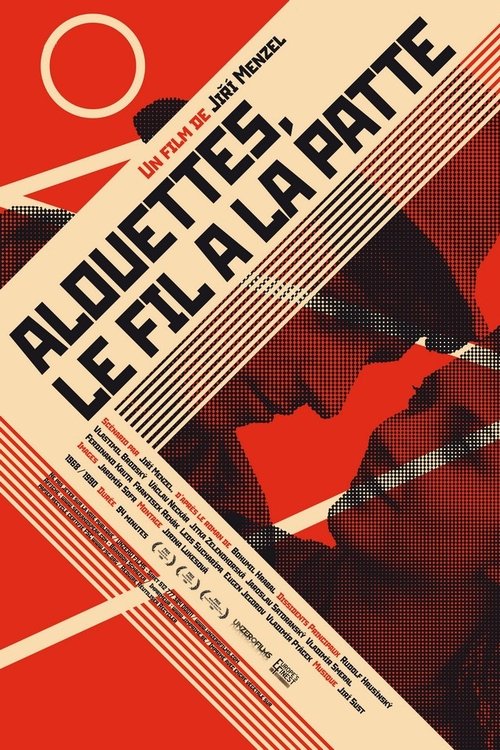
In post-WWII Communist Czechoslovakia, several characters considered bourgeois are sentenced to work in a junkyard for rehabilitation. Among them is a young man who pines for a female convict.
The husband and wife Ludva and Hedus Homolkas with their twins Péta and Máta and Ludva's parents - the granny and grandpa - arrive in the snowy Spindleruv Mlýn for a holiday. They promise to each other that they will not spoil the quite expensive holiday by quarrels. If somebody hurts the other one he/she will kneel as a punishment.
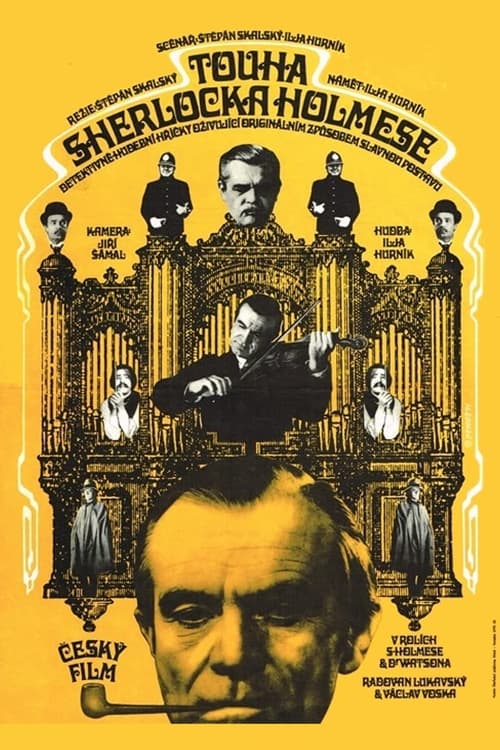
Sherlock Holmes likes to play violin and expects a great career in music. He gets a place in a spa orchestra, but he is again and again distracted by criminal cases. Therefore he is the only one who does not see that his violin has no future. He solves the criminal mysteries in passing but the final test shows that the famous detective is tone-deaf.
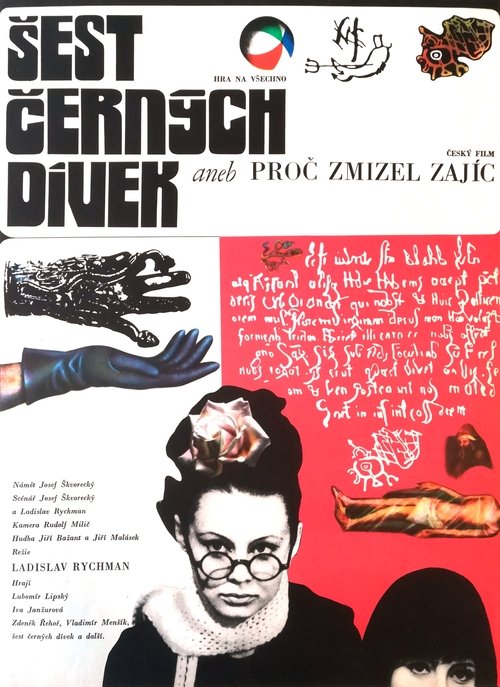
Detective Lieutenant Boruvka (Lubomír Lipský) is called to the State Scientific Library to investigate the loss of a precious manuscript, the Infernal Psalter of the Occult Sciences by Master Peregrinus from the eleventh century, written in a secret script which has only recently been deciphered by senior lecturer Zajíc (Josef Chvalina). Chaos is reigning in the labyrinth of passages and halls of the former monastery where the library is housed. In order to save space the director of the library has introduced a peculiar system. The books are arranged in the bookcases according to height and six girls dressed in black, the library assistants, are quite happy to cut volumes down to size in case of need. Boruvka refuses the case, since he is specialist in murders. He has to return to the investigation, however, when senior lecturer Zajíc disappears.
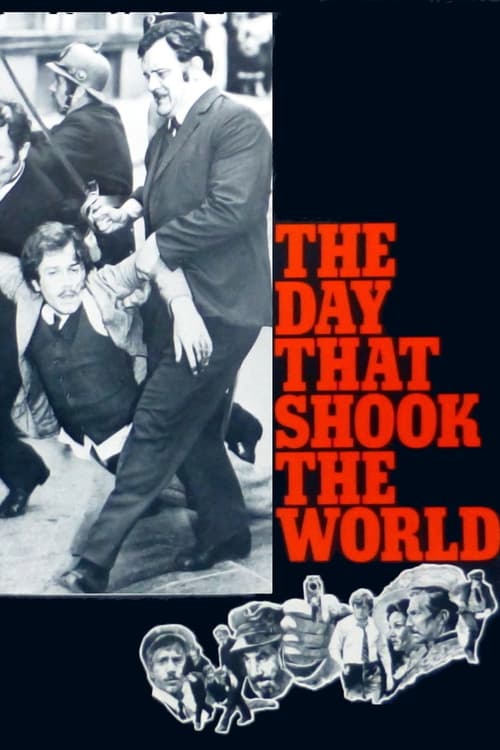
An historical depiction of the events preceding the political murder of Archduke Franz Ferdinand, would-be emperor of the Austro-Hungarian throne, in Sarajevo on June 28th, 1914.
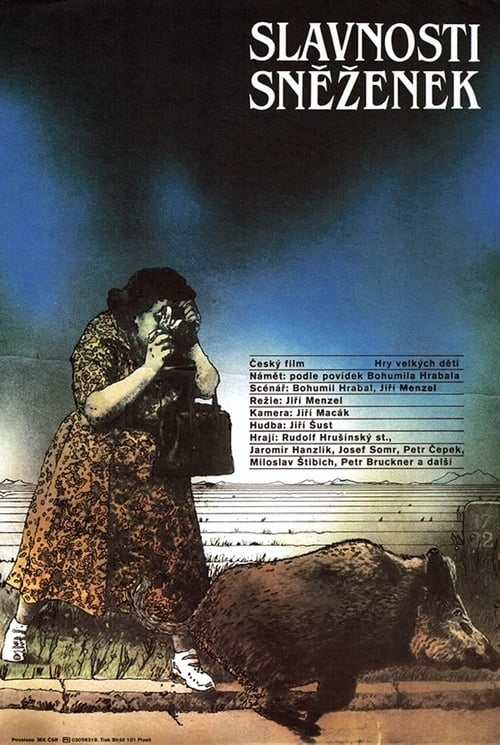
An episodic film about the inhabitants of Kersko, their hardships and their joys, most prominently hunting. A lyrical and humorous adaptation of writings by Bohumil Hrabal.
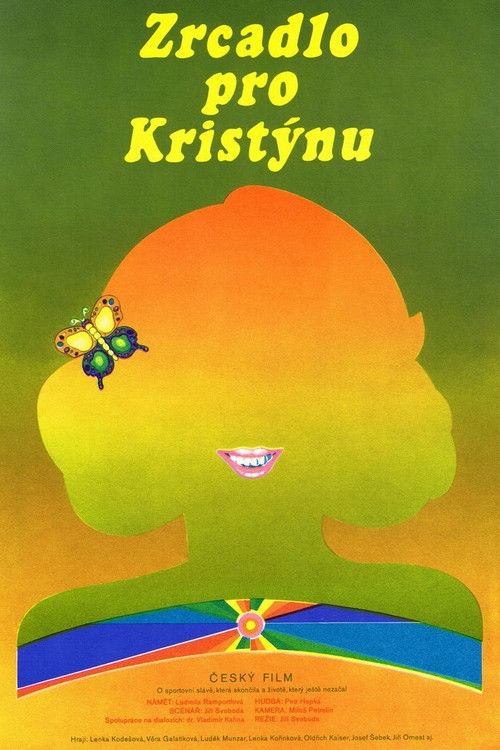
The 19-year-old volleyball player has been bedridden for a long time due to a spinal injury. The self-confident and energetic girl has time to recap her life and short sporting career so far...