Acting
No description available.
The catastrophically dry weather of 1947 causes immense problems in the countryside. In the small village Klícov, only farmers Hánek and Bervida and the old Hromádka have water. The others must queue every day for a drop for themselves and their cattle. All the villagers lament over their previous decision to turn down the cooperative chairman Kouba's proposal to built a new village water-supply system.
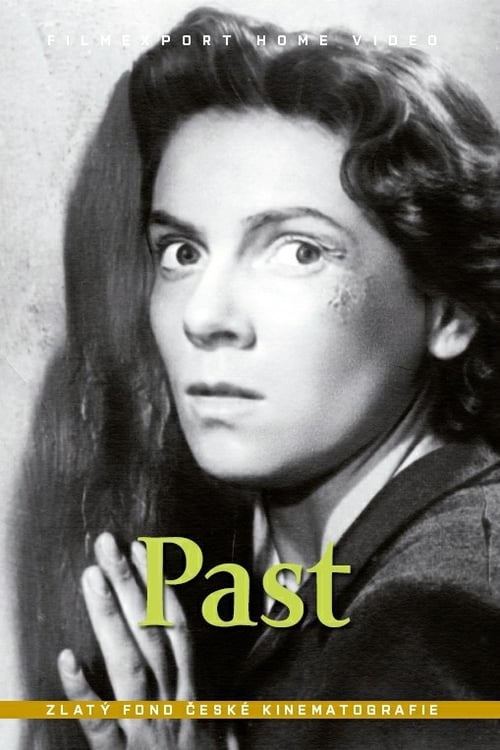
The drama from the time of the Nazi occupation begins at the train station, where a transport with German soldiers is passing. The train is stopped due to improvised sabotage by one of the railway workers. Resistance liaison Růžena Kubínová is arrested in a random raid. The cynical councilor Dönnert discovers her false documents and has her brutally interrogated. He suspects that she could contribute to exposing the entire group. He puts a informant, Herta, in her cell.
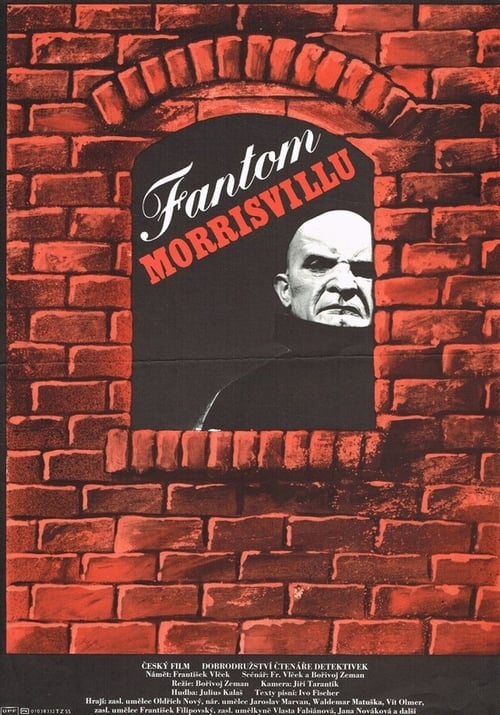
Inspector Brumpby (Jaroslav Marvan) and the young crime reporter Allan Pinkerton (Vít Olmer) attend wedding of Sir Hannibal Morris (Oldrich Nový) with beautiful Clarence (Kveta Fialová). After the ceremony, Clarence's ex-husband, criminal Manuel Diaz (Waldemar Matuska), who was believed dead, shows up in her room. He wants to get his hands on Clarence and, most importantly, on the money she would inherit in the eventuality of her new husband's death. Diaz makes attempts on Hannibal's life. He knows his way about an underground labyrinth in the château and the traps he sets up for Hannibal seem to work, since Hannibal is apparently found dead after an explosion in the labyrinth, after which his body vanishes. The inspector tries to solve the countless mysteries. In this, he is joined by Allan, always ahead of the man of the law in his estimation and judgment of the situation.
A psychological study of the life of a woman, a working mother of two young children. The film captures a small slice of her life, just one day, during which the heroine takes stock of what she has experienced so far and what she has succeeded or failed in. And it's not an optimistic one, as she searches in vain for a clue: her marriage has failed and her affair with a married man does not offer a bright future...
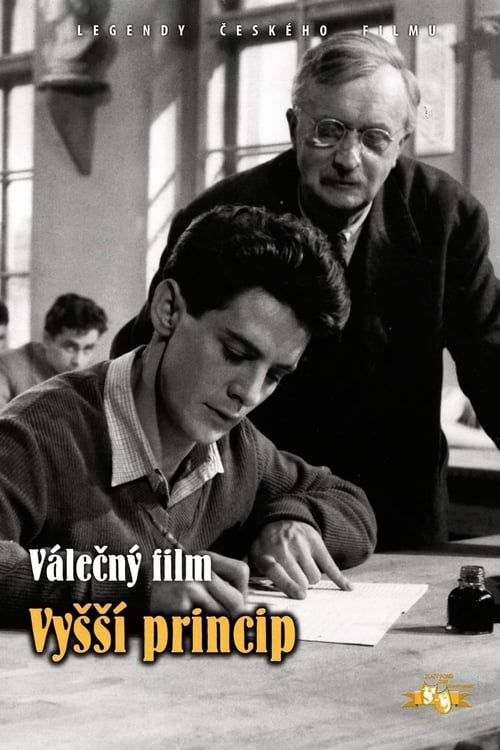
During the Nazi occupation of a Czech city civilians are being rounded up on the slightest of pretexts and shot. One day three high school boys who crack jokes about a recently deceased "hero of the Reich" are pulled out of school by the Gestapo.
An outdated fireclay factory is due to close, but its long-time employees can't imagine stopping what has fed them all their lives and what they do best...
A satire about trying to please "those at the top".
The story of two communist friends, one of whom leaves as secretary to the district committee of the Communist Party of Czechoslovakia and the other remains in the village as a party agitator.
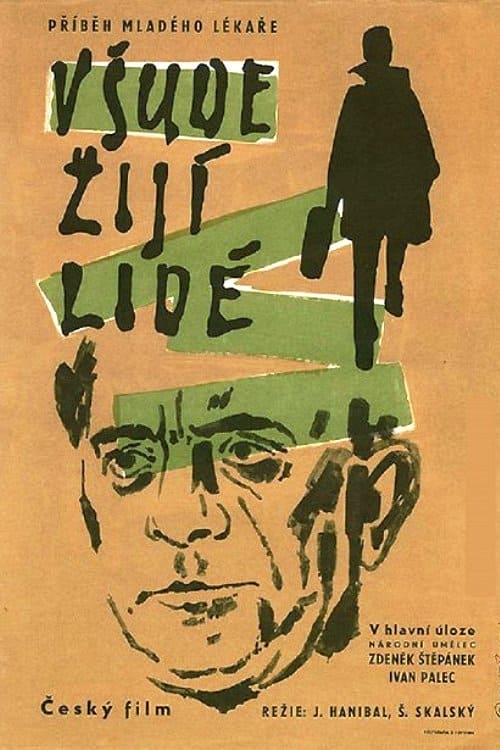
Even if a person grumbles about difficulties, he should realize that he will find a place where he did not want to go at all. Such an exemplary realization is also reached by a budding doctor who was assigned a remote border village as his first posting - his fiancé did not want to go to such a backwater at all. But the example of the local doctor, who is about to retire, convinces him that a good doctor is needed everywhere.
A story about the uproar caused by the arrival of a new, young and, by local standards, too energetic zookeeper in a village JZD. Her name is Maya Četná and one evening she arrives like a tornado on a motorbike in the semi-truck of a typical Czech village. The chairman, leaving the next day for a long-term training, has no time to get to know the girl properly, so it's no wonder he can't help wondering when she returns.
An orphaned young woman named Jana moves into the household of Robert and his older, possessive wife, Klára. While Klára maintains a strict and manipulative control over the home, a mutual attraction develops between Robert and Jana. The three characters continue to live together as their domestic tensions increase.
Pavel, a young student living in Prague in 1942, hides a Jewish girl in his apartment building's attic. Amidst the brutality of the occupying German army, love blossoms between the two. He is her only link to the outside world. Then the two are discovered by Pavel's mother, who forces the residents of the apartment building to decide whether Hana can remain.
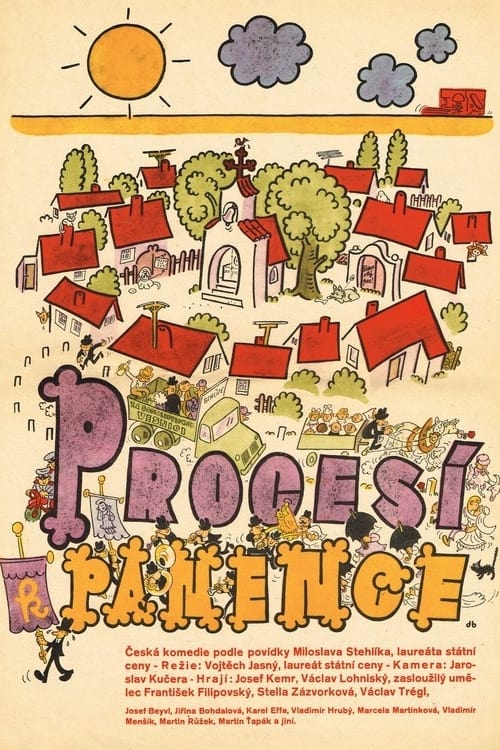
Farmers get away from their arguments by embarking on a religious pilgrimage, enjoy a picnic en route, and on their return decide to form a cooperative.
Twelve graduates of one year of DAMU decide to go to the regional theatre together. During the first season, the enthusiastic collective breaks up and only five remain, determined to continue.
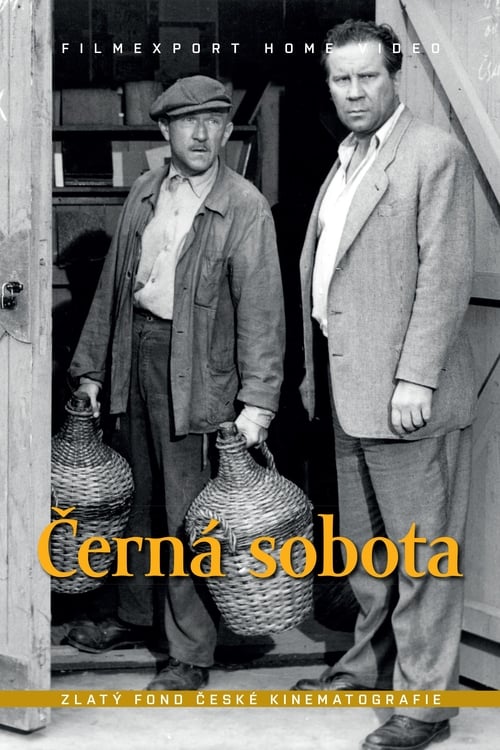
In this crime story, surprisingly, neither the all-powerful criminals nor the spies or saboteurs are pursued, as was once common. The plot is almost mundane: someone unwittingly siphoned off alcohol from a tanker, unaware that it was deadly methyl alcohol, intended for industrial use. Finding out where the poison has been transported and which people it endangers requires painstaking work.
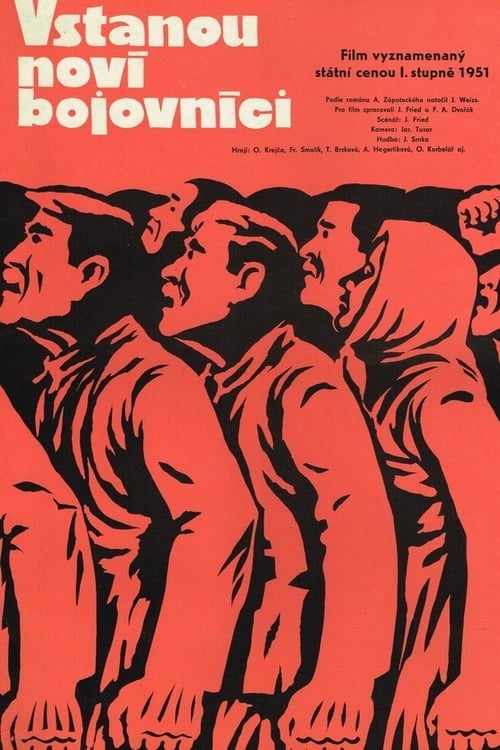
The leader of the emerging organized labor movement in the 1880s, Ladislav Zápotocký-Budečský, is exiled to his native village, where he works as a tailor and continues to raise social awareness among members of the working class.
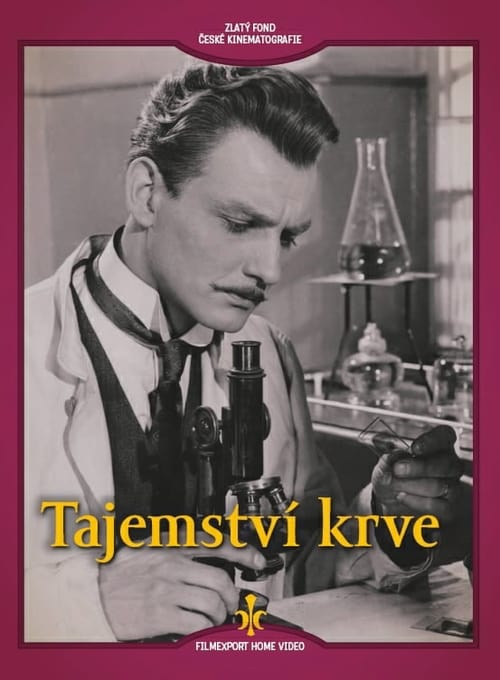
A biographical film about a Czech doctor, Dr. Jánský. The athletically inclined medic Jánský successfully completes his studies. He wants to become a surgeon, but finds himself in Professor Kuffner's psychiatric clinic, where, together with his colleague Kozdera, he tries to uncover the connection between blood clotting and mental illness. They make the surprising discovery that human blood can be divided into four groups and thus prevent it from clotting during transfusions. However, Jánský's discovery is met with misunderstanding by the Czech medical community...
Poetic story of a proletarian couple's relationship in the years of economic crisis and unemployment.