Crew
No description available.
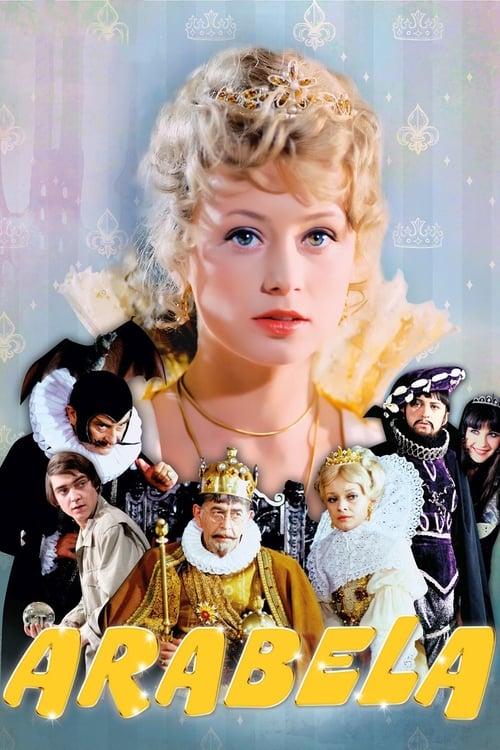
Arabela was a children's television series produced in Czechoslovakia which aired from 1979 to 1981. The series has 13 episodes and is in the Czech language.
Series about the life of Renaissance anatomist, scholar and politic Johannes Jessenius. Already legendary series today, was produced by Czechoslovak Television Bratislava, directed by Slovak director Miroslav Luther in the first half of 80's in Barrandov Studios in Prague. The story and screenplay of the series wrote Czech writer Vladimír Körner. Five-episodes epic historical narration is a biographical story of distinguished Renaissance scholar, anatomist and politic of Slovak origin, Johannes Jessenius (Ján Jesenský, 1566–1621). It displays his life from the first studies and successes. In 1594 he became professor of surgery and anatomy on Wittenberg University, which he had attended years before. From that moment, his life went through social and personal wins and losses, to the sad end on the Prague Old Town Square gallows, among 27 noblemen, knights and burgenses, after lose Bohemian Revolt in 1621. His destiny was coupled with key events of Czech history in the break of 16th and 17th century, when Renaissance and European humanism slowly fade out.
It tells the story of a young man who was turned into a donkey by curiosity and a fatal mistake. While the hero despairs and does not know how to return to human form, we can observe through his eyes the society that surrounds him. The television fairy tale of screenwriter Jiří Bednář and director František Filip alternates dramatic tension with comic moments.
About the love of two princes for one princess. The archer whose arrow flies the furthest will win the hand of the beautiful princess and ascend to the royal throne. So decided the king when both his sons fell in love with the same princess and both wanted to rule. But no one suspected that the arrow that would help one of the princes win his beloved and rule the land was magical.
A comedy concerning a down on his luck bookshop owner with a penchant for women who decides to make some money by pretending to be a waiter and collecting cash from unsuspecting diners.
In this fairy-tale comedy, a clumsy second-rate wizard, Rumburak, gets stuck in the world of humans. He has forgotten the spell that allows him to return to his home fairyland. His only joy is watching the figure skater Helen, whom he would like to woo. His hopes of returning to fairyland dawn when he discovers a computer in a research institute that could generate the lost spell.
Prince Dominik torments his father with his aversion to marriage so much that the king has him locked up in an old tower. In prison, the prince is discovered by the water nymph Aneta, who is enchanted by the young man's beauty. She boasts about her latest discovery to her friend, the genie Létavec. However, he objects to the nymph, saying that the most beautiful creature is the emperor's daughter, Princess Budúr, who rejects all suitors. The magical beings bring their favorites together so they can compare their charms. However, they have no idea that this fateful meeting will cause Prince Dominik and Princess Budúr to fall in love.
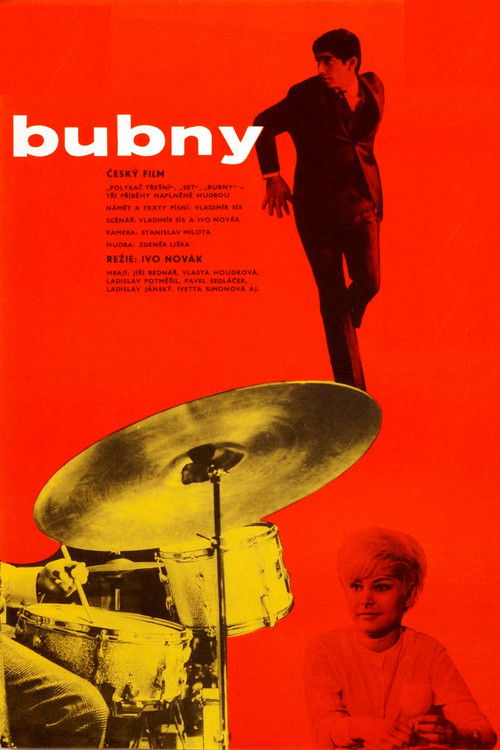
An anthology in three jazz-infused tales: an idealistic student’s romance with a pragmatic trumpeter; a vibraphonist’s urgent journey ending in tragedy; and drummer Honza’s moral dilemma as he confronts how far he’ll go to obtain his dream kit.
The third and final installment of the fairy-tale fencing comedies Crossed Swords and Ringing Swords. Once again, they are full of intrigue and misfortune, but also the search for happiness and love. The villain, Count Meron, attempts to poison the young king, seize the throne, and pin the blame on the innocent Peter. New characters also play a significant role in the story - the camp follower Vilma and her young daughter Jana, who is disguised as a boy out of fear of bandits. Love naturally reaches its goal, evil in the form of Count Meron is punished, and the inevitable fairy-tale happy ending follows...
Three suitors, three princes, vie for the hand of Princess Lejada. But she rejects them all. The offended suitors decide to punish the proud princess and offer her an unknown young man as a suitor of noble birth. But he is a poor shepherd who falls in love with the princess, and she with him. However, he must not reveal his true identity. He promises to remain silent and do as he is told. In the end, however, he confesses to the princess who he really is. This enrages the princes and suitors... The theme of the fairy tale is loosely based on a Hindu myth belonging to the field of Indian religious literature and dealing with the fates of gods and earthly heroes. The main character is the Hindu goddess Kali, a symbol of maternal instincts and cults. The second hero is her son, a young shepherd who, at the end of the fairy tale, takes his mother's name in her divine honor. The story takes place in India in the 6th century BC.