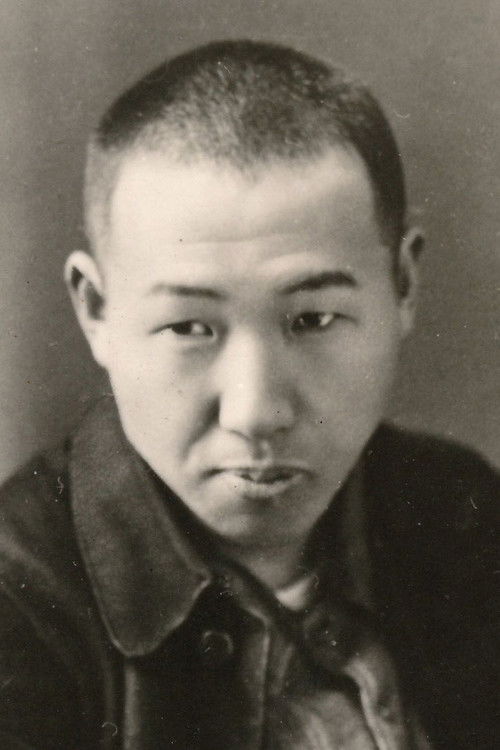
Kenji Miyazawa
Writing
Biography
Kenji Miyazawa was a poet and author of novelist in early Showa period Japan. Many of his children's works, that appear superficially to be light or humorous, contain stories intended for moral education of the reader. A number of his children's stories have been adapted into animated movies in Japan.
Known For
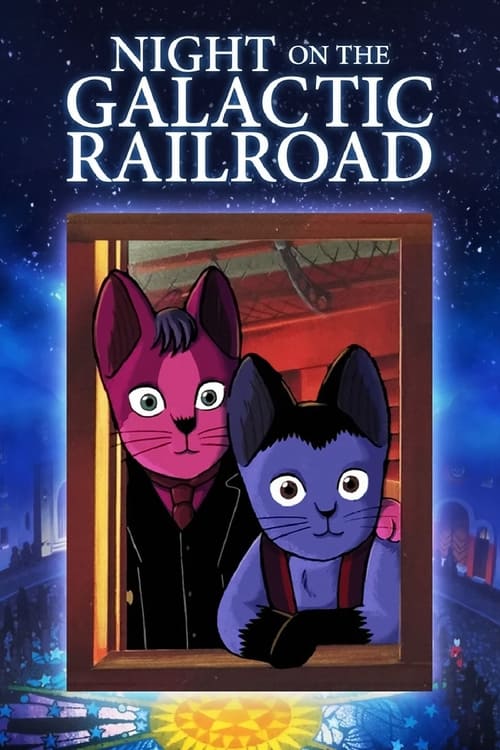
Giovanni currently lives a dreary life of near non-stop work. At school, his peers ridicule him incessantly, and his employer at work is distant and cold. As his isolation from society becomes unbearable, he suddenly finds himself on a train heading far away from his miserable home. Accompanied by Campanella, an acquaintance from school, Giovanni embarks on a journey that will define the rest of his life.
Night on the Galactic Railroad
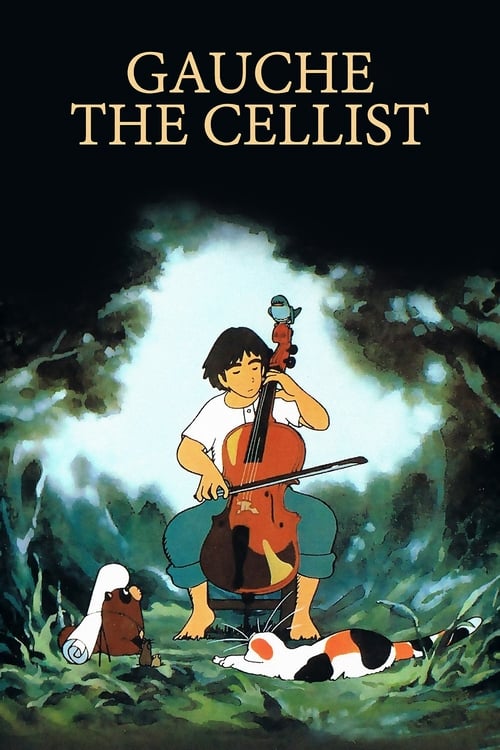
Gauche is a diligent but mediocre cellist who plays for a small town orchestra and the local cinema in the early 20th century. He struggles during rehearsals and is often berated by his conductor during preparations for an upcoming performance of Beethoven's Sixth Symphony. Over the course of four nights, Gauche is visited at his mill house home by talking animals as he is practicing.
Gauche the Cellist
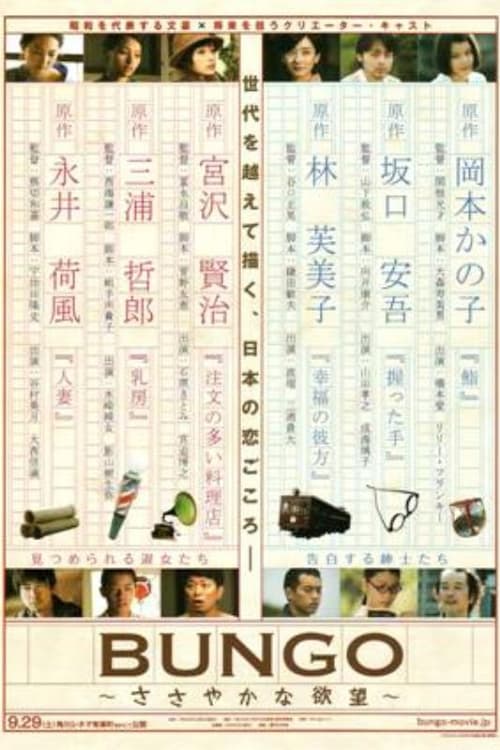
Omnibus film "Bungo Sasayakana Yokubo" features 6 different short stories set under 2 different themes ("Mitsumerareru Shukujotachi" & "Kokuhaku Suru Shinshitachi").
Bungo: Stories of Desire
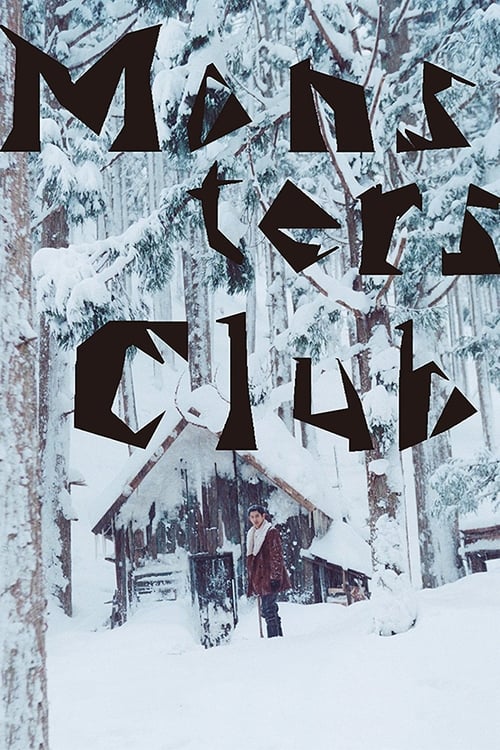
Having abandoned modern civilization, Ryoichi lives an isolated, self-sufficient life on a snow-covered mountain and sends mail bombs to the CEOs of corporations and TV networks. One day, he encounters a mysterious creature in the forest. That night, his older brother, who had committed suicide, appears before him at his cabin. The apparition takes Ryoichi beyond a door, where Ryoichi learns the truth about his family.
Monsters Club
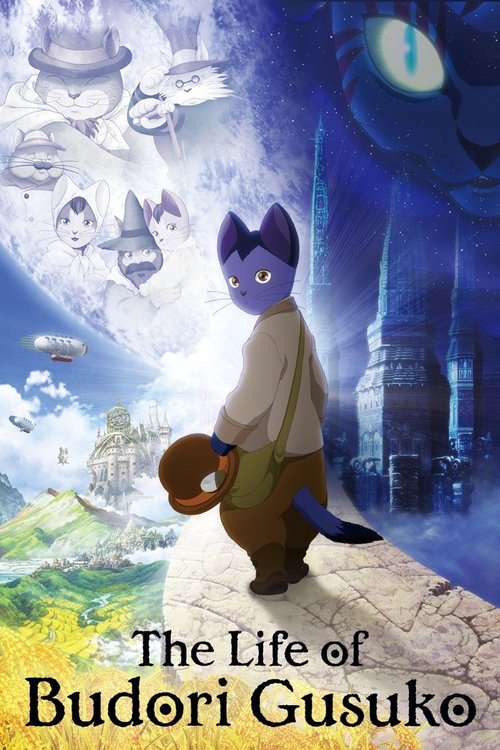
The fairy tale follows a young man named Gusukō in the Tōhoku forests of northeastern Japan in the 1920s. After an onslaught of droughts and natural disasters, Gusukō is forced to leave his home and search for a better life elsewhere. Gusukō joins a group of scientists at the Ihatov Volcano Department, which deals with the same natural disasters that drove Gusukō from his home.
The Life of Budori Gusuko
Set in the beginning of the 20th century Japan, the film follows the bright and eccentric Kenji from his late student years through his adulthood. Kenji suffers the tragedy of being an artist whose art isn't recognized during his lifetime. Based on the life of the author Kenji Miyazawa, the film depicts his brief but intense existence.
Spring and Chaos
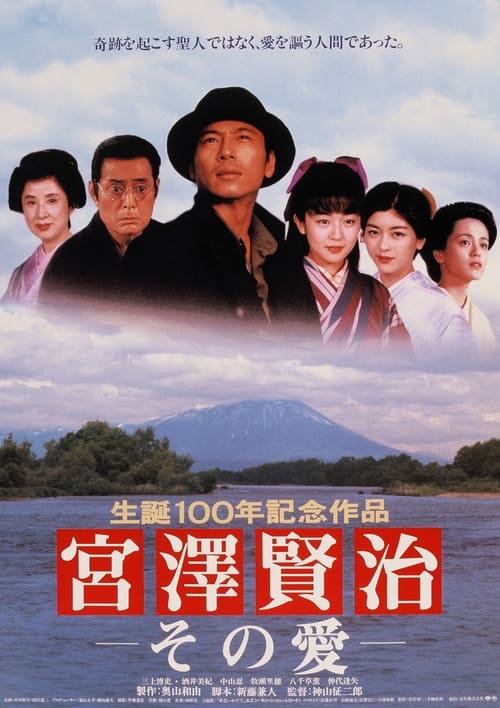
A biographical drama depicting the life full of love and suffering of the writer and poet Kenji Miyazawa, who celebrated his 100th birthday in 1996.
The Life and Love of Kenji Miyazawa

Welcome aboard the fantasy train in the stars! "Fantasy Railroad in the Stars" is a fantastic journey of a boy, Giovanni, in a dreamscape created into a colourful full-dome CG animation picture with inspiring background music. Based on the famous Ginga Tetsudou no Yoru story written by Kenji Miyazawa in the early 20th century, Kagaya, a digital fine artist, has breathed new life into the unique imaginary world using creativity and precise astronomical knowledge. The starry sky is depicted as the Celestial Field made up of a river, a field of silver grasses, flowers, birds, survey towers, railway signals and more. Across this amazing beautiful scenery, the Celestial Railroad runs along the Milky Way. It is a fantasy world in full colour, but designed with scientific accuracy.
The Celestial Railroad
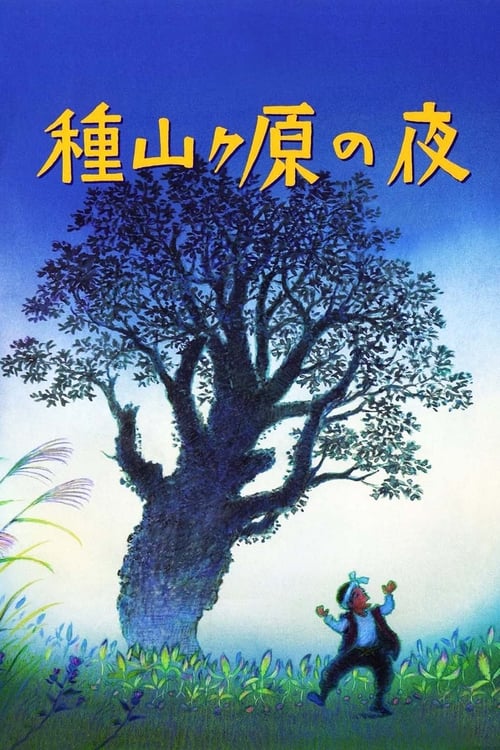
Four farmers spend the night at a campfire. Three of them talk about work, nature and weather, while one of them has dreams about buying his own plot.
The Night of Taneyamagahara
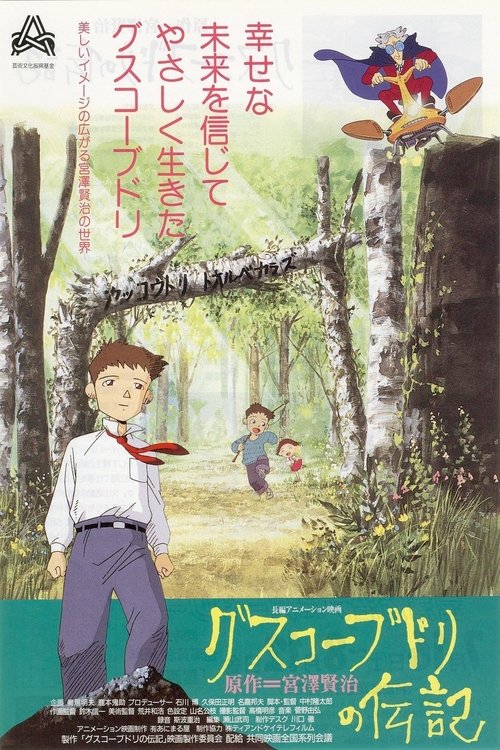
A young boy named Guskou lives in the countryside with his parents and little sister. A string of droughts and other natural disasters tear the family apart, and Guskou is forced to leave home and seek his fortunes on his own. Driven by a desire to improve the quality of life of his poor countrymen, he eventually joins a group of scientists called the Ihatov Volcano Department; he takes part in scientific projects to fight the natural disasters that drove him from his home.
The Life of Guskou Budori
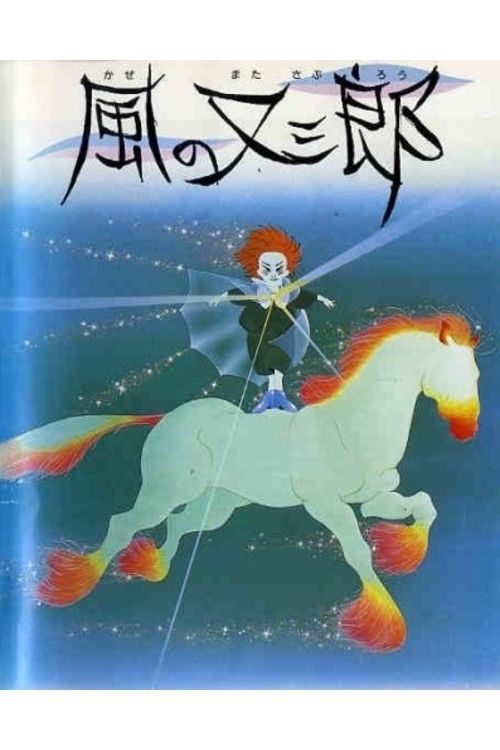
A foreign transfer student from the city arrives one day in a Japanese country town. Enchanted by his air of mystery, his classmates nickname him "Matasaburou the Wind Imp" after a local legend. Eventually they become friends and spend many days playing in the countryside. One windy day, Matasaburou returns to the city, leaving his classmates to speculate that he really was Matasaburou the Wind Imp and that he flew away on the wind.
Matasaburo the Wind Boy
28-year-old Towa Hongo works as a research worker at a painting company. 10 years ago, she came to Tokyo from Hanamaki, Iwate Prefecture. At an early age, her father Yukio died and her mother remarried, but her relationship with her mother worsened. They have not talked for a long time.
Yodaka's Star
This is essentially a highly condensed remake of the famous 1982 Isao Takahara release. It tells the story of Gauche, a struggling cellist in a provincial orchestra. He is visited by four talking animals - a cat, a cuckoo, a tanuki, and a field mouse - on successive nights They help him to improve his playing, just in time for orchestra’s concert performance of Beethoven’s Pastoral Symphony.
Gauche the Cellist
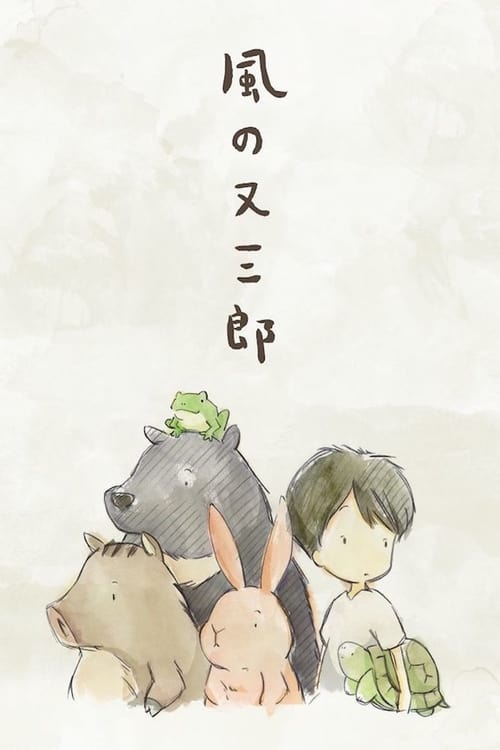
A girl moves from the city and goes to school in the country due to some circumstances in her father's job. Her new schoolmates keep her at a distance. There is a boy she'd like to get to know better, but she worries about how he might treat her and doesn't try to get closer. She begins to hate life in the countryside and longs to return to the city, but she ends up meeting a real god of wind.
Matasaburou of the Wind
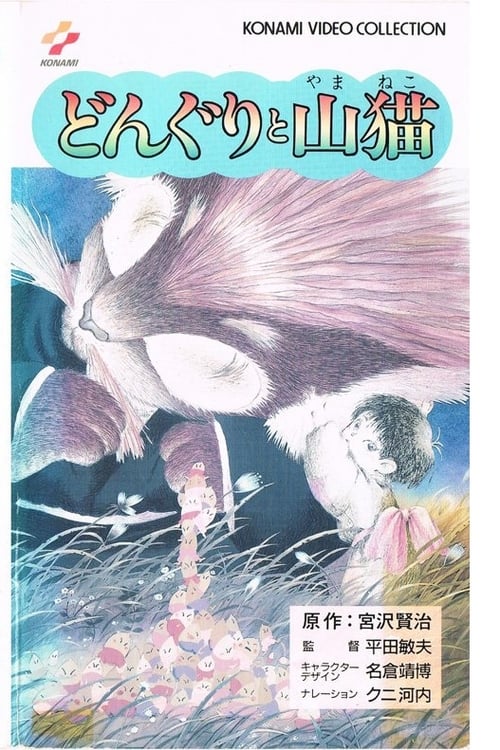
The Acorns and the Wildcat is a unique short film in picture-book format from the creator of Night on the Galactic Railroad and Gauche the Cellist. Unusually for an anime, a narrator reads Kenji's story aloud while the action is played out on the screen by a succession of warm and evocative illustrations brought to life by subtle touches of animation. If the film feels somehow familiar yet you can't put your finger on the reason why, it's probably the sumptuously minimalist animation by Yasuhiro Nagura, who was the animation director of Mamoru Oshii's artsy 1986 feature Angel's Egg. That, and Kenji's wildcat is said to have been the inspiration for Miyazaki's Panda/Totoro creature. The idea of reading Kenji's story aloud instead of playing it out as a drama is quite refreshing, and Kenji's magical language and narrative style are entirely sufficient to sustain interest. Combined with the spacey music and breathtaking art, the result is a pleasantly unassuming little gem of a film.
The Acorns and the Wildcat
Each year, at the start of the fall school year in September, Japan suffers from typhoons. That same month, in a small elementary school in a mountainous region, Saburô, a new red-haired pupil has just arrived with the wind. The children of the village thought they recognized in this strange boy who came from the city the spirit that they called “Matasaburô, the wind”. During two weeks of autumn, Matasaburô and the other children will do various experiments in nature.
Recitation Travelogue - Masterpieces of Japan: Matasaburo the Wind Imp
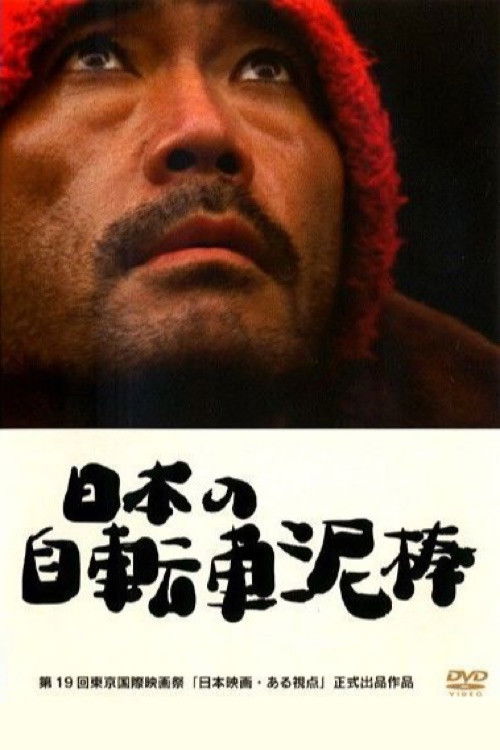
Steel-worker Saito Tetsuo, driven by an unexplained anxiety, steals bike after bike to move away from his hometown to Tokyo. Through snow-storms and empty landscapes, the breathtaking photography allows us to look deep into the mindscape of a man searching for an answer - although the question itself is never quite articulated.
The Bicycle Thief Was Bad
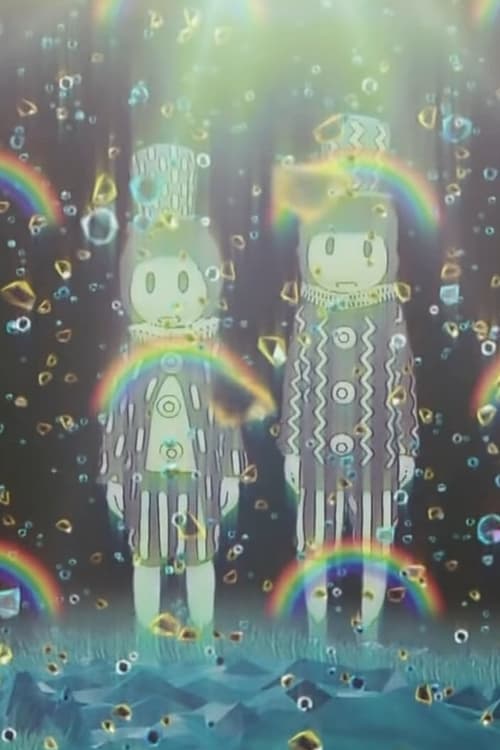
A young prince and a minister's son go on a quest to find the greatest jewel the world has ever seen. An adaptation of Kenji Miyazawa's short story with the same title.
十力の金剛石
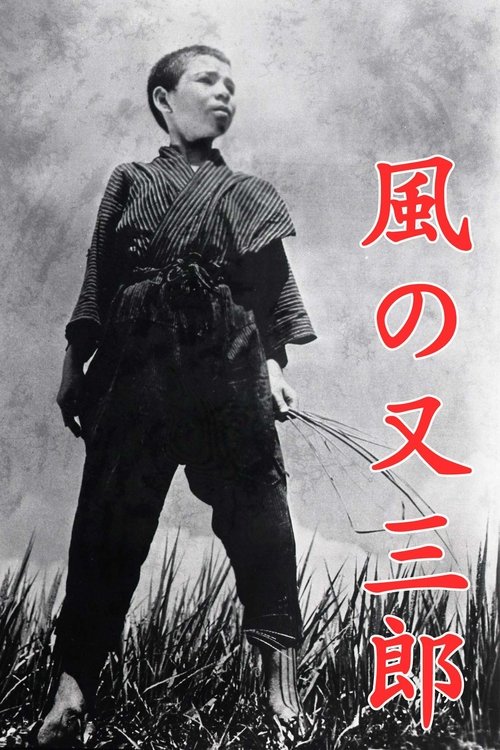
Saburō Takada transfers from a city to a very small school. The village children suspect that Saburō is actually Matasaburō, the wind sprite.
Kaze no Matasaburô
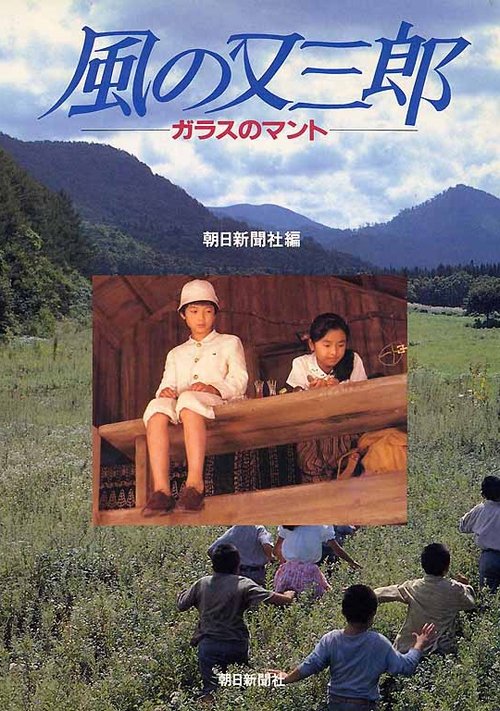
Karin has lived alone in a secluded mountain village with her consumptive mother since her father died. Her worried grandfather advises her to send her mother to a sanatorium and be adopted by him, although she refuses to accept. On the Buddhist All Soul’s Day Festival in August, a messenger from her grandfather pays a sudden visit to her house.