
Yang Fudong
Directing
Known For
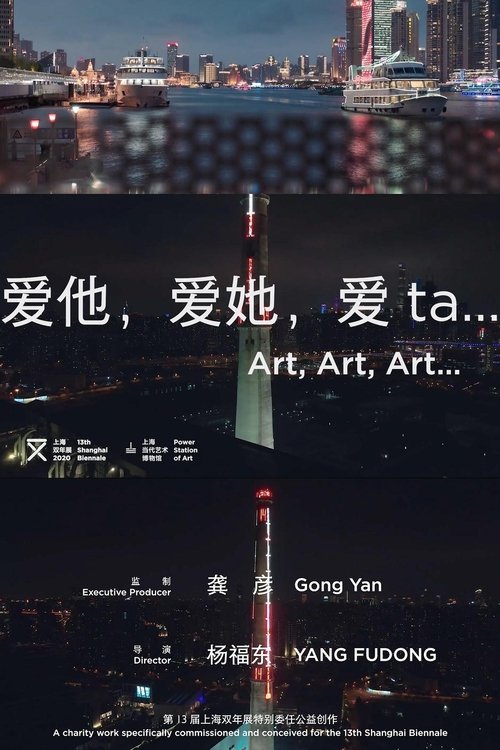
The 13th Shanghai Biennale cooperated with the artist Yang Fudong in a public welfare short film - "Art, Art, Art...".
Art, Art, Art.
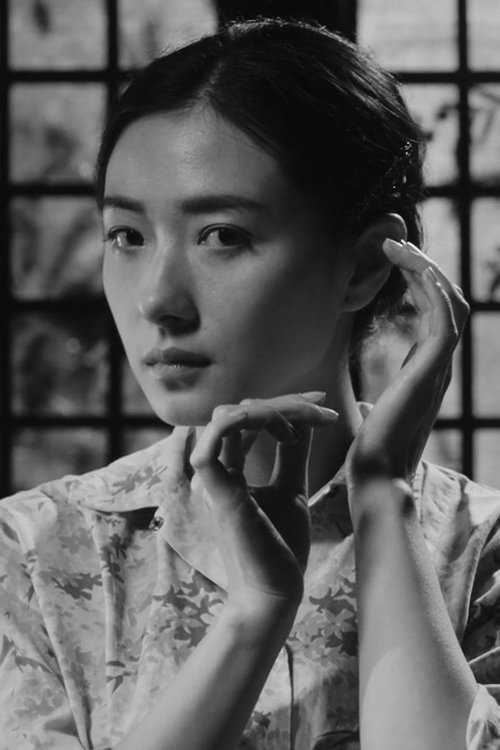
Yang Fudong, one of the most influential contemporary artists in China, is known for his epic black-and-white films and photographs, which straddle the worlds of contemporary art installation and cinema. Moving Mountains is a 46-minute, black-and-white film, accompanied by photographs from the film set, drawings and props. The film is inspired by the ancient tale of a man, seeking to move a mountain, and extolls the virtues of perseverance and collective action. The artist makes this story a poetic reflection upon human nature and the shifting values to which it can be subjected.
Moving Mountains

Multi-channel video, 35mm, B&W, 8-11 mins...She rises gently, her hair tousled by the wind; gracefully, she picks up a handkerchief and wipes her brow; sunlight catches the wall across from her and lingers there for a while.
New Women
A 15 part film featuring scenes from Xianghe, running from the mundane to the surreal: people parade in opera costumes, slaughter pigs in public and dine on the fields; they bury the dead and get married, tickling the bride and groom, everything done without speech. Sitting somewhere between intimate personal reels and detached ethnographic records, the work creates a simultaneous sense of immersion and distance – of the type you might associate with end-of-life flashbacks. Yang gives nostalgia a fantastic, mystical bent, as if to suggest that to revel in memory is a creative act.
Xiānghé
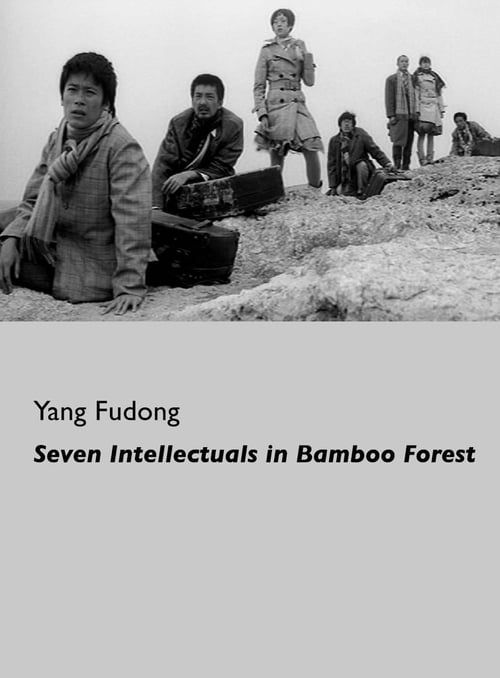
The film 'Seven Intellectuals In Bamboo Forest' is based on the history of seven talented intellectuals from the ancient Chinese Wei and Jin Dynasties. Ruan Ji, Ji Kang, Shan Tao, Liu Ling, Ruan Yan, Xiang Xiu and Wang Rong were famous poets and artists at that time. Open and unruly, they used to gather and drink in the bamboo forest, singing songs and playing traditional Chinese musical instruments, in the hope of escaping from earthly life. They pursued individuality, freedom, and liberty. Their remarkable talent and passion made them a notable group in Chinese history. Part 5 is about the return to the city and to reality. We live in the city and belong to it. If any problem arises, we are able to solve it.
Seven Intellectuals in Bamboo Forest, Part V
The film 'Seven Intellectuals In Bamboo Forest' is based on the history of seven talented intellectuals from the ancient Chinese Wei and Jin Dynasties. Ruan Ji, Ji Kang, Shan Tao, Liu Ling, Ruan Yan, Xiang Xiu and Wang Rong were famous poets and artists at that time. Open and unruly, they used to gather and drink in the bamboo forest, singing songs and playing traditional Chinese musical instruments, in the hope of escaping from earthly life. They pursued individuality, freedom, and liberty. Their remarkable talent and passion made them a notable group in Chinese history. Part 4 is about the idea of living on an island with no one else, avoiding the hustle and bustle of the busy metropolis. In Chinese legend, there is an island of Peach Blossoms - the very ideal place to live, where one's thoughts can fly freely.
Seven Intellectuals in Bamboo Forest, Part IV
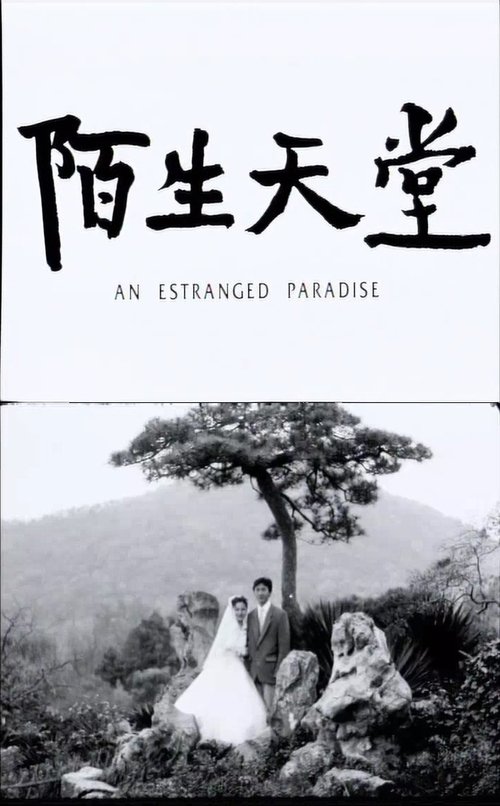
Set in the city of Hangzhou, the film takes as its focal point a restless young man, Zhu Zi, following him as he aimlessly wanders through the city. Through a series of distinct vignettes, Yang depicts Zhu Zi's inability to find comfort in friends, lovers or environment as a reflection of the existential difficulty of China's "nameless generation," cast adrift during the rapid changes at the turn of the millennium.
An Estranged Paradise
A culmination of artist Yang Fudong's film practice over two decades, Sparrow on the Sea presents a nonlinear narrative following Mr. Ng, a mysterious man dressed in a dark Chinese robe and a fedora, carrying a suitcase, who traverses the varied terrains of Hong Kong.
Sparrow on the Sea
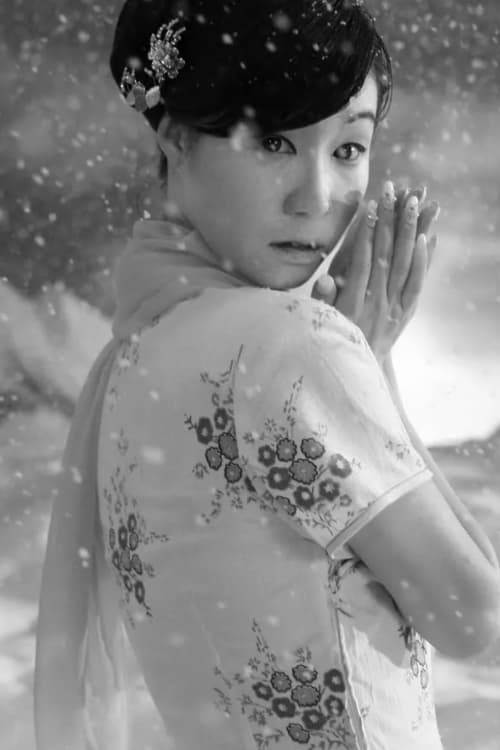
Yejiang / The Nightman Cometh features a cast of strange figures who slip between historical eras. Strewn with symbols of past and future, civilisation and wilderness, dream and reality, the work is laden with filmic, artistic and literary meanings but surrenders to none. An ancient warrior is seen wounded and forlorn after battle, in conflict about his path in life. Yang dramatises the clash between the hero's social role or 'mask', and the more authentic face of his instincts and aspirations. For Yang, the visible world presented in this work is not an objective one but rather the externalisation of internal sentiments.
The Nightman Cometh
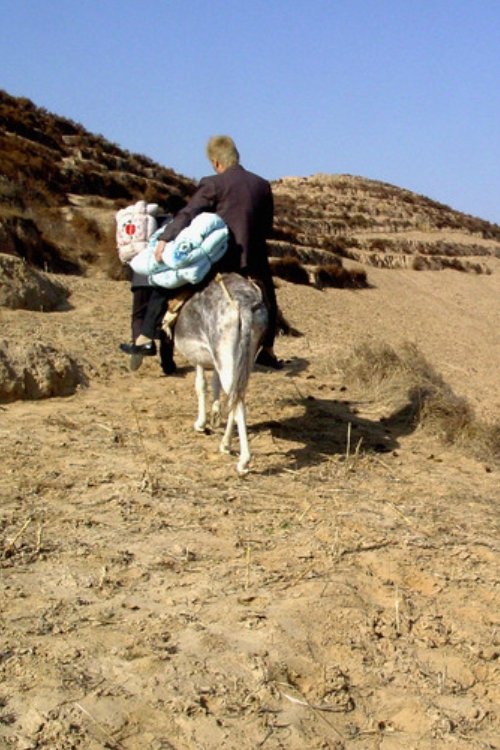
An Sai, Shanbei, An isolated village on the Loess Plateau, Northern China. Two young outsiders are moving in, While two young locals are struggling to escape. Comes into view a donkey full of luggage, Comes also into view a young couple, He carries her on a bike...
The Half Hitching Post
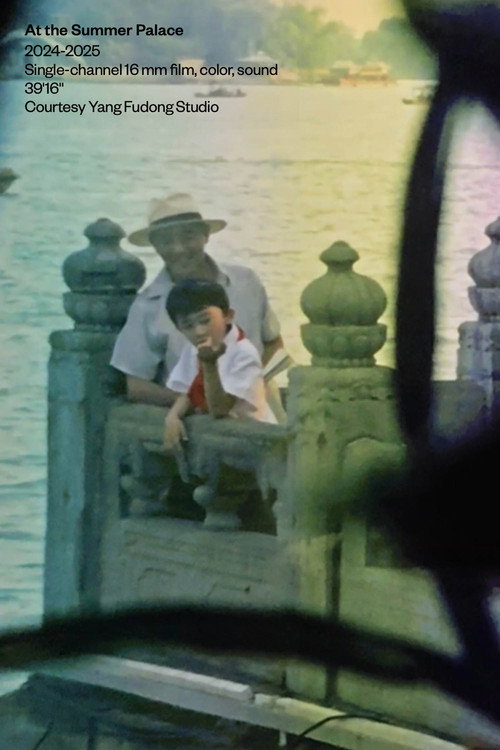
At the Summer Palace follows a mysterious man and a young boy as they wander through the Summer Palace, clad in clothing recalling styles from the 1980s and 1990s. The work unfolds like a hazy moment between dreaming and wakefulness, recalling the stillness of a languid afternoon. The era-specific details present in the setting seem to anachronistically clash with their pair’s clothing and behavior. Through this dislocation of time and space, Yang Fudong evokes the complex emotions of childhood, specifically the mixture of curiosity and unease a child feels upon encountering the strange and unknown.
At The Summer Palace
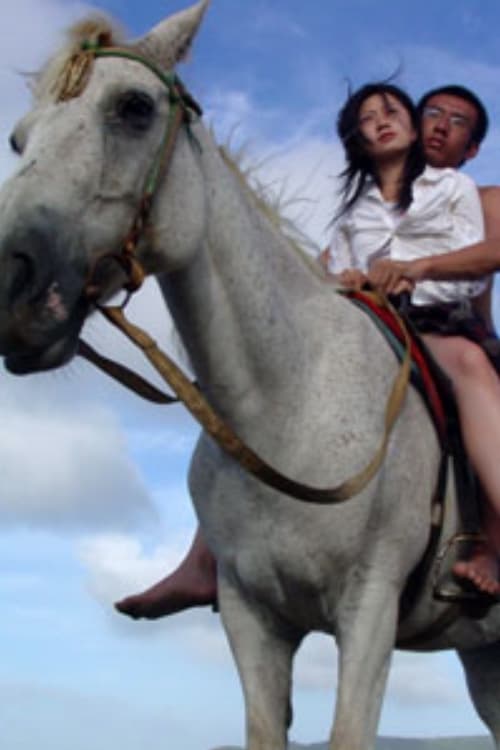
10-channel video installation. Sound by Jin Wang. A concert is being staged at the seaside. Accompanied by various musical instruments, the love story of a young couple is unfolded on the same location. The videos set on the centre display two scenarios taking place simultaneously: one shows a young couple riding a horse along the sea and the other a pair of lovers struggling for survival from a ship accident. The other eight screens deliver at the same time the performance of diverse instruments, a trumpet and a cello played on the rocks, for example. The background music, which is hallucinatory, dreamlike and even uncoordinated, reflects the conflicts between ideals and reality. The young lovers, despite the threat of death, continue with their discussion of ideal, faith and anticipation.
Close to the Sea
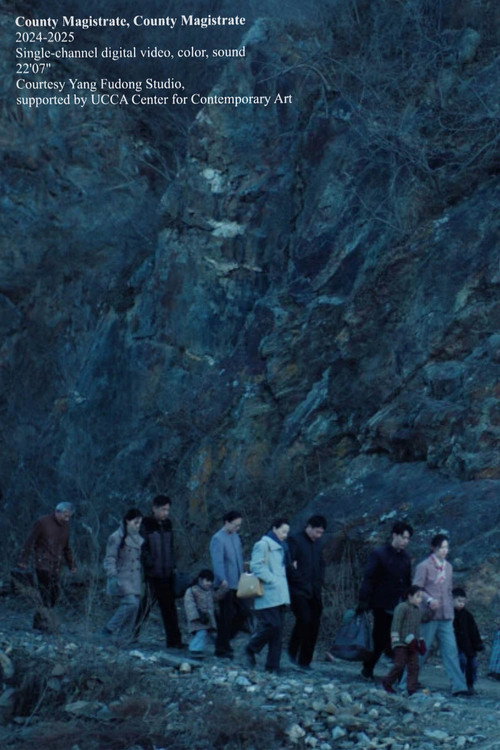
County Magistrate, County Magistrate depicts a collective migration unfolding in an indeterminate time and place. Men, women, and children from a village move through mountains as the sky gradually grows dark, walking resolutely into the distance until they arrive at a new settlement. The abandoned courtyards they leave behind still bear traces of daily life: a steaming kettle, unfinished bowls of food, an old television flickering with static, and worn-out pieces of furniture. The camera then slowly pans to an outdoor movie screen showing After Armistice, a black-and-white film released in 1962. In the film, a man draws a business card from his pocket and introduces himself as Xianghe’s newly appointed county magistrate. At this moment, the story slips into another layer of fictional time and space.
County Magistrate, County Magistrate

“For my work for films4peace, I considered certain visual metaphors. Compared with the eternity of the universe, human life is short, very short. Our existence is like a grain of sand in a desert or a speck of stone on the rock that makes the world. Conflict and destruction seems absurd if you consider the insignificance of our time on earth. Let us distance ourselves from oppression and slaughter. The creation of world peace is more important for all humankind. In my film, huge boulders slowly rise up amidst a chaotic noise that drifts in and out. Human life is not always beautiful, more often than not, we are simply trying to survive, allowing our lives to continue and nothing more.” —Yang Fudong
films4peace

Two young men wear the uniform of 70’s policeman, sometimes they look like runaway criminal. They want to escape reality which is impossible to cast off. They yearn for the bright sunshine life, expecting the time to be captured, to exchange for a calmness of the heart.
Lock Again
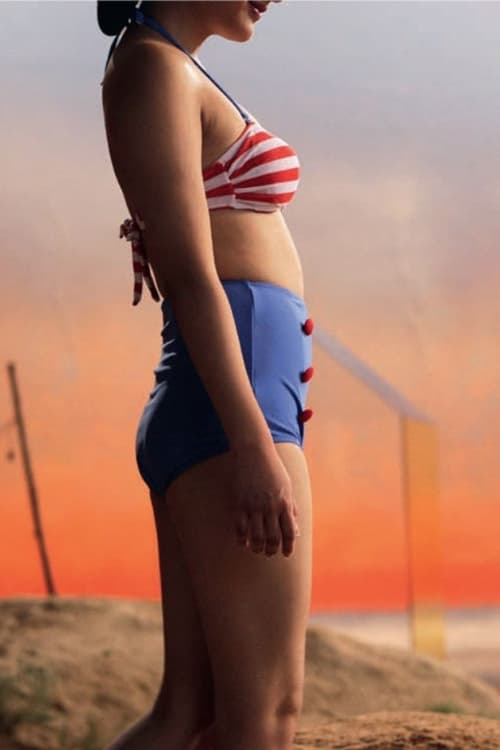
5 channel video installation, HD colour with sound, 12'00-15'48". Music by Wang Wenwei. With a haunting lyricism and dreamlike narrative, The Coloured Sky: New Women II examines the secret desires and anxieties of young women as they come of age. The work captures a journey that has on one hand ended and on the other has barely begun. The ingenues, teetering on the brink of womanhood, frolic self-consciously in an artificially staged beach scene, aware of their burgeoning sexuality and its underlying power. The shadow of China's historic system of concubinage hangs over these contemporary scenes, as the idealized beauties negotiate a new social milieu in which future prospects hinge on appearance and the cultivation of male fantasy.
The Coloured Sky: New Women II
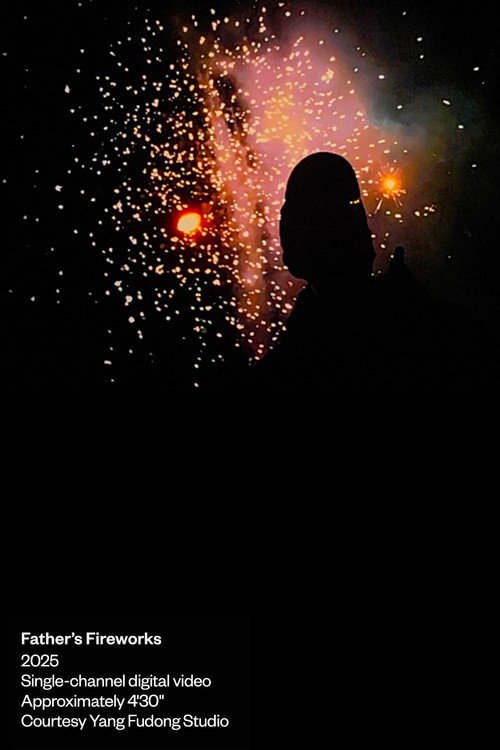
Father’s Fireworks is a short film the artist edited out of footage of daily life that he had previously shot. The film first depicts a worrisome and loving letter written by Yang Fudong's father to Yang Fudong through textual still frames, after which it shows the artist’s father setting off fireworks in celebration of the New Year.
Father's Fireworks
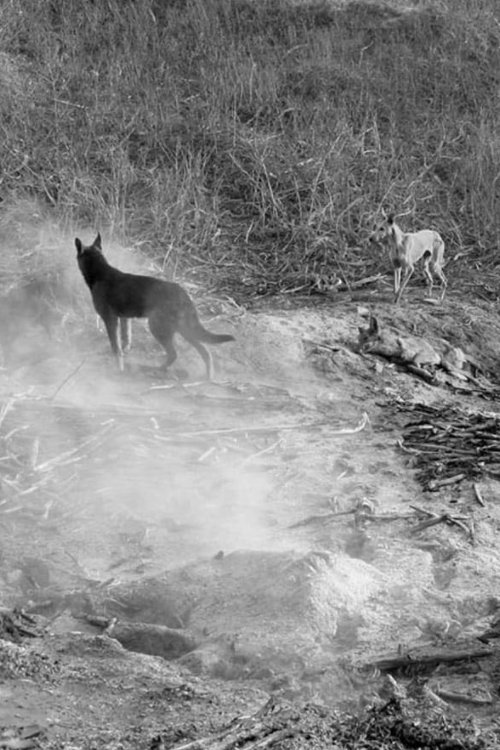
Shot in the rural Chinese province of Hebei, this work captures a pack of wild dogs scavenging in an arid desolate landscape. East of Que Village considers the impact of Chinese industrialisation and urbanisation on rural communities, casting fresh light on those neglected by the new social-economic paradigm. The dogs, which literally have to eat each other to survive are juxtaposed with a group of villagers who struggle in the same ways. The work reflects the sense of isolation and loss increasingly present in Chinese society as communities are scattered, traditional rural villages are dissolved, and the fight for survival takes hold. The work's title signals to the only road leading from the village to the outside world.
East of Que Village

Short film by Yang Fudong.
Right Night / Larva Night

The film 'Seven Intellectuals In Bamboo Forest' is based on the history of seven talented intellectuals from the ancient Chinese Wei and Jin Dynasties. Ruan Ji, Ji Kang, Shan Tao, Liu Ling, Ruan Yan, Xiang Xiu and Wang Rong were famous poets and artists at that time. Open and unruly, they used to gather and drink in the bamboo forest, singing songs and playing traditional Chinese musical instruments, in the hope of escaping from earthly life. They pursued individuality, freedom, and liberty. Their remarkable talent and passion made them a notable group in Chinese history. Part 2 exposes closed city life in a noisy metropolis, such as Shanghai. The 7 young people live in the city, but seem to have little connection with the city.