Writing
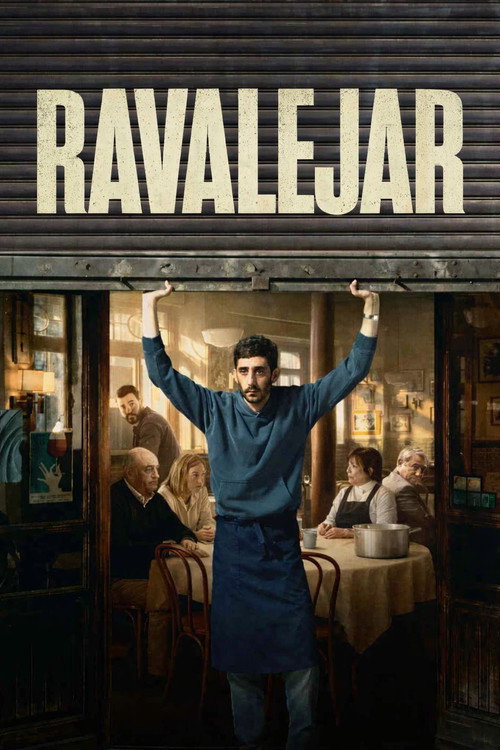
In Barcelona’s Raval neighbourhood, the family-run restaurant “Can Mosques” faces eviction after an investment fund buys the building. The family’s fight to survive escalates, pushing them to cross any and all boundaries.
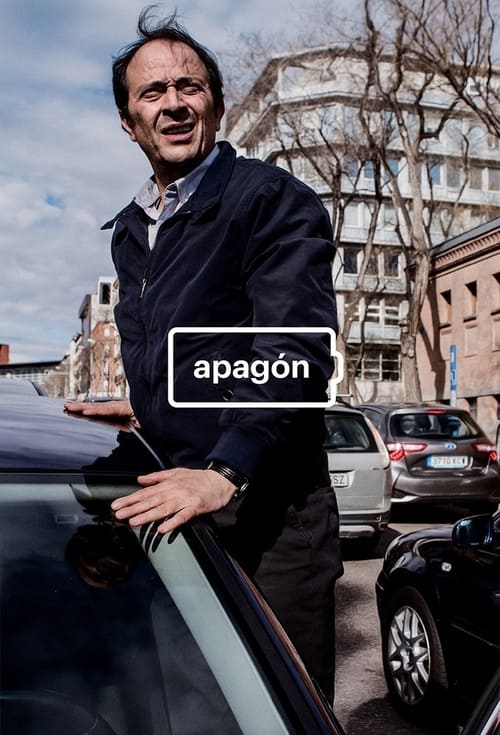
A solar storm hits the Earth, causing a widespread blackout. In this new reality, five stories unfold, focusing on characters who struggle to adapt to a world without electricity, telecommunications or means of transport, where they are forced to face up to their most primal needs, instincts and fears.
In the year 2000, Nevenka Fernández, 24 years old, Councilor for Finance in the Ponferrada City Council, suffered relentless persecution, both sentimental and professional, by the mayor, a man accustomed to doing his will politically and personally. She never decides to report, although she knows that she will have to pay a very high price: her environment does not support her, the society of Ponferrada turns its back on her and the media subjects her to a public trial. A story inspired by real events that turns its protagonist into a pioneer by taking an influential and popular politician to court for sexual and workplace harassment for the first time.
Ramón and Céline are a young couple that attended a concert at the Bataclan theatre in Paris on the fateful night of November 13, 2015. They survive the attack, but when they leave the theatre, they are no longer the same. That night leaves a deep scar on both their lives and each tries to cope.
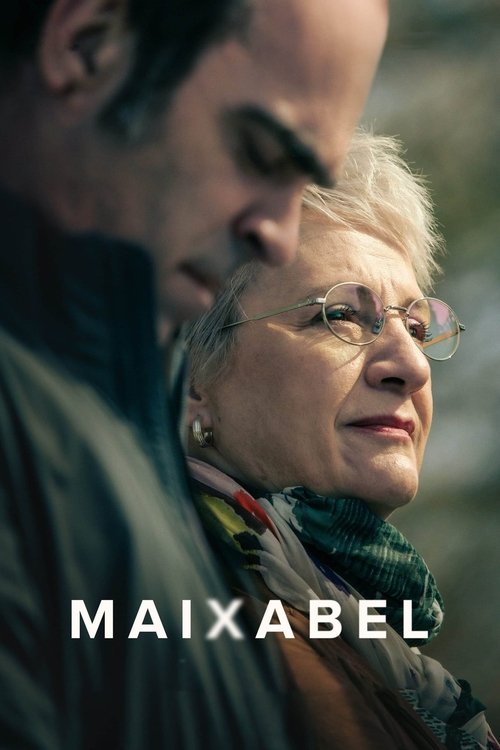
In the year 2000, Maixabel Lasa’s husband, Juan Maria Jauregi, was killed by ETA. Eleven years later, she receives an incredible request: one of the men who killed Juan wants to meet with her in the Nanclares de la Oca prison in Araba (Spain), where he is serving his sentence after breaking ties with the terrorist group. Despite her reservations and her immense pain, Maixabel Lasa agrees to meet face to face with those who ended the life of the person who had been her companion since she was 16 years old. ‘Everyone deserves a second chance’, she said, when asked why she was willing to confront the man who killed her husband.
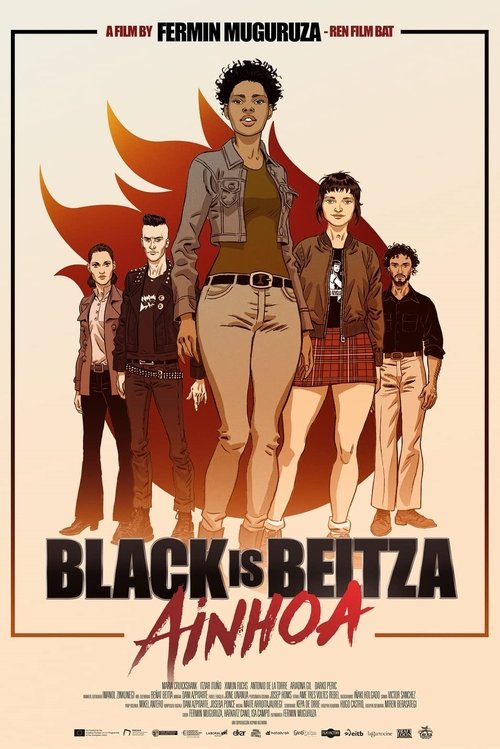
Ainhoa is born by chance in La Paz (Bolivia); but she grows up in Cuba and, at the age of 21, in 1988, she travels to the Basque Country (Spain) to discover the land of Manex, her father. In the midst of political struggle, she meets Josune, a committed journalist, and her group of friends.
Exploring the issue of stolen children in Spain, the plot tracks Vera’s search for her biological son, given in adoption, thereby coming across Cora and her adoptive son Egoz.
Isaki Lacuesta presents a social satire in which five common or garden citizens, from a country pretty much identical to our own, see their lives ripped apart by the economic crisis. With nothing more to lose, they come up with a crazy plan to save the Spanish and world economy: kidnap the chairman of the Central Bank and demand that he return everything to the way it used to be.
This is the story of a man who created a jungle next to the highway, building with his bare hands beautiful and unbelievable works of engineering in the forest. This is also the story of how he ended up burning them to ashes to reconstruct them, time after time, over decades. He is known as “Garrell”, also as “Tarzan from Argelaguer”, and he is not driven by any apparent purpose, except one: going “on the go”.
Fiction inspired by the novelistic biography of the painter and writer Francois Augiéras. The artist covered with paints a military bunker in the desert, and let it sink into the sand so no one could find it until the XXI century. The search continues to feed the myth bunker ... Who is Augiéras? ¿Legionnaire, painter, writer, gunman, holy, thief, devil or a mixture of all?
Isra and Cheito are two brothers who have taken very different paths in life. When Isra gets released from prison and Cheito comes home after a long tour with the Marines, they both return to the island of San Fernando. The reunion of the two brothers will bring with it the memory of the violent death their father suffered when they were just boys; the need to get back on track with their lives and finally come to terms with what happened will bring them together again.
Various objects are observed using a high-resolution electron microscope: some paint pigments from a supposed 19th-century painting, a dollar bill, and a piece of old film celluloid in the process of decomposition. Microscopic observation will reveal the mysteries hidden on the surface of these materials: the infinite number of paintings that can be found in a tiny fragment of paint, the other possible invisible motion pictures that are hidden in each little piece of film.
A teenager who went missing and was presumed dead returns home after eight years to find a family deeply affected by his disappearance. Gradually, doubts arise about whether he really is the missing boy or an impostor.
The exhibition 'The Complete Letters' features epistolary works defined by cinematographic creation. This is an experimental communication format used between pairs of film directors. Although each director is situated in a location geographically distant from that of their partner, they are united by their willingness to share ideas and reflections on all that motivates their work. Within this space of freedom, the directors featured in the exhibition examine their affinities and differences, within an environment of mutual respect and simultaneity of interests and with notable formal variants established in each of the correspondences.
On the day of the blackout, Alicia prepares for the inevitable as she heads to her parents' country house. When the power goes out, she discovers she is not alone: some farmhands are stranded on the estate. Forced to live together, the group learns to organize themselves in order to survive.
No description available.
Two ex-guerrillas meet again 30 years later in an illegal excavation, where they will search for the body of a third companion who disappeared at the time. The tension and secrets hidden during that time will surface as you approach the unpredictable final solution, where not everything will be what it seemed.
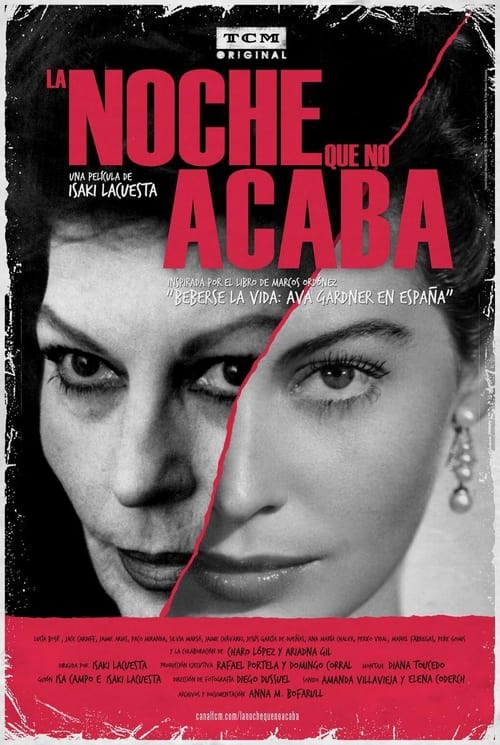
Like so many other actors, Ava Gardner hated to watch her films. She said that the woman on the screen wasn't her. But all films tell two stories: the plot and the tale of the bodies filmed. This film narrates what happened between two images: a first shot of 'Pandora' and a first shot of 'Harem', the first and last movie filmed by the actress in Spain. Ava must certainly have thought that neither of these two women had anything in common with herself.
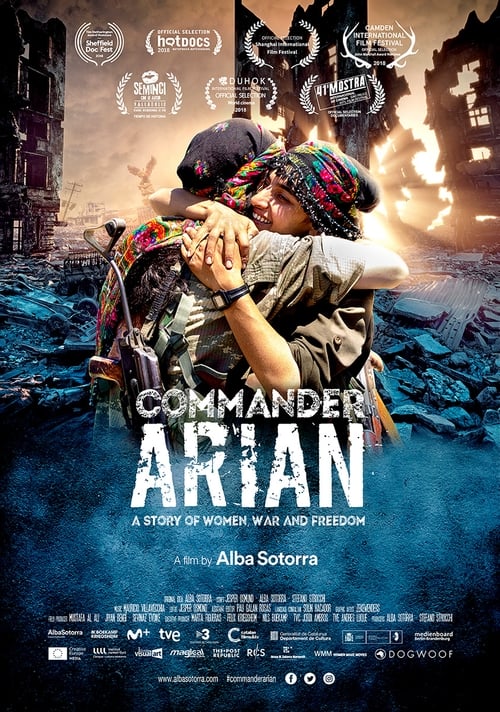
On the front line of the Syrian war, a 30-year-old commander leads her female battalion to retake an ISIS-controlled city and emerges severely wounded, forcing her to redefine herself in this empowering tale of emancipation and freedom.