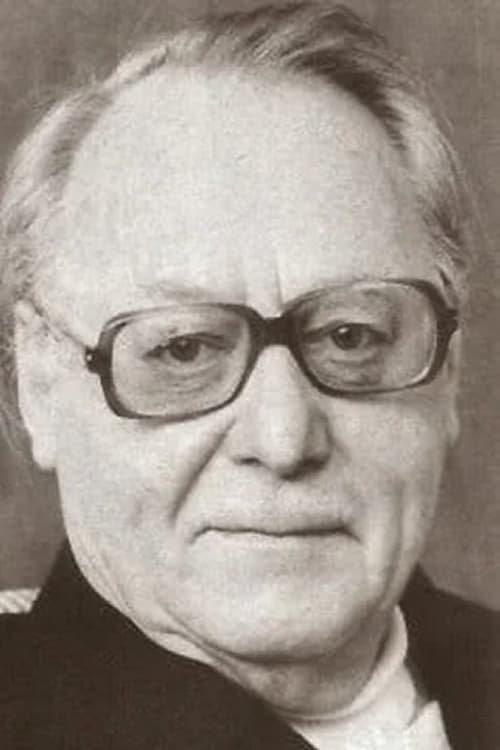
Miskow Makwarth
Acting
Biography
Miskow Makwarth, der var søn af komponist og dirigent Ludwig Makwarth, havde Henrik Malberg og Holger Gabrielsen som lærere og blev uddannet på Dansk Skolescene i 1926 og debuterede som skuespiller på Aarhus Teater i 1925, hvortil han var knyttet i sæsonerne 1926-27 - 1927-28. Han tog endvidere en instruktøruddannelse, der gav ham debut med Kaj Munk stykket "Smeltediglen". Efter nogle år ved københavnske scener, - Dagmarteatret, Alléscenen, Det ny Teater og turnéer bl.a. som gæst på Den Nationale Scene i Bergen kom han tilbage til Aarhus Teater 1938 til 1944 som instruktør, bl.a. af friluftsspillene 1941-43. Han iscenesatte endvidere festspil bl.a. i Kalundborg og Viborg. Han dramatiserede og iscenesatte "Den lille havfrue" for Pingklubben på Nørrebros Teater i 1943 og et bibelsk julespil, hvori han også spillede Slangen og Djævelen, på Alléscenen i 44. Dèr var han direktør i 1944/45. I 1959 var han på Aveny Teatret som Izo i "Tante Mamie", og i 60 spillede han hovedrollen Manufakturhandler Sort i "Syndebukken" på Landsskolescenen. I 1961 dublerede han som Vanderbilt i "Knickerbocker Holiday" på Folketeatret, og dér var han Brighella i Een tjener og to herrer" i 63. Han spillede Jeronimus i "Abracadabra" i Den Gamle By i Århus og turnerede med Dansk Folkescene som Andreas Blegnæb i "Helligtrekongersaften" i 62. På Omegnsteatret i Gladsaxe spillede han Apollion i "Romulus den Store" og Kongen i "Drømmen". Han fungerede som leder af festspil ved byjubilæer, men skuespillerkarrieren medførte også store roller på talrige scener, fx. som Henrik i "Den politiske kandestøber", Per Degn i "Erasmus Montanus", Fagin i "Oliver Twist" og Vielgeschrei i "Den stundesløse". Miskow Makwarth havde de fleste engagementer på Århus Teater, Dagmar Teatret, Det ny Teater og på Nationalscenen i Bergen. I de seneste år havde han mindre roller i det lette repertoire på københavnske teatre, bl.a. på Amager Scenen.
Known For
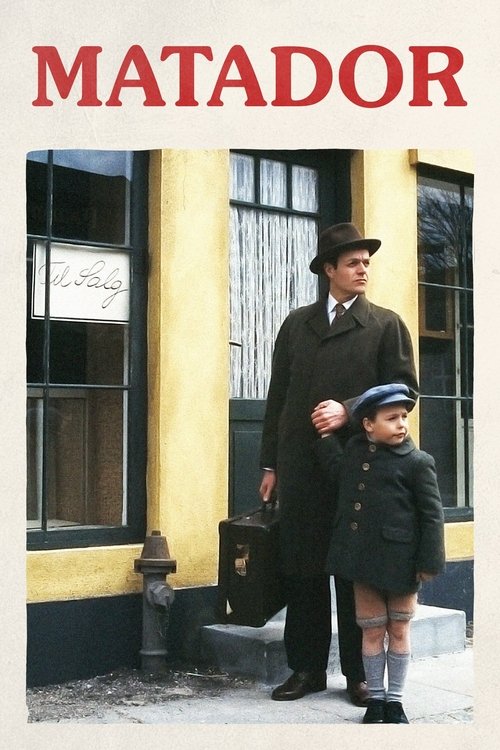
Matador is a Danish TV series produced and shown between 1978 and 1982. It is set in the fictional Danish town of Korsbæk between 1929 and 1947. It follows the lives of a range of characters from across the social spectrum, focusing specifically on the rivalry between the families of two businessmen: The banker Hans Christian Varnæs, an established local worthy, and social climber Mads Skjern, who arrives in town as the series opens. The name Matador was taken from the localised edition of the boardgame Monopoly, also the series' tentative English title. In addition, in contemporary Danish a "matador" is often used to describe a business tycoon, in the series referring to the character of Mads Skjern and his craftiness as a self-made entrepreneur. Directed by famed Danish film maker Erik Balling, Matador was the idea of author Lise Nørgaard who wrote the bulk of the episodes alongside Karen Smith, Jens Louis Petersen and Paul Hammerich. The series is one of the most well-known and popular examples of Danish television and represents the peak of longtime development of Danish TV drama by the public service channel Danmarks Radio. The series has become part of the modern self-understanding of Danes, partly because of its successful mix of melodrama and a distinct warm Danish humour in the depiction of characters, which were portrayed by a wide range of the most popular Danish actors at the time; but also not least because of its accurate portrayal of a turbulent Denmark from around the start of the Great Depression and through Nazi Germany's occupation of Denmark in World War II.
Matador
It's evening and mother Alice read bedtime stories for her three children.
H.C. Andersens sagor
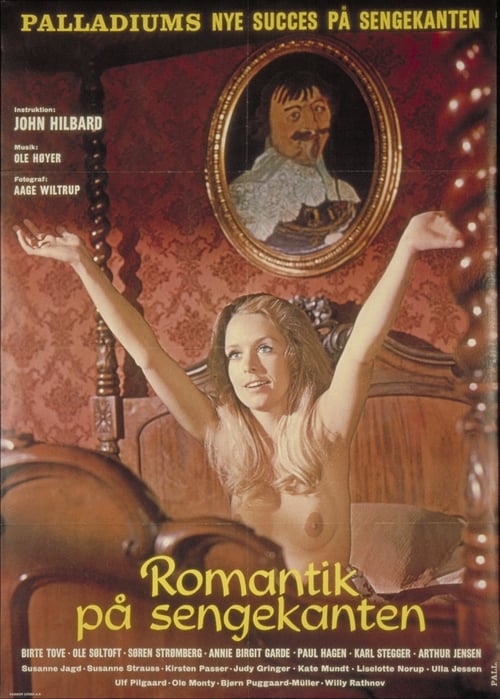
A girl inherits a string of industrial concerns that will become bankrupt by the inheritance tax unless the girl marries the son of the owner of a competing industrial concern.
Bedside Romance
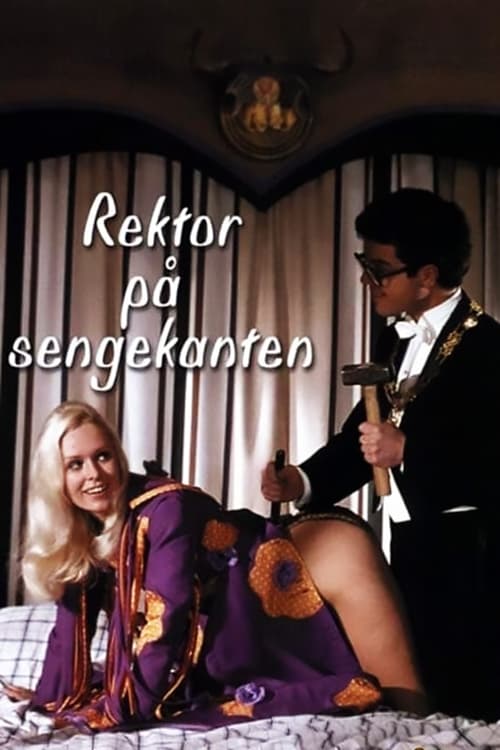
The young headmaster of a boy's boarding school has decided that due to the virility of his young charges, they are a sort of national treasure. He believes that his school should become co-educational as soon as possible. In order to raise funds for the changeover, the boys stay behind during their summer vacation and temporarily convert the school into a love hotel.
Bedside Head
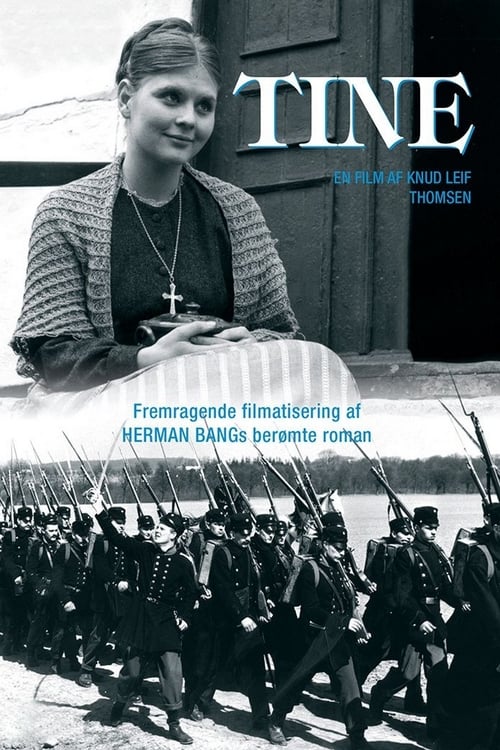
Danish melodrama about a housemaid struggling to find normalcy and love in the midst of war.
Tine
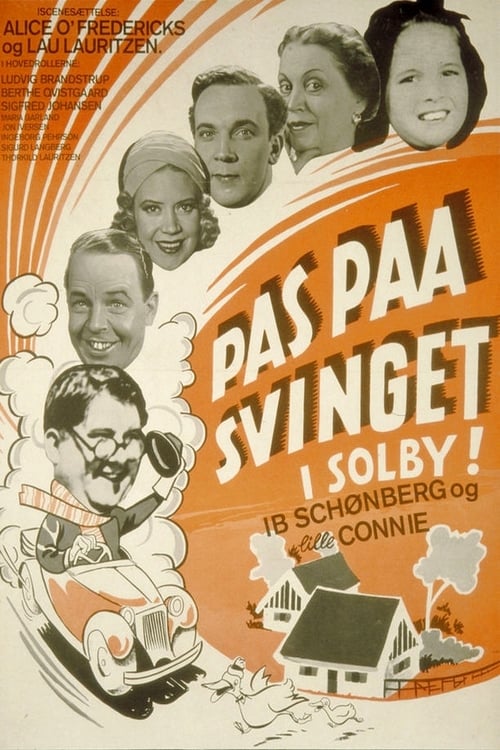
The priest in Solby borrows 2,000 kroons from the parish council treasury to pay for one of his parishioners' hospital stays in Germany. Marianne, the rich man's daughter, is to be a bridesmaid in Aalborg and is leaving Copenhagen for Jutland. In Solby, she drives too fast through the town, which is why she has a car accident and ends up in the priest's garden! She immediately starts to lead everyone around the rectory, which Aunt Marie is definitely not happy about. The priest, on the other hand, is attracted to the girl. They swim in the lake and go to a ball together, which leads to Mrs. Larsen coming in to talk to the bishop. After Marianne has returned to Copenhagen, the bishop announces his arrival at the rectory. Where will the priest now find the 2,000 kroons? The priest has a number of friends who are trying to help him, but he also receives unexpected help from the bishop.
Pas paa svinget i Solby

Thomas, a naive young dental student, faces a rather difficult challenge. His millionaire aunt, a bit of a sex nut, will give both him and his dental school millions if he can prove that he is sexually able and skillful. His schoolmates hear rumors of this trial, but understand the challenge to be for him to keep his celibacy.
Bedside Dentist
A young, idealistic business student has ambitions to be a concert pianist, but his obsession with beautiful women keeps him from achieving his goal. To earn money for his tuition, he takes a job as headmaster of a small girls' school. There his weakness for beautiful women is put to the test when he is pursued by a bevy of sexy coeds.
The Song of the Red Ruby
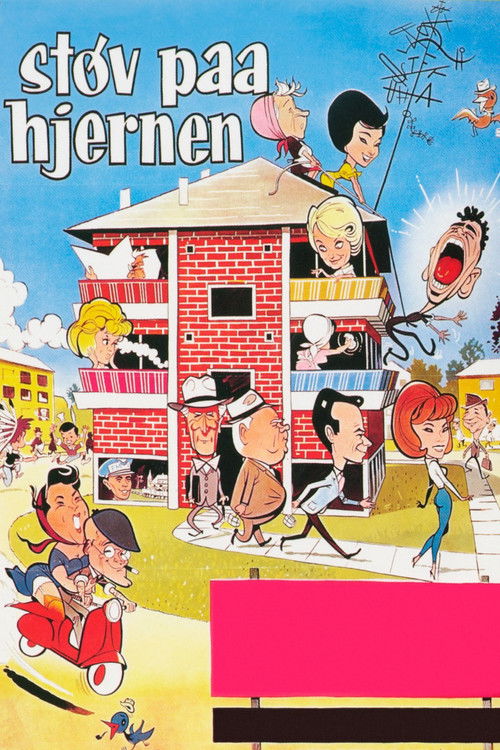
The story centers around the busybody housewives of a modern Danish working class neighborhood of the 1960's. A remake of the Norwegian comedy film from 1959.
Dust on the Brain
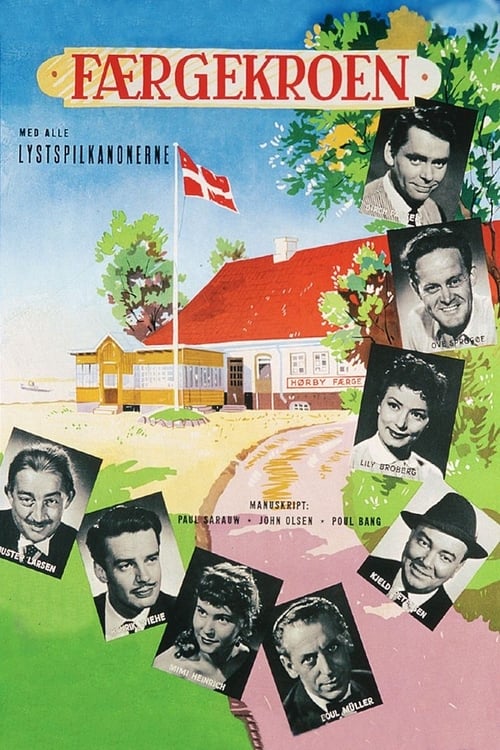
The Royal privileged ferry inn in Hørby is owned and operated by the two good friends Erik Hansen and Lars Tofte. In addition to the inn they own the small ferry, which keeps them in touch with the mainland.
Færgekroen
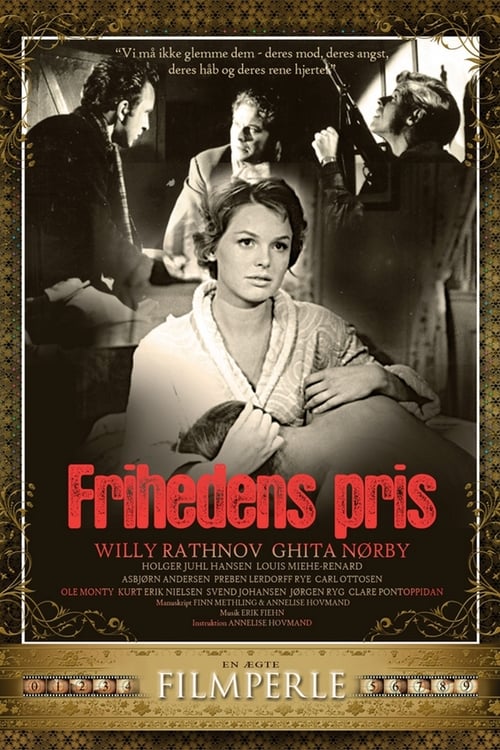
The young sailor Morten returns home from his travels in the midst of the general strike of 1944, where he is confronted with the occupation. He joins a resistance group and actively participates in the struggle. There is no time for relaxation. He must always be on guard. Only with the sweet and charming young Lise can he relax a little and be himself. During a factory sabotage, the group is captured by the Germans.
Frihedens pris
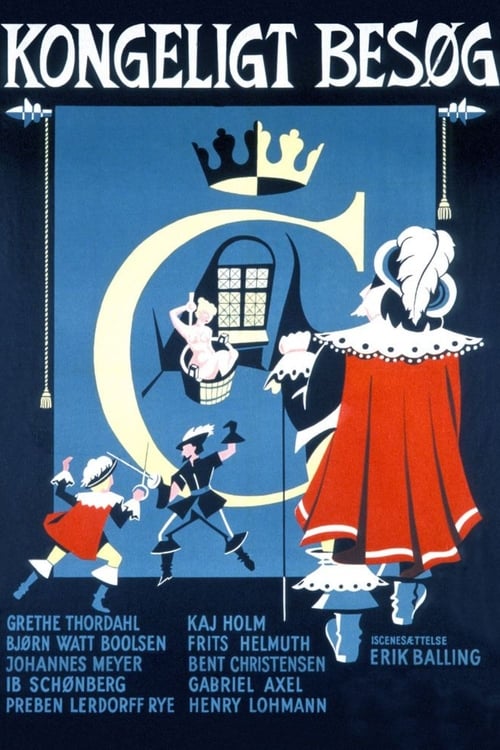
In the year 1646, Denmark is at peace. Only recently have the last occupying troops left Jutland, leaving behind the sad traces of iron heels. The administration has partially collapsed, the kingdom is short of money, and what money there is is unevenly distributed. This is the unusual and sad background to this unpretentious account.
Kongeligt besøg

Due to his weakness for women and gambling, the old landowner Vilhelm Stone has ruined his marriage and lost his son and friends. But when he dies, his son Niels returns home from Australia to take over the estate. However, it is not that simple. Lawyers drag out the inheritance case, and initially Niels only inherits the racehorse Ibrahim. Niels is determined to win the big race of the year at the racetrack, and it is here that Poul Reichhardt sings the famous schlager Ibrahim to his horse. In the battle to get the family estate, Niels gets incredible help from his faithful companion, the farmhand Nicholajsen.
Det store løb
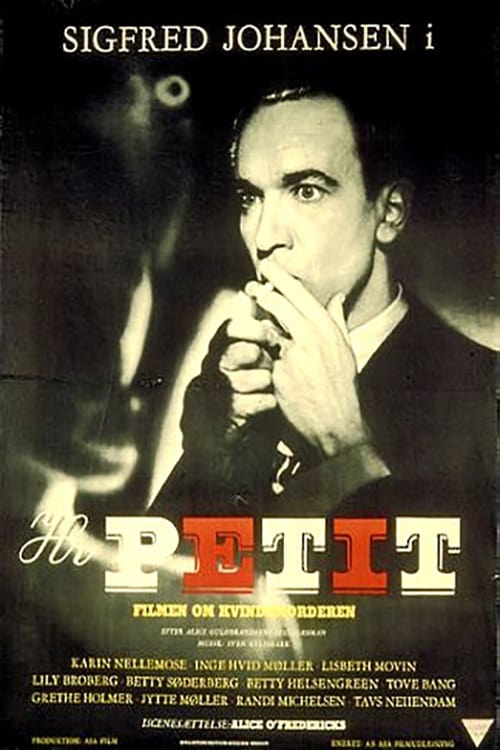
The story about Mr. Petit - a French charming marriage trickster and murderer of women.
Hr. Petit
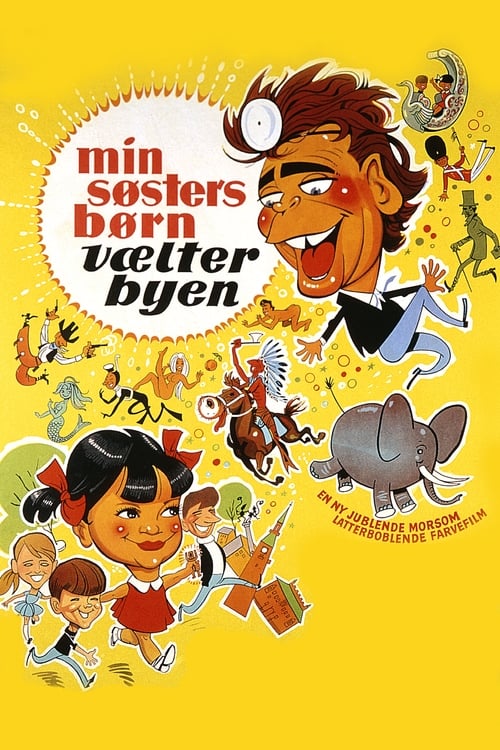
Police constable Møller'og psychiatrist Dr. Mogensen will have something to watch as the Pusle to everyone's surprise finds out that she can do magic. On her birthday she gets sent an ancient, magical figure from her uncle in South America. On the same day Pusle's parents has to travel to London, and the large family is now left to strict aunt Alma.
Magic in Town

A folk comedy for the whole family. The two carefree farm musicians, Poul Otto Madsen and Bernhard Iversen, along with the dog Hannibal, move into the garden houses Nokken on Amager. Shortly afterwards, Bernhard's two children, Anne and Peter, show up after living with his sister in the United States. The children thrive among Nokken's free spirits and helpful people, but the social services want to take them away because the environment is not in the children's best interests (!) - Of course, everything ends as it should. The feisty Olga, owner of the Faldgruben pub, suddenly becomes a mother of two – initially to please the authorities and the children.
Ta' lidt solskin
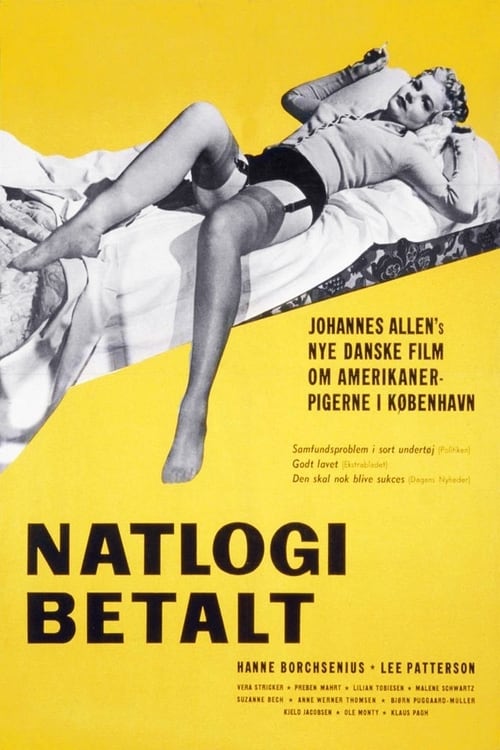
A whirlwind romance between a Danish storeclerk and an American G.I. in Copenhagen takes them to a dance club base for prostitutes, whom she befriends and whose pimp he antagonizes.
Night Girls
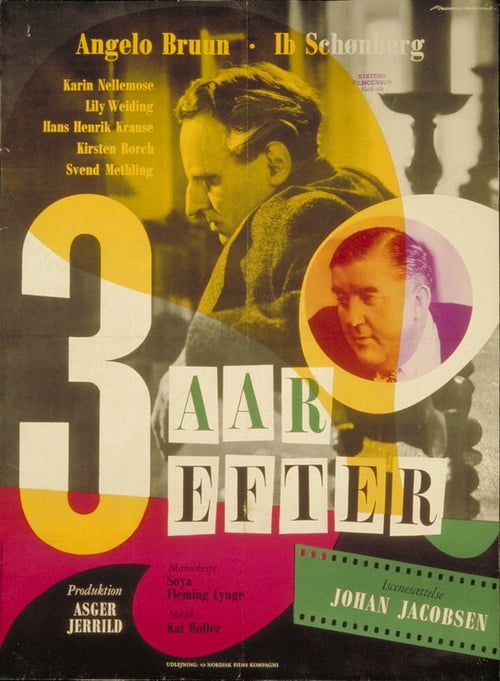
Soya's satirist take on variations of Danes, who willingly or unwillingly came to deal with German troops during the five year Second World War occupation.
3 years after
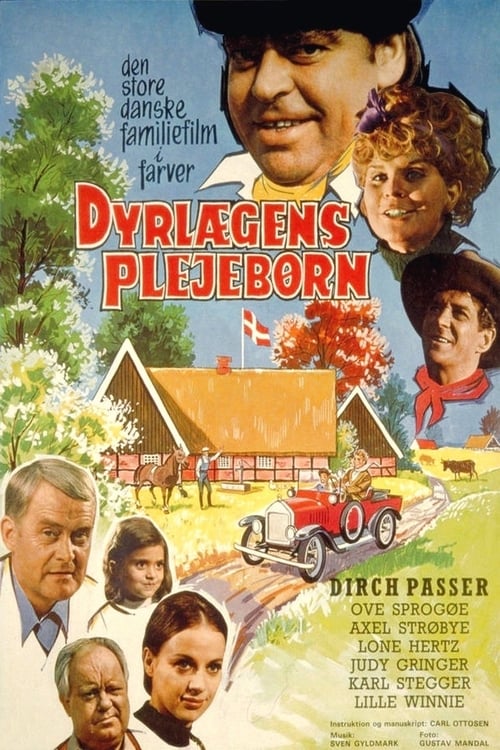
Winnie's mother is going to Bangkok to settle an inheritance matter and is looking for a good boarding house for her child. She calls Dr. Linager, who tells her that he has a boarding house for "expensive children," but the price is no object to Winnie's mother. When Winnie shows up, the good Dr. Linager is a little surprised. He is a veterinarian and thought he was going to be looking after a Siamese cat, but everyone in the house naturally welcomes the charming little Winnie.
The Veterinarian's Adopted Children
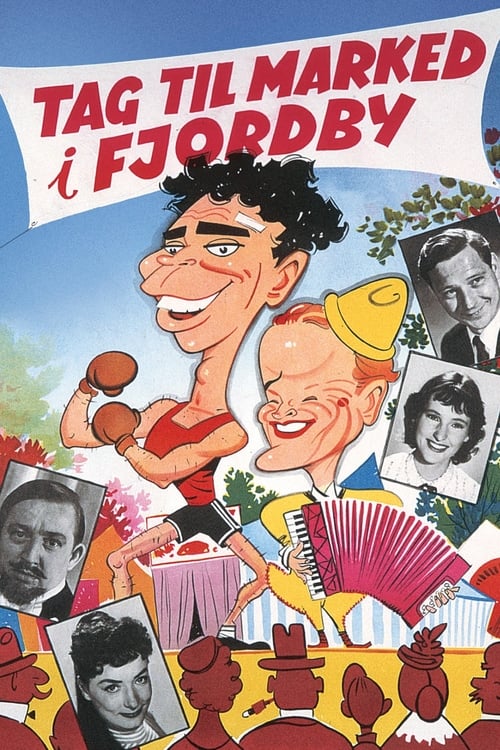
In the early 1940s, there were a couple of guys who traveled around the country from market to market with their tent. It contained only one thing: a boxing ring. The big, strong boxer challenged the local farmhands to a quick three-round boxing match and promised a large cash reward to anyone who could knock him out.