Tetsu Tsuboi
Acting
Known For
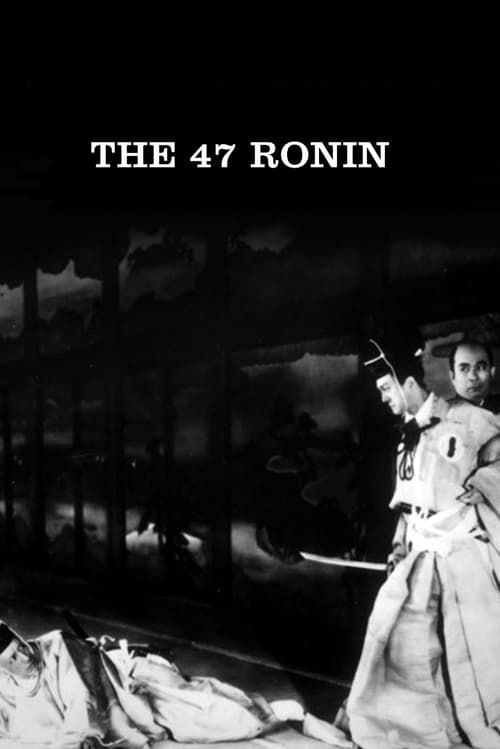
In the early 18th-century, Lord Takumi-no-kami Asano, feuding with Lord Kira, tries to kill his opponent in the corridors of the Shogun's palace. The Shogun sentences Asano to seppuku and deprives the palace and lands from his clan, but does not punish Kira. Asano's vassals leave the land and his samurais become ronin and want to seek revenge against the Lord's dishonour. But their leader Kuranosuke Oishi seeks to restore the Asano clan with his brother Daigaku Asano. One year later, the Shogun refuses, and Oishi and 46 rōnin are out for revenge.
The 47 Ronin

A man takes a job at an asylum with hopes of freeing his imprisoned wife.
A Page of Madness
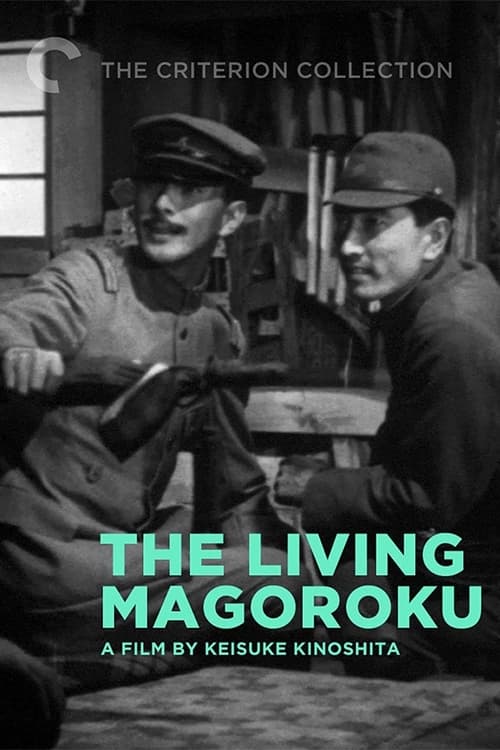
A wealthy family will not allow the military to grow crops on their fields due to their superstitious beliefs about their son's illness.
The Living Magoroku
A bar girl tries to pass her three children, each from a different father, to rural relatives.
A Mother's Love
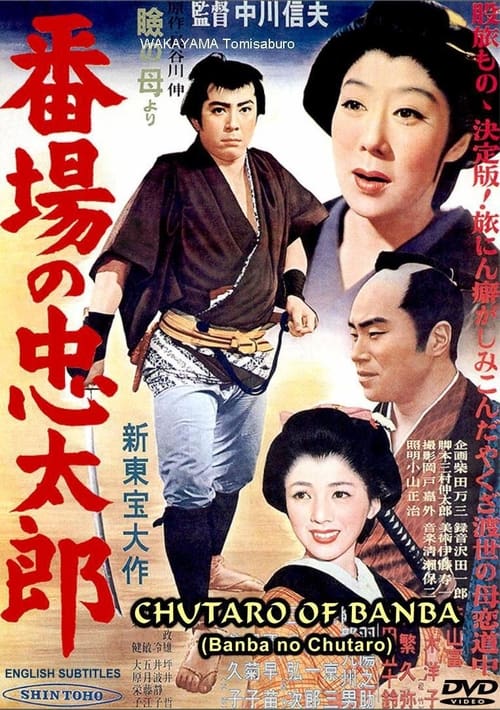
Based on the play ”Mabuta no haha” by famed author Shin Hasegawa, this is the first major starring role for Tomisaburo Wakayama. This heartfelt story concerns a wandering gambler from Banba by the name of Chutaro. Set during the Tenpo Period, Chutaro runs afoul of Boss Sukegoro of Iioka. Pursued by vengeance seeking swordsmen, Chutaro displays his phenomenal martial art skills. Abandoned as a child, he seeks to find his long lost mother, while at the same time fighting off numerous attacks by Iioka’s men.
Chutaro of Banba
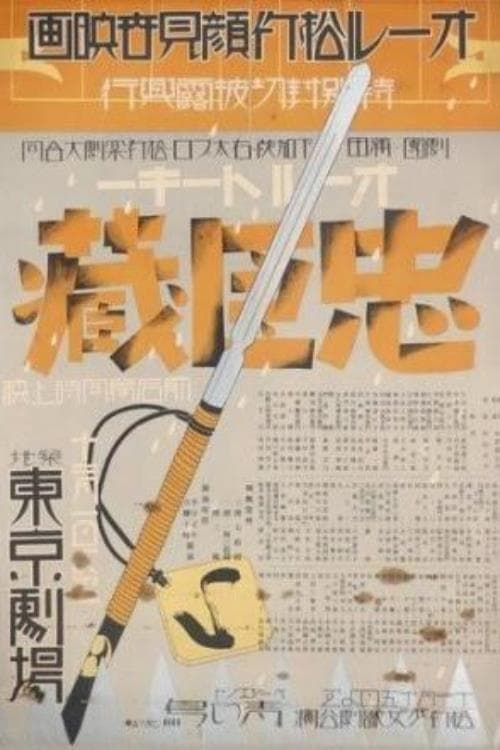
This 1932 adaptation is the earliest sound version of the ever-popular and much-filmed Chushingura story of the loyal 47 retainers who avenged their feudal lord after he was obliged to commit hara-kiri due to the machinations of a villainous courtier. As the first sound version of the classic narrative, the film was something of an event, and employed a stellar cast, who give a roster of memorable performances. Director Teinosuke Kinugasa was primarily a specialist in jidai-geki (period films), such as the internationally celebrated Gate of Hell (Jigokumon, 1953), and although he is now most famous as the maker of the avant-garde silent films A Page of Madness (Kurutta ichipeji, 1926) and Crossroads (Jujiro, 1928), Chushingura is in fact more typical of his output than those experimental works. The film ranked third in that year’s Kinema Junpo critics’ poll, and Joseph Anderson and Donald Richie noted that 'not only the sound but the quick cutting was admired by many critics.
The Loyal 47 Ronin

Saheita, the final heir of a once rich and respectable family, can't refuse the many villagers that come to him for favours and money, even though he is on the brink of bankruptcy. Around town he is better known by his nickname Mr. Shosuke Ohara.
Mr. Shosuke Ohara

Inoue was something of a rarity in the sense, that he was a Shochiku house director who seems to have worked mostly in period films, often with big stars like Hasegawa or Bando. "Sumidagawa", named after the river that runs through Tokyo, is also a period film, but thematically a modern one. All the themes that you associate with the normal Shochiku women's films set in the present day are in this film, just in a different context: love, the planning of a marriage, career, family relations and societal melancholy. There is no action or swordplay.
Sumida River
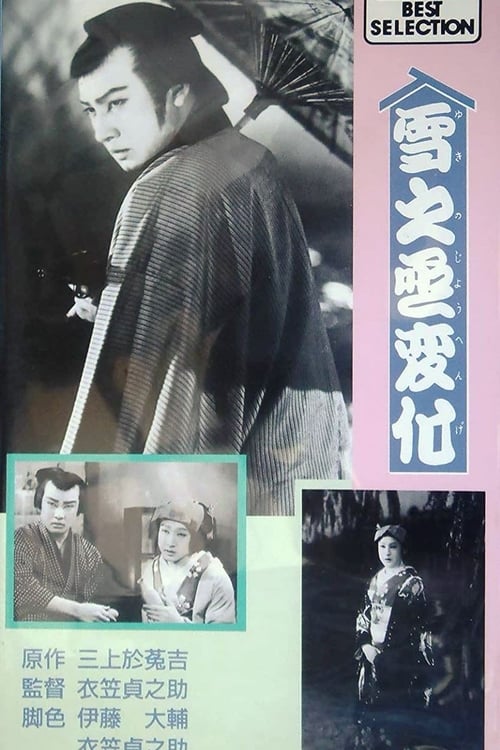
An onnagata (female impersonator) of a Kabuki troupe avenges his parents' deaths. Remade in 1963 as Yukinojô Henge.
An Actor's Revenge
No description available.
Yukinojō henge, Kanketsu-hen
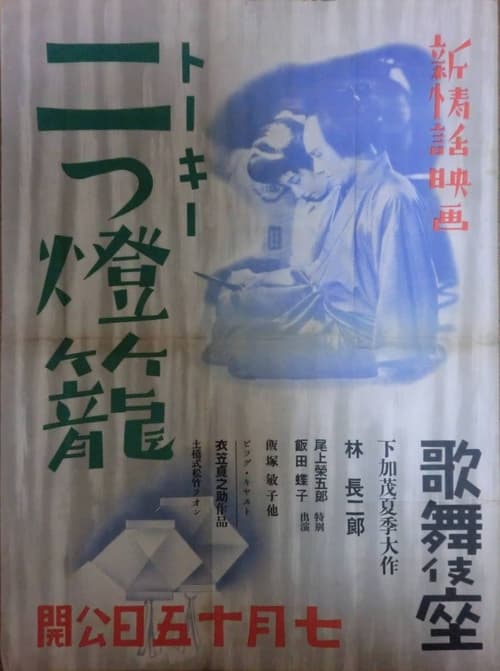
A mournful masterpiece by Kinugasa Teinosuke
Two Lanterns
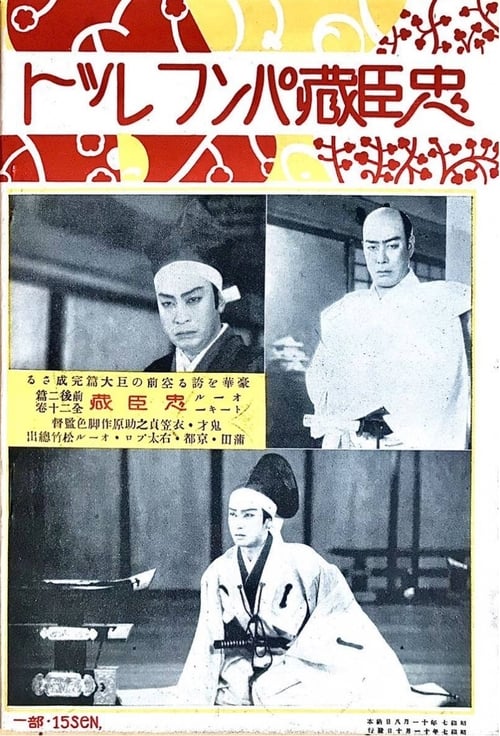
No description available.
Chûshingura - Zempen: Akahokyô no maki
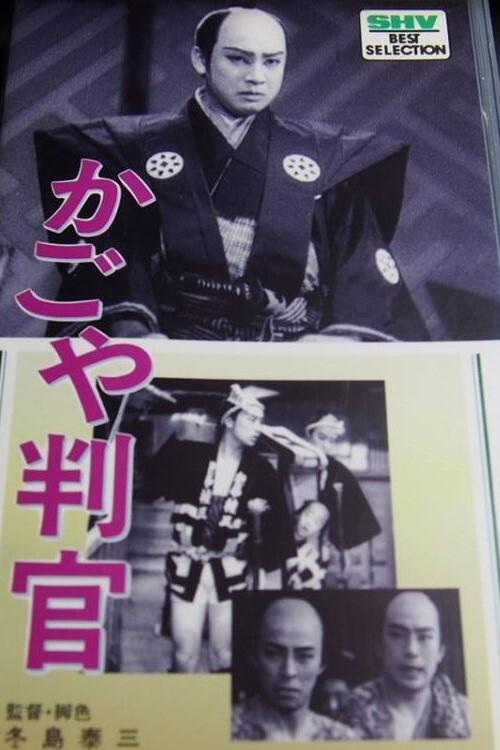
Two cowardly palanquin carriers know the culprit of a murder, but are too scared to report it to the police. In the meantime, an innocent man is arrested as the murderer and chaos ensues.
The Palanquin Carrier Magistrate
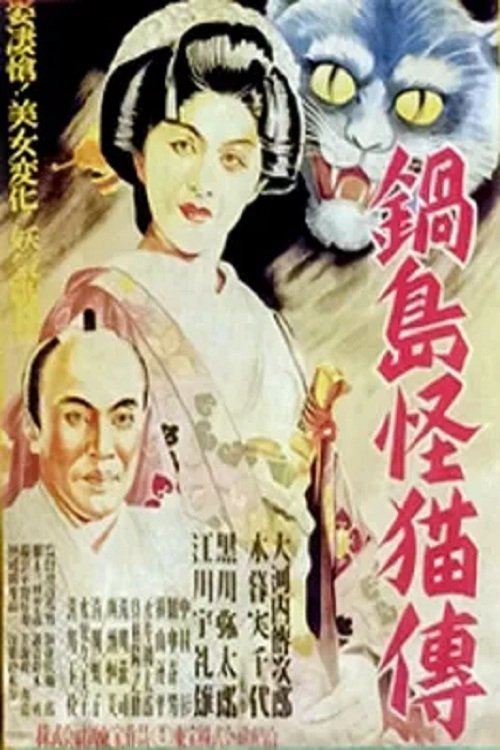
Tanuma Kandayuu is a high class samurai of the house of Nabeshima. He finds a lavish board of Go (a Chinese Board game) at Kinbei's store. He recommend Kinbei to offer it to his lord. Kinbei hesitates at first, since he knows the board has a mysterious legend surrounding it; it's believed that for every game played on the board, one death is required.
Ghost Cat of Nabeshima
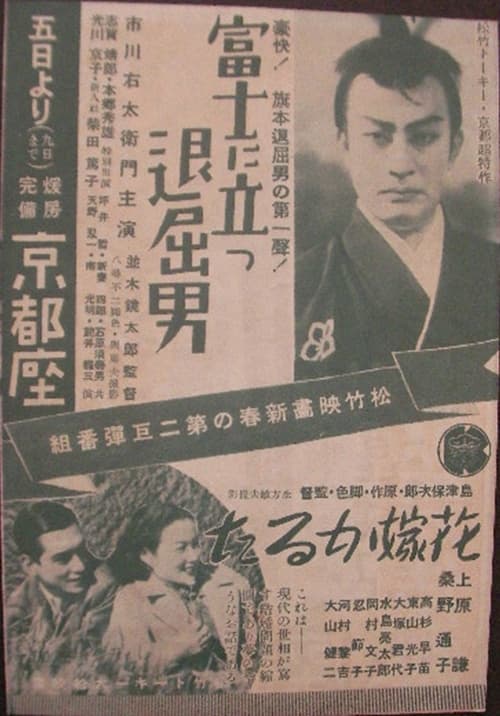
Bored Hatamoto film #8
Bored Hatamoto on Mt. Fuji
A 1930 silent film from director Eichi Koishi, following the adventures of Edo firefighter Sanji.
Nogitsune Sanji
First film adaptation of the kabuki play Benten Kozo, about a thief who steals from the rich and gives to the poor...
Benten kozo
Shinzaemon has been Sukeroku’s enemy ever since Sukeroku fought and defeated gangs from Shinzaemon’s group at a Kabuki theatre over Agemaki from Miuraya. Sukeroku swears that he will never draw his sword until he finds his family’s treasured blade, Tomokirimaru, so he gets insulted often by Shinzaemon’s men. Bunzaemon redeems Agemaki for Sukeroku ahead of Shinzaemon, but Sukeroku, ever the gentleman, does not accept. When Shinzaemon snatches Agemaki, it is found that he has Tomokirimaru.
Kurotegumi Sukeroku
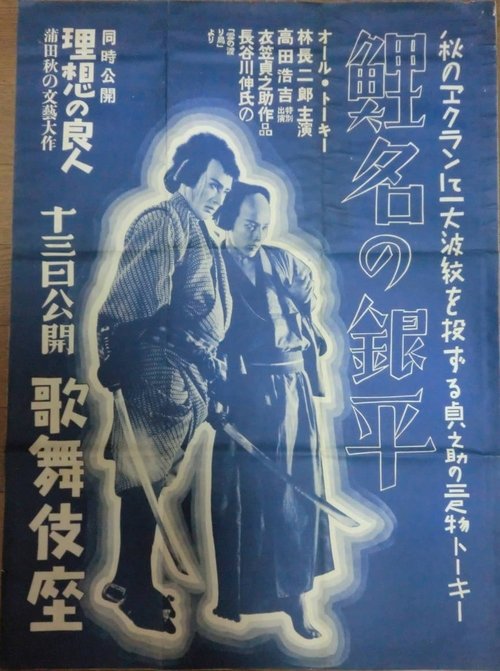
The first half of the movie depicts a man's jealousy of his best friend and the woman he love. The second part depicts a hero who is ready to put the past behind him and risk his life for his friend.
Genpei the Carp
The doomed love story between a young courtesan and a samurai, in Kyoto.