Jihan El-Tahri
Directing
Biography
Jihan el-Tahri is an Egyptian writer, director, and producer. After receiving a degree in political science from the American University in Cairo, she worked as a news correspondent for British and American newspapers, covering the Middle East and Africa. She has authored, directed and produced award-winning documentary films, and books and reported on political conflicts in the Middle East and Africa. In 1990, El-Tahri began directing and producing documentaries for French television and international broadcasters. Her produced and directed documentaries, including the award-winning film Behind the Rainbow. She also produced and directed the acclaimed documentary Cuba: An African Odyssey and the Emmy-nominated House of Saud. Her 2014 Egypt's Modern Pharaohs, a trilogy of films about former Egyptian presidents Gamal Abdel Nasser, Anwar Sadat and Hosni Mubarak, was funded by a grant through the Doha Film Institute. Jihan's other accomplishments include being a member of the Executive Bureau of FEPACI (Federation of Pan-African Cinema) and the Secretary General of the Guild of African filmmakers in the Diaspora.
Known For

Journalist Assia Boundaoui sets out to investigate long-brewing rumors that her quiet, predominantly Arab-American neighborhood was being monitored by the FBI.
The Feeling of Being Watched

April, 1994. Genocide in Rwanda. 800,000 dead. A catastrophe that upset the balance in the entire region. The Great Lakes region of Africa ended the year with a bloodbath. This documentary shows the intrigues, the dramatic effects, the treasons, the vengeances that prevailed over those years and whose only goal was to maintain or increase each faction’s area of influence. In just ten years, the population saw all their hopes vanish: The dream of an Africa in control of its own destiny, alimentary self-sufficiency, the end of interethnic conflicts
Africa in Pieces: The Tragedy of the Great Lakes
Every day the U.S. donates millions of tons of food to famine victims and other starving people in the world's poorest countries. This provocative documentary, through an in-depth case study of a recent famine crisis in Zambia, shows how these aid programs may address an immediate crisis but at the same time can create long-term problems for the recipient nation.
The Price of Aid

From Nasser to Sadat and Mubarak, the series follows the path of the successive regimes in power, and reveals their common goal to carefully lay the basis of a solid independence, but which, on the other hand, led to the revolution on Tahrir Square in 2011. The series plunges the spectator into the heart of contemporary Egyptian history, interweaving the major themes of the Army, the Moslem Brotherhood, International Relations and the role of Civil Society.
The Pharaohs of Modern Egypt

Documentary about Cuban's involvement in African politics.
Cuba: An African Odyssey
In COMPLEXIFYING RESTITUTION (2022), El-Tahri invites the viewer into the spacetime of a project that brings together archive researchers, artists, and filmmakers to interpret, rethink, and reappropriate the archive. The purpose of this engagement with the archive is not to simply delve into history and memory in order to look backward, but rather to use that past knowledge—the fragments that can be unearthed—as a tool to reinterpret our current reality and imagine an alternative future. (Berlin Biennale)
Complexifying restitution: Notes to self
From the exile of King Farouk in 1952 to the departure of Hosni Mubarak in 2011, this three-part documentary revisits Egypt's contemporary history, focusing on four recurring pillars: the army, civil society, the Muslim Brotherhood and the country's interactions with foreign powers.
Les pharaons de l'Egypte moderne
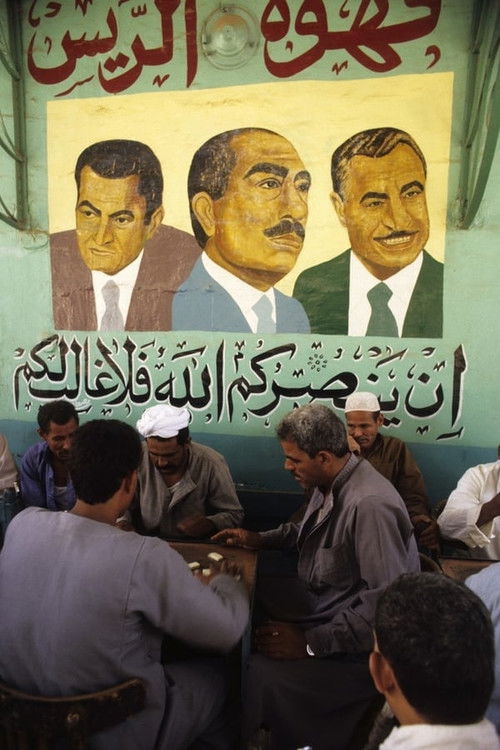
From Gamal Abdel Nasser to Anwar Sadat, to Hosni Mubarak, “The Pharaohs of Modern Egypt” follows the path of the successive regimes in power and reveals their common goal to carefully lay the basis of a solid independence, but which, on the other hand, led to the revolution on Tahrir Square in 2011. President Anwar Sadat led the country down the diametrically opposite path. He forged an alliance with the Muslim Brotherhood, the regime’s life-long enemy, and rerouted the country onto the road of capitalism. By ignoring increasing wealth gaps and insisting on peace with Israel at all political costs, the “pious” president opened up the Pandora’s Box of radical Islam, a decision that cost him his life, and which has since had repercussions on the entire world.
Egypt's Modern Pharaohs: Sadat
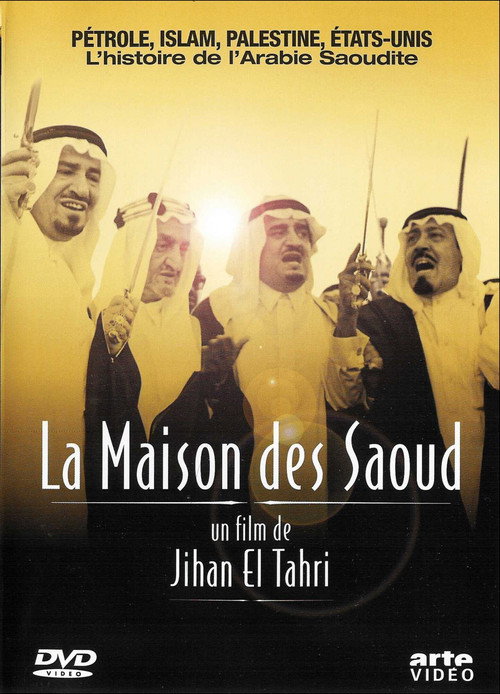
A Special History of Saudi Arabia, it's troubled relationship with America, and the challenges confronting a nation where tradition an modernity are in violent collision.
The House of Saud
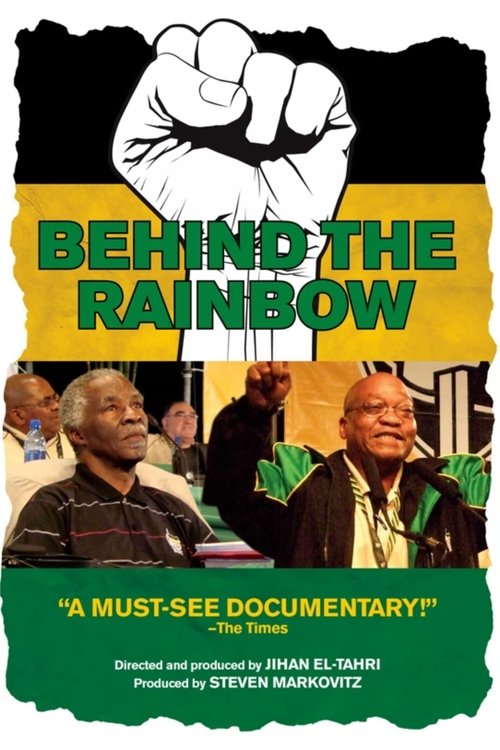
Behind the Rainbow explores the transition of the African National Congress (ANC) from its role as a liberation organization to its position as South Africa's ruling party, by means of the evolution of the relationship between two of its most prominent leaders, Thabo Mbeki and Jacob Zuma. Exiled under Apartheid, brothers in arms following Mandela's leadership, they loyally labored to build a non-racial state. Now they are bitter rivals. Their confrontation threatens to tear apart the ANC and the country, mean while the poor desperately seek hope in change and the elite fight for the spoils of victory.
Behind the Rainbow
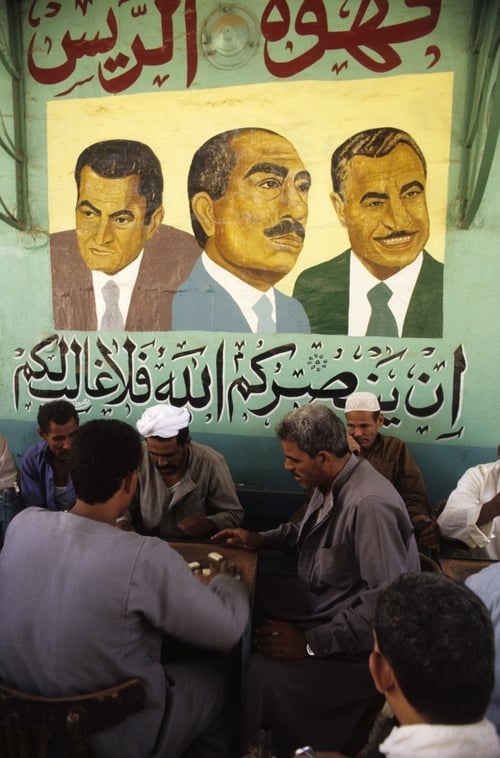
From Gamal Abdel Nasser to Anwar Sadat, to Hosni Mubarak, “The Pharaohs of Modern Egypt” follows the path of the successive regimes in power, and reveals their common goal to carefully lay the basis of a solid independence, but which, on the other hand, led to the revolution on Tahrir Square in 2011. President Anwar Sadat led the country down the diametrically opposite path. He forged an alliance with the Muslim Brotherhood, the regime’s life-long enemy, and rerouted the country onto the road of capitalism. By ignoring increasing wealth gaps and insisting on peace with Israel at all political costs, the “pious” president opened up the Pandora’s Box of radical Islam, a decision that cost him his life, and which has since had repercussions on the entire world.
Egypt's Modern Pharaohs: Nasser
From Gamal Abdel Nasser to Anwar Sadat, to Hosni Mubarak, “The Pharaohs of Modern Egypt” follows the path of the successive regimes in power, and reveals their common goal to carefully lay the basis of a solid independence, but which, on the other hand, led to the revolution on Tahrir Square in 2011. President Anwar Sadat led the country down the diametrically opposite path. He forged an alliance with the Muslim Brotherhood, the regime’s life-long enemy, and rerouted the country onto the road of capitalism. By ignoring increasing wealth gaps and insisting on peace with Israel at all political costs, the “pious” president opened up the Pandora’s Box of radical Islam, a decision that cost him his life, and which has since had repercussions on the entire world.