Acting
Malhação is a Brazilian television series for the teenage audience. The soap started in 1995, and was set in a fictional Gym Club called Malhação on Barra da Tijuca, Rio de Janeiro. Through the years the location varied slightly. Although the name of the soap remains the same, it is now set in the Múltipla Escolha High School.
Os Trapalhões was a Brazilian comedy group and also a Brazilian television series created by Wilton Franco. Its members were Dedé Santana, Zacarias, Mussum and their leader Didi Mocó, that was played by Renato Aragão. The name Trapalhões is derived from the Portuguese verb atrapalhar, which means the opposite of helping, to do something the wrong way or to Those that confuse. The name is translated "Tramps" in English DVD subtitles. It was aired by Rede Globo from 1977 to 1999. On March 18, 1990, Zacarias died due to respiratory failure, but the group and the series didn't come to an end until July 29, 1994, when Mussum died due to an unsuccessful heart transplant.
No description available.
Marina is raised by her father on an island after her mother's death. As a teenager, she moves to Rio de Janeiro to study and live with her godparents, where she ends up falling in love with Marcelo.
Paloma is a willful woman whose newborn baby is kidnapped by her own brother, Félix, who plans to become sole heir to the family’s fortune. Bruno is an honest man who, during the same night, loses his wife and son in childbirth and miraculously finds Paloma’s child in a dumpster. Destiny will unite their lives in a plot of secrets, revelations, and disputes, with the unpredictable consequences of lives based on a dangerous and surprising network of lies.
Sol and Tião are born to different social backgrounds—she to a poor suburban family in Rio, and him to an even poorer family who raised cattle in West São Paulo State. They eventually meet, due to unlikely circumstances, but part again, as she has set as her ultimate priority to reach the United States or bust. While she comes to the U.S. to live as an illegal immigrant, he remains in Brazil and, despite many trials and tribulations, he becomes a successful rodeo cowboy.
The adventures of a man with amnesia who struggles to rediscover his past while learning to live in the present.
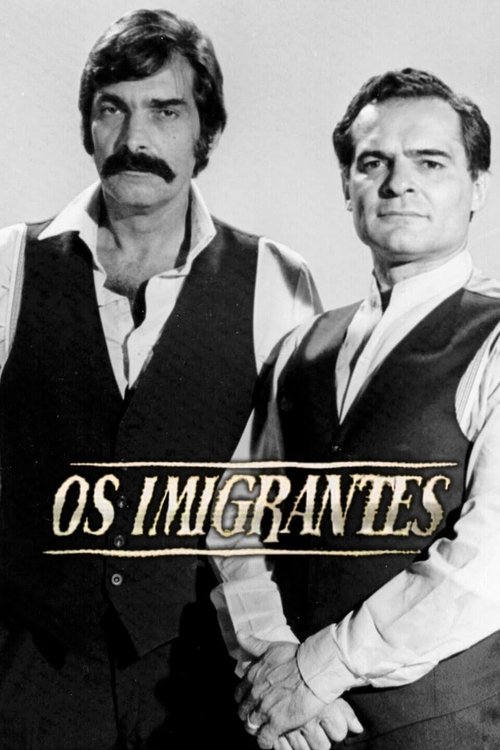
The story of two young Italian lovers of different, rival families who are separated after he moves to Brazil and falls for another woman, while she is forced to marry a fascist.
Fernanda and Vivi are identical, but from different worlds. A cruel plan swaps their identities and transforms their lives into a game of lies and ambition.
An orphaned young man raised in the wild by an indigenous shaman is found by his grandfather and returned to his estranged family, where he finds himself as heir to their wealth.
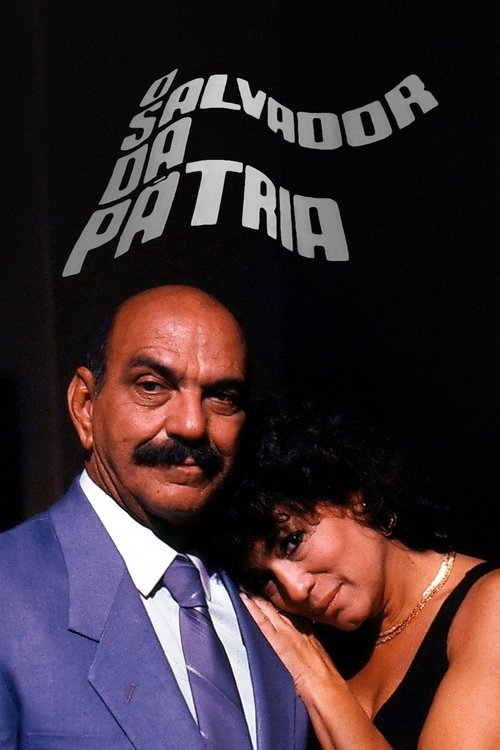
Sassá Mutema is a farm laborer who becomes the target of the city's powerful figures' cruelty. With Clotilde's support, he discovers that it's possible to start a new life alongside a great love.
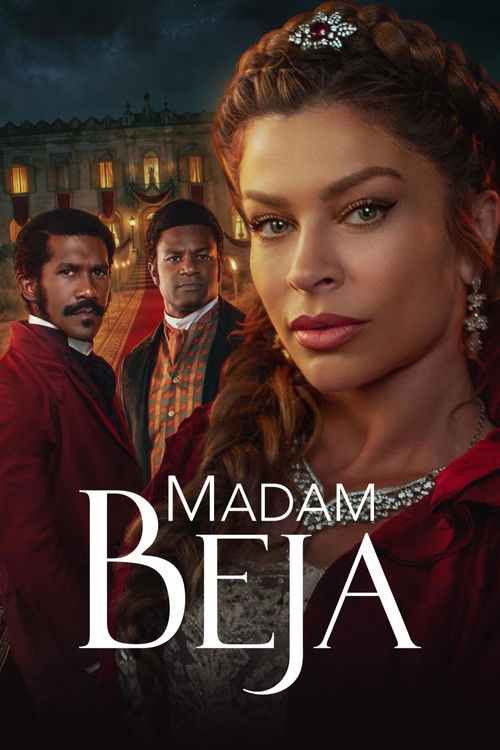
In imperial Brazil, a young woman stripped of her reputation is forced into exile from polite society. Recasting herself as Madam Beja, she builds an elite pleasure house that becomes a hub of political intrigue, economic power, and forbidden desire, using charm, intelligence, and ruthless strategy to bend the same men and institutions that once destroyed her.
After an unjust imprisonment, friends return to the town of Remanso, facing betrayals and lost loves, while battling a corrupt lawyer.
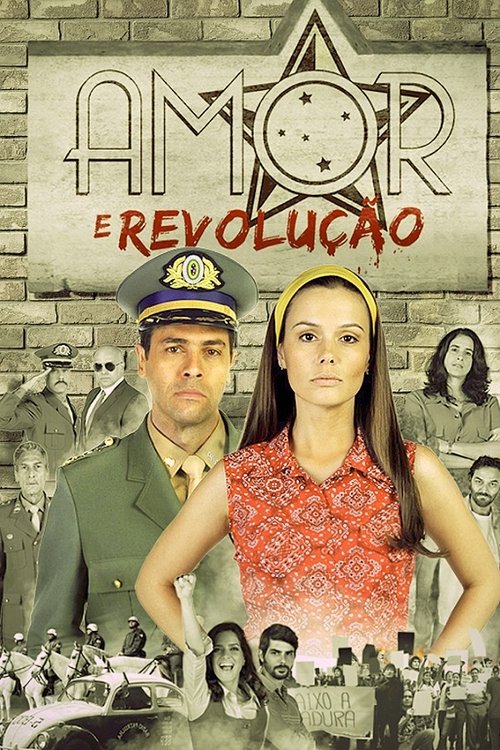
Amor e Revolução is a Brazilian telenovela produced by SBT and originally broadcast from April 5, 2011, to January 13, 2012. Created by Tiago Santiago, with collaboration from Renata Dias Gomes, Miguel Paiva, and Eliana Garcia, and directed by Reynaldo Boury, the telenovela stars Graziella Schmitt, Cláudio Lins, and Lúcia Veríssimo. The production was the first Brazilian telenovela to portray the period of the military dictatorship as its main theme. Set between the 1960s and 1970s, the story follows Maria Paixão, a young woman involved in the armed resistance against the military regime, and José Guerra, a military officer who secretly opposes the government's actions. Despite being on opposite sides of the political conflict, they fall in love and face persecution, violence, ideological disagreements, and personal tragedies while fighting for their ideals and their relationship during one of the most turbulent periods in Brazilian history.
Jocasta, an 18-year-old sociology student and daughter of communist activist Túlio Silveira, is actively involved in the country's political landscape. She is in love with Laio—her polar opposite—a disengaged, esoteric young man who lives off his wealthy father's allowance. A mystic, Laio makes no move without consulting his guru and friend Argemiro, whom he turns to upon learning of Jocasta's pregnancy. The cowrie shell reading reveals that his son is destined to kill him and enter into a romantic relationship with his mother. Terrified, Laio disappears with the child immediately after birth, aided by Argemiro—who loves Laio and loathes Jocasta. Twenty-five years later, Jocasta is a successful yet restless woman searching for her missing son. She is estranged from Laio, who has spent recent years expanding his father's fortune through involvement in underground gambling. On a highway, he encounters Oedipus, unaware that the young man is his son.
Renato Villar is an ambitious businessman. After discovering a brain tumor, his life takes a turn, and he decides to settle his debts and live his true love.
The cunning Senator Petrônio Paranhos gives an interview to the beautiful journalist Magali Santanna, who is interested only in his affair with Arlete—an ambitious young woman intent on conceiving the older man's child via in vitro fertilization. To land this scoop, Magali agreed to interview the politician in a motel room, a condition he had insisted upon. However, Paranhos suffers a sudden collapse and dies during the interview. Detective Aristênio Catanduva, who had been keeping the senator under surveillance, investigates the case. Known by the codename "Araponga," he is a bumbling figure working for the Federal Police following his long service to the military regime.
In 1970, during a glittering New Year's Eve party attended by the aristocracy, a young pantry maid named Zaíra is mysteriously murdered. Thirteen years later, the prime suspect—Gastão, a humble waiter and former colleague of the victim—seeks to prove his innocence with the help of his son, Nil, becoming entangled in the lives of the other party guests. The story also follows a cunning pair of jewel thieves: the sophisticated Antônia Regina and João Maria—a criminal lawyer and member of the declining aristocracy who takes up the cause of Nil's father.
Mário Fofoca, a bungling detective, moves to Rio and, with the help of a friend, investigates cases—starting with a wife's suspected infidelity.