Acting
No description available.
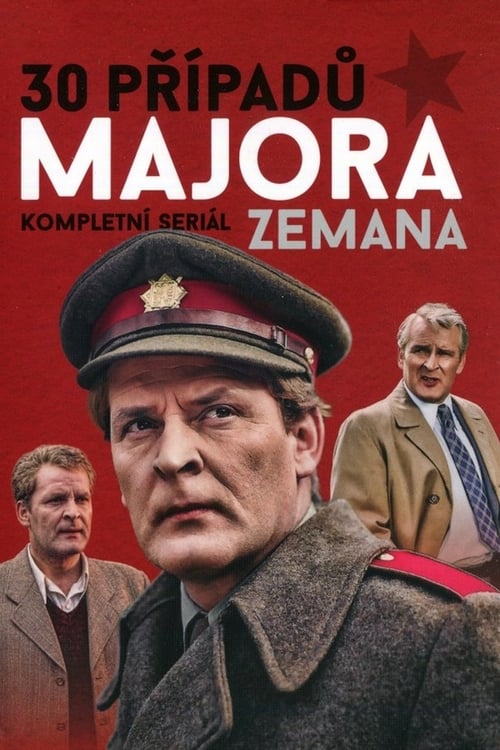
Thirty Cases of Major Zeman is a Czechoslovak action-drama television show intended as a political propaganda to support the official attitude of the communist party. The series were filmed in the 1970s. Each episode encompasses one year, and investigations are stylized to that year. Most are inspired by real cases. The series follows the life of police investigator Jan Zeman during his career from 1945 to 1975.
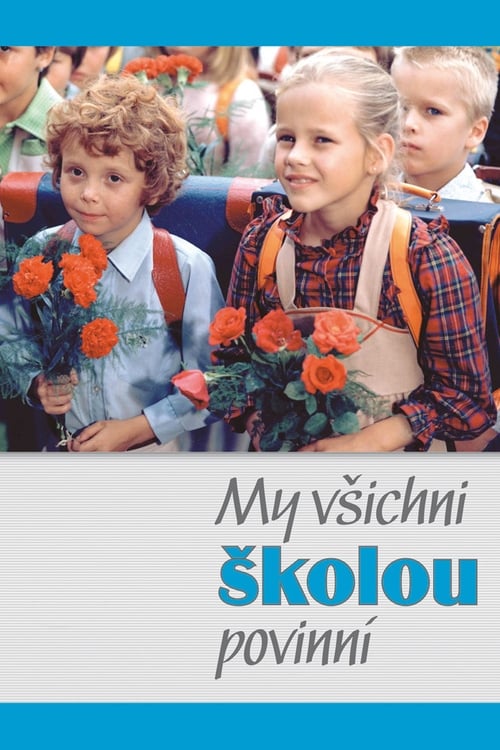
Stories from a daily life of children attending a regular school.
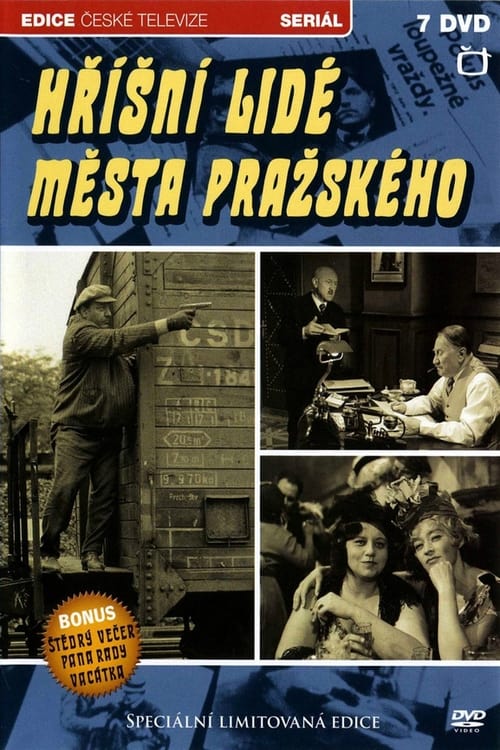
The miniseries depicts the fate of the residents of an apartment block in Prague’s Jewish quarter following the invasion by German troops in 1939. Among them is an elderly widow who had once disowned her son and now wishes to bring him to Brazil; there are also the owners of a stationery shop, who are driven to ruin by the German occupiers. The caretaker Glaser, who is of German descent, also comes under pressure when his son is arrested in a communist pub. To save his own skin, he informs on two young people who are active in the resistance.
The trenches of World War I provide for a captivating backdrop to the drama of Corporal Hoferik. In his devotion to the Habsburg Monarchy, he fanatically carries out his military orders, but he ultimately suffers the Empire's disfavor.
The hero of the opening story, the Postman Puppet (directed by Zdeněk Troška), works as a postman in the mountains. When his wife is taken to the maternity ward, he goes on his usual hike through the solitudes. Little Libor goes after the father of two girls (Petr Pospíchal), who longs for a son. Meanwhile, the weather on the ridges worsens sharply. An experienced mountaineer and his little friend spend the night in a makeshift shelter... The second episode of Hádanka (directed by Jan Ekl) has a criminal plot. A new father (Vlastimil Hašek) gets drunk with friends in a wine bar and the next day becomes a suspect in a murder. He doesn't remember the critical moments, but his testimony leads to the capture of the real perpetrator... The main character of the final short story True Love (directed by Vladimír Drha) is a frat boy (Pavel Zedníček) who spends whole days in pubs. He gets a harsh lesson from his wife, who refuses to let him see the baby...
The film depicts the fate of the residents of an apartment block in Prague’s Jewish quarter following the invasion by German troops in 1939. Among them is an elderly widow who had once disowned her son and now wishes to bring him to Brazil; there are also the owners of a stationery shop, who are driven to ruin by the German occupiers. The caretaker Glaser, who is of German descent, also comes under pressure when his son is arrested in a communist pub. To save his own skin, he informs on two young people who are active in the resistance.
Three separate short stories by Jan Drda from the collection The Dumb Barricade: The Dynamite Watchman, Hatred and Traces.
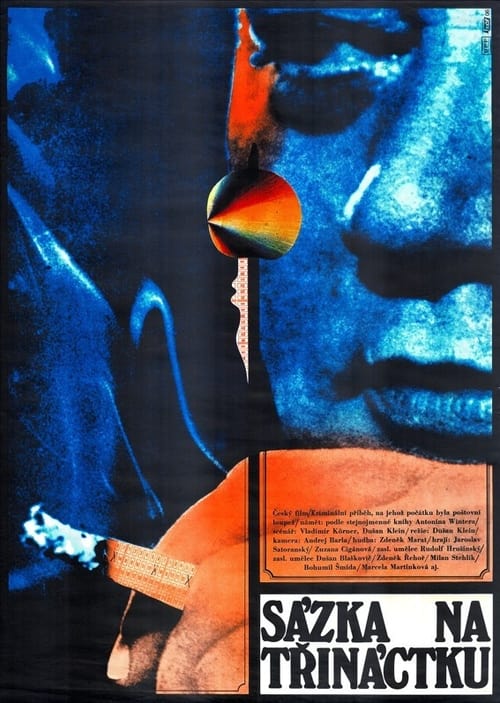
A mail truck is robbed near the small town of Kostelec, during which the perpetrators steal CZK 2.5 million. The local police fail to solve the case. After some time, a young and capable lieutenant Charvát arrives from the Prague CID. While he is getting acquainted with the circumstances of the case and the evidence found, he makes friends with the handsome Květa, the daughter of the hostel manager Weisse. The complicated relationship that develops between the two lovers is in no way comparable to the complexity of the criminal case that brought Charvat to Kostelec. Things get even more complicated when someone murders Malásek, a local brawler and drunkard, with a shotgun. He is actually Květa's husband. And his death, according to Charvat, is connected to the mail robbery...
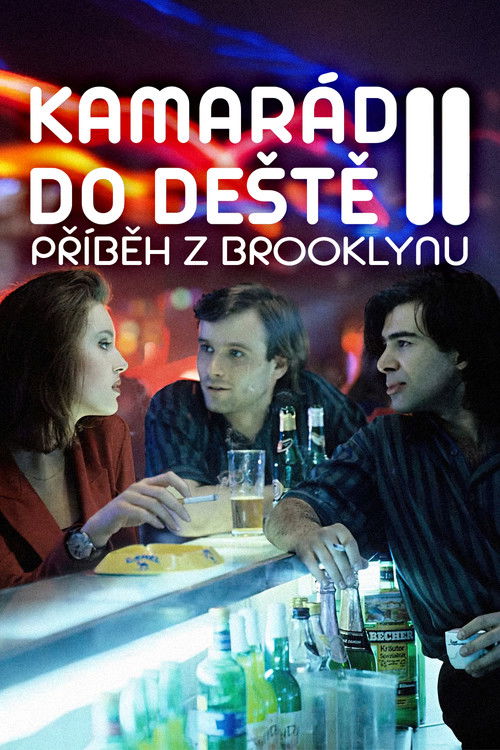
The main characters left their original professions of waiter and taxi driver and rented a thriving disco Brooklyn. However, their peaceful life is disrupted by the con man Kadlec, who has not forgotten that it was they who put him behind bars two years ago. All this time, all he's been thinking about is revenge. The formerly petty crook, with the help of his accomplices, his son-in-law Buresh and fellow prisoner "The Engineer", joins the drug trade and begins his revenge. Michal is arrested for the rape of a girl he has never seen in his life, and it doesn't take much for Tomas to figure out that Kadlec is behind it all. What Tomas also doesn't realise for a long time is that the sympathetic Ivana, who has joined their business and with whom he has fallen in love, also works as a luxury prostitute and was put into the business by Kadlec.
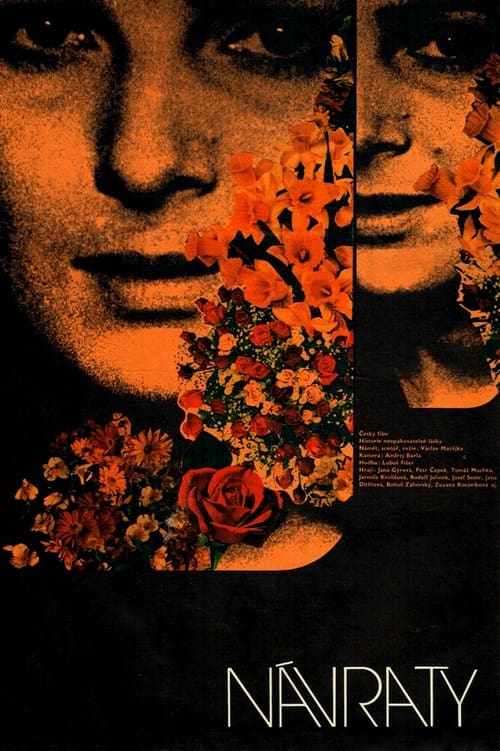
A psychological film about the sense of self-fulfillment of a divorced couple over 30 who feel that life is slipping through their fingers. While she, a nurse by profession, is adapting better, he, unreliable and always improvising, is searching in vain for his clue and even tries to get back to his ex-wife.