Al Bano
Acting
Biography
Albano Antonio Carrisi (born 20 May 1943), better known as Al Bano, is an Italian and Albanian tenor, actor, and winemaker. Having sold over 165 million records globally, he is one of the most recognisable Italian singers in the world whose career spans seven decades. He has gained worldwide notability due to his four and a half octave vocal rangeas well as mésalliance with Romina Power, daughter of Hollywood legend Tyrone Power. Carrisi is acclaimed for singing with operatic affinity in pop, rock and italodisco repertoires. In 2016, he was awarded Albanian citizenship due to his close ties with the country and a forename referring to the land. He was born in the town of Cellino San Marco (province of Brindisi, Puglia in Southern Italy), where he still lives. His mother Iolanda Ottino named him Albano because, when he was born, his father Carmelo Carrisi was fighting in Albania for the Royal Italian Army during World War II. He has one brother, Franco Carrisi (Kocis). He made his debut in 1966 both as a singer, at the Festival delle Rose, and on television. He won the Disco per l'Estate, an Italian song contest, with "Pensando a te" in 1968. He recorded some major hits such as "La siepe" and "Nel sole" at that time. "Nel sole" sold 600,000 copies in Italy within three months of release in 1967, and eventually over one million copies, and was awarded a gold disc in July 1968. Soon afterwards, he started a musical collaboration with Romina Power (daughter of the American actor Tyrone Power), whom he married in 1970. After their marriage, they recorded "Storia di due innamorati". They sang as the duo Al Bano & Romina Power for almost thirty years; their work has been especially popular in Italy, Austria, France, Spain, Bulgaria, Romania, Greece and Germany. They released "Dialogo" in 1975 and took part in the Eurovision Song Contest 1976 with the song "We'll Live It All Again" ("Noi lo rivivremo di nuovo"). They sang "Sharazan" in 1981 and the following year they took part in the Sanremo Music Festival with the song "Felicità", which came second. They won first prize in 1984 singing "Ci sarà" and again took part in the Eurovision Song Contest 1985 with "Magic Oh Magic". Both their Eurovision entries placed 7th. Other hits of 1987 include: "Nostalgia canaglia" (awarded 3rd prize at Festival di Sanremo '87) and "Libertà". Those successful songs were followed by "Cara terra mia", which came in third once more at the 1989 Sanremo Music Festival, and "Oggi sposi" which placed 8th at the 1991 Sanremo Music Festival. Al Bano returned to his solo career in 1996 with "È la mia vita" which was followed by "Verso il sole" in 1997 and "Ancora in volo" in 1999 (that year, his duo – and his marriage – with Romina broke up). He also played in "Herşeye Rağmen" ("Nonetheless" in Turkish) music video of Sima (full name was Sima Sarıkaya), a Turkish singer in 1997. In 2000, Al Bano returned to the Eurovision stage, providing backing vocals for the Swiss entry (performed in Italian) "La vita cos'è?" performed by Jane Bogaert. This song placed 20th out of 24 in the contest. On 16 October 2001, Carrisi was nominated Goodwill Ambassador of the Food and Agriculture Organization of the United Nations (FAO). ... Source: Article "Albano Carrisi" from Wikipedia in English, licensed under CC-BY-SA 3.0.
Known For

Every evening at 6:45 p.m. sharp, a prominent guest takes a seat on the red sofa—and DAS! provides daily updates on what's hot in the north.
DAS!
No description available.
Volle Kanne

TV presenter Markus Lanz invites prominent guests and experts from all areas of public life to his colourful talk show. As a rule, there are four guests, introduced individually to contribute their personal experiences to the topics.
Markus Lanz
No description available.
Champs-Elysées

The Eurovision Song Contest is an international song competition, organised annually by the European Broadcasting Union (EBU) and featuring participants representing primarily European countries. Each participating country submits an original song to be performed on live television and radio, transmitted to national broadcasters via the EBU's Eurovision and Euroradio networks, with competing countries then casting votes for the other countries' songs to determine the winner.
Eurovision Song Contest

Midi Première is a French variety show presented by Danièle Gilbert, directed by Jacques Pierre and broadcast from January 6, 1975 until January 1, 1982 on TF1. The program was generally broadcast between 12:15 p.m. and 12:55 p.m., then giving way to the 1:00 p.m. TV news. However, the broadcast schedule could change, depending on the guests, and the setting where the recording of the program was shot. Certain performances by artists who have become cult like the one where Ringo jostles with a demonstrator in interpretation (1977), that of Dalida with the title There is always a song with the soundtrack that does not start, twice, at the right speed (1978), Claude François and his Clodettes, who, in the provinces, are unable to join "the set" in order to interpret his song, the latter being taken by the crowd of delirious fans (summer 1977) . The group Supertramp performed there with the title "Dreamer" on March 8, 1975.
Midi Première
No description available.
Sacrée soirée

No description available.
ZDF-Fernsehgarten
No description available.
3 nach 9
A talk show presented by Michel Drucker
Les Rendez-vous du dimanche
No description available.
Le monde est à vous
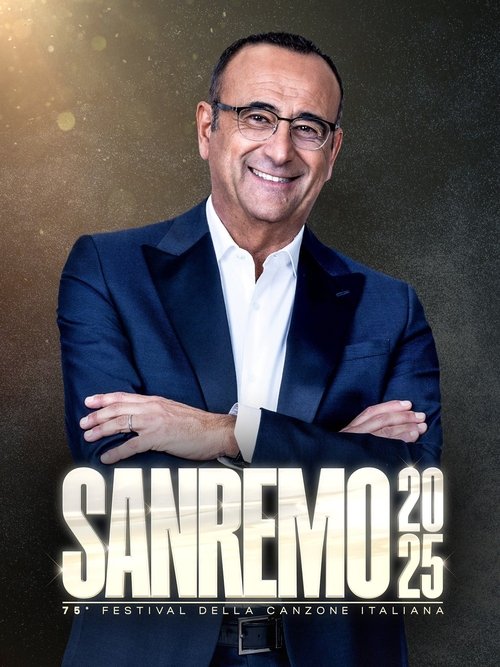
The Sanremo Music Festival is the most popular Italian song contest and awards, held annually in the town of Sanremo, Imperia, Italy, and consisting of a competition amongst previously unreleased songs. The Festival was the inspiration for the Eurovision Song Contest.
Sanremo Music Festival

No description available.
Die Montagsmaler
The ZDF-Hitparade, or Hitparade for short was one of the most popular and most well-known music television series presenting mostly German Schlager.
Die ZDF-Hitparade
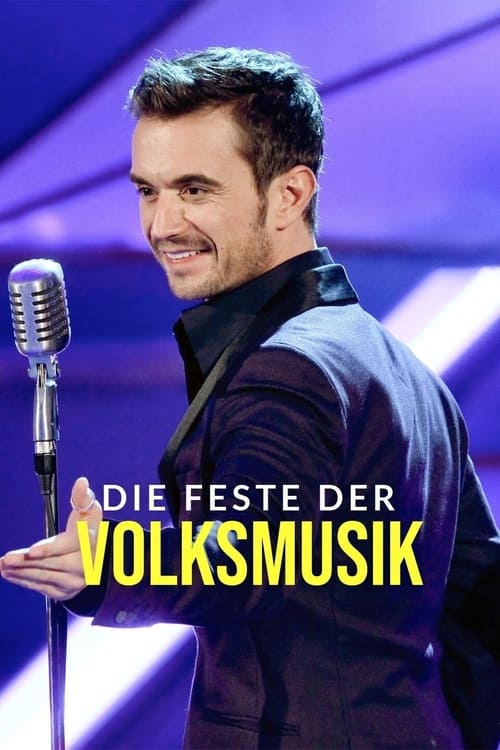
No description available.
Die Feste mit Florian Silbereisen
No description available.
Die Pyramide
Disco was a pop music program that aired in Germany on the ZDF network from 1971 to 1982. It generally aired on the first Saturday of each month at 7:30PM, each show running 45 minutes. 133 shows were produced. The show was hosted by German actor and comedian Ilja Richter. Its lesser known predecessor on ZDF, 4-3-2-1 Hot & Sweet was aired between 1966 and 1970, presenters included Ilja Richter and Suzanne Doucet. Disco generally served a younger pop-oriented audience compared to ZDF's Hitparade, and until 1972, its main competitor was Beat-Club, followed by Musikladen, both on ARD. Repeats of Disco have been aired since 1984 on ZDF Musikkanal, after its closedown in 1989 on 3sat. Since 2004, the digital ZDF Theaterkanal aired repeats of the entire series. In 2007, ZDF Dokukanal began to air reruns, starting with episodes from 1975 and also multiple repeats of the series have been shown on hit24 in 2008. The show focussed on chart hits current at the time of airing, giving about equal airtime to international pop music and German Schlager. Despite its name, it did not particularly focus on disco music although it featured many disco hits as long as they were chart relevant..
Disco
No description available.
Système 2
Every year there was a Gala of the Stars at the Zirkus Krone in Munich.
Stars in the Ring

No description available.