Sound
No description available.
Tita is passionately in love with Pedro, but her controlling mother forbids her from marrying him. When Pedro marries her sister, Tita throws herself into her cooking and discovers she can transfer her emotions through the food she prepares, infecting all who eat it with her intense heartbreak.
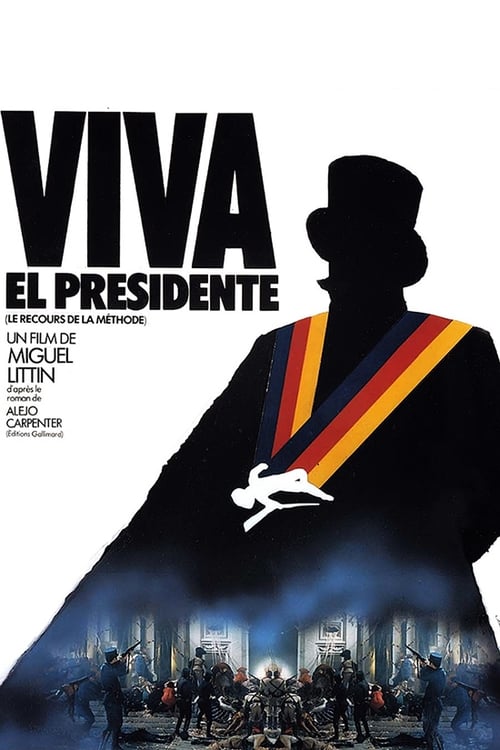
Set in the early 1900s, this film charts the rule of a Latin American dictator as he moves from being a charming despot to a tyrannical ruler before he is finally ousted, only to die in obscurity in Paris. Early in his regime, the resources and agricultural products his country sells command high prices, and he is a reasonably confident, even gentle, ruler who likes to take long vacations with his daughter in Paris. After World War I, with falling prices and a number of coup attempts behind him, his rule becomes quite cruel.
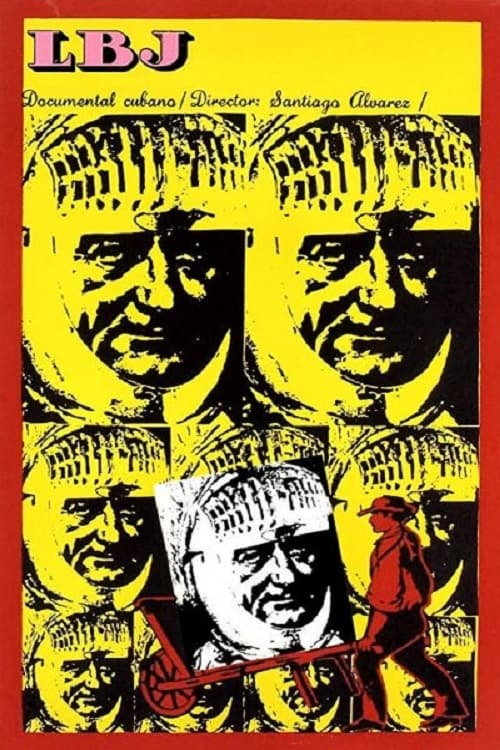
This is a montage of different images from the JFK, Martin Luther King and Bobby Kennedy triumphs and assassinations, all three events being observed by Lyndon Johnson as the dark figure who is plotting the anti-black rights movement.
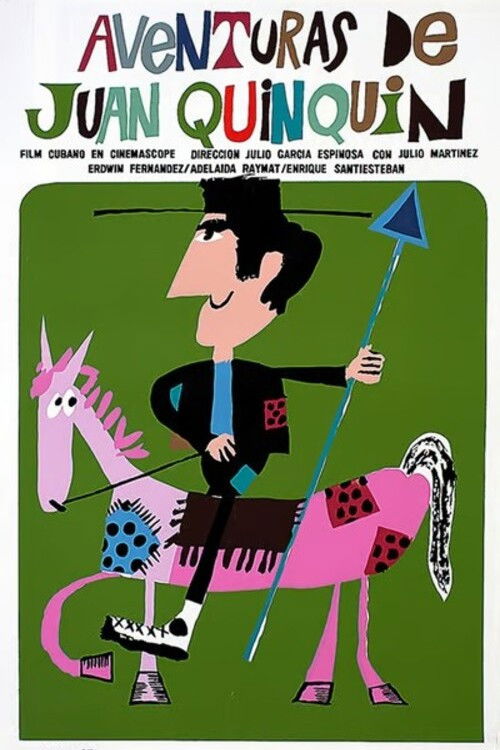
The adventures, fortunes and misfortunes of resourceful peasant Juan Quin Quin - in turns bullfighter, guerrilla fighter and sacristan - who never resigns himself to his fate. Set against the backdrop of 1950s Cuba and steeped in the island's countryside traditions, this comedy is considered the first successful Cuban experimental film.
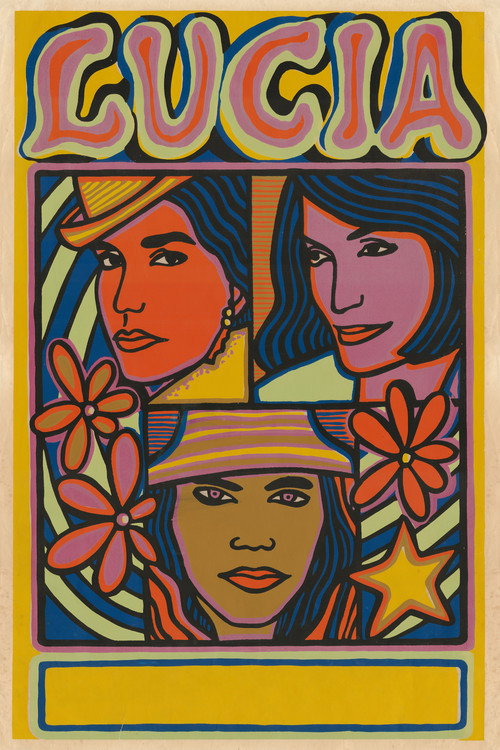
Traces episodes in the lives of three Cuban women, each named Lucía, from three different historical periods: the 1890s, the 1930s, and the 1960s.
1964, in the Escambray mountains: the area is infested with counter- revolutionary bands which are trying to spread terror among the population and re-establish contact with the US, CIA. The murder of a man led to a reprisal to wipe out the bandits.
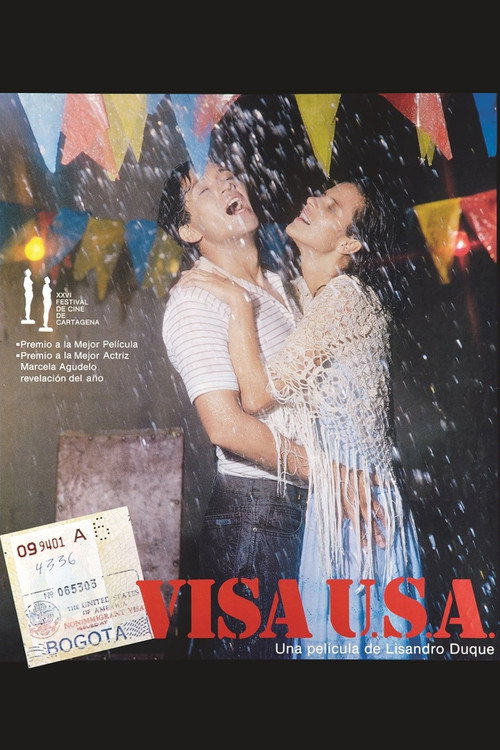
Adolfo is an ambitious young man who dreams of leaving the town where he lives with his parents and trying his luck as a radio host in the United States of America, without realizing that everything he truly desires is closer than he thinks.
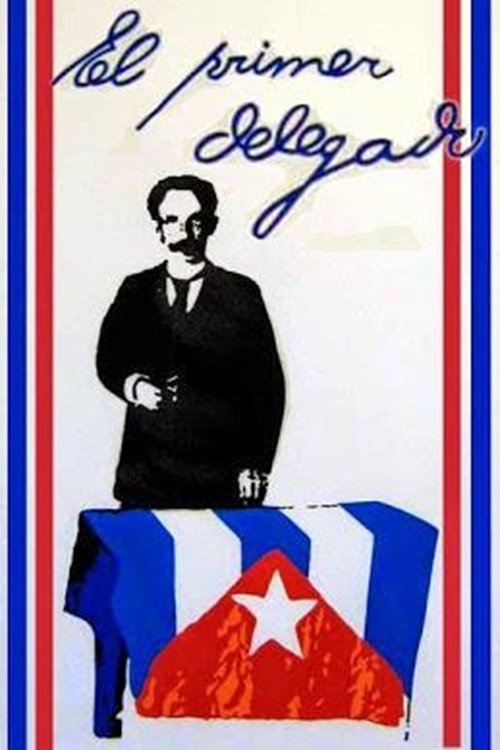
The short film El primer delegado (The First Delegate), made by a group of ICAIC directors, recounts the moments in which José Martí announced the foundations and statutes of the Cuban Revolutionary Party, the tireless struggle that the hero sustained throughout his life to obtain independence, his gifts as a political organizer, the final founding of the party, of which he was the first delegate, and his offer to General Máximo Gómez of the military leadership of the insurrection, the final founding of the party, of which he was the first delegate, and his offer to General Máximo Gómez of the military leadership of the insurrection, all narrated live by an announcer who entertains with his reading the work of the cigar makers in a tobacco factory, until the documentary reaches its final climax: the symbolic reconversion of the old Marti's party into a new one.
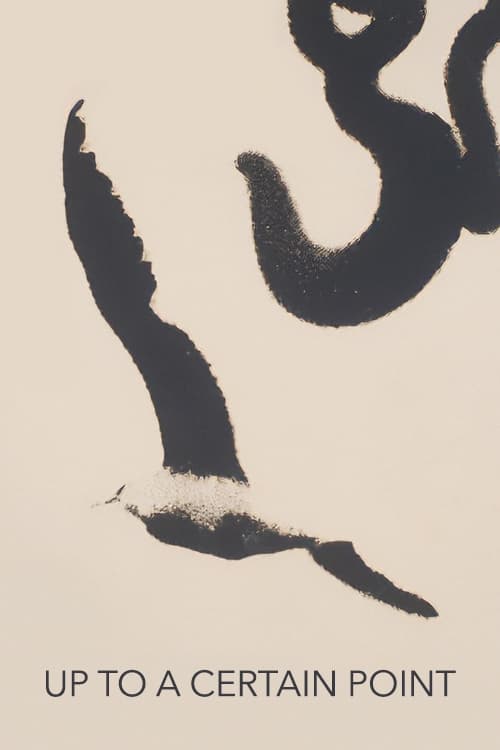
This film confronts the failures of the Cuban economy, although it is made in a Guevara-like spirit of moral exhortation rather than criticism.
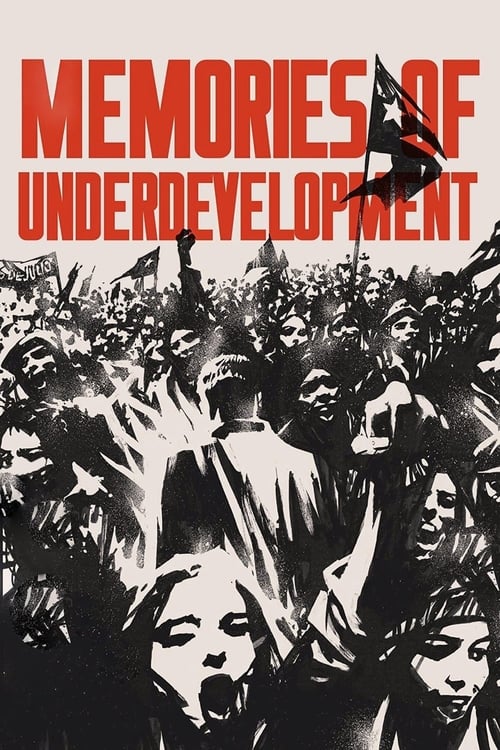
In the aftermath of the Bay of Pigs incident, Sergio chooses to stay behind in Cuba while his wife and family escape to neighboring Miami. Alone in a brave new world, Sergio observes the constant threat of foreign invasion while chasing young women all over Havana. He finally meets Elena, a young girl he seeks to mould into the image of his ex-wife, but at what cost to himself?
In 1914, during World Ward I, Amada, a bourgeois wife, falls in love with her cousin Marcial, a young idealist who is fighting against the Cuban regime in power.
The life and legend of Arequipa poet Mariano Melgar (1791-1815), hero of the insurrection led by José Angulo and chief Mateo Pumacahua in the Viceroyalty of Peru in 1815.
It is the story of a young man named Esteban, who was totally devoted to the cause of the Revolution against Fulgencio Batista. One day, Esteban is diagnosed with a cerebral aneurism, which causes him to take stock of his life as a revolutionary and to reconsider his relationships to his family--to his mother and brother, particularly--and his friends.
Follows the Cuban leader into the home of a 93 year old acquaintance of Jose Marti, who is now blind and who takes the duration of the film to realize who his illustrious interviewer actually is.
Focuses on the history of foreign intervention in Laos, first by France and then by the United States. It shows how the liberation forces of Laos, under continuous U.S. bombing, were able to run an entire society in hidden caves and tunnels. Through the leadership of the Pathet Lao, they organized schools, cultural activities, clinics, as well as political and military activities literally underground.
A theater director and script-writer falls for a female worker from the Havana docks, but his machismo, social and working conflicts, and the Cuban woman's condition interfere with their relationship.
The story of the Santa María School massacre of miners in 1907.
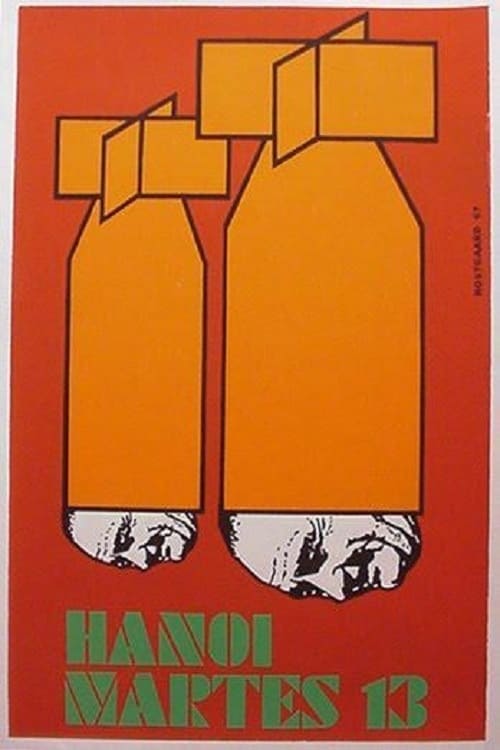
In December 1967, a Cuban film crew led by Santiago Alvarez, the veteran polemicist, travelled to Hanoi. They shot the footage which constitutes this short documentary all in one day - Tuesday 13. The film is the story of that day and what happened to the North Vietnamese people in the course of it.
"Gold of Cuba" is a documentary by Argentine filmmaker Alejandro Saderman that shows the development of Cuba through the promotion of its main industry: sugar. From the discovery of America to the figure of Reinaldo Castro, National Hero of Labor as a sugarcane cutter, the film discusses the introduction of mechanical harvesters, including the African slave labor that would later be replaced, with the abolition of slavery, by Chinese sugarcane cutters.