FEEL IT.STREAM
Haroun Tazieff

Haroun Tazieff

Acting

Biography

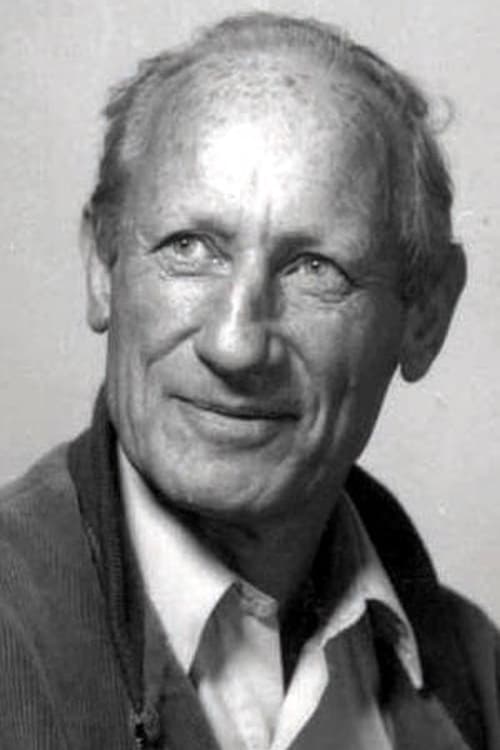
Haroun Tazieff (Warsaw, 11 May 1914 – Paris, 2 February 1998) was a Tatar, Belgian and French volcanologist and geologist. He was a famous cinematographer of volcanic eruptions and lava flows, and the author of several books on volcanoes. He was also a government adviser and French cabinet minister. He also served in the Belgian resistance during world war 2. His parents met and married in 1906 while they were both students in Brussels. They later returned to Warsaw, Russian Partition, where their first son, Salvator, died at two months and where Haroun was born. His father, Sabir, was a Muslim medical doctor, of Tatar descent and his mother, Zenita Iliyasovna Klupta, was a Tatar[dubious – discuss] chemist and doctor of natural science and holder of a bachelor's degree in political science. His father was conscripted into the Russian Army and died during the First world war, a fact that did not reach the family until 1919. In 1917 Haroun emigrated to Brussels with his widowed mother. Haroun received a degree in agronomy in Gembloux in 1938, and another degree in geology at the University of Liège in 1944. He was later a Secretary of state in France, in charge of protection against major risks. Haroun Tazieff participated in the first detailed exploration of the "Saint-Martin" La Verna cave system in the French Pyrenees. In 1952, while he was filming Marcel Loubens' ascent of the Pierre-Saint-Martin rock face, the cable of the hoist broke and Loubens fell over 80 meters. Loubens died 36 hours later but his body could only be recovered from the cave in 1954. He became famous in France after publishing a book entitled, "Le Gouffre de la Pierre Saint-Martin" in 1952. He directed the documentary movie Le volcan interdit (1966) about the Nyiragongo Mountain in the Democratic Republic of Congo, which he was the first to climb in 1948. The National Geographic film, The Violent Earth, was based on Tazieff's expeditions to the volcanoes Mount Etna on Sicily in 1971 and Mount Nyiragongo in 1972. In these expeditions he attempted, unsuccessfully, to descend into the active lava lake in order to collect samples — something he had managed to achieve on a previous expedition in 1959. Tazieff died in 1998 and was buried in the Passy Cemetery in Paris. Source: Article "Haroun Tazieff" from Wikipedia in English, licensed under CC-BY-SA 3.0.
Known For

Champs-Elysées
6.8

No description available.

Champs-Elysées

1982
Midi Première
9.0

Midi Première is a French variety show presented by Danièle Gilbert, directed by Jacques Pierre and broadcast from January 6, 1975 until January 1, 1982 on TF1. The program was generally broadcast between 12:15 p.m. and 12:55 p.m., then giving way to the 1:00 p.m. TV news. However, the broadcast schedule could change, depending on the guests, and the setting where the recording of the program was shot. Certain performances by artists who have become cult like the one where Ringo jostles with a demonstrator in interpretation (1977), that of Dalida with the title There is always a song with the soundtrack that does not start, twice, at the right speed (1978), Claude François and his Clodettes, who, in the provinces, are unable to join "the set" in order to interpret his song, the latter being taken by the crowd of delirious fans (summer 1977) . The group Supertramp performed there with the title "Dreamer" on March 8, 1975.

Midi Première

1975
Sacrée soirée
5.7

No description available.

Sacrée soirée

1987
Le Grand Échiquier
8.0

Le Grand Échiquier is a French variety television program created and presented by Jacques Chancel. It aired at 8:30 pm on the first channel of the ORTF from January 12, 1972 to July 12, 1972, then on the second color channel of the ORTF from September 1972 to December 1974, and finally on Antenne 2 from January 1975 to December 21, 1989. The program returned to France 2 on December 20, 2018 and is hosted by Anne-Sophie Lapix.

Le Grand Échiquier

1972
Stars 90
6.2

No description available.

Stars 90

1990
Fantomas Unleashed
6.7

In the second episode of the trilogy Fantômas kidnaps distinguished scientist professor Marchand with the aim to develop a super weapon that will enable him to menace the world. Fantômas is also planning to abduct a second scientist, professor Lefebvre.

Fantomas Unleashed

1965
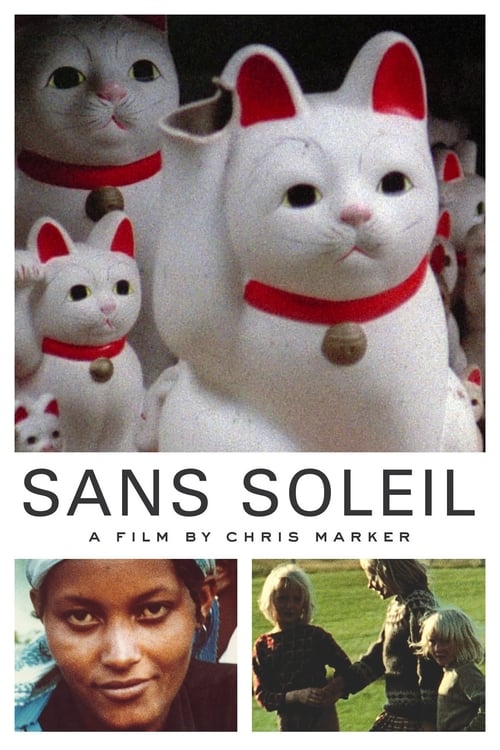
Sans Soleil
7.5

A woman narrates the thoughts of a world traveler, meditations on time and memory expressed in words and images from places as far-flung as Japan, Guinea-Bissau, Iceland, and San Francisco.

Sans Soleil

1983
The Power of Speech
5.9

Godard blends elements of literature, cinema and other artistic medias from different historical periods in order to make a stance on how words can be subverted and manipulated to many different contexts, sometimes bearing a similar significance to the original material or even creating an alternate context.

The Power of Speech

1988
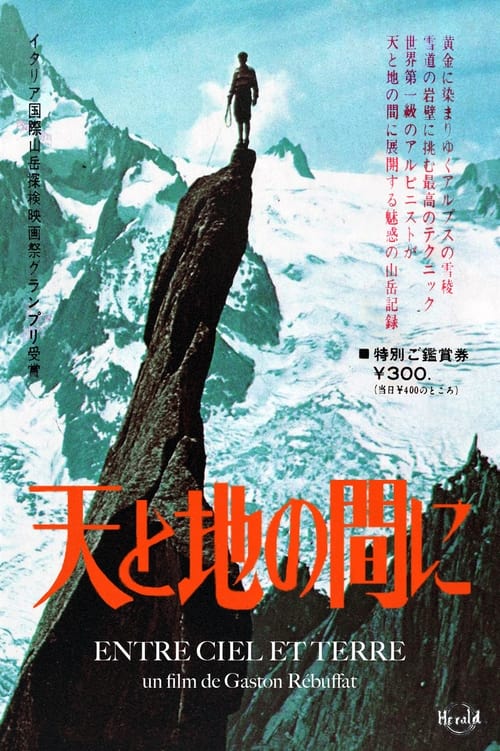
Entre Terre et Ciel
10.0

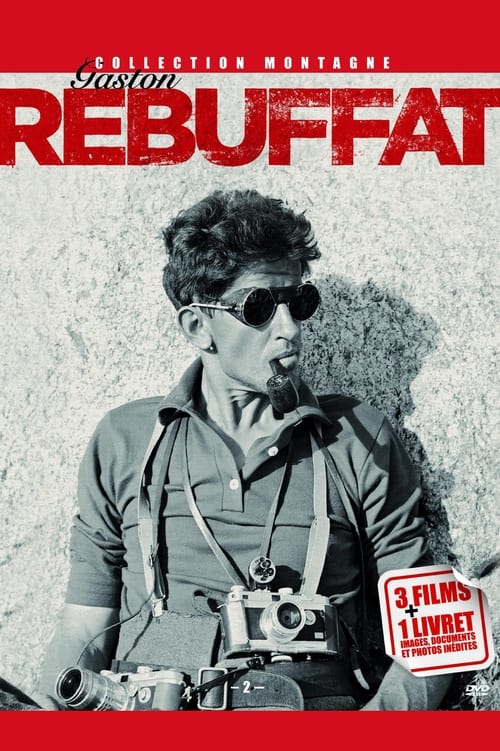
This is Gaston Rebuffat's fourth film, in which, with several close friends, he discovers the sublime landscapes of the Alps. “Mont-Blanc is beautiful. I climbed it several times depending on the time, the color of the sky and the shape of the cornices and ridges. Because of the weather and also because of this feeling of altitude, Mont-Blanc provides great pleasure. For the guide, Mont Blanc is his garden, but the garden becomes more beautiful when shown to a friend. Personally, I really like the bivouacs; only there one penetrates a little the mystery of the altitude. That's why I immediately accepted when Tazieff expressed the desire to spend the night at the top of Mont Blanc in an igloo. The film won the Grand Prix at the Trento Film Festival in 1961.

Entre Terre et Ciel

1961
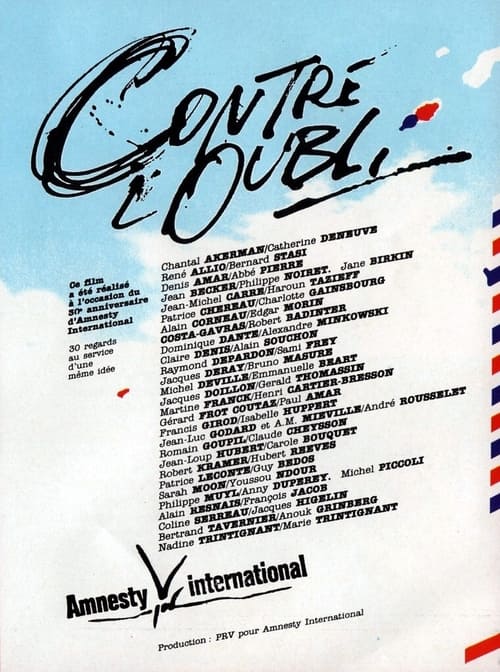
Lest We Forget
7.0

A compilation of 30 French filmmakers, Alain Resnais and Jean Luc Godard among them, who use film to make a plea on behalf of a political prisoner. Jean Luc Godard and Anne Marie Mieville's film concerns the plight of Thomas Wanggai, West Papuan activist who has since died in prison. The short films were commissioned by Amnesty International.

Lest We Forget

1991
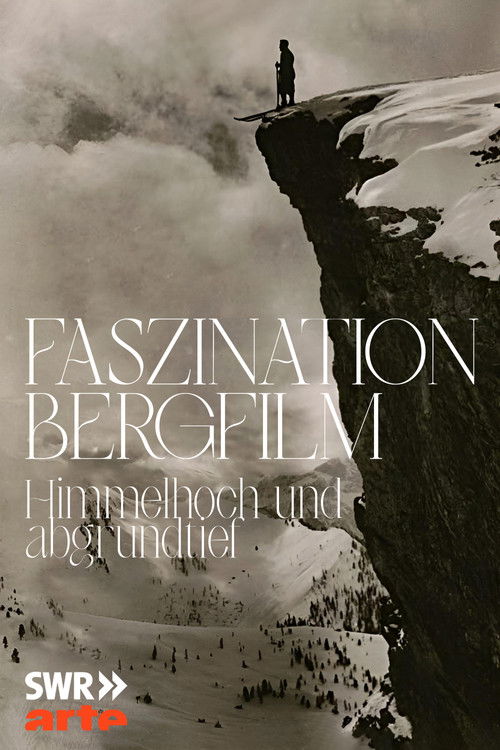
Faszination Bergfilm - Himmelhoch und Abgrundtief
10.0

A fascinating chronology of 100 years of mountain film history in the Alps. This documentary focuses primarily on films shot on the Matterhorn, the Eiger, and the Grandes Jorasses, considered until the 1930s as the "last problems of the Alps," and shows the evolution of mountain filmmaking through numerous excerpts from documentaries and feature films – notably on the Matterhorn in 1901. The genre, appropriated as a means of mass exaltation by "fascist" regimes during the Second World War, was reinvented in the 1950s by Gaston Rebuffat, Marcel Ichac, and Lionel Terray in the Mont Blanc massif, avant-garde figures of French mountain cinema, who reintroduced, beyond performance, the values ​​of the mountains – and in color – poetry, humor, and sharing among people from all walks of life.

Faszination Bergfilm - Himmelhoch und Abgrundtief

2008
No image
8.0

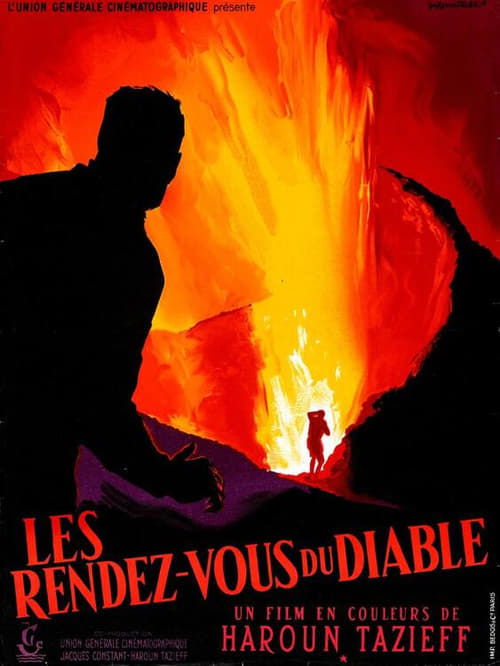
Set in Zaire, the film follows an expedition exploring the crater of the Niragongo volcano of the Virunga chain, whose eruptions are known for their violence and their massive lava flows.

The Forbidden Volcano

1966
The Devil's Blast
7.4

Haroun Tazieff's documentary on the lava lake in the depths of the Nyiragongo Crater.

The Devil's Blast

1959
Haroun Tazieff: The Poet of Fire
N/A

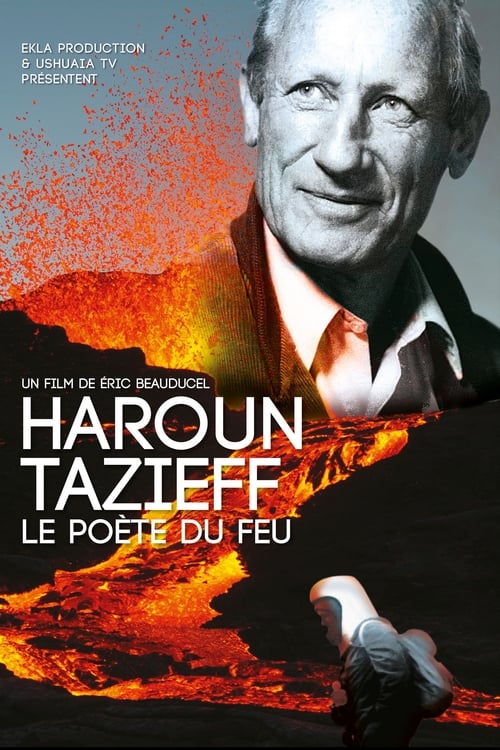
Documentary on the famous French/Belgian pioneer volcanologist.

Haroun Tazieff: The Poet of Fire

2019
No image
N/A

Short Belgian documentary on volcanos.

Exploration du volcan Niragongo

1959
The Righteous
7.7

While, during World War II, European Jews were being dragged by the Nazis to the extermination camps and most people bowed their heads, some brave men and women risked their lives to save them: a journey through the world and history in search of those who, by their heroic and pious deeds, deserved to be known as the righteous.

The Righteous

1994
The World of Gaston Rébuffat
10.0

The World of Gaston Rébuffat is a documentary on mountaineering which takes place at Gendarme Du Pic Du Roc and Grande Candelle. Directed by Gilles Chappaz in 2009 and produced by Seven Doc, we find Christophe Profit, Françoise Rébuffat, Thierry Renault, Jean-Olivier Majastre, René Vernadet, Sam Beaugey and many others. Friendship of his rope companions, friendship of the mountain, friendship of all of nature, he spoke of the mountain with simplicity and happiness. A precursor, a visionary, Gaston Rébuffat was a resolutely committed person, without ever having spoken of an exploit, let alone a fight (among other achievements, he was the first to climb the six north faces of the Alps in a lifetime as a mountaineer).

The World of Gaston Rébuffat

2009
No image
N/A

Short Belgian documentary on volcanos.

Les Eaux souterraines

1955
No image
N/A

Documentary by the famous volcanologist on platetectonics.

Afar, Continental Drift

1977
L'Erta Ale
N/A

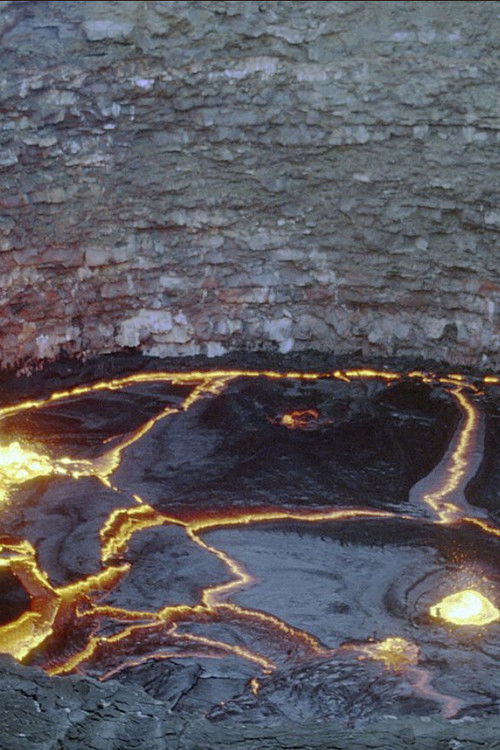
Short documentary on the volcano Erta Ale.

L'Erta Ale

1973