Directing
"Business is on the Fritz," nothing to do but complain and everything seems to be going to the "demnition bow-wows." "If things get much worse I'll close up," says the restaurateur to his waiter. "And I'll give up me job," says the waiter, "if I can't get any money out of the place." What's that? It's a "joy wagon" with a crowd of tourists: they're headed for the restaurant. Immediately the proprietor and the waiter hurriedly get a move on and hustle our to receive the guests who are soon conducted into the dining-room, served, dined and wined with alacrity that is almost magical. The host and his waiter are all smiles and are astonished as well as pleased at the liberal way in which their customers order everything and anything.
A short silent film produced by Gaston Mèliès in San Antonio.
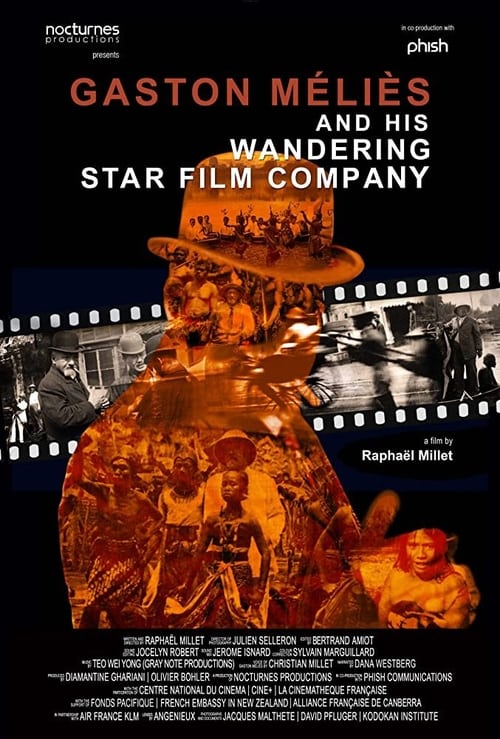
In 1912-1913, movie pioneer Gaston Méliès, brother of Georges Méliès, did a ten month long trip around Asia-Pacific, shooting both documentaries and fictions on location in Polynesia, New Zealand, Australia, Java, Singapore, Cambodia and Japan. He wanted the “real” thing” he filmed, with the locals, being one of the first to give Polynesians, Maoris, Aborigines and Khmers a chance to appear on screen. His hybrid cinema dealt with questions of alterity, identity and representation.
In order to photograph this film, the cameraman placed his equipment on a broad sidewalk in the business district of a large city, probably New York. As the action begins, a woman dressed in the fashion of the time is seen approaching the camera position. She stops in front of the window of a mercantile store. While she is scrutinizing the merchandise, a purse snatcher comes from the rear, grabs her handbag, turns, and makes off with it in the opposite direction. The woman causes quite a commotion, waves her arms and yells attracting a large crowd, including some policemen. The cameraman changed his position and the last scene shows the woman, escorted by two policemen and followed by a group of people, walking down the sidewalk into a building that might be a police station.
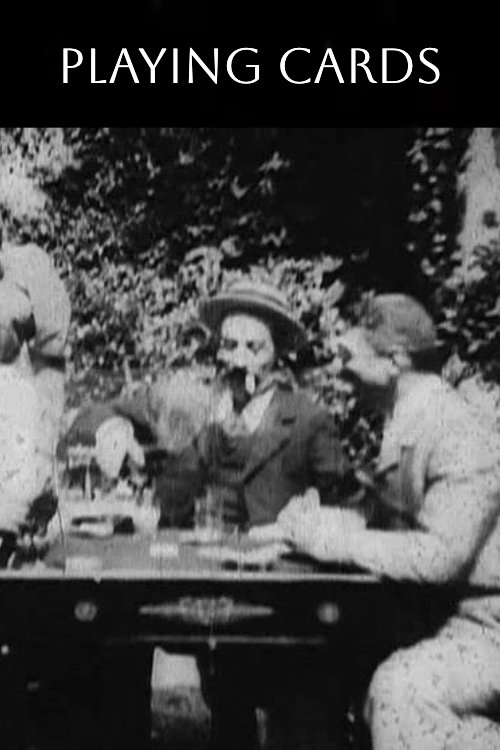
Three friends are playing cards in a beer garden. One of them orders drinks. The waitress comes back with a bottle of wine and three glasses on a tray. The man serves his friends. They clink glasses and drink. Then the man asks for a newspaper. He reads a funny story in it and the three friends burst out laughing while the waitress merely smiles.
John Stuart, a young business man of the east, comes to San Antonio to locate for the good of his health. While walking about the city he sees an old padre, or priest, fall from sunstroke. Young Stuart runs to his assistance. At the same time, Marion, a young heiress, is passing in her automobile and stops to lend aid to the stricken man. They lift him into the auto and young Stuart is invited to ride with them to the Mission, where the priest lives. Thus an acquaintance is formed which ripens into an engagement between Marion and John Stuart.
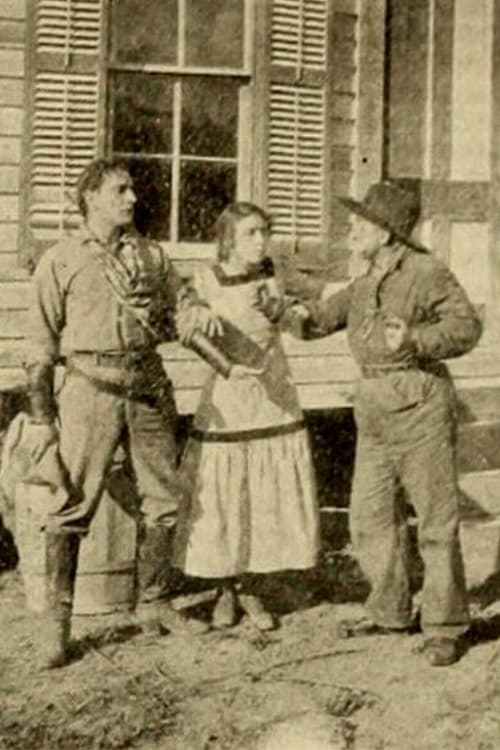
Mary is from Boston, and she doesn't just take to the cow punchers as she would to the "rah-rah boys" of the Hub. Bill, who is a fellow of no small caliber, is looked upon by his companions as a sort of leader, feels a little miffed, but acknowledges she is the real goods and has some occasion to feel proud of herself; at the same time he won't stand for her snubs. The punchers await developments and make up their mind what can't be cured must be endured. The Captain, a classy chap, from a neighboring ranch, puts in his appearance, and asks Mary to go riding with him.
Nell, an independent and somewhat obstinate girl, receives an invitation to attend a dance. She asks her mother for money to buy a new dress. Her mother, a hard working woman, who has to toil from morn to night, feels that her request involves an unnecessary extravagance and she denies it. Nell answers her sharply and leaves in a sullen mood. While working in the hot, broiling sun, the mother is overcome with the heat.
Three swells stopping at the same hotel, one a bicyclist, the other a horseman and the third a motorist, are ardently in love with the same widow, living in a villa some distance in the country. Each one, eager to woo her, makes an equally strong plea with apparently the same impression, although she seems slightly to favor the horseman. After listening to their declarations of love, she dismisses them with an evasive answer. With no decided preference she is in a quandary. She does not want to lose an opportunity, but how to make a choice is a difficult problem. She has an idea. She writes them a letter and sends it to the hotel: "The first one reaching my home and me can claim me as his bride."
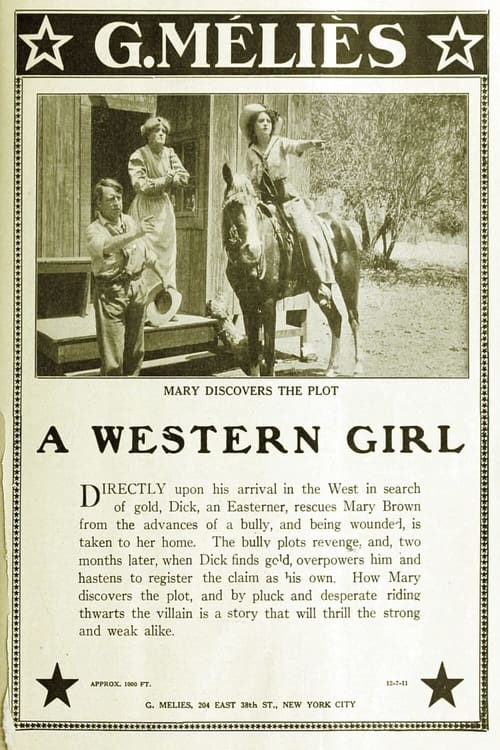
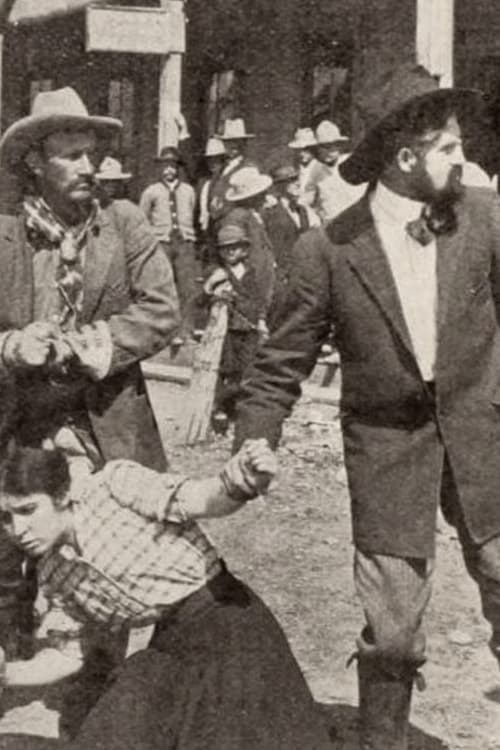
Dick, an easterner, comes west to try his luck at mining. No sooner does he arrive than Hartley, the local gambler and all-around villain, commences to make sport at his expense. Dick endeavors to bear it patiently, but a clash is inevitable, until the arrival at the village store of Mary Brown, one whom all held in respect, excepting Hartley.
Wena, a Māori princess, is told by a sorceress that "she will marry a white man, tall and handsome, with eyes as fair as the sky and a fair beard". Chadwick a trapper who was hunting in the bush is captured and brought to the pa to be burnt at the stake to provide "white mans meat". Wena recognises Chadwick as that man, but the young chief Te Heuheu arrives to court her. She helps Chadwick escape and they swear eternal love. Chadwick goes through the geysers to his hut on the lake, but they are discovered there by Te Heuheu. Chadwick is threatened with death, so she returns to the tribe. But when she is near death from pining for him her father the chief relents. Chadwick is made a chief, she recovers and the tribe celebrates with a feast.
Desdemona was not the only woman to have trouble over a handkerchief. It occurred to Mary also. Mary was in love with Bill, who worked on her father's ranch, and was greatly admired by all the boys. Shorty returned from town one day with a fine checkered handkerchief, which he proudly placed about his neck, strutting in front of Bill to attract his notice. The handkerchief was almost loud enough to speak for itself, so Bill noticed it all right. One of the boys sneaked it from about Shorty's neck and hung it on a nail, where Mary found it. Seeing that it was new, she placed it about her own comely neck, but alas, Othello Bill became jealous and accused her of accepting it from Shorty.
Nora, who is the president of the Bachelor's Club, receives a letter announcing the death of her uncle in the west and that he has made her heir to his immense fortune. Including a ranch at Grey Oaks. Nora decides to go west and take charge of the ranch and run it herself a la suffragette fashion. She invites all the girls to go with her and they start for their new home. Arriving at Grey Oaks they pay no attention to the cowboys who greet them at the station but go at once in the old stage-coach to the ranch. The cowboys follow, approach the ranch, offer their services and are rewarded by being driven from the premises. The boys make up their minds to "get next" to the girls and devise a scheme.
It was April weather on Lloyd's ranch, but all was not sunshine. The mortgage was due, and while there were enough cattle to sell to pay it, they were woefully short of men to handle them. Finally Lloyd decided to entrust the job to his son, Hal, and detailed El Paso Pete, one of his trusted men, to accompany the boy to Waco. The cattle were rounded up and shipped. Hal sold them to advantage and collected the money and was on his way to settle the mortgage, when he ran into an adventure. Jim Dempsey, a rough gambler, was having an altercation with his daughter, Rose. A Texan will ever respond to the call of beauty in distress and, regardless of the relationship, Hal interfered and followed them to see it safely through. He was led to a dance hall and was surprised and somewhat disappointed to see that Rose was a dancer there, but discovered that her father forced her to thus earn her living.
If John was half the man that Molly is, she and her father would have been a great deal better off. Molly by her industry and ambition has saved up five hundred dollars to go to college and complete her education; she is very proud of her achievement. John is a young fellow with extravagant idle notions, who refuses to hold his jobs as a skilled mechanic and insist upon spending his time in rambling and dissipation. Molly loves her brother and tries to induce him to mend his ways and make a man of himself.
John Burton met Bessie Fields on her way home one day, and was for making love to her right then and there, but for the interruption of Crazy Joe, a half-witted boy, who always seemed to get in wrong. Burton was incensed, and, although Bessie protested, applied his whip to the demented boy, when Steve Ross, Bessie's sweetheart, happened along and rushed to the boy's rescue. Steve saw that Burton's attentions were not welcomed and ordered him off the scene. Next day, both went to Mr. Fields, and proposed for Bessie's hand. When Burton learned that Steve had been accepted, he rushed from the house, fired back upon it, and fled. Of two shots spent, one hit and killed Mr. Fields.
In happy mood, a rollicking, good-natured party of "Jack Tars" on shore leave are out for a good time, and get themselves well under way in song and general good cheer by visiting the only place of merchandise and refreshment which the little seacoast town affords. Under full sail they are steering their way through the streets of the village, running foul of trees and posts, bowing in humble apology for their seeming rudeness and disturbance. They have apparently lost their "sea legs" and are a little bit unsteady in the joints, but merrily they roll along until they come to a swinging bridge crossing the river. Here is where they strike rough weather.
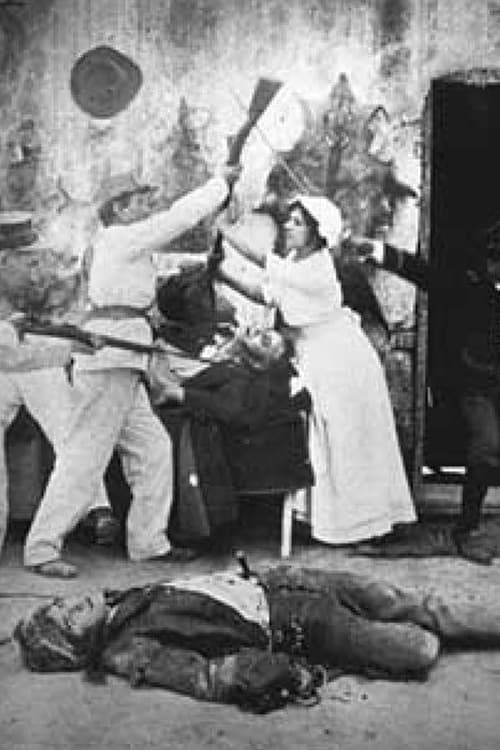
A lost silent film depicting the battle of the Alamo. Filmed in San Antonio.
A short silent western produced by Gaston Mèliès in San Antonio.
He's a regular "fan" and studies the baseball news as carefully as some people do their Bibles. He comes to breakfast with his dear little wife and finds his morning paper as usual at his plate. "By Jove!" he shouts, as he glances at the news, "a game this afternoon." Then he begins to wax eloquent about the strikes, flies, home runs and base hits, putting his hand in the hominy, knocking the coffee pot from the table and winding up his exposition by pulling the table-cloth off and everything else with it. He has gone the limit and wifey can humor his craze no longer. She swoops down upon him with an umbrella and gets in some "swats" that nearly knock the cover from his dome. He makes a run for the office with a deep laid plan to go to the ball game by pretending he has a toothache.