FEEL IT.STREAM
?

Carlos Casas

Directing

Biography

Carlos Casas (Barcelona, 1974) is a Spanish artist whose practice encompasses film, sound and visual arts. Since the beginning of his career, Casas has been extending his explorations in multiple branches, from documentary film conceived for the movie theater to live-editing, through photography and drawing to multimedia installations, transformation of pre-existing environments and record publishing. His works have been exhibited by international institutions such as the Venice Biennale, Tate Modern in London, Fondation Cartier, Palais de Tokyo, Centre Pompidou in Paris, NTU CCA Singapore, HangarBicocca and La Triennale in Milan, CCCB Barcelona, Matadero Madrid, GAM Turin, Bozar and Kunstenfestivaldesarts in Brussels. His films have been screened and awarded at prestigious international festivals such as the Venice Film Festival and the International Film Festival Rotterdam. Since 2022 Carlos Casas has been the programme director of the Fabrica research center in Treviso.
Known For

Krakatoa
N/A

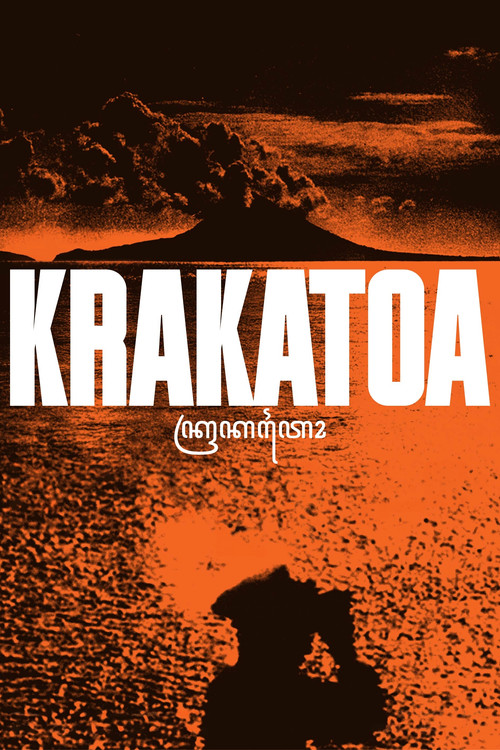
A Javanese fisherman experiences the greatest volcanic eruption of all time. Stranded on a deserted island, in search of food and water, he draws closer to the depths of the earth. A visceral and psychedelic odyssey.

Krakatoa

2026
No image
N/A

A Selection of Fieldworks captured in location during 2005 in Hichigh, one of the highest inhabited villages in Badakhshan Autonomous region in Tajikistan. In the Pamir mountain Range in Central Asia.

Tree

2005
Aral, Fishing in an Invisible Sea
7.2

A documentary film about the three remaining generations of fishermen in the Aral Sea-- Their everyday struggle to survive in one of the most dire and inhospitable places on the planet.

Aral, Fishing in an Invisible Sea

2004
No image
N/A

A selection of Fieldworks captured in location during 2001-2002 in Tierra del Fuego, Patagonia, Argentina. Chile

Condor

2001
Grotta
10.0

In 1907 Herman Hesse spent a few days mediating and fasting in a cave near Monte Verità. During these days he collected the visions and insights that went on to be very influential in his thinking and shaped some of the most important works of his literary career. The images and sounds of this film were shot there and are a homage to this cave and its possible invocations. Grotta is part of Fieldworks, an ongoing experiment with ambient video and radio frequencies.

Grotta

2023
Cemetery
7.0

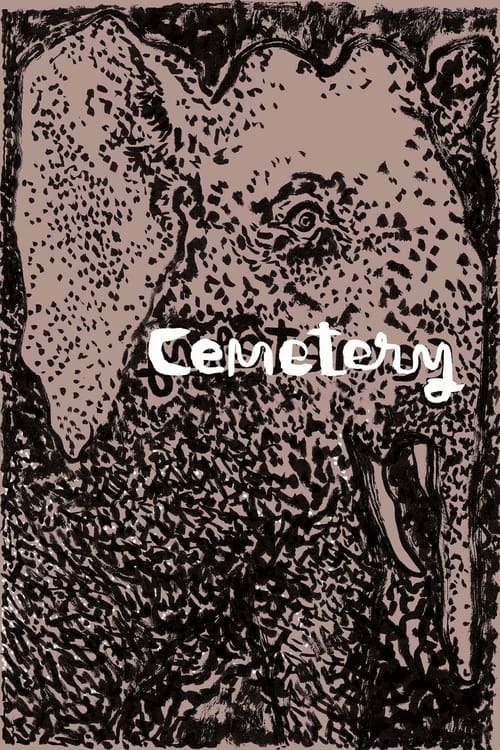
After a devastating earthquake, Nga, an old elephant and probably the last of its species, and Sanra, his mahout, are about to embark on a journey to find the mythical elephant’s graveyard. The group of poachers following them will die one after the other under mysterious circumstances and spells.

Cemetery

2019
Afterwords
N/A

A man lives alone inside a closed labyrinth like space which seems to reflect his state of mind. The windows open into his subconscious to illuminate the desolate and mysterious spectacle of his solitude as if this were the last day of the world, and he the last man able to testify.

Afterwords

2001
No image
N/A

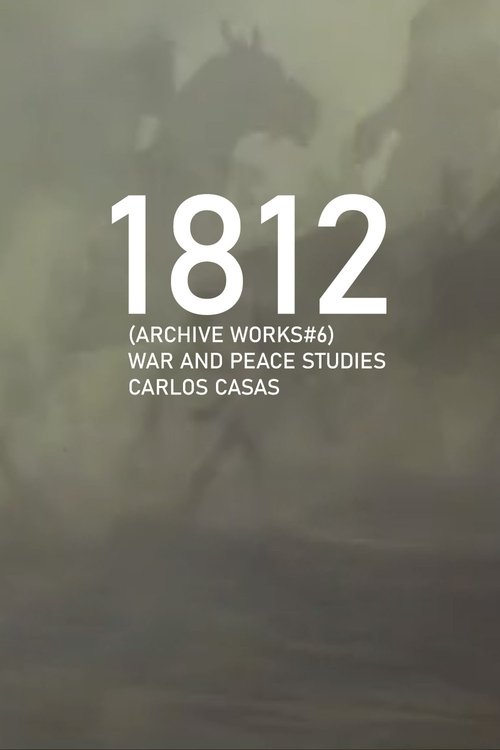
1812 is an immersive audiovisual work entirely created and reworked from the classic Russian film War and Peace by Sergey Bondarchuk, from 1967. The work uses only and exclusively found footage and material from the film, and implodes it to create a new audiovisual work, a new visual sound experience. The result is an experimental vision that pretends to expand the way we perceive films and tries to push our notion of audiovisual sensations.

1812: War and Peace Studies

2011
Choir
N/A

Conceived as a manifesto for the label, Choir is an audiovisual experiment, that takes the shape of an installation and live media event, as well as a limited edition video work. The image and sound is a superposition of source material selected by the artists and overlayered in order to produce a ghostly image an "hypnotic tantric metal experience" as some of the irst viewers of the piece told. Choir is an hypnotic journey into the imaginary of this two artists.The sound is asynchronous and comes from different selection creating an amalgam of sources and inluences. This release presents the Ghostly Choir of the inluences and imaginary background of these two artist.

Choir

2008
Faro
10.0

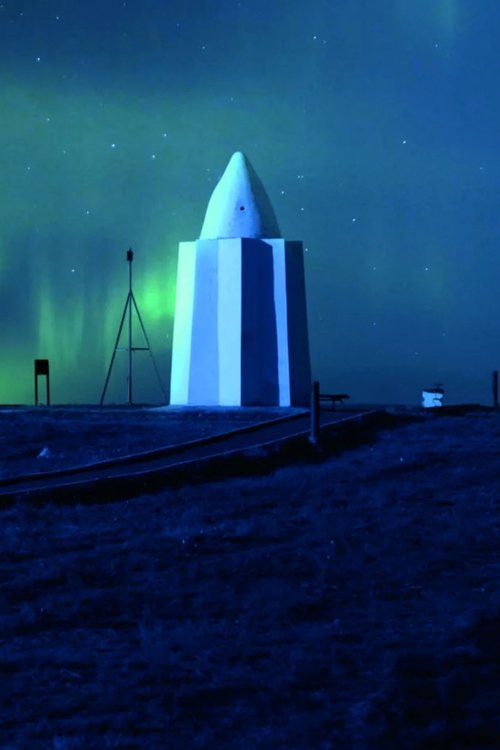
Faro is a portrait of the lighthouse of Leuca (Italy), one of the last lighthouses in the south of the Mediterranean. The lighthouse illuminates the unknown, embraces the borders of the extreme lands. Casas portrays its spirit, its behaviour and its evocative power.

Faro

2016
18000 Worlds
N/A

According to the 12th century mystic Shihab al-Din Yahya al-Suhrawardi, the world we live in is only one of the 18,000 that make up the universe. The film 18,000 WORLDS is conceived as a video story that draws attention to a world that is losing contact with its ancestors, and where the danger of losing forms of knowledge is real.

18000 Worlds

2023
No image
N/A

A fieldwork featuring the sun glitter in the only remain waters of the Aral Sea outside the former port town of Moynak, produced by the high density of salt minerals and chemical pollutants in the lake. Sound is a composition of different radio frequencies captured on location.

Glitter

2003
Yawar fiesta: Fiesta de sangre
7.0

An indigenous tradition in the highlands of Peru where three key players take part: a wild condor, a raging bull and brave young men.

Yawar fiesta: Fiesta de sangre

1986
No image
N/A

"Filmed in Cairo, in Al-Azhar Park, sunset during Isha'a praying time. The city becomes a Chorus. Dedicated to the people of Cairo. With love and hope." Part of the Azan series & the Cairo fieldworks.

Cairo Chorus

2010
No image
8.1

In one of the least-populated regions of the world, three men lead lives in total solitude. Isolated from the world for different reasons, they survive in a suspended time all their own-- In an unforgiving, near-inhospitable environment.

Solitude at the End of the World

2006
No image
N/A

Istanbul Chorus is a film composed in 5 parts: image and sound captured in location in five different key positions in Istanbul, capturing the landscape during the 5 different prayer time schedules of the city. The film attempts to map the city through its geographical coordinates and time frame division.

Istanbul Chorus

2011
No image
9.5

"Along the coast of the Bering Sea a community of whale hunters are struggling to survive keeping alive a millenary tradition. Surviving one of the most extreme environments of the planet."

Hunters Since the Beginning of Time

2008
Vucca
10.0

At the tip of Italy’s heel, lies la Vucca de lu puzzu, the gaping “mouth of the well”. Vucca (2016) is the intimate result of the artist’s field recordings inside the cave. Saline and pluvial water merge through an underwater tunnel, refracted sunlight challenges obscurity, while the rock stubbornly resists the passages of civilizations. The multilayered soundtrack and visuals echo the dizziness of the space.

Vucca

2016
Melted into the Sun
N/A

The work is inspired by the ambiguous figure of Al-Muqannaʿ (“The Veiled One”), a dyer who became a spiritual and political agitator in eighth-century southern Central Asia, while it speculates about the cultural and political echoes of his revolutionary ideas. Al-Muqannaʿ preached an ideological syncretism of Zoroastrianism, Mazdakism and Buddhism, and awakened the minds of his “White-Clothed” disciples by shedding light on the status quo of his time, challenging practices of land exploitation, authoritarian centralized power, and religious repression. His legacy, which might be seen today as “proto socialist,” was appropriated by the regional Soviet propaganda machine as a nativist heroic example of how to rise up and fight for the communal sharing of property and wealth.

Melted into the Sun

2024
Swan Lake
N/A

Composed of footage from Central Asian film archives, Swan Lake addresses the period running from a decade before to a decade after the collapse of the Soviet Union. The film includes familiar visual markers of the era: long queues outside shops, popular television programs hosted by healers and hypnotists, ballerinas performing Tchaikovsky’s Swan Lake (1876). This was a typical television intermezzo in the late Soviet empire, when high culture often filled the airwaves during moments of political uncertainty, whether the death of another elderly leader or an emergency declared in Moscow. What may be less familiar to Western audiences is the footage drawn from Central Asian films of the same period. These fragments extend the usual visual aesthetics of perestroika into a different regional context, introducing other ethnicities, landscapes, and urban spaces into what is often remembered as a predominantly Russian narrative of late-Soviet culture.

Swan Lake

2025