FEEL IT.STREAM
?

László Moholy-Nagy

Directing

Biography

László Moholy-Nagy was a Hungarian painter and photographer as well as a professor in the Bauhaus school. He was highly influenced by constructivism and a strong advocate of the integration of technology and industry into the arts.
Known For

A Light-Play in Black-White-Gray
5.3

This short film made by László Moholy-Nagy is based on the shadow patterns created by his Light-Space Modulator, an early kinetic sculpture consisting of a variety of curved objects in a carefully choreographed cycle of movements. Created in 1930, the film was originally planned as the sixth and final part of a much longer work depicting the new space-time.

A Light-Play in Black-White-Gray

1930
No image
7.7

The film examines the redesign of various exhibits at the London Zoo. The film was produced for the Museum of Modern Art, New York, and the Zoological Society of London, England.

The New Architecture and the London Zoo

1936
The New Bauhaus
10.0

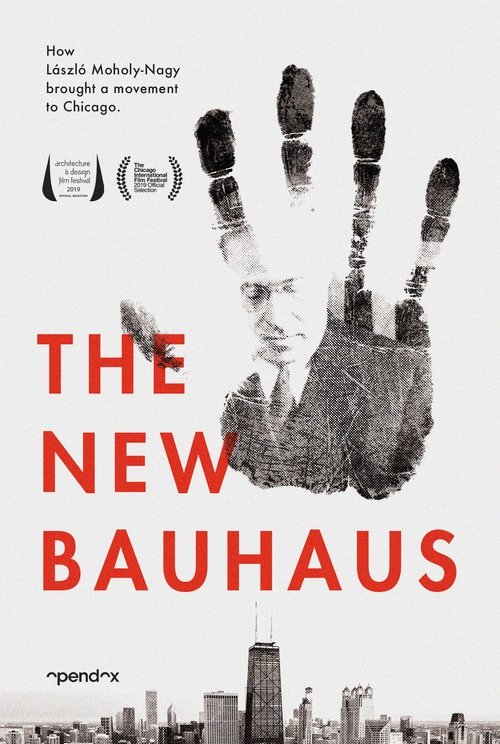
When radical Hungarian artist László Moholy-Nagy moved to Chicago in 1937, he spearheaded “The New Bauhaus,” a movement descended from the famous German school. An original Bauhaus member, Moholy-Nagy took a pioneering interdisciplinary mixed-media approach to art and design that was vastly ahead of its time. Featuring intimate interviews with Moholy-Nagy’s daughter and an in-depth exploration of his groundbreaking work, The New Bauhaus offers an illuminating portrait of a visionary teacher and thinker.

The New Bauhaus

2019
No image
6.8

"Impressionen vom alten marseiller Hafen," captures the steady hum of commerce of one of europe's biggest and most populous port cities.

Impressions of the Old Marseille Harbor

1929
Berlin Still-Life
6.5

A city symphony of Berlin.

Berlin Still-Life

1926
No image
N/A

The film skims along close-up head shots of seven day and evening students. It then shows a disassembled bent plywood armchair. Various student projects are presented, including chess pieces made of transparent plastic, posters, a four-part lamp design, a radio design, abstract photography, flexible sculptures of wood, the head shot of a student, objects too dark to be identifiable and a chess set of clear plastic inspired by a design from the German Bauhaus.

Interview with Students (no sound) and Display of Student Work

1943
Metropolitan Gypsies
7.3

This film documents the daily lives of Roma in their winter quarters on the outskirts of Berlin, Germany. The film presents insights into the Roma’s complex and often tumultuous society.

Metropolitan Gypsies

1932
No image
N/A

Laszlo Moholy-Nagy originally shot "Design Workshops" as a silent film to which he lectured when he presented the program of the Institute of Design. Now, after many years an added commentary and music. The film records students, faculty, and projects of the School of the early 1940s. It animates, as only film can, Moholy-Nagy's two English-language books on Bauhaus education, The New Vision & Vision in Motion.

Design Workshops

1944
Der Feinschmecker
N/A

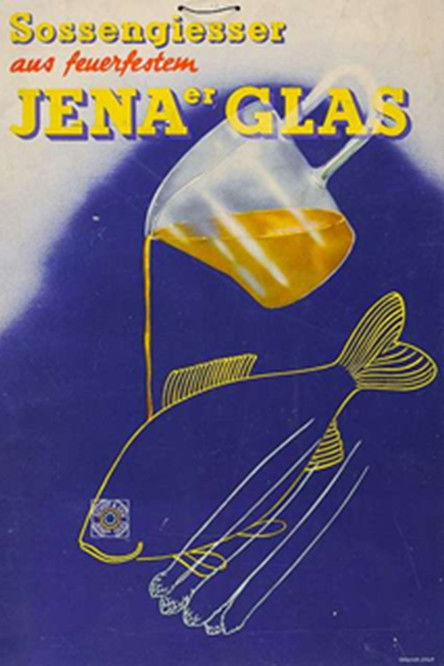
Publicity film for Jena Glass.

Der Feinschmecker

No image
N/A

In December 1941 shortly after the United States entered World War II, Chicago’s mayor, Edward Kelly, appointed Moholy-Nagy to a committee to investigate the possibilities of camouflaging important landmarks and potential targets. György Kepes taught a certified course in camouflage at the school in the fall of 1942. The exercises and solutions were presented in an exhibition that year. The film footage begins with natural examples of camouflage in the animal world and then presents examples of military use in different settings. Various structural solutions, such as painted patterns that confuse contours, textures and hiding buildings and equipment such as train cars and airplanes beneath structures covered by netting are shown.

Work of the Camouflage Class

1942
No image
N/A

Do Not Disturb, produced by Institute of Design head Laszlo Moholy-Nagy and his students in 1945, is the perfect encapsulation of this brio. Jealousies and tensions amongst young lovers are projected using every trick of the trade: multiple exposures, reverse motion, handheld camerawork, split screen, prism lenses, rapid motion, distortions and more.

Do Not Disturb

1945
No image
N/A

A film made by the British General Post Office (GPO) in 1933, promoting the automation of telephone exchanges.

The Coming of the Dial

1933
No image
6.5

Lobsters, 1935: A documentary film about lobster fishermen in Sussex, England. It brings to life the struggle above and below the surface of the sea. With narration by Alan Howard.

Lobsters

1935
No image
N/A

For several years a children’s class was held at the school on Saturday mornings. Creativity was encouraged, often within the framework of a specific project. For example, a visit to the Lincoln Park Zoo might inspire the design and construction of figures of animals, as shown in the film. Or a visit to the Shedd Aquarium would result in the construction of rattan and cellophane fishes. The culmination of a project was the bringing together of the children and their creations in a performance, such as the AQUARIUM PLAY shown at the end of the film, which featured reflected colored forms and shadows.

Children's Workshop

1940
No image
N/A

This film documents one of the end of the year exhibitions of student work from the 1940s. It begins with a collection of abstract sculptures of cast white plaster. It then moves to drawings illustrating specific problems, kinetic sculptures, a composite photographic portrait, drawings of various ways to depict the same object, studies of the human figure, texture studies, three-dimensional studies in joints and solids, analysis of Picasso paintings, lettering exercises, and concludes with a variety of black and white designs.

Student Exhibition #2

1943
No image
N/A

At the end of the school year, students presented their work in an exhibition. The film begins with the production of wood hand sculptures and delicate wooden plates and bowls produced on a lathe. Moholy-Nagy in his signature white lab coat walks among students at work. Other student exercises are shown, including different forms of texture charts, a pillow of metal screening, a paper cutting exercise, weight-bearing paper struts, objects illustrating how wood can be made flexible, leading to the development of various forms of wooden springs for use in mattresses and chairs. The development of the Z-spring and its use in an armchair and in a mattress for a bed are demonstrated. Views of the annual student exhibition showing photography, hand sculptures, and paper constructions. A chair of bent plywood and the electric press used to shape it. An assortment of woven textiles from the Weaving Workshop is shown to a woman, seated in the plywood chair.

Student Exhibition #1

1943
Architects' Congress
10.0

Architects' Congress is Lázló Moholy-Nagy's cinematic journal which recorded the 4th meeting of the CIAM (International Congress of Modern Architecture) in August of 1933. The meeting was held on board the ship Patris II which cruised from Marseilles to Athens, the Aegean Islands, and back. Congress participants featured such luminaries as Alvar Aalto, Cornelis van Eesteren, Charlotte Perriand, Ferdinand Léger, Seigfried Gideon, Le Corbusier, and José Luis Sert.

Architects' Congress

1933
ABC in Sound
5.6

In this light-hearted experiment, Professor Moholy-Nagy demonstrates differences in sound produced by arbitrary manipulation of the soundtrack. The optical soundtrack has been re-photographed to appear on the screen as the corresponding sound is heard.

ABC in Sound

1933