Acting
A young woman is fated to relive the love of an earlier life. Separated by time, young Serena and botanist Rafael surmount all obstacles as they live a love that is stronger than fate itself. These challenges include the lovely but ambitious Cristina, who is obsessed by the rich botanist and driven nearly mad by her attempts to shatter their great love. A romantic comedy set in the 1940s, Soul Mate underscores the importance of love, family values and the ties of affection with a light touch and plenty of humor.
Os Trapalhões was a Brazilian comedy group and also a Brazilian television series created by Wilton Franco. Its members were Dedé Santana, Zacarias, Mussum and their leader Didi Mocó, that was played by Renato Aragão. The name Trapalhões is derived from the Portuguese verb atrapalhar, which means the opposite of helping, to do something the wrong way or to Those that confuse. The name is translated "Tramps" in English DVD subtitles. It was aired by Rede Globo from 1977 to 1999. On March 18, 1990, Zacarias died due to respiratory failure, but the group and the series didn't come to an end until July 29, 1994, when Mussum died due to an unsuccessful heart transplant.
No description available.
Ana and Zeca have a happy marriage, but they can't have children. To fulfill their dream, the couple hires the young Clara as a surrogate mother, which leads them into a legal dispute.
Dara is a young Gypsy woman torn between her family’s traditions and her desire to choose her own path. Promised in marriage to Igor, her life changes when she meets Júlio Falcão online. Caught between love, the customs of her people and family conflicts, Dara must face choices that could transform her future.
Quinzinho and João Victor are identical twins separated at birth, unaware of each other's existence. The brothers eventually draw closer, guided by their instincts.
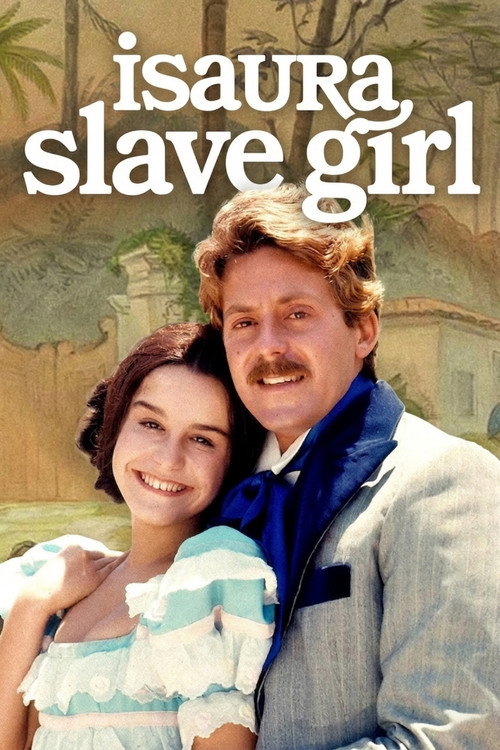
Set in 19th-century Brazil during the waning years of slavery, Escrava Isaura tells the story of Isaura, a white-skinned enslaved woman raised with the manners and education of a noble lady. Though treated with affection by her mistress, Isaura remains legally enslaved and becomes the object of obsessive desire by Leôncio Almeida, the cruel heir to the plantation. After the death of her protector, Isaura falls under Leôncio’s control. Despite his attempts to seduce and dominate her, she resists, determined to preserve her dignity and freedom. Her father, Miguel, helps her escape to Recife, where she adopts a new identity and meets Álvaro, a wealthy and principled abolitionist who falls in love with her. Leôncio eventually tracks her down, leading to dramatic confrontations. In the end, Álvaro rescues Isaura by purchasing Leôncio’s debts, securing her freedom and affirming the story’s central themes of justice, love, and resistance against oppression.
"Sparkling Girls" centers around three young and beautiful, hard-working housekeepers who reach stardom instantly when an online video clip of them singing, surprisingly becomes a hit. Their success provokes the wrath of a glamorously gaudy and outspoken famous singer who will do anything to ruin the girls' friendship and career. With humor, romance, over the top characters, and bright, glittery stage performances set to catchy tunes, "Sparkling Girls" delivers all of the expected delights and shows that dreams really do come true.
The telenovela tells the story of Francisca Moura Imperial, a wealthy businesswoman, and her two sons: Jordão and Tiago, who show little interest in the family business. Jordão is the product of a whirlwind romance in Francisca's youth, while Tiago was born from her marriage to Roberto, a seductive man who moves in high society but is penniless. Francisca is preoccupied with her sons but cannot interfere in their lives as much as she would like. Eccentric and full of outlandish ideas, she decides to undergo plastic surgery, which makes her look 20 years younger, believing that this will bring her closer to Jordão and Tiago. Francisca's greatest concern is that at least one of her sons will marry and give her a grandchild, thus ensuring the continuation of the family name.
Carlão is a taxi driver who experiences a drama of conscience after fleeing bank robbers leave a suitcase with stolen money in his car: he doesn't know whether to hand it over to the police, running the risk of being accused of being an accomplice in the robbery, or whether to use the money to solve his problems.
The cheerful and outgoing Jordana lived alongside Silas for 20 years, helping him become wealthy. Despite this, he abandons her to run away with the opportunistic Carla. After the separation, Jordana faces financial difficulties. She then meets Dona Mena, an eccentric and lonely old woman abandoned by her family. Jordana takes care of Dona Mena and, when she dies, inherits four bronze cupids containing a million dollars. The problem is that the cupids disappear without a trace. The cupids become the subject of a fight between Dona Mena's nephews, Loreta and Carlito. The two are the villains of the story. Jordana, however, ends up falling in love with Carlito. In the final chapters, Jordana manages to recover the cupids and rebuild her life. She has the help of her friend Vieira.
Kiki Blanche is a former star dedicated to her family and her beauty salon, in the South Zone of Rio de Janeiro. In addition to Milena, her legitimate daughter, Kiki raises Fernanda, Paulo, Renata and Regina. The great conflict of the plot is Fernanda's passion for Fábio, a man also loved by Milena.
The genius Jonas Marra (Murilo Benício, from Brazil Avenue) has attained what few others have — a rich and famous celebrity of the digital world in Silicon Valley and the owner of Marra International, a respected technology conglomerate. But behind his image of a successful businessman lies another person shrouded in conflict and mystery.
The famous psychologist Teca falls in love with the widower Renato, father of one of her patients. The romance awakens the jealousy of Stela, who harbors an unhealthy passion for Renato, her brother-in-law.
The young and rich Patricia, daughter of Ambassador André Dumont's first marriage, is in love with and reciprocated by Luiz Carlos, a poor boy, son of the family's maid, Isolda. Whoever doesn't like to see her with the maid's son is her stepmother, Renata Dumont, André's wife. Renata is an ambitious woman who hides her humble origins and a secret from the past that unites her with Isolda. Career, she married the diplomat André, from a traditional family, with whom she had a son, Lipe.
The story is set in the quiet, fictional town of Ouro Velho. Sofia Schnaider is a striking woman of great class and intelligence, possessing strong ethical values inherited from her Jewish family, who emigrated to Brazil after the war. Following the death of her husband—the aristocrat Victor Sousa Carvalho—Sofia takes over the family business, Estrela Dourada, which operates water-based tourism activities on the large local reservoir. However, her mother-in-law, Úrsula, refuses to accept this arrangement and launches a fierce battle for control of the Sousa Carvalho business empire.