Wheeler Dixon
Directing
Biography
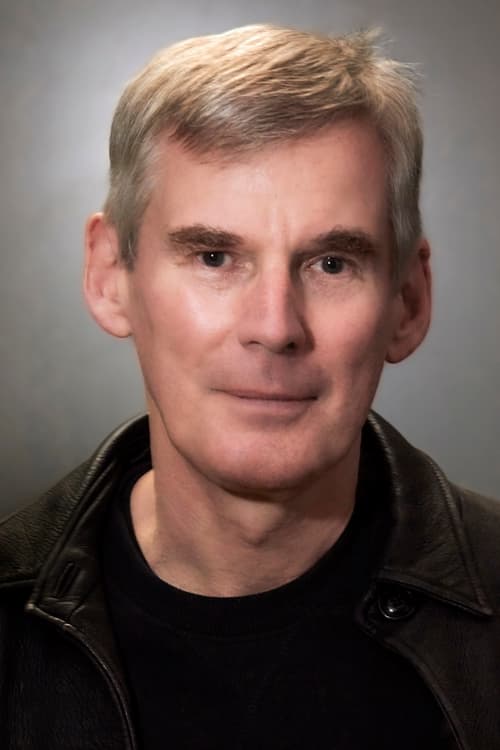
Wheeler Winston Dixon (born March 12, 1950) is an American filmmaker and scholar. He is an expert on film history, theory and criticism. His scholarship has particular emphasis on François Truffaut, Jean-Luc Godard, American experimental cinema and horror films. He has written extensively on numerous aspects of film, including his books A Short History of Film and A History of Horror. From 1999 through the end of 2014, he was co-editor of the Quarterly Review of Film and Video. He is regarded as a top reviewer of films. In addition, he is notable as an experimental American filmmaker with films made over several decades, and theMuseum of Modern Art exhibited his works in 2003. He taught at Rutgers University, The New School in New York, the University of Amsterdam in the Netherlands, and is currently the Ryan professor of film studies and English at the University of Nebraska in Lincoln.
Known For

“Quick Constant and Solid Instant documents a Flux Mass at Voorhees Chapel at Rutgers University in 1969; intercut with the paintings of John Wallington, and Rod Townley on his Harley Davidson motorcycle. Soundtrack: Gerard Malanga, reading his poems at The Rose Room, Rutgers University, 1969.” – Wheeler Winston Dixon “The rich filmic collapse of personal memory into cultural history is summed up at the end of Quick Constant and Solid Instant (1969), a Fluxus performance set to a Gerard Malanga poetry reading. ‘It will take you a long time,’ intones Malanga, ‘to understand why I wrote poems for you.’” - Ed Halter, The Village Voice
Quick Constant and Solid Instant
A young boy auditions for a position in a choir academy; he is turned down. He returns home with his mother and father where the father is met with the news that his father has just died, and he must leave immediately for the funeral. Upon his arrival at his parents' home, he finds he is too late for the funeral. Later that evening, over coffee, he tries to reconcile himself with his sense of loss in a brief talk with his mother. This narrative framework serves as the jumping-off point for numerous digressions and reminiscences utilizing both "found" and originally photographed imagery.
Un petit Examen, and Not So Damned Petit Either, or, The Light Shining Over the Dark
Three separate events: the birth of a litter of pups at a British reform school for delinquent minors in 1946; a dentist's convention in Cincinnati circa 1936; and common place views of New York City in the 1920s as interpreted by a visitor from Ohio.
Dana Can Deal

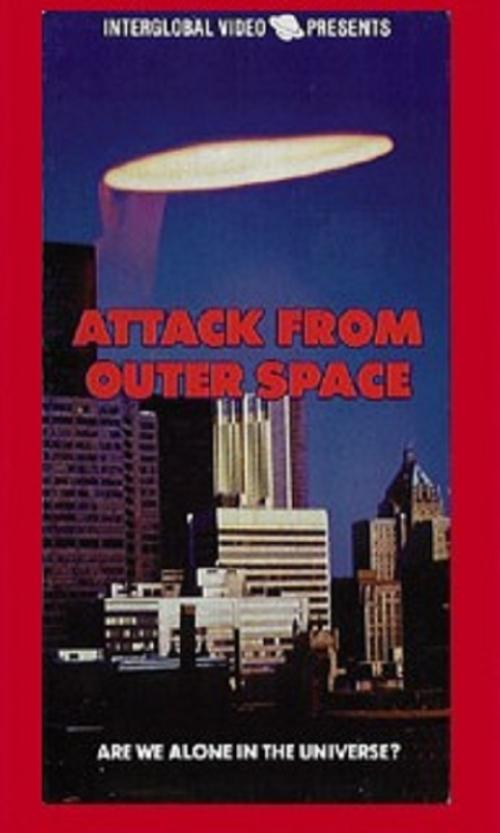
A documentary exploring the existence of UFOs and examining the possibility that extraterrestrial beings have visited Earth in the past.
Attack from Outer Space

A documentary that attempts to prove the existence of UFOs.
UFO: Exclusive
Memories of a long-ago summer, London 1968; morning tea and departures.
Distance
An elderly woman in New York City has a group of dinner guests over to her apartment one evening, and describes the difficulties of her life and her family relationships.
What Can I Do?

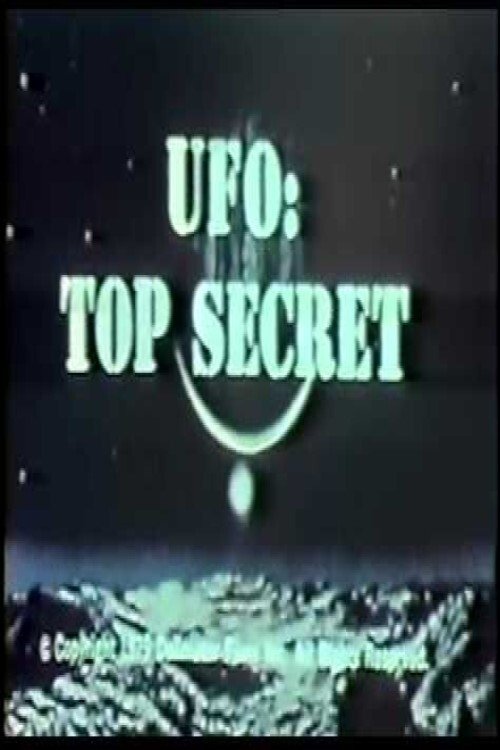
Yes, it's yet another UFO documentary of stock footage, blurry photographs, and rambling narration that may or may not relate to what is on screen.
UFO: Top Secret
"No matter where you arrive in legend, you find yourself at the point of initial departure." - Wheeler Winston Dixon
London Clouds

“Serial Metaphysics — a thirteen-minute experimental 16mm film which has been described as 'an examination of the American commercial lifestyle, recut entirely from existing television advertisements' — was edited by Dixon himself, on a single night, New Year’s Eve 1972, culled down from 72 hours of American TV commercials. The film is a fever dream as seen through our existing television advertisements, foreshadowing for hopeful future generations a promised future life of happiness and security in the land of plenty.
Serial Metaphysics

Squatters is a feature film chronicling two days in the life of two young men and two young women, who roam the French countryside breaking into houses and living there for a few days before moving on. In the film, the group find an isolated country mansion in the south of France, break in, and spend two days involved in increasingly intense confrontations...
Squatters

Examines the careers of women who made a lasting contribution to film history as directors: Alice Guy Blaché, who in 1896 directed what is arguably the first plot-driven film; Ida Lupino, who also had a long career as an actor; Ruth Ann Baldwin, who directed numerous early westerns; Leni Riefenstahl, Hitler's film propagandist; as well as Dorothy Davenport Reid, Lois Weber, Kathlyn Williams, Germaine Dulac, Cleo Madison and many more. Film clips, stills, and other archival materials bring their work to life.
Women Who Made the Movies

Do ghosts come from outer space? Are they amongst us? The Amazing World of Ghosts seeks to unveil the mysteries that defy mankind's understanding and define the modern age… and then runs out of stock footage before getting anywhere.
Amazing World of Ghosts
"The Diaries is a split screen movie. It has two projectors running at once, at least for most of the film. I was influenced here by Warren Sonbert’s later films. What Warren did was something that infuriated everybody that knew him, and in fact still infuriates people today. He made early films like The Bad and the Beautiful (1967) and the Tenth Legion (1967), and then he would re-edit them into other films later. But he wouldn’t preserve any copies of the originals, which would then cease to exist. I did the same thing. The Diaries was an attempt to reshape material that’s in my early films; I decided to go into the cutting room and just put the stuff together. It’s really all of the key moments, I think, from all of the films that I no longer felt were individual entities or didn’t deserve to be, or weren’t strong enough, compiled into two reels. I edited it around 1976. It’s really an evocation of all of my experiences in life up until that period." - WWD
The Diaries

Meditations on light and a window fan for Jerry Hiler and Nick Dorsky. "Warm regards from the West Coast -- I only wish I had seen your films much sooner than I did because we are so much closer as filmmakers than I ever could have expected." - Jerome Hiler
Numen Lumen
"Late one night in the Time/Life Building in 1969, the television speaks." - Wheeler Winston Dixon
Bits & Pieces

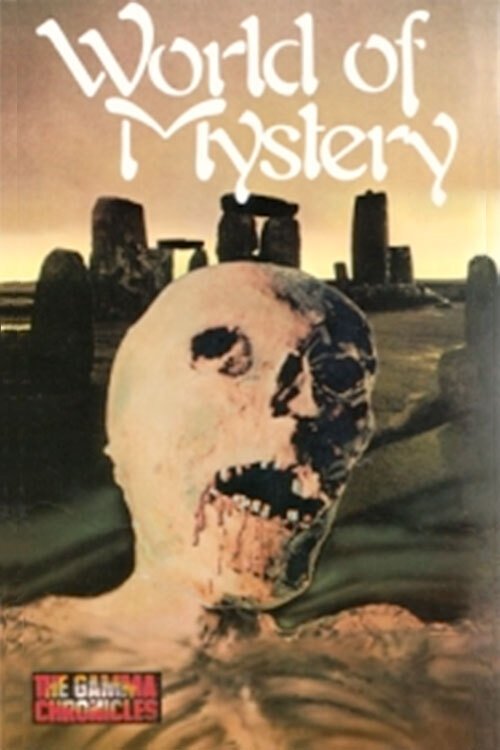
An exploration into the enigmas, riddles and secrets that enamor and often terrify man as he strives to understand the universe around him.
World of Mystery
"A brief silent film. Working on an upright Moviola in a cutting room at Preview Theater in Manhattan, 1974. Photographed by David Kofke." - Wheeler Winston Dixon
Cutting Room Newsreel

THE DC FIVE MEMORIAL FILM is structured in five sections: a young man writhing in ecstasy in a deserted house in Massachusetts; rephotographed home movies of my childhood in 1953 Connecticut; footage shot at my farm in upstate New York in the summer of 1969, as some friends of mine share cigarettes in the woods; a party at the Sanctuary Discotheque in the summer of 1969, photographed using the same reel of color film reloaded into the camera at least seven or eight times; and finally the apotheosis of the work, in which a group of young women, arms linked, walk through the Port Authority Bus Terminal in the dead of night.
The DC Five Memorial Film

A series of dramatizations of famous Bible stories.