FEEL IT.STREAM
F. Percy Smith

F. Percy Smith

Directing

Biography

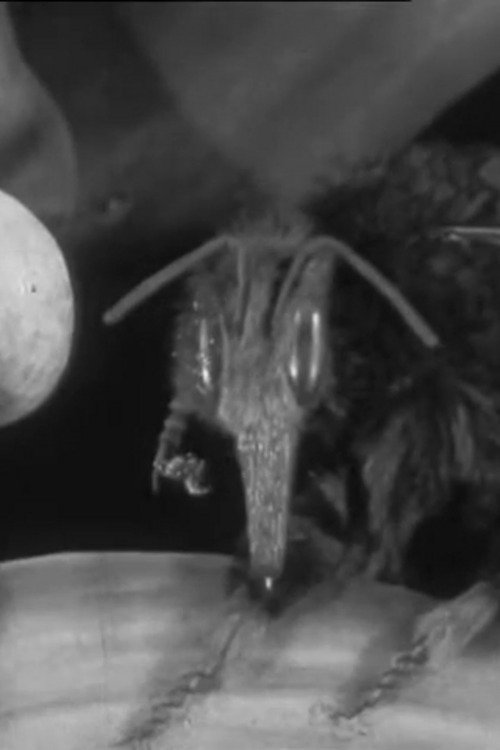
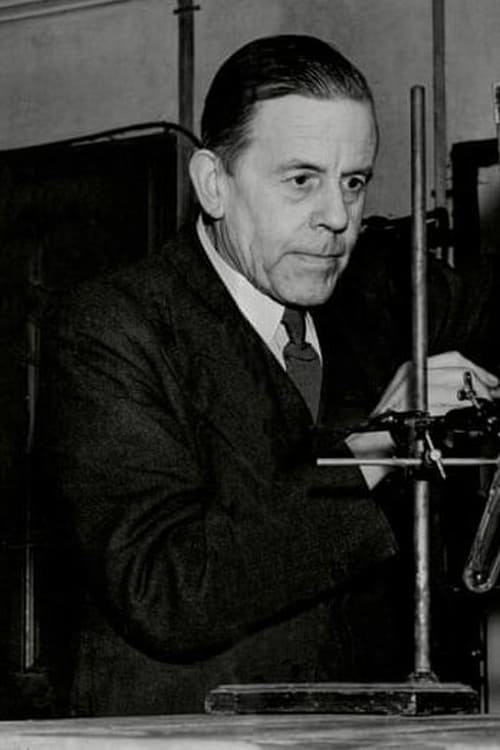
A distinguished pioneer of scientific filmmaking, Percy Smith was born in London in 1880. Working as a clerk at the Board of Education, Percy began to photograph the natural world around him, nursing a lifelong fascination with all manner of plant and animal life.  His close-up photograph of a bluebottle's tongue caught the attention of film entrepreneur Charles Urban, who quickly began to exhibit Percy's work in London theatres. After the considerable success of sequences such as The Balancing Bluebottle, where he recorded flies juggling, Percy finally joined Urban as a full-time filmmaker in 1910.  Before the outbreak of the First World War, Percy completed over fifty nature films for the Urban Sciences series including, in 1910, the famous piece,  The Birth of a Flower. An early example of stop-motion photography, the film was hugely popular. Meticulously researching his subjects, Percy devised ingenious ways to film slow-growing plant life - modifying his equipment with gramophone needles, candle wicks and other assorted objects, allowing him to continue filming plant movement even as he slept.  In 1911 his study,  The Strength and Agility of Insects sparked a huge press debate - detailing a range of insects as they lift tiny dumbbells, twirl matchsticks and juggle objects much heavier than themselves he had to dispel rumours of trickery and cruelty by revealing his innovative filming techniques.  Percy went on to serve as a naval photographer during the War and, upon his return, began work for British Instructional Films (BIF). Contributing to the company's widely acclaimed  Secrets of Nature series he worked on numerous films, including An Aquarium in a Wineglass (1926), The Home Wrecker (1929) and Magic Myxies (1931). He continued to work on the project in the 1930s when it became known as Secrets of Life and in 1939 published Secrets of Nature, a review of the filming techniques used throughout the series.  (via wildfilmhistory.org)
Known For

Wisdom of the Wild
9.0

A wildlife film with a difference: it has A Message for any humans in the house. "The squirrel in the tree, the fox below, the birds, insects, all know that a time of plenty will not last forever". Austerity-stricken wartime viewers can learn from their economical feeding habits. An entertaining hybrid of public information and natural history from the makers of wildlife series Secrets of Life. Released in the BFI boxset Ration Books and Rabbit Pies: Films from the Home Front.

Wisdom of the Wild

1940
No image
N/A

This film shows how and why the animals which inhabit a pond are dependent one on another for their survival. We see the minnow in pursuit of water fleas and a stickleback seeking worms to satisfy his need of fuel. Carbon-dioxide, we are reminded, is essential for the growth of the green plants and the oxygen they release for the breathing of the animal population of the pond.

Life in the Balance

1936
The Life History of the Onion
N/A

The film shows speeded-up germination of the seed to form roots and shoot, at whose base the leaves later form a bulb. The flower produces pollen grains (shown much magnified), which are transferred by insects to the stigmas for fertilization of seeds inside the ovary.

The Life History of the Onion

1943
Memories
N/A

History - and natural history - filmed on location in Selborne, East Hampshire. This unusual edition of the long-running series Secrets of Life tells the story of the village's famous son, Rev Gilbert White, whose 1789 book The Natural History and Antiquities of Selborne is a classic of natural history. The film follows in his footsteps, with camera rather than quill in hand, focusing on nature but also taking in views of the village and its human inhabitants. The ingenious close coverage of bird, reptile and other wildlife was the stock-in-trade of the filmmakers at Gaumont-British Instructional, producers of the series. Under the direction of the redoubtable Mary Field, the behind-screen talent here includes legendary 'cine-biologists' Percy Smith and Oliver Pike. A tribute by one generation of pioneering naturalists to another, it's a quietly moving film in spite of its clipped English reserve - or perhaps partly because of it.

Memories

1944
No image
6.1

Propped upon the tail-end of a match, a housefly performs astonishing feats, alternately juggling a series of objects - a blade of grass, a cork, a miniature dumbbell… Most extraordinary of all is the sequence in which the fly spins a ball twice its own size, while a second fly perches on top. In the final sequence, the fly repeats some of its earlier tricks while apparently seated on a tiny chair.

The Acrobatic Fly

1910
To Demonstrate How Spiders Fly
2.0

Charming animated illustration of one of nature's wonders from Britain's most inventive pioneer of wildlife filmmaking.

To Demonstrate How Spiders Fly

1909
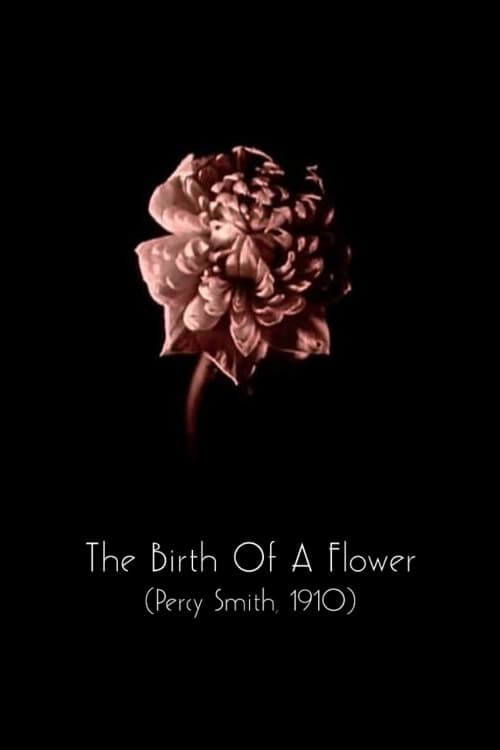
The Birth of a Flower
6.5

"Percy Smith (1880-1944) was world famous as a photographer of plant life. Probably the first British example of time-lapse photography as applied to the growth of plants." Monthly Film Bulletin, November 1955.

The Birth of a Flower

1910
Minute Bodies: The Intimate World of F. Percy Smith
7.2

A meditative, immersive tribute to the astonishing work and achievements of naturalist, inventor and pioneering filmmaker F. Percy Smith. Smith worked in the early years of the 20th century, developing various cinematographic and micro-photographic techniques to capture nature's secrets in action. Working in a number of public roles, including the Royal Navy and British Instructional Films, Smith was prolific and driven, often directing several films simultaneously, apparently on a mission to explore and capture nature's hidden terrains. This film is an interpretative edit that combines Smith's original footage with a new contemporary score by tindersticks to create a hypnotic, alien yet familiar dreamscape that connects us to the sense of wonder Smith must have felt as he peered through his own lenses and seen these micro-worlds for the first time.

Minute Bodies: The Intimate World of F. Percy Smith

2016
No image
N/A

A Secrets of Life short of which the BFI gave this description: "The first part of the film is a speeded-up picture of germination and growth of the tomato plant, ending with the fertilization of the flower and the growth of the fruit. The white flies are then shown in action on the plant, and by skilful micro-photography their life cycle is shown, together with the means by which they injure the plant. A natural parasite—small species of wasp—is also shown in action by means of micro-photography,and its method of parasitism is clearlybrought out. The film concludes with apictorial demonstration of the means forridding tomato glass-houses infested withwhite fly by the use of hydrocyanic gas."

White Flies and Tomatoes

1935
Romance in a Pond
N/A

Short, anthropomorphically-inclined documentary showing the life-cycle of the common newt.

Romance in a Pond

1932
The Life Cycle of the Newt
N/A

Underwater and microscopic photography by F. Percy Smith tell the story of a newt's life.

The Life Cycle of the Newt

1942
Magic Myxies
N/A

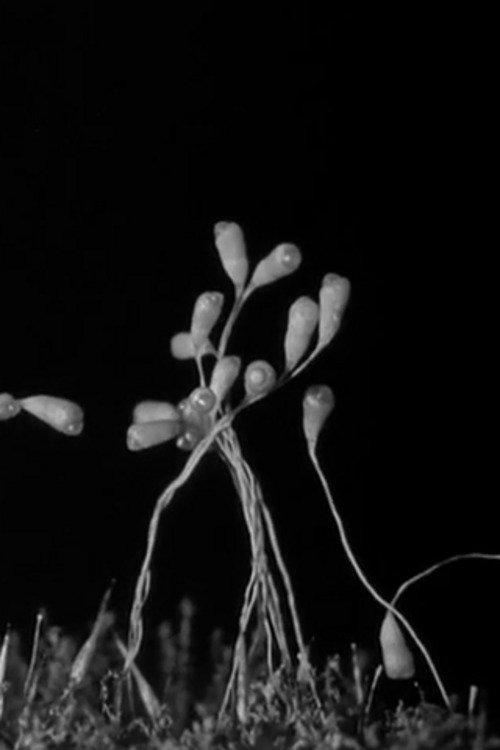
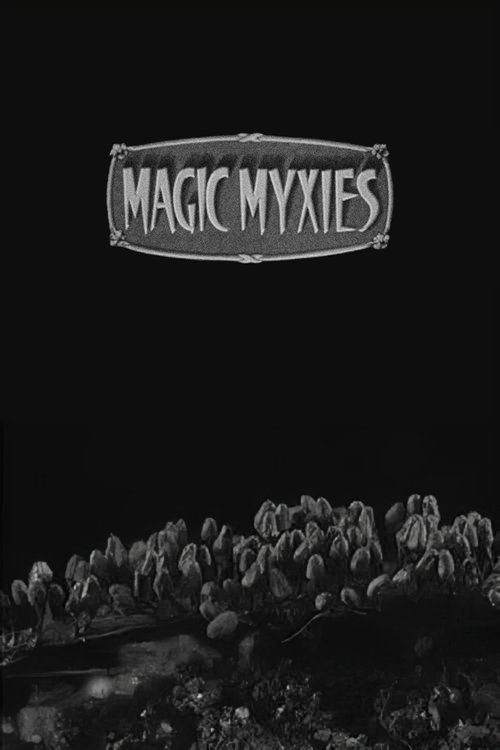
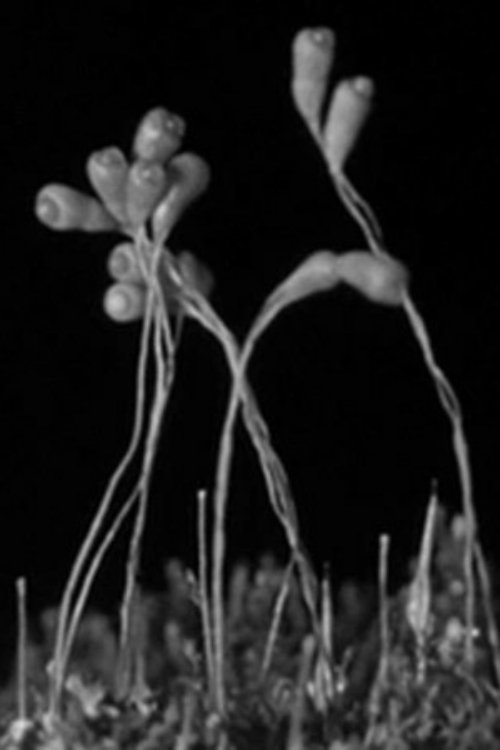
Short film showing (with limited accuracy) the life-cycle of myxomycetes.

Magic Myxies

1931
No image
N/A

Part of the Junior Biology series, this study of pin mould is aided by diagrammatic, time-lapse, and microscopic footage.

The Life Cycle of the Pin Mould

1943
No image
N/A

The lifecycle of a freshwater trout; looking in detail at the development of a trout embryo and hatchling. Also shows the techniques involved in dry-fly trout fishing. (NFA Catalogue) Life cycle and habits of the trout. Photographed by Percy Smith. (Synopsis)

The Catch of the Season

1938
No image
N/A

Part of the archive's Junior Biology series, this study of maize is aided by diagrammatic, time-lapse, and microscopic footage.

The Life Cycle of the Maize

1942
The World in a Wine-Glass
N/A

Short documentary showing infusoria in a wine-glass.

The World in a Wine-Glass

1931
No image
N/A

How science and nature combine to purify water in a reservoir. Micro-cinematography shows the bacteria present in the water.

The Story of a Glass of Water

1927
Brewster's Magic
N/A

A short documentary study of hops, barley and yeast, and how they interact.

Brewster's Magic

1933
No image
N/A

A Secrets of Life short to which the BFI gave this description: "The film falls into two related sections: the first part shows, by fast motion... the germination, growth-characteristic and fertilisation of the wild cabbage; the second part shows how the varied forms of cultivated cabbage - Savoys, Brussels sprouts, cauliflowers, sprouting broccoli - are related to the wild form, by illustrating the particular feature of the wild form that is present to an exaggerated degree in the cultivated variety... A very good example of how to deal with familiar gardening knowledge in an interesting manner, while at the same time using everyday facts to bring home the scientific lessons that can be drawn therefrom... Perhaps the most striking portions of the whole film are the sections showing which parts of the wild form have been greatly developed to produce the Brussels sprouts, cauliflower, or the Savoy cabbage."

Cabbage

1935
No image
N/A

Micro-cinematography is used to show how plants transform their secretions into other substances.

Plant Magic

1927