Philip Zimbardo
Acting
Biography
Dr. Philip George Zimbardo was an American psychologist and a professor emeritus at Stanford University. He was president of the Heroic Imagination Project. He is known for his Stanford prison study, and authorship of various introductory psychology books and textbooks for college students, including The Lucifer Effect and The Time Paradox.

Known For

Skavlan is a Norwegian-Swedish television talk show hosted by Norwegian journalist Fredrik Skavlan. It premiered in Sweden on Sveriges Television in January 2009, and the first guests to appear on the show were former Prime Minister of Sweden Göran Persson and his wife Anitra Steen. On 8 May 2009, it was announced that Skavlan had been renewed for a second season. It was also announced that the show would no longer only be produced by SVT in Sweden; Skavlan would now be partly produced in Norway by the Norwegian Broadcasting Corporation. The first twelve episodes of Skavlan's second season were produced by SVT in Sweden, and the remaining twelve by NRK in Norway. Skavlan speaks Norwegian and his dialog is therefore subtitled in Swedish in Sweden, even though the two languages are quite similar and mutually intelligible. If the persons being interviewed by Skavlan are Swedish, he often tells them to let him know if they do not understand what he is saying. Swedish novelist Jan Guillou has criticized SVT for subtitling the program, stating "there is no need for that. If the host had been Danish, subtitling would have been necessary, but with a Norwegian host it does not make any sense."
Skavlan

Explore the surprising things we know (and don’t know) about why people are the way they are through expert interviews, rare footage from historical experiments, and brand-new, ground-breaking demonstrations of human nature at work.
Mind Field

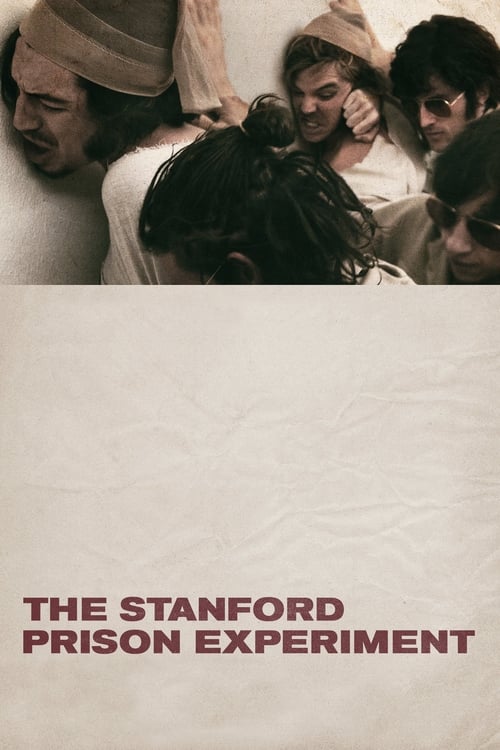
In 1971, Stanford's Professor Philip Zimbardo conducts a controversial psychology experiment in which college students pretend to be either prisoners or guards, but the proceedings soon get out of hand. Based on a true story.
The Stanford Prison Experiment

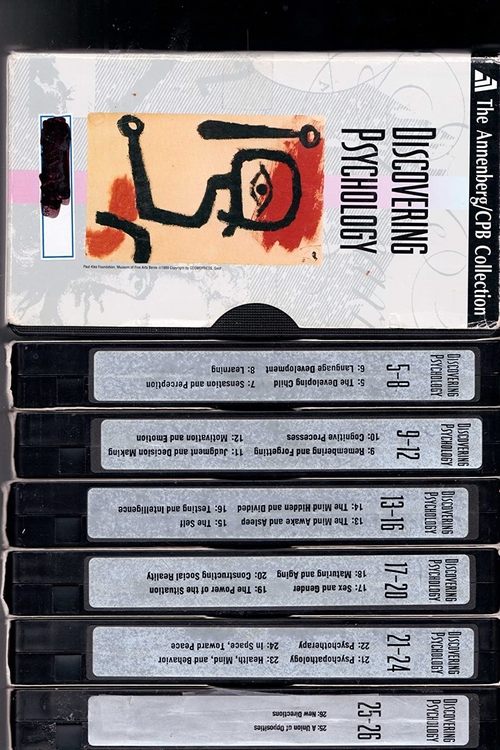
Discovering Psychology is a PBS documentary on psychology presented by Philip Zimbardo, for which he received the Carl Sagan Award for Public Understanding of Science. The series was released in 1990, with an updated edition comprising three additional episodes in 2001.
Discovering Psychology

An intensive psychological test by Professor Philip Zimbardo in 1971 saw US students volunteer to play prisoners and guards in an bid to examine the nature of good and evil. Within five days, four prisoners had broken down and another was on hunger strike. This film, containing strong language, reveals why the test was abandoned after less than a week.
The Stanford Prison Experiment

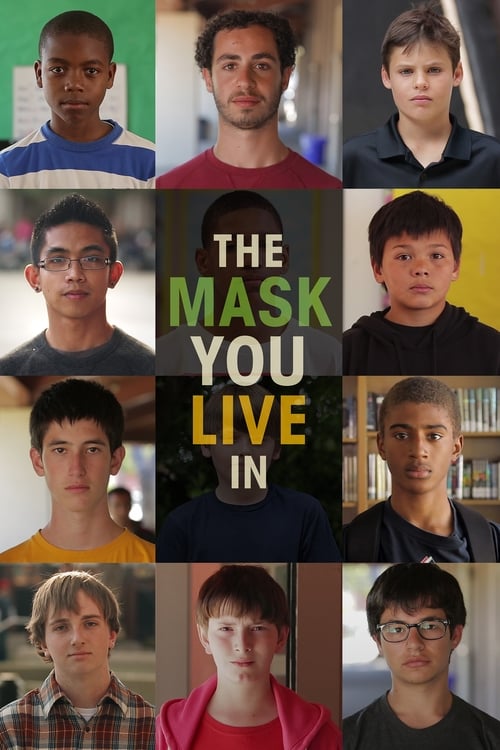
Compared to girls, research shows that boys in the United States are more likely to be diagnosed with a behaviour disorder, prescribed stimulant medications, fail out of school, binge drink, commit a violent crime, and/or take their own lives. The Mask You Live In asks: as a society, how are we failing our boys?
The Mask You Live In

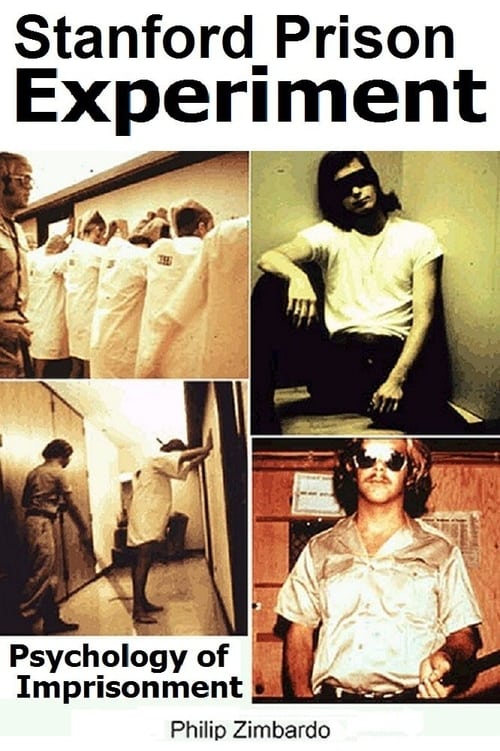
The Stanford prison experiment was a landmark psychological study of the human response to captivity, in particular, to the real world circumstances of prison life, and the effects of imposed social roles on behaviour. It was conducted in 1971 by a team of researchers led by Philip Zimbardo of Stanford University.
Stanford Prison Experiment: Psychology of Imprisonment

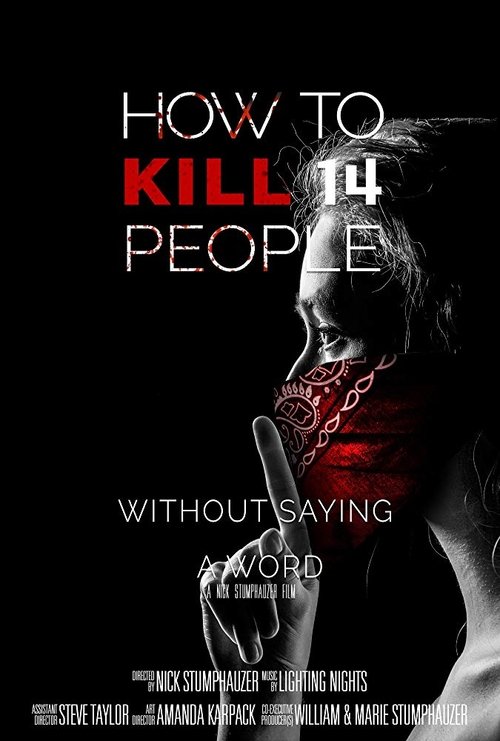
This is a story of how the lips of America became sealed. How we stood by and let our minds be censored. How countless lives were lost in the name of comfort and correctness. This is how we killed fourteen people in San Bernardino, CA on December 2nd, 2015 without saying a single word.
How to Kill 14 People Without Saying a Word

On a talkshow, actor and German TV ikon Joachim Fuchsberger recalls how the games for his show "Nur nicht nervös werden" (Don't Get Nervous), first broadcast on West German TV in 1960, were developed along the lines of American psychiatry. Asked "So how many crazy people watched you?", he responded: "A whole crazy, psychologically disturbed nation". Why were the Germans or to be more precise, the West Germans, a psychologically disturbed nation at that time? This is a film about cheerful and serious games, therapies for re-education and self-imposed re-education, as well as the history of the idea of permanent revolution. Those appearing include directors and producers of gameshows, psychiatrists, anthropologists, and the diversely paranoid.
Overgames

In the summer of 1971, Philip Zimbardo, Craig Haney, and Curtis Banks carried out a psychological experiment to test a simple question. What happens when you put good people in an evil place-does humanity win over evil, or does evil triumph? To explore this question, college student volunteers were pretested and randomly assigned to play the role of prisoner or guard in a simulated prison at Stanford University. Although the students were mentally healthy and knew they were taking part in an experiment, some guards soon because sadistic and the prisoners showed signs of acute stress and depression. After only six days, the planned two-week study spun out of control and had to be ended to prevent further abuse of the prisoners. This dramatic demonstration of the power of social situations is relevant to many institutional settings, such as the Abu Ghraib Prison in Iraq.