FEEL IT.STREAM
Jackie Raynal

Jackie Raynal

Directing

Biography

Jacky Raynal is French directress, actress and film editor. She's born in 1940 near Montpellier. The film maker has a diploma in Linguistics. In the early 60's, already a photographer, young Jacky Raynal starts working in the field of cinema. She's assistent film editor for the documentarys of G. Patriss and F. Vienne. After that, she edits the first films of E. Rohmer. In 1965 J. Raynal gets the license of senior film editor for feature films in CNC (National Cinema Center). Now she's working with the film directors of the New Wave. She edits all of the skecthes of Six in Paris, directed by Jean Douchet, Jean Rouch, Jean-Daniel Pollet, Eric Rohmer, Jean-Luc Godard and Claude Chabrol. Jacky Raynal continues to work in editing till the end of 70's. In 1968, with S. Boissonas and O. Mosset, she's the founder of the Zanzibar group. She works with Philippe Garrel, Serge Bard, Daniel Pommereulle, Alain Jouffroy and Patrick Deval. J. Raynal shoots her first feature film Two Times in Barcelona. In 1972, the movie wins the Grand Prix in the Festival of HyÚres/Toulon. At that time she's already living in New York. There, between 1975 and 1992, she's responsible for the programs of Carnegie Hall Cinema and Bleeker Street Cinema. She shows there numerous independent international films. Her job in New York is appreciated by F. Truffaut (he compares it with the French Cinematheque) and awarded twice by the Village Voice in 1981 and 1991. J. Raynal directs New York Story (Grand Prix in Melbourne) and Hotel New York. In the same time, she plays in several movies, organises numerous international cinema festivals, like Colombian Film Festival, Israel Film Festival or Avignon Film Festival. From 1973 to 1986, with Sid Geffen, they're publishing the independent international cinema review 1000 Eyes Magazine. From 2000, Jacky Raynal directs numerous documentarys, like Notes on Jonas Mekas (2000) or Eric Rohmer, the Film Maker (2010). In 2010, Jacky Raynal is rewarded for her work in arts the Légion d'Honneur (Knight in the Order Arts and Letters).
Known For

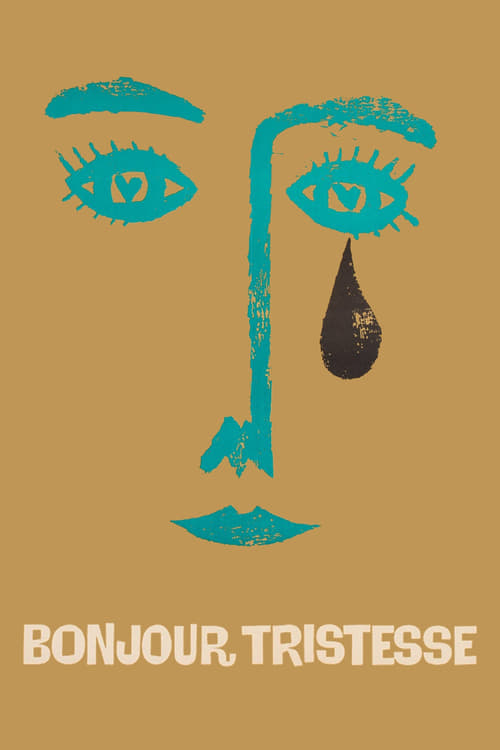
Bonjour Tristesse
6.7

A spoiled teenager spends the summer at the French Riviera with her rich, widower, playboy father, but when his old flame resurfaces, she resolves to keep her frivolous lifestyle at all costs.

Bonjour Tristesse

1958
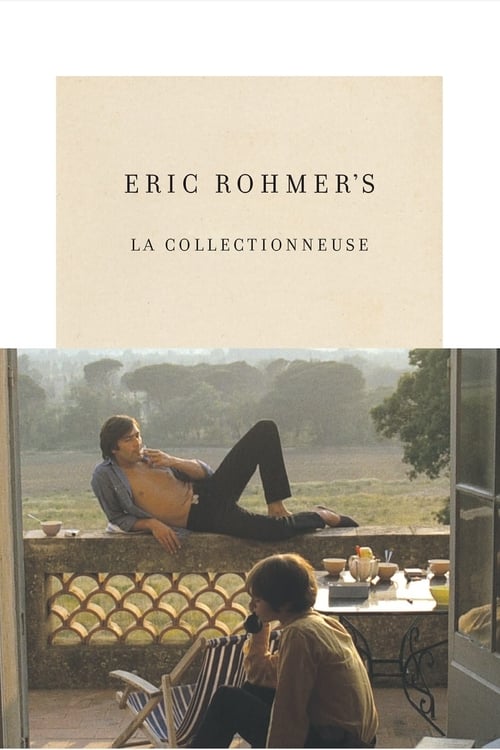
La Collectionneuse
6.9

A bombastic, womanizing art dealer and his painter friend go to a seventeenth-century villa on the Riviera for a relaxing summer getaway. But their idyll is disturbed by the presence of the bohemian HaydĂ©e, accused of being a “collector” of men.

La Collectionneuse

1967
Welcome to New York
5.1

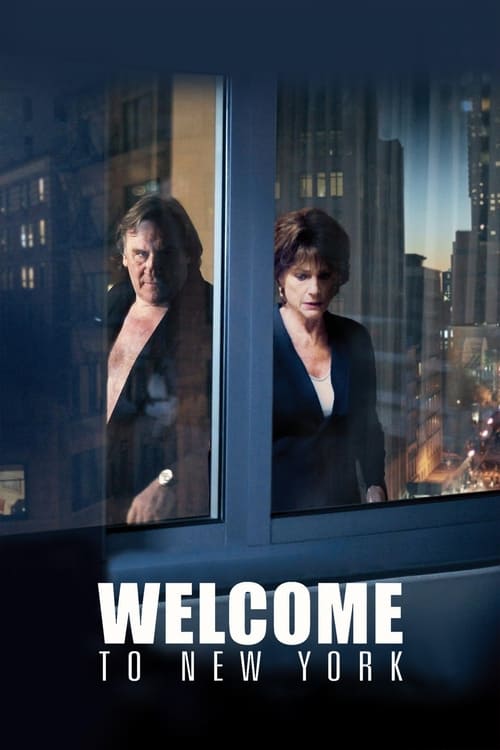
Mr. Devereaux is a powerful man. A man who handles billions of dollars every day. A man who controls the economic fate of nations. A man driven by a frenzied and unbridled sexual hunger. A man who dreamed of saving the world and who cannot save himself. A terrified man. A lost man.

Welcome to New York

2014
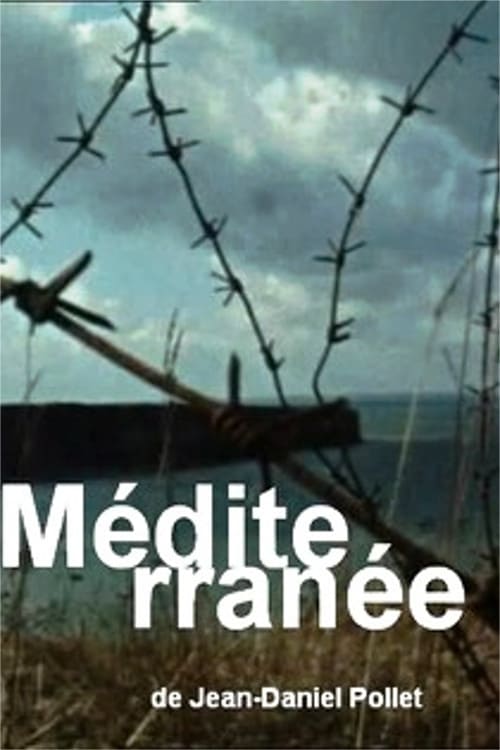
Méditerranée
5.6

[Here] Pollet made a work that is the very definition of what French critics like to call an ovni or ufo (as in ‘unidentified filmic object’). [It] has been described as being ‘like a comet in the sky of French cinema,’ an ‘unknown masterpiece,’ and an ‘unprecedented’ work that refuses interpretation even as it has provoked reams of critical writing. Its rhythmic collage of images – a girl on a gurney, a fisherman, Greek ruins, a Sicilian garden, a Spanish corrida – is accompanied by an abstract commentary written by Sollers, and only the somber lyricism of Antoine Duhamel’s score holds the film’s elements together. At first viewing, you fear that [it] might fly apart into incoherent fragments. Instead, over the course of its 45 minutes it invents its own rules, and you realize you’re watching something like the filmic channeling of an ancient ritual.

Méditerranée

1963
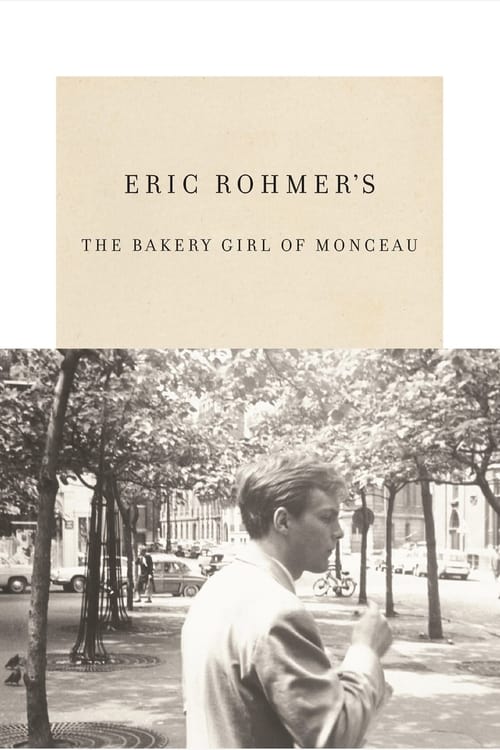
The Bakery Girl of Monceau
6.9

Early new wave effort from Rohmer, which was the first of his six moral tales. It concerns a young man who approaches a girl in the street, but after several days without seeing her again, he becomes involved with the girl in the local bakery. Eventually, he has to choose between them when he arranges dates with them on the same day.

The Bakery Girl of Monceau

1963
Cinématon
4.9

Cinématon is a 156-hour long experimental film by French director Gérard Courant. It was the longest film ever released until 2011. Composed over 36 years from 1978 until 2006, it consists of a series of over 2,821 silent vignettes (cinématons), each 3 minutes and 25 seconds long, of various celebrities, artists, journalists and friends of the director, each doing whatever they want for the allotted time. Subjects of the film include directors Barbet Schroeder, Nagisa Oshima, Volker Schlöndorff, Ken Loach, Benjamin Cuq, Youssef Chahine, Wim Wenders, Joseph Losey, Jean-Luc Godard, Samuel Fuller and Terry Gilliam, chess grandmaster Joël Lautier, and actors Roberto Benigni, Stéphane Audran, Julie Delpy and Lesley Chatterley. Gilliam is featured eating a 100-franc note, while Fuller smokes a cigar. Courant's favourite subject was a 7-month-old baby. The film was screened in its then-entirety in Avignon in November 2009 and was screened in Redondo Beach, CA on April 9, 2010.

Cinématon

1978
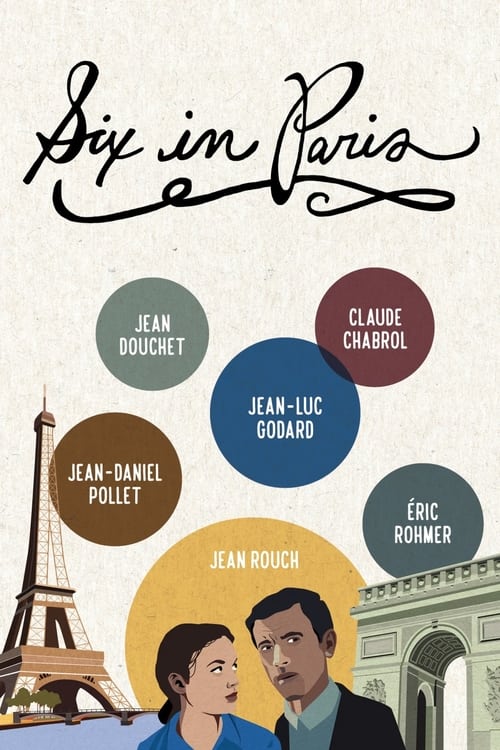
Six in Paris
6.7

Six vignettes set in different sections of Paris, by six directors. St. Germain des Pres (Douchet), Gare du Nord (Rouch), Rue St. Denis (Pollet), and Montparnasse et Levallois (Godard) are stories of love, flirtation and prostitution; Place d'Etoile (Rohmer) concerns a haberdasher and his umbrella; and La Muette (Chabrol), a bourgeois family and earplugs.

Six in Paris

1965
Destroy Yourselves
7.8

Detruisez-vous is a ‘primitive’ film which breaks all the rules of film-making. It’s the first Zanzibar film (and predates the very naming of the movement), an attempt to make a film which defies the rules of production, the production line of commerce

Destroy Yourselves

1969
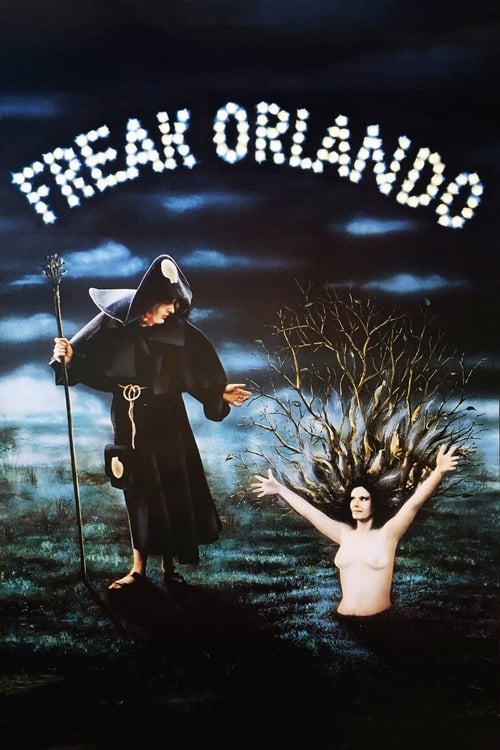
Freak Orlando
5.4

Five more-or-less distinct sections, all featuring "Freak" Orlando, a woman played by the late Magdalena Montezuma, who appears in various guises and deformities throughout.

Freak Orlando

1981
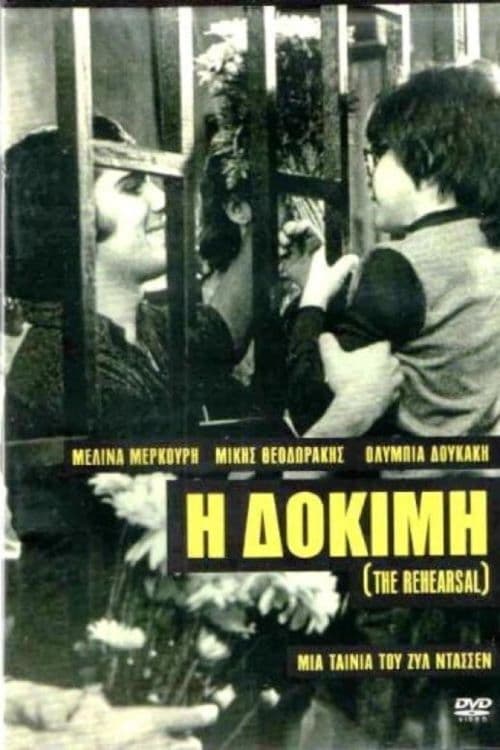
The Rehearsal
5.4

An indictment of the Greek military junta of 1967–1974. The film tries to give a reconstruction of the events during the students' uprising in the Athens Polytechnic (November 1973) by documents, rehearsals, interviews, songs and poems.

The Rehearsal

1974
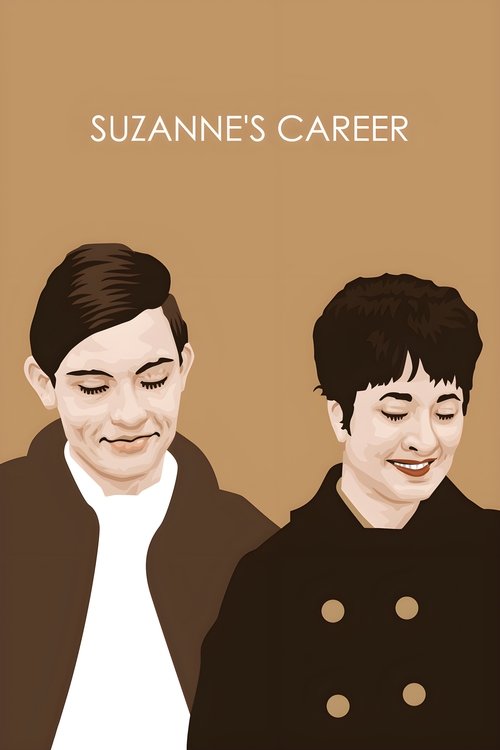
Suzanne’s Career
6.5

In the second of Rohmer's moral tales, he examines the relationship between two friends and a girl who at first appears easily exploited. It is a complex tale of feelings and misconceptions, acted out within the head of the main character, as part of Rohmer's attempt to more easily simulate the mindscape quality of literature within a film.

Suzanne’s Career

1963
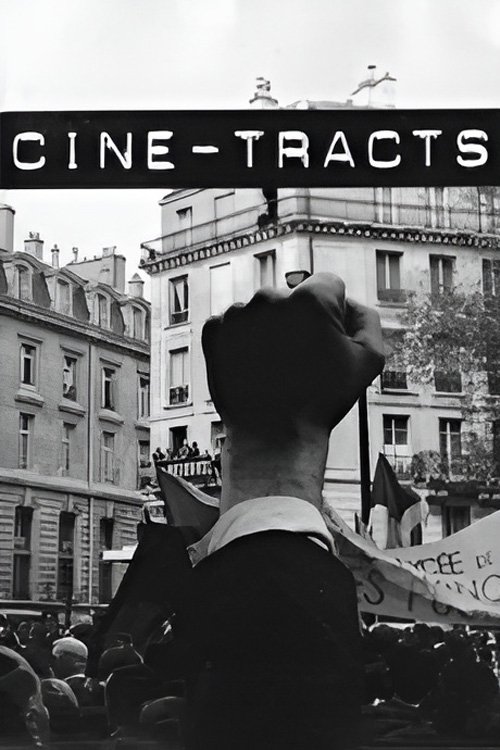
Cinétracts
7.9

A series of 43 documentary shorts, directed (without credit) by several famous French filmmakers and each running between two and four minutes. Each "tract" espouses a leftist political viewpoint through the filmed depiction of real-life events, including workers' strikes and the events of Paris in May '68.

Cinétracts

1968
The Big Departure
6.0

This is the only feature directed by the famed French painter and sculptor Martial Raysse. In keeping with the revolutionary spirit of the time, the movie has no plot to speak of and appears to have been largely made up on the spot. We follow the cat man into a bizarre fantasy universe presented in negative exposure that reverses color values (black is white and vice versa) and written words. The cat man steals a car and then picks up a young girl he promises to take to “Heaven.” Heaven turns out to be a country chateau inhabited by several more animal mask wearing weirdoes...

The Big Departure

1972
Trap
4.7

A genuine performance film as Bernadette Laffont and Bulle Ogier engage, with reckless abandon, in a flurry of senseless destruction in a house at night. Somewhere between a hallucination and a nightmare. Both the explosive soundtrack and narration that accompanies the mayhem was provided by François Tusques.

Trap

1970
Free Radicals: A History of Experimental Film
6.8

Experimental filmmaker Pip Chodorov traces the course of experimental film in America, taking the very personal point of view of someone who grew up as part of the experimental film community.

Free Radicals: A History of Experimental Film

2011
No image
3.3

After debuting in 1983 with Casta Diva, Eric de Kuyper immediately made Naughty Boys in 1984, a film that he himself described as “a sad musical comedy” in which he pays homage to the old musicals and comedies. The film is set in an unspecified time, somewhere between both World Wars in a large English country house. Six gentlemen in dinner jackets try to maintain the atmosphere of a party that has just ended. Naughty Boys was the second film De Kuyper made with friends and students, but here for the first time they were joined by a “professional” actress, Linda Polan.

Naughty Boys

1984
Bizet Carmen
7.3

This spectacular opera film was taped in 1967 and is based on the 1966 Salzburg Festival production directed by Herbert von Karajan himself, who also conducts the fabulous Vienna Philharmonic Orchestra. The production features the three greatest exponents of their respective roles at the time: Grace Bumbry’s magnificently seductive-toned Carmen, Mirella Freni’s ineffably lovely, touching MicaĂ«la and Jon Vickers’s thrillingly manic-depressive Don JosĂ©. On its release the film was hailed by Die Presse, (Vienna) as a “unique artistic event”, while Le Monde felt that Karajan’s production brought “a whole new dimension” to the opera, “combined with a magisterial interpretation”. A classical and utterly dramatic approach to probably the world's most beloved opera – Karajan’s Carmen is as much a delicacy for opera fans as it is a perfect starter for newcomers.

Bizet Carmen

1967
Portrait de Jean Rouch
N/A

On the terrace of his regular café haunt in Paris' 14th arrondissement, Jean Rouch regales Noël Simsolo and Jackie Raynal with stories from the life of a self-described "amateur filmmaker".

Portrait de Jean Rouch

2004
Felix in Wonderland
6.0

Fall into the world of Felix Kubin's experimentation and creation of music sound and his mastering of his instrument of predilection, the KORG MS20. A portrait of a great artist who never stops living with music in his head.

Felix in Wonderland

2019
Hotel New York
7.5

A comedy about New York and its eccentric inhabitants. A French filmmaker comes to New York to show her film at MOMA. Fascinated by the city, she decides to stay.

Hotel New York

1984
Jackie Raynal | Feel It Stream