Writing
French playwright.
No description available.
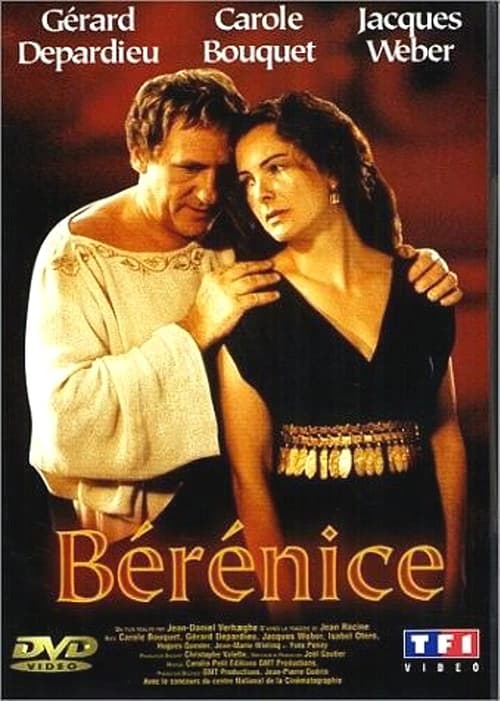
Now Titus' father has died, the new emperor will be free to marry his beloved Bérénice. Also In love with Bérénice, Titus' friend Antiochus plans to flee Rome rather than face the marriage. However, public opinion about the pairing causes Titus to choose his duty to Rome over his love for Bérénice, and he sends his love rival to tell Bérénice the news...
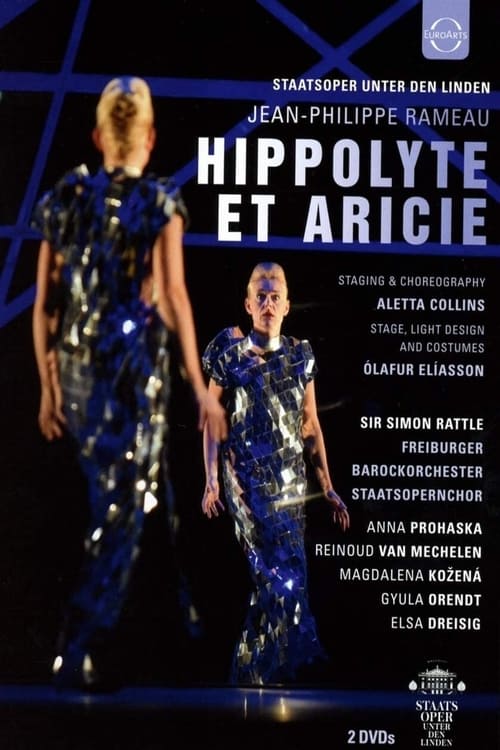
Staatsoper Berlin’s new production of Rameau’s tragédie lyrique, directed by Alletta Collins; featuring costumes, sets and lighting designed by Ólafur Eliasson; and musical direction by Simon Rattle, who makes his debut with the Freiburg Baroque Orchestra.
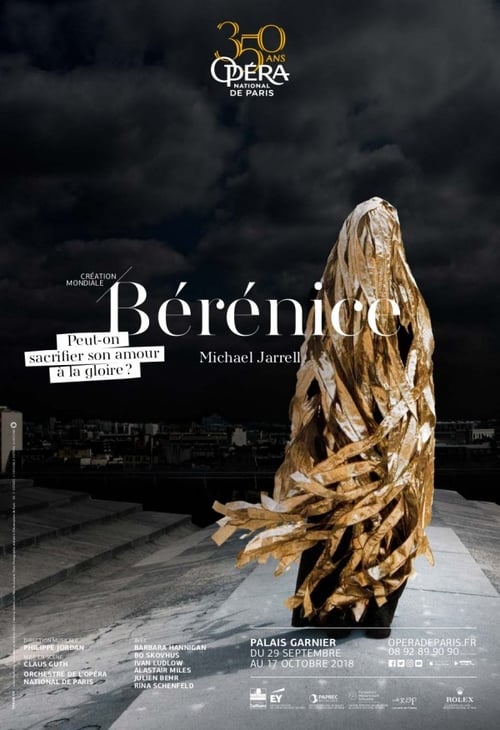
Titus and Berenice love each other; under the watchful eye of Antiochus, the hopeless lover, they try yet refuse to understand each other. Taking up the “majestic sadness” of these alexandrines, among the greatest verses in the French language, Michael Jarrell amplifies the power of words, making them a vehicle for spaces and identities that, from Rome to Jerusalem, are unceasingly questioned.
A staging of Jean Racine's play "Andromaque" by Anne Théron.
On the shores of Aulis, the Greeks prepare to attack Troy. But their ships are unable to set sail because the gods are holding back the winds necessary for departure. Agamemnon consults the oracle. The solution is tragic. To appease the goddess Artemis, whom he had offended, he must sacrifice his own daughter.
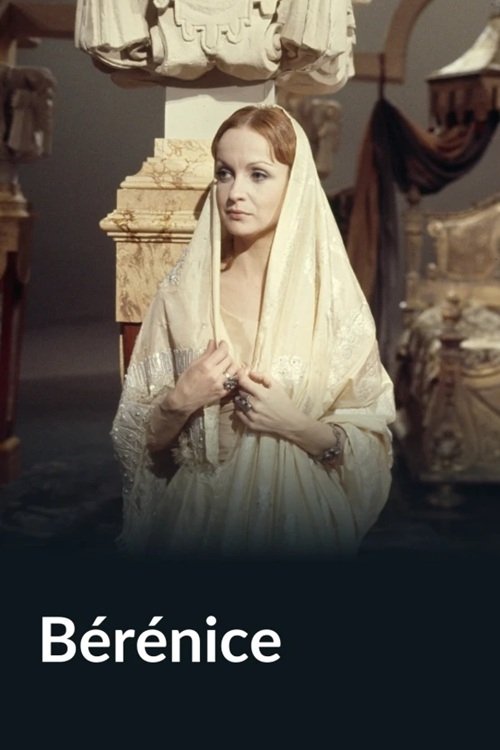
Adaptation of the Racine play. Titus, Roman Emperor, is torn between his love for the captive Queen Bérénice and his duty to marry a Roman.
A staging of Jean Racine's play "Iphigénie" by Chloé Dabert.
Emperor Claudius had a son, Britannicus, before marrying Agrippina and adopting her son Nero, born of a previous marriage. Nero succeeded Claudius and ruled the Empire. Despite his reign, Nero decides to free himself from his mother's yoke and take revenge on Britannicus, the brother who has everything and whom he envies.
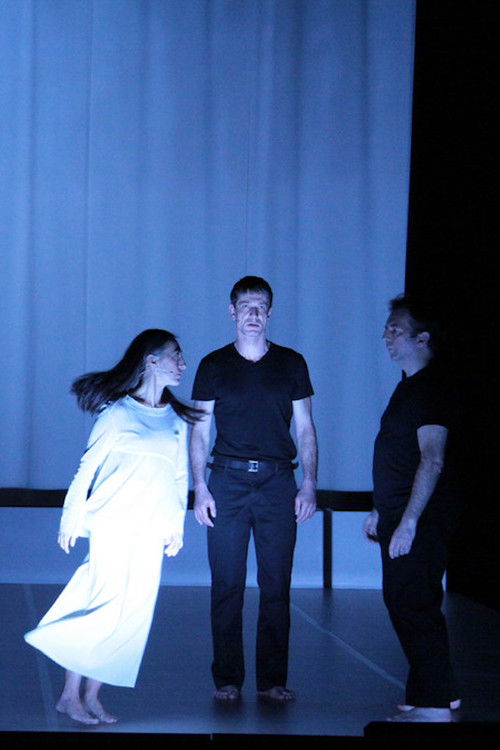
An adaptation of Jean Racine's tragedy which depicts the thwarted loves of Antiochus, Titus (the future emperor of Rome) and Berenice (the queen of Palestine).
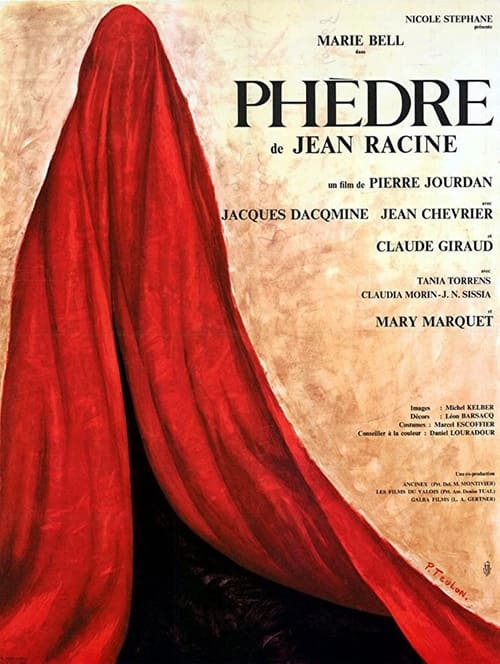
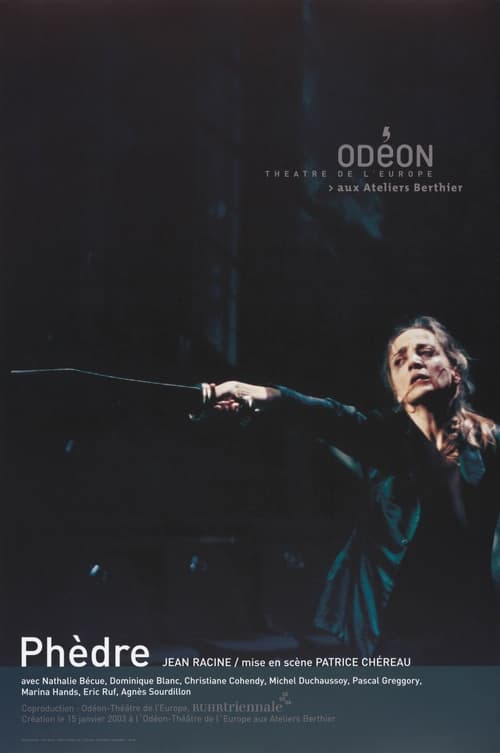
In the absence of her royal husband Theseus, thought to be dead, Phaedra declares her love to Hippolyte, Theseus's son from a previous marriage.
“The Queen of Judah has gained her throne by eliminating the Royal Princes, but one is still alive and protected by the high priest. In a dream the Queen sees the young Prince as a king. She orders an assault on the Temple but when the Priest draws back a curtain to reveal the child king on his throne, she rushes from the scene believing it to be the fulfilment of her dream (incomplete).” - BFI.
Hèdre is queen but doesn't love the king. She prefers his son Hippolytus, whom he had from a first marriage, to Theseus. A guilty love, hidden by feigned hatred, that makes her suffer and perish, and that she can't keep from confessing as soon as she hears of the king's death. But Hippolyte doesn't love her. And the monarch is only wounded. Ashamed, the queen can no longer look at him. Oenone, her confidante, tries to save her by making the king believe that the outrage comes from his son. Fanned by Theseus, the fury of the gods strikes Hippolytus. The adulteress kills herself.
A staging of Jean Racine's play "Britannicus" by Jean-Louis Martinelli.
A staging of Jean Racine's play "Bérénice" by Jean-Louis Martinelli.
The continuing demand for high standards is what sets Rousseau's work apart. What makes this film distinctive is the way Rousseau explicitly returns to the source of his creative inspiration. So here he is at home reciting «Bérénice» to himself, whilst going about his household chores. It verges on the comical: There are repeated shots of him obstinately trying to turn off a dripping tap, or the jubilant close up of bare feet carried away in performing a dance step or two. Combining art with life in such a way, that nothing is compartmentalised, nothing lost - that is the goal.
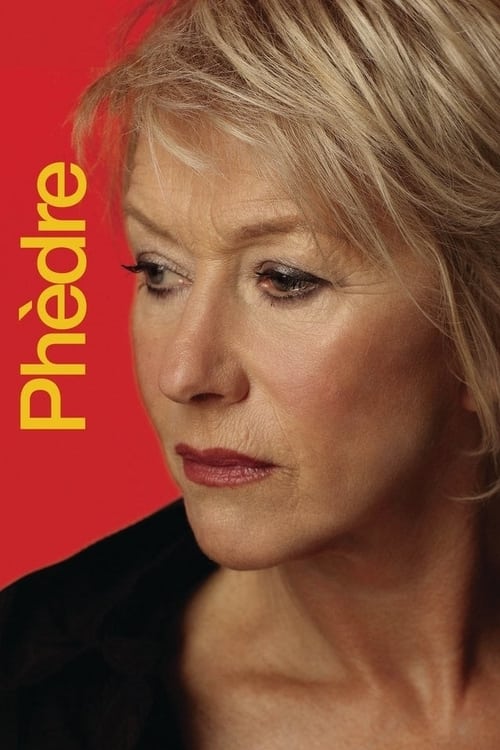
A new English adaptation of the classic French tragedy Phèdre by Jean Racine (1639-1699). It retells the ancient Greek tale of the wife of the Atenian King Theseus, who conceived a forbidden love for his son (by an earlier wife) Hyppolytus. All ends badly for all. One of the first five episodes also released on terrestrial TV on a 2009 BBC TV series titled "National Theatre Live".
In October 1733, the audience at the Académie Royale de Musique witnessed the birth of a revolutionary work: Hippolyte et Aricie. With its inventiveness and musical richness, Rameau’s opera marks a break in the history of French music. A similarly revolutionary duo – Jeanne Candel and Raphaël Pichon – get to grips with this work for the Opéra Comique.