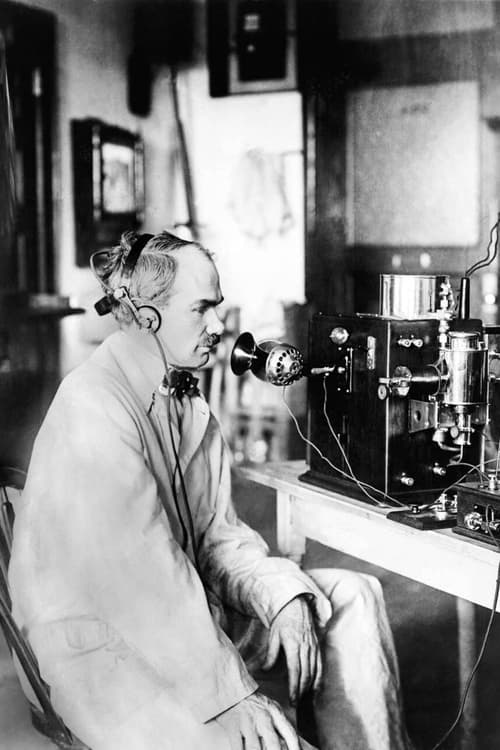
Lee De Forest
Directing
Biography
Lee de Forest, (born August 26, 1873, Council Bluffs, Iowa, U.S.—died June 30, 1961, Hollywood, California), American inventor of the Audion vacuum tube, which made possible live radio broadcasting and became the key component of all radio, telephone, radar, television, and computer systems before the invention of the transistor in 1947. Although de Forest was bitter over the financial exploitation of his inventions by others, he was widely honoured as the “father of radio” and the “grandfather of television.” He was supported strongly but unsuccessfully for the Nobel Prize for Physics.
Known For

For 50 years radio dominated the airwaves and the American consciousness as the first “mass medium.” In Empire of the Air: The Men Who Made Radio, Ken Burns examines the lives of three extraordinary men who shared the primary responsibility for this invention and its early success, and whose genius, friendship, rivalry and enmity interacted in tragic ways. This is the story of Lee de Forest, a clergyman’s flamboyant son, who invented the audion tube; Edwin Howard Armstrong, a brilliant, withdrawn inventor who pioneered FM technology; and David Sarnoff, a hard-driving Russian immigrant who created the most powerful communications company on earth.
Empire of the Air: The Men Who Made Radio
Early sound film featuring comedian Eddie Cantor.
A Few Moments with Eddie Cantor
A dainty combination of Music and Grace.
Stringed Harmony

A dog gets ready for dinner as the story takes us into a sing-a-long with "My Old Kentucky Home". The first sound cartoon ever produced.
My Old Kentucky Home
A dainty combination of music and grace.
Harlequin Serenade
Early music video.
Ben Bernie and All the Lads

Noble Sissle and Eubie Blake sing snappy songs.
Noble Sissle and Eubie Blake Sing Snappy Songs

Spanish dancer Conchita Piquer performs in a short film produced in the DeForest Phonofilm sound-on-film process.
From Far Seville
British music hall entertainer Dick Henderson sings "I Love Her All the More" and trills out a resounding ode to his beloved in this early sound recording, stopping to aim some rather less romantic jibes at his wife before delivering a rousing encore.
Dick Henderson

'Billy Merson, the great Nottingham-born music hall performer, presents one of his signature numbers. The film clearly captures Merson's comic brilliance - he not only sings, but dances, skips and indulges in a lot of creative business with a lyre. Merson had been making films since 1915 and Desdemonia is often cited as Britain's first sound film.' (Robin Baker, BFI)
Billy Merson Singing 'Desdemonia'

The first presidential film with sound recording.
President Coolidge, Taken on the White House Grounds
Vaudeville stars Weber and Fields perform their famous pool hall routine in a short film produced in the DeForest Phonofilm sound-on-film process.
Weber and Fields Pool Hall

In his career, De Wolf Hopper recited Ernest Lawrence Thayer's "Casey at the Bat" thousands of times. Here, wearing a tuxedo, he emerges from behind a curtain as if at a theater, gives a short introduction, and launches into the poem. The camera is stationary, and although Hopper stands in one place, his hands and arms, his face, and his voice are animated throughout. In delivery, it's a minstrel performance.
Casey at the Bat
Short introductory film demonstrating the novel sound-synchronized film technology, the "Phonofilm".
What the Phonofilm Means

Blake plays his "Fantasy on Swanee River" (two takes of same piece, in different styles). The highest notes failed to record in this seminal experiment with synchronized sound.
Eubie Blake Plays His Fantasy on Swanee River
The first colored talking picture ever made.
Parade of the Wooden Soldiers from Chauve Souris

Follow the bouncing ball sing-along
Sweet Adeline
A selection of images (a dog barking, a baby crying, and a musical scene), initially shown in silence, and then repeated with Phonofilm accompanying soundtrack to demonstrate the potential of the technology.