Henning Christiansen
Sound
Biography
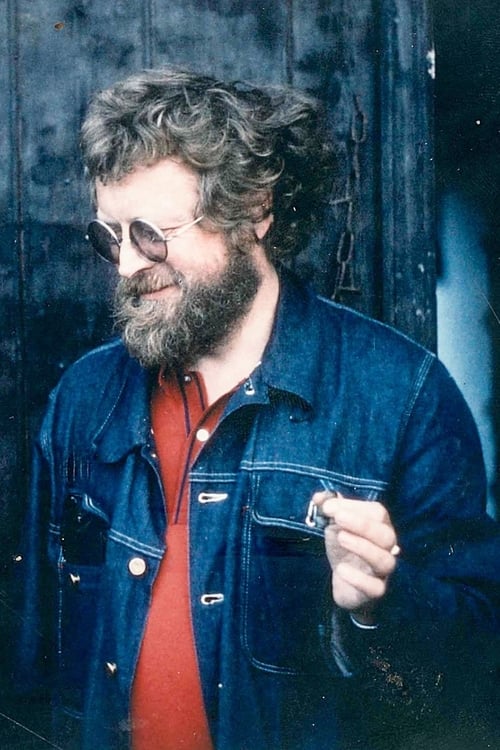
Henning Christiansen was a Danish composer and an active member of the Fluxus-movement. His overall goal was to work collaboratively and to trespass conventional boundaries. He resented the idea of an isolated artistic genius and his entire production can be seen as a subsequent and vibrant example of praxis in a constant flux. This is visible from his engagement in Fluxus, over numerous collaborative performances to his position as a professor at the Art Academy in Hamburg (Hochschule für Bildende Künste - HfBK). He worked with artists such as Joseph Beuys and Nam June Paik, as well as with his wife Ursula Reuter Christiansen. Other collaborators include Bjørn Nørgaard, Carlo Quartucci, Carla Tato, Ernst Kretzer, Ben Patterson, David Moss, Ute Wassermann, Andreas Oldörp, Christophe Charles, Bernd Jasper, Henrik Kiel, Vilem Wagner, Vladimir Tarasov, Niko Tenten, and many others.
Known For

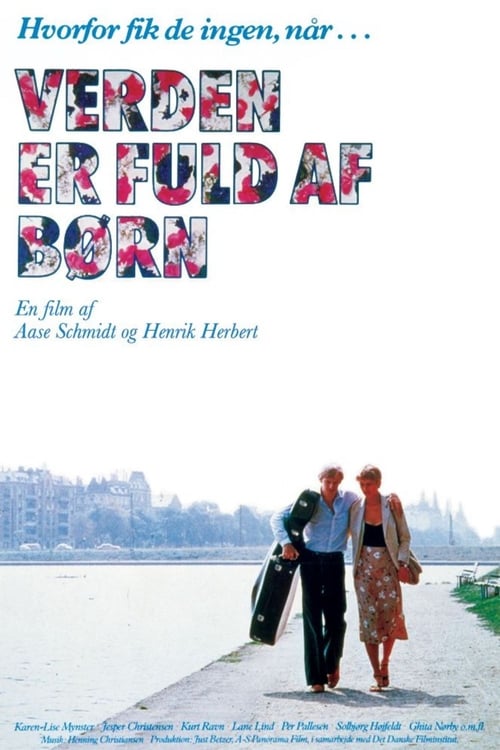
Susanne, a journalist, and Morten, a cellist, desperately want a child, but are unsuccessful. The situation leads to desperate acts, occasional drunkenness, and solace for her with a discreet lover.
It's a World Full of Children

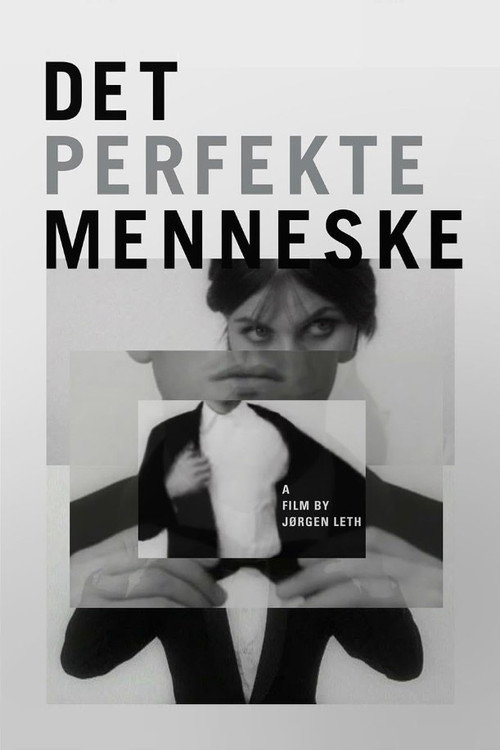
An elegant and humorous film—in the guise of a serious anthropological treatise—spotlights "The Perfect Human," a model of the modern Dane created by our wishful thinking.
The Perfect Human

An existential pictorial poem about human life. "Can they stand it? Do they never feel?" (DFI)
Love

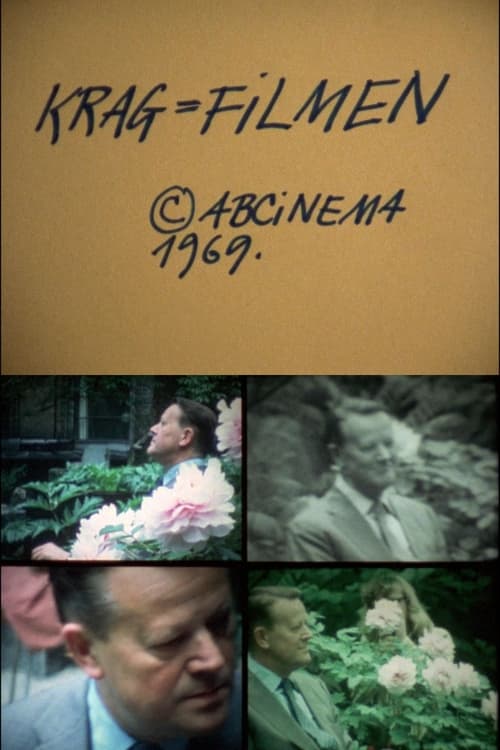
The ABCinema group dispatched Jørgen Leth to make the arrangements with Prime Minister Jens Otto Krag, who good-naturedly put himself at their disposal. Relaxing on a bench in the garden of Copenhagen's Royal Academy of Fine Arts, Krag is scrutinised by camera-wielding collective members almost like a model in a life-drawing class. Every possible angle, distance and framing is tried. The result is an image of the prime minister that is both fragmented and multi-facetted, describing his visual appearance as a man and an icon. At the same time, the ABCinema members film each other filming Krag, which gives the film a highly self-reflective character. Like "The Deer Garden," this is a film about a film being filmed. A showdown with the documentary portrait genre, "Jens Otto Krag" is devised according to the principle of keeping the material alive by not editing it but randomly piecing it together. (DFI)
Krag-filmen

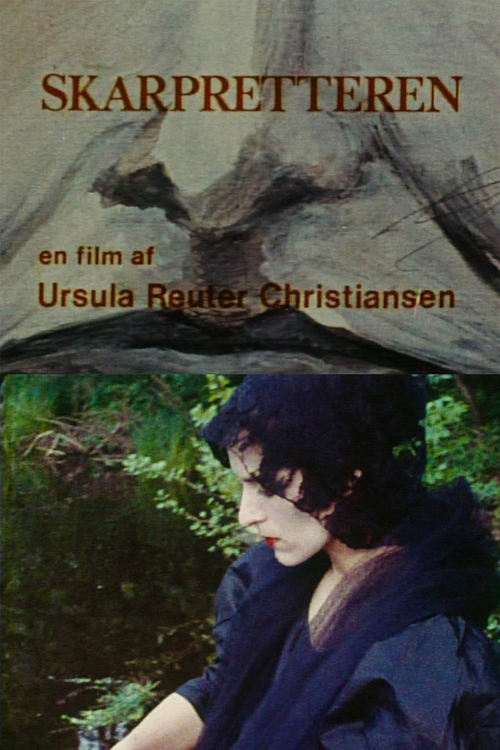
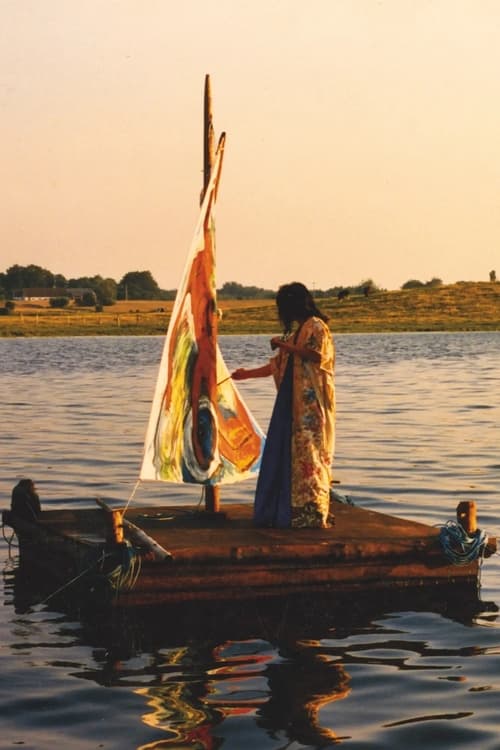
Starring Reuter Christiansen herself and shot in the lush landscape of Møn, the Danish island where she has lived since 1970, THE EXECUTIONER uses a fragmented narrative to tell “a story of woman’s degradation and exaltation,” as its subtitle indicates. A landmark of Danish feminist art, the film was also Reuter Christiansen’s first major collaboration with Henning, who composed the film’s lyrical, subtly experimental music.
The Executioner

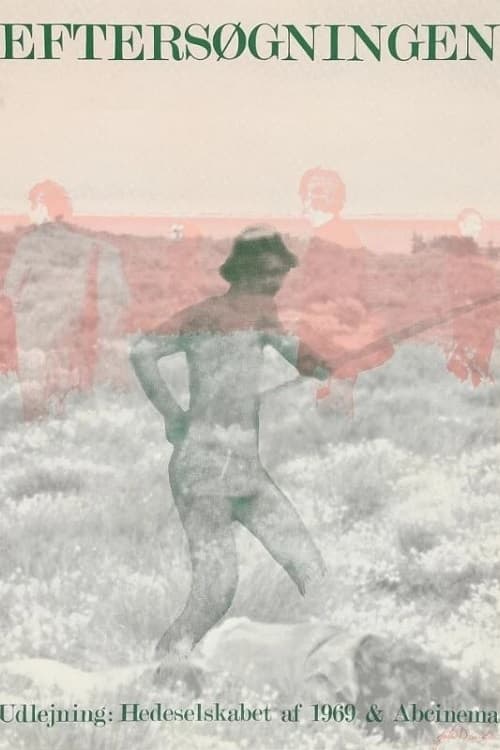
The Search is the ultimate happening film created by a group of ABCinema members during a camp on the Juttish heath. The film consists of loosely composed sequences. The landscape is the setting for a series of peculiar occurrences in which individual members were free to realize personal ideas, fantasies and themes: a man runs across the heath, shouting, a Molotov cocktail flares on a beach, a man repeatedly falls over, an angel-like woman makes a solitary procession, a burning pine, a man breaking a tree with a shovel, etc.
The Search

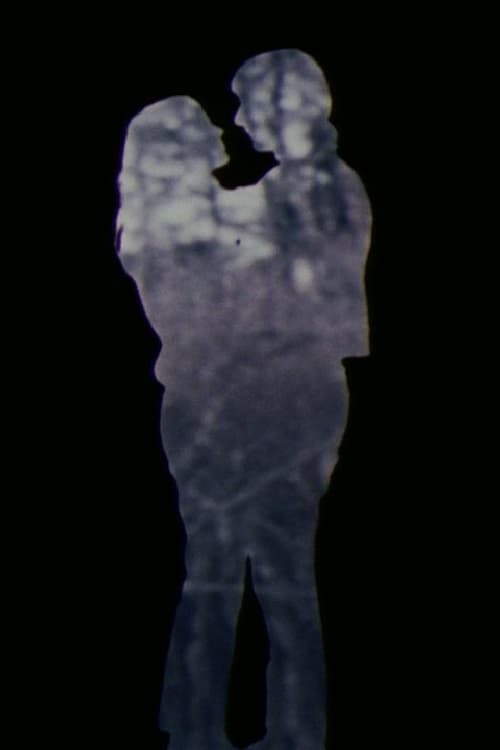
A cinematic experiment that moves in several planes. Four people act out a human course, seen with white silhouettes on a black background. 'Inside' them - or behind them - a different process plays out, supported and contradicted by the sound side. (DFI)
Inside

With the participation of Danish and foreign artists. Creation of a printing house, film screenings, production of the Potato Opera, etc.
Festival 200

No description available.
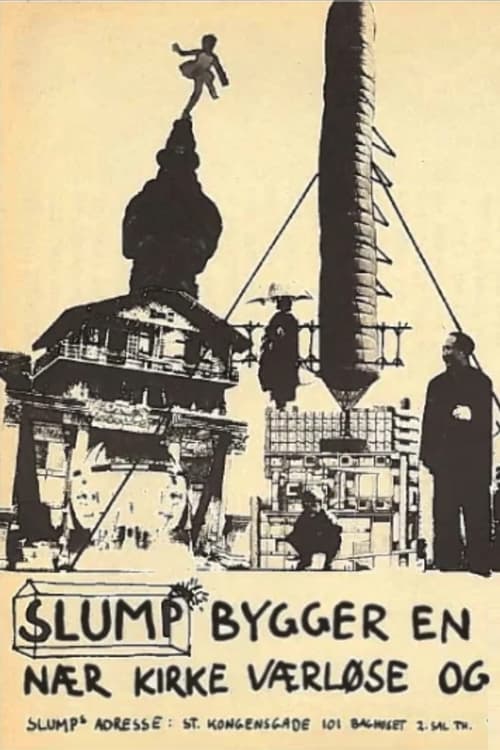
Fargo. Slump I film

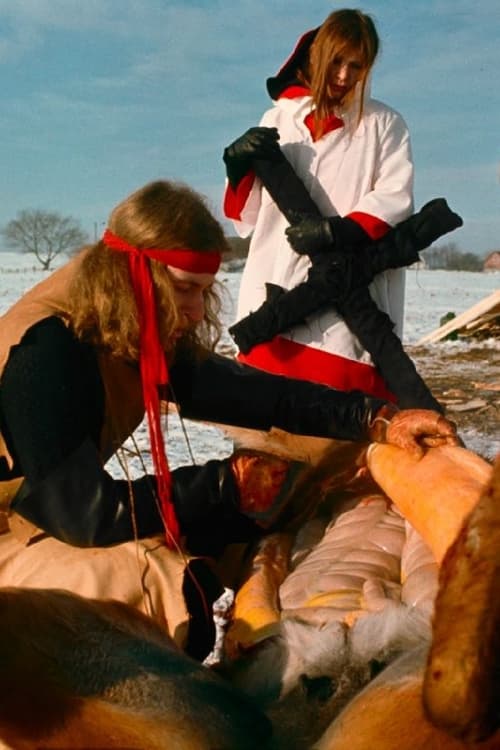
Broadcast to a large portion of the Danish population in January 1970, Hesteofringen ('Horse Sacrifice') was the ostensible ritual slaughtering and dismemberment of a horse in protest of the ongoing war in Vietnam (the horse was actually very old and put down humanely by a vet).
The Horse Sacrifice

With the relationship between mother and daughter as a common theme, the film is divided into 9 image rooms with action patterns that are based on archetypal images and motifs. The film is unconventional in its choice of means of action. Ursula Reuter Christiansen, who is a painter, tells her adventurous stories with an emphasis on the visual element, which works in interaction with Henning Christiansen's original soundtrack. (DFI)
The Red Forest: An Oracle in Nine Illustrations
Abandoned Goods is an essay film exploring the journey of one of Britain’s major collections of Asylum Art containing about 5,500 objects (paintings, drawings, ceramics, sculptures and works on stone, flint and bone) created between 1946 and 1981, by about 140 people compelled to live in the Netherne psychiatric hospital in South London. Blending archive, reconstruction, animation, 35mm rostrum, and observational photography, the film explores the transformation of these objects from clinical material to revered art objects examining the lives of the creators and the changing contexts in which the objects were produced and displayed.