Editing
Pan Tau always had a gentle expression and a friendly smile, he was elegantly dressed in a stroller, with an umbrella and a white carnation in the lapel. Foremost, he was famous for his magic bowler hat. By tapping on his hat, Pan Tau was able to change his appearance into a puppet, to conjure up miscellaneous objects or to do other magic. His most characteristically behavior is that he would help children who were experiencing some sort of difficulties in-between their dreams and reality, like finding a place for skiing, settling family problems on Christmas, and even give a boy a good time at a fair when he is supposed to have piano lessons. To adults, he usually remained invisible.
No description available.
Karol Plicka was an important musician and composer. He recorded folk songs immediately after hearing them in musical notation to preserve them for future generations. Similarly, he records and interprets traditions associated with dance, folk song and local stories that vary from region to region in his film The Eternal Song. The short documentary presents merry-making in Slovak and Czech regions that are changing with the coming modernization and transformation of musical records.
The year is 2163. Starship Ikaria XB-1 embarks on a mission deep into space in search of alien life. During their perilous journey the crew confront the effects of a malignant dark star, the destructive legacy of the 20th century and, ultimately, the limits of their own sanity.
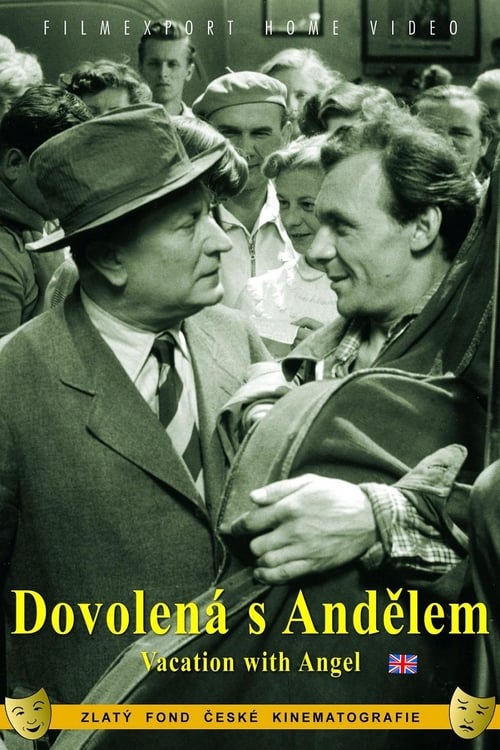
Strict and always dissatisfied grumbler Mr. Angel gets a voucher for summer recreation. He rejects it at first but he eventually decides to use it and spend 14 days in unionist hut Jezerka together with other merited co-workers.
Ferda Mravenec (Ferda The Ant, 1944 ) runs over ten minutes, telling the tale of an ant colony versus a spider. This one is teeming with characters, with impressive animation, fun gags, and a good story.
On Christmas Eve, 1944, in Nazi-occupied Slovakia, the Kubiš family grapples with survival amidst brutal reprisals. Marián collaborates as a fascist guard leader, while his sister Angela has an affair with their Nazi lodger, Major Brecker. The situation escalates when their younger son, Juraj, a former partisan fighter, returns home wounded. As Germans search homes for escapees, Juraj hides in the attic, while an unsettling Christmas dinner unfolds below with Major Brecker present.
The Prague Research Institute of Air Engineering is to prepare a proposal to reduce dust in Ostrava, especially in the area where the new power plant is to be built. That is why engineers Vojtěch Spára and Jiří Zástěra will travel to Ostrava. Eva Frágnerová, a hygienist, will strongly oppose the power plant project near the housing estate.
Three pensioners, three Josephs, living on a housing estate, are bored. They have nothing to do, so they make up all sorts of alliterations and tease each other. When one of them is approached by a neighbour, he asks if he can find out who is borrowing her bicycle from the carriage shop. He finds out it's a little boy who doesn't have a dad, and his mom doesn't have money for a bike. So he borrows the bike and always leaves it somewhere on the estate. The pensioners feel sorry for the boy, so one of them takes the blame and offers to be the boy's mum's surrogate grandparents.
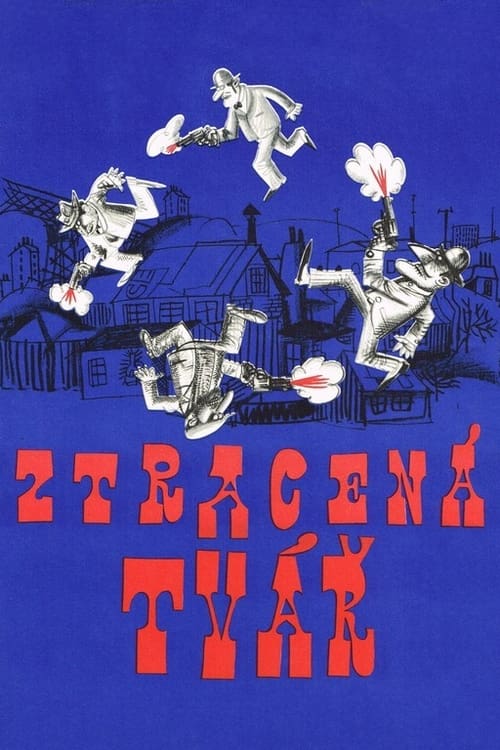
It is the 1930s. Physician Bartos devotedly attends poor patients in the city suburbs, at the same time researching the possibilities of regeneration of human tissues after transplantation. His former colleague Rosen, now working as an assistant at the private clinic of surgeon Kirchenbruch, considers the research a mere utopia. The disappointed Bartos, trying to verify his theories, therefore accepts the outrageous proposal of Marion, owner of a brothel - to surgically replace the face of her lover, the wanted thief Cutter, with the face of murdered Father Hopsasa. Bartos is well paid but his successful operation remains a secret.