Acting
During World War II, a brave, patriotic American Soldier undergoes experiments to become a new supersoldier, "Captain America". Racing to Germany to sabotage the rockets of Nazi baddie "Red Skull", Captain America winds up frozen until the 1990s. He reawakens to find that the Red Skull has changed identities and is now planning to kidnap the President of the United States.
Piano player is commissioned as an officer in WW1 Austro-Hungarian army. His sensitive soul is being tormented by war atrocities. And then he is ordered to hang an old lady...
In former Yugoslavia, following Tito's break-up with Stalin, the rocky island of Goli Otok was the camp site for political prisoners. From that officially non-existant yet dreaded place a young man escapes and seeks refuge on a nearby island. The nuns from the local convent find him unconscious and decide to give him shelter. A relentless secret policeman comes to the island and starts making life miserable for its inhabitants, hoping to find his prey...
The series focuses on the Croatian struggle for independence, dating as far back as 1895.
Documentary about Croatian nationalist Ante Bruno Busic (1939-1978).
A theater premiere of Timon of Athens ends with a rapturous applause from the audience, and Boris, the lead actor (Boris Buzančić), is congratulated for having played the role of his lifetime. Encouraged by the sense of his own worth, he starts a romantic affair with a prompter, spurring gossip in the theater. The ensemble embarks on a tour, but as their performances achieve more success, Boris is becoming less liked among his colleagues, and he begins to experience the fate of the character he is playing...
The last play that Miroslav Krleza ever wrote. Especially interesting is the directorial concept, which sets the play in the space of the old Dubrovnik fortress, and used the audience as semi-active participants in the event. Two acting ensembles played for different audience with a short time lag.
Sasa is an unsuccessful writer who works as a restaurant critic. His life starts to change when he meets and falls in love with Ines who works in a private sports center. However, things get complicated when he writes a bad review for the restaurant owned by a well-connected man. To get his life in order, Sasa has to face up to all of his character flaws.
A war drama about a German officer's search for a priceless art collection.
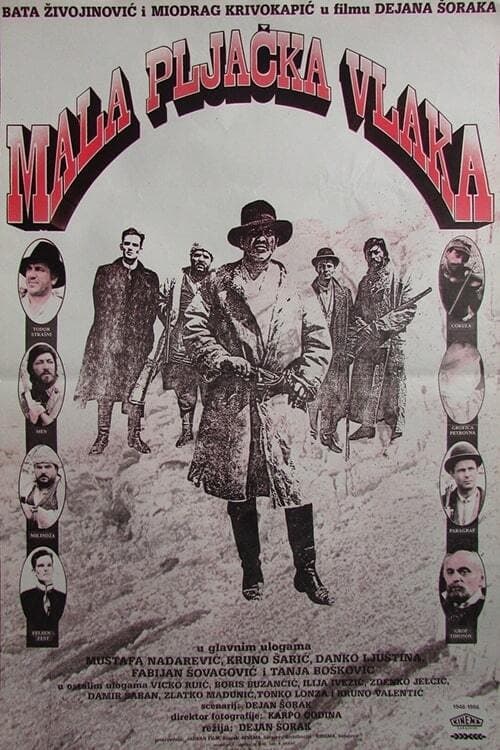
Lika, Austro-Hungarian Empire, the year is 1918, the last year of WWI. In a wasteland rocky area, among ravines there is a small gendarmery police station with several gendarmes headed by sergeant Cokula. The area is controlled by a group of outlaws led by Todor nicknamed "The Terrible". Sergeant Cokula and Todor did not bother each other, until bandits robbed the emperor's inspector.
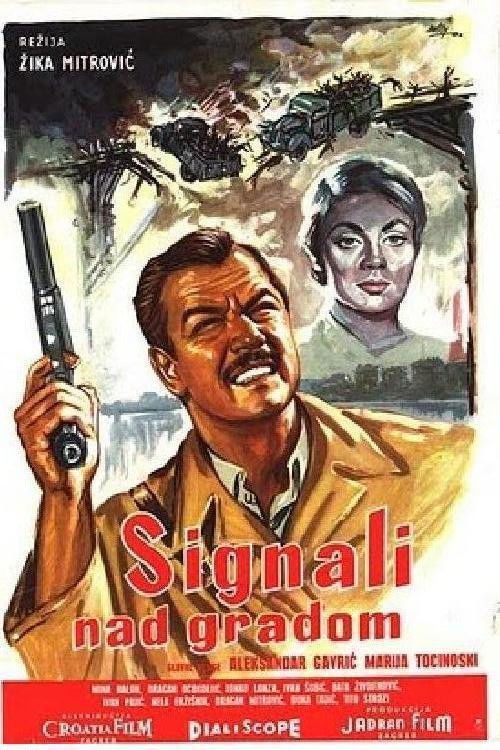
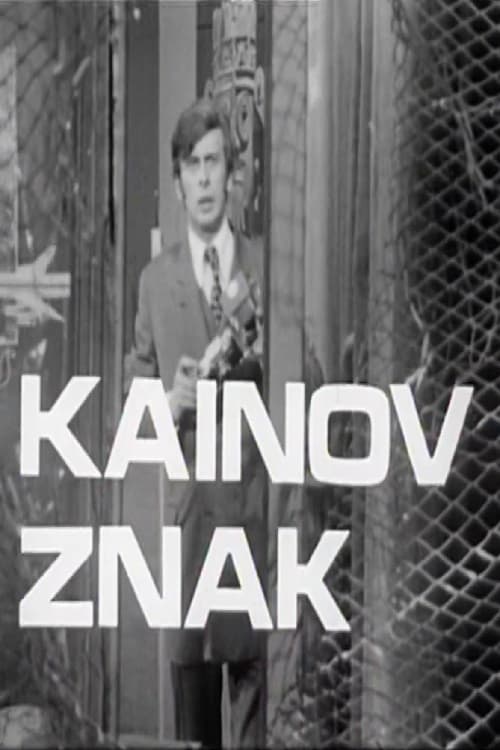
The movie is based on true events that occured in Croatian city of Karlovac in 1941. In order to save the imprisoned high ranking member of the resistance movement, the group of Partizans are conducting daring raid in the very center of the enemy stronghold.
"The Emperor is Having Fun" is a Yugoslav black-and-white television drama produced by RTV Zagreb and broadcast in 1975. It was directed by Berislav Makarovic, and the screenplay was written by Gojko Sobota. The protagonist is the tyrannical Roman emperor Nero, and the plot shows how he decides to direct a theater play and forces the courtiers to act in it in order to show their true colors.
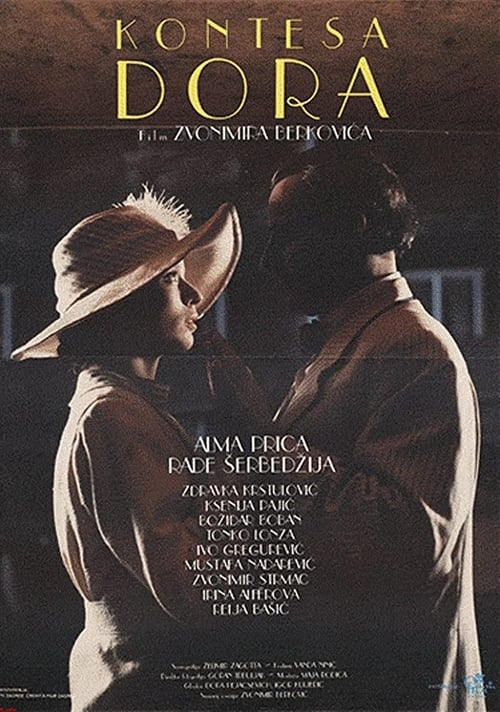
A pseudo biography of Dora Pejačević (10 September 1885 - 5 March 1923), a Croatian composer.
A juvenile delinquent escapes the hall and responses to ad of the parents who lost their son in WWII. After being accepted with much love and care, he reconsiders his initial plan to rob the family.
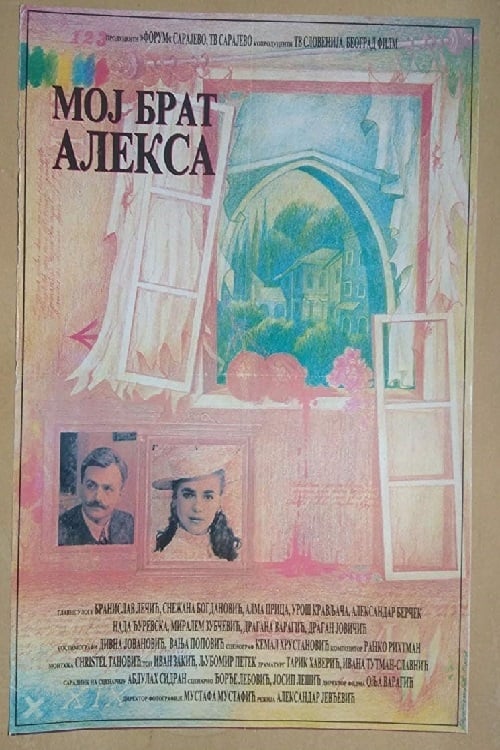
The story of poet Aleksa Santic, visionary and romanticist, great loser in private life. The poet was born in strict patriarchal, rich trading family from Mostar, in conservative social environment, in controversial times in the end of XIX and beginning of XX century. As a young man, he falls in love with the Slavonian girl, Anka Tomlinovic, daughter of poor photographer, leaving her under pressure of his family. Later, he meets Zorka Solina, young and rich girl from Mostar who, again because of the interests of her family, leaves the poet. In his mature years, Aleksa Santic engages himself passionately in social and political life of his age. Disappointments, poverty, sickness and loneliness follow. And the certainty of early death. His older brother tells the story of poet's life, while he is dying.
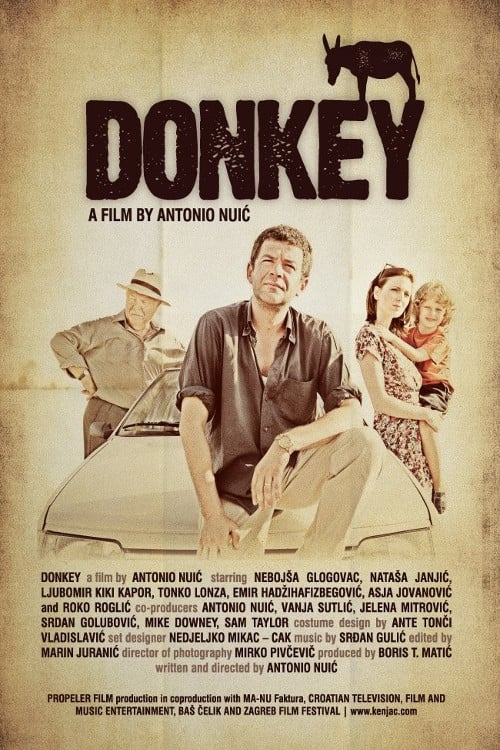
It is 1995. The summer when the war operation Storm will take place. Boro, who is going to be forty in a year and a half, with his wife Jasna and son Luka goes to his home village Drinovci, Herzegovina, after seven years. He wants to see his brother who managed to leave Sarajevo with his family. Boro knew that his brother was wounded, but when he sees him after many years, he discovers that the brother will spend the rest of his life in wheel chair. Boro constantly fights with Jasna, and he doesn't speak at all to his father Pako, whom he blames for his mother's death. In two weeks in August 1995, Boro will solve the years long dispute with his father, he will learn to be a better husband and a father.
An armed robbery with murder was committed in the downtown of Zagreb. That event will have significant consequences on the unusual relationship between a distinguished politician and a young bon vivant, who is connected to a robbed company.
The story of the Dubrovnik landowner Nikša Prokulić, who fiercely opposes romance between his daughter Jela and the Czech officer Marek, member of the Austro-Hungarian army that occupied their city in 1814, after the departure of the French. The story of the final downfall of the Republic of Dubrovnik thus also becomes the story of the agony of an ancient aristocratic family.
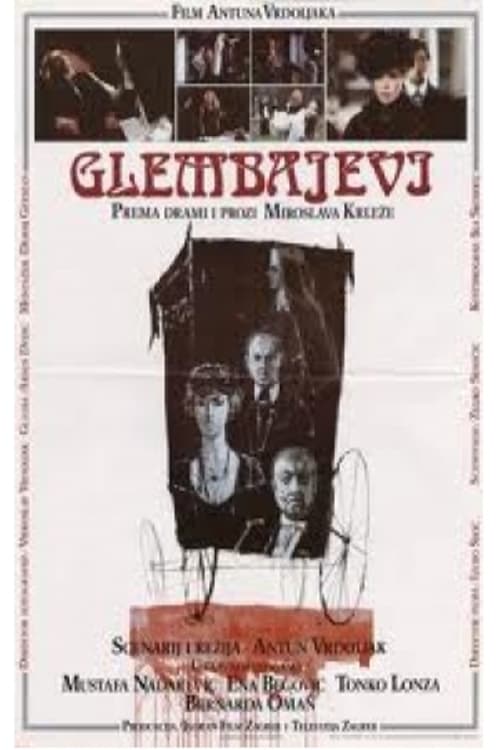
The Glembays of Zagreb are a rich family cursed with tragedies and haunted by sinister past. Leone Glembay, a rebelious son of the family patriarch, is becoming disgusted with hypocrisy, perversion and crime that runs in the family.
I. S. returns after many years to his hometown, from which he escaped after WW II, fearing that, as a civil clerk of the NDH, could suffer prosecution from the new government. He has been falsely accused to be a member of Ustasha movement.