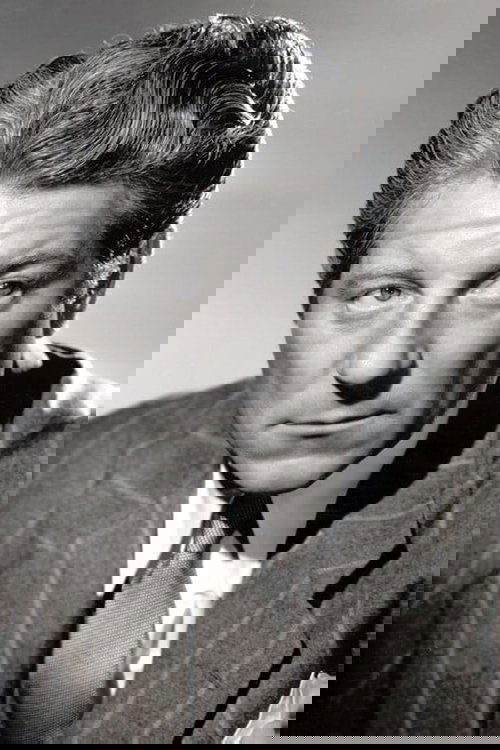
Jean Gabin
Acting
Biography
Jean Gabin Alexis Moncorgé (born Jean-Alexis Moncorgé), known as Jean Gabin (17 May 1904 – 15 November 1976), was a French actor and singer. Considered a key figure in French cinema, he starred in several classic films, including Pépé le Moko (1937), La grande illusion (1937), Le Quai des brumes (1938), La bête humaine (1938), Le jour se lève (1939), and Le plaisir (1952). During his career, he twice won the Silver Bear for Best Actor from the Berlin International Film Festival and the Volpi Cup for Best Actor from the Venice Film Festival, respectively. Gabin was made a member of the Légion d'honneur in recognition of the important role he played in French cinema. Gabin was born Jean-Alexis Moncorgé in Paris, the son of Madeleine Petit and Ferdinand Moncorgé, a cafe owner and cabaret entertainer whose stage name was Gabin, which is a first name in French. He grew up in the village of Mériel in the Seine-et-Oise (now Val-d'Oise) département, about 22 mi (35 km) north of Paris. He attended the Lycée Janson de Sailly. Gabin left school early, and worked as a laborer until the age of 19 when he entered show business with a bit part in a Folies Bergère production. He continued performing in a variety of minor roles before going into the military. After completing his military service in the Fusiliers marins, he returned to the entertainment business, working under the stage name of Jean Gabin at whatever was offered in the Parisian music halls and operettas, imitating the singing style of Maurice Chevalier, which was the rage at the time. He was part of a troupe that toured South America, and upon returning to France found work at the Moulin Rouge. His performances started getting noticed, and better stage roles came along that led to parts in two silent films in 1928. Two years later Gabin made the transition to sound films in a 1930 Pathé Frères production, Chacun sa chance. Playing secondary roles, he made more than a dozen films over the next four years, including films directed by Maurice and Jacques Tourneur. But he only gained real recognition for his performance in Maria Chapdelaine, a 1934 production directed by Julien Duvivier. He was then cast as a romantic hero in the 1936 war drama La Bandera; this second Duvivier-directed film established him as a major star. The next year he teamed up with Duvivier again in the highly successful Pépé le Moko. Its popularity brought Gabin international recognition. That same year he starred in Jean Renoir's La Grande Illusion, an antiwar film that ran at a New York City theatre for an unprecedented six months. This was followed by another of Renoir's major works, La Bête Humaine (The Human Beast), a film noir tragedy based on the novel by Émile Zola and starring Gabin and Simone Simon, as well as Le Quai Des Brumes (Port of Shadows), one of director Marcel Carné's classics of poetic realism. His rugged charisma could be compared with Humphrey Bogart and James Cagney. He divorced his second wife in 1939. ... Source: Article "Jean Gabin" from Wikipedia in English, licensed under CC-BY-SA.

Known For

No description available.
Sacrée soirée

Marcello Mastroianni, Isabelle Adjani, Alain Delon, Martin Scorsese, Woody Allen... the biggest stars in cinema were welcomed by Christian Defaye on his show Spécial cinéma. Between intimate confessions from actors and immersion in the world of the greatest filmmakers, Christian Defaye took viewers on a journey into the fascinating world of cinema for nearly thirty years.
Spécial cinéma

No description available.
Cinépanorama
V.I.P.-Schaukel is a 45 minute documentary-family-news-talk show starring Margret Dünser as Host. The series premiered on Sun May 09, 1971 on ZDF and Folge 37 - Final Show last aired on Fri May 09, 1980.
V.I.P. Schaukel

The César Awards are cinematographic awards created in 1976 and presented annually in Paris to professionals of the 7th art in various categories to recognize the best French productions. They are often cited as the French equivalent of the Oscars in the United States.
Cérémonie des César
Produced for television by Claude-Jean Philippe, the « Encyclopédie audiovisuelle du cinéma », recounts the history of French cinema from its birth to the beginning of the 1960s. With commentary read by Jean Rochefort.
Encyclopédie audiovisuelle du cinéma

Police Commissioner Jules Maigret returns to the small village where he spent his childhood at the request of the Countess of Saint-Fiacre, who has received a disturbing anonymous letter.
Maigret and the St. Fiacre Case

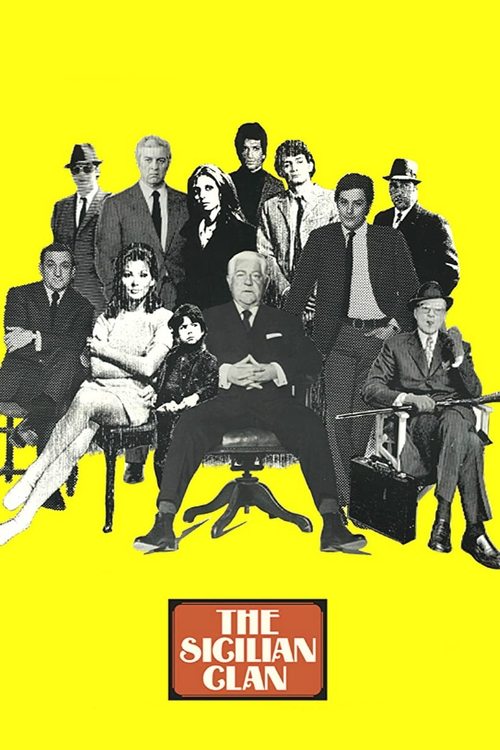
An ambitious mobster plans an elaborate diamond heist while seducing the daughter-in-law of a ruthless mob patriarch as a determined police commissioner closes in on all of them.
The Sicilian Clan

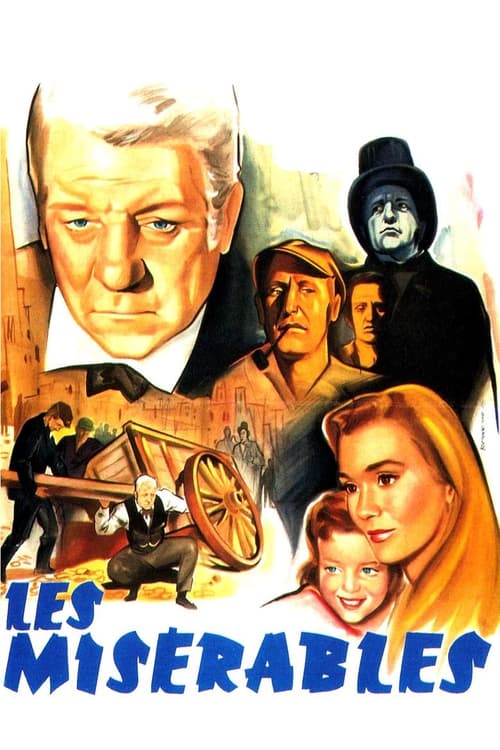
In 19th century France, Jean Valjean, a man imprisoned for stealing bread, must flee a relentless policeman named Javert. The pursuit consumes both men's lives, and soon Valjean finds himself in the midst of the student revolutions in France.
Les Misérables

No description available.
The Century of Icons

A group of French soldiers, including the patrician Captain de Boeldieu and the working-class Lieutenant Maréchal, grapple with their own class differences after being captured and held in a World War I German prison camp. When the men are transferred to a high-security fortress, they must concoct a plan to escape beneath the watchful eye of aristocratic German officer von Rauffenstein, who has formed an unexpected bond with de Boeldieu.
Grand Illusion

Charles, fresh out of jail, rejects his wife's plan for a quiet life of bourgeois respectability. He enlists a former cell mate, Francis, to assist him in pulling off one final score, a carefully planned assault on the vault of a Cannes casino.
Any Number Can Win

A former bank robber is released after 10 years in prison. He gets help from a social-worker, but gets harassed by an old cop from his past.
Two Men in Town

Gentleman gangster Max and his partner, Riton, pull off their last, most successful heist and find themselves comfortable enough to retire in the style they enjoy. However, Max confides the details of the theft to his younger mistress, Josey -- who has secretly taken up with ambitious young rival gangster Angelo. Angelo then has Riton kidnapped and demands the stash of gold as ransom, which threatens Max's dreams of the perfect retirement.
Touchez Pas au Grisbi

The film follows the life of Napoleon from his early life in Corsica to his death at Saint Helena. The film is notable for its use of location shooting for numerous scenes, especially at the French estates of Malmaison and Fontainebleau, the Palace of Versailles, and sites of Napoleonic battles including Austerlitz and Waterloo.
Napoleon

Nineteenth-century Paris comes vibrantly alive in Jean Renoir’s exhilarating tale of the opening of the world-renowned Moulin Rouge. Jean Gabin plays the wily impresario Danglard, who makes the cancan all the rage while juggling the love of two beautiful women—an Egyptian belly-dancer and a naive working girl turned cancan star.
French Cancan

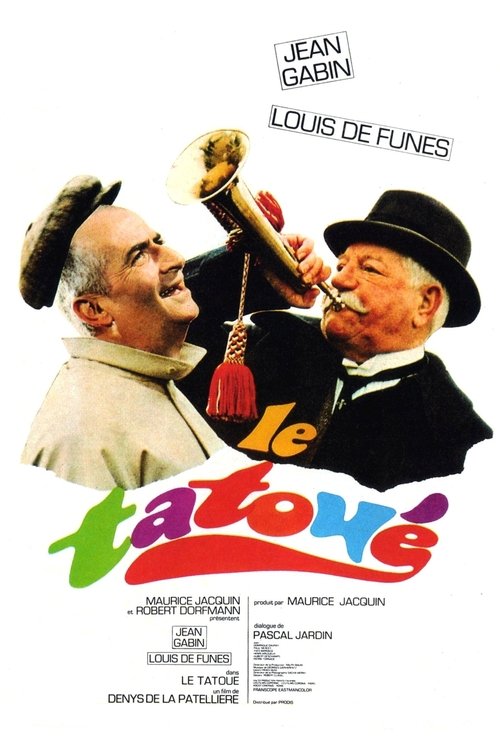
An art dealer wants to buy a Modigliani, which is tattooed on the back of an old soldier.
The Tattoo

After committing a murder, a man locks himself in his apartment and recollects the events that led him to the killing.
Daybreak

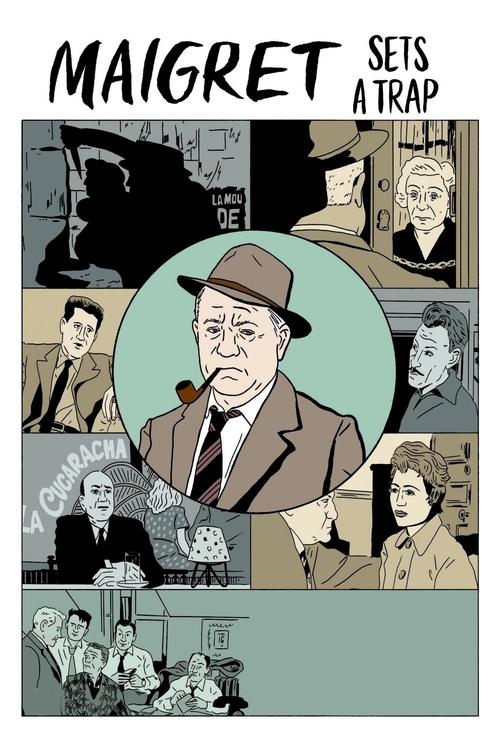
Four women were murdered, each was knifed and, though they had their clothes torn, they weren't molested. As the famed police inspector Jules Maigret pieces the clues together, he comes to realize that for the elusive man that he suspects to be unmasked, he has to set him a trap.
Maigret Sets a Trap

The final days of Jesus from the time he enters the city of Jerusalem. Viewed as a threat, it is decided that he must be captured, tried, and executed as a criminal, a plan aided and abetted by disciple Judas Iscariot.