Wang Chu-Chin
Directing
Biography
Wang Chu-Chin (王菊金) is a Taiwanese director born in Shanghai, China. His family moved to Hong Kong in 1953, he then settled in Taiwan. From 1965 to 1968, he studied at the National Taiwan Academy of Arts. In 1973, he founded his own production company, AURORA Films (組震旦影視公司).
Known For

The Taipei Golden Horse Film Festival and Awards (Chinese: 台北金馬影展; pinyin: Táiběi Jīnmǎ Yǐngzhǎn; Pe̍h-ōe-jī: Tâi-pak Kim-má iáⁿ-tián) is a film festival and awards ceremony held annually in Taiwan. It was founded in 1962 by the Government Information Office of the Republic of China (ROC) in Taiwan. The awards ceremony is usually held in November or December in Taipei, although the event has also been held in other locations in Taiwan in recent times
Golden Horse Awards

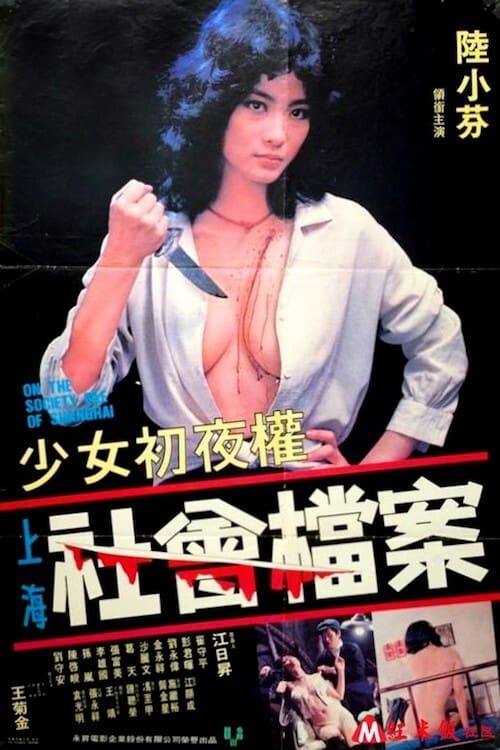
In Shanghai, Hai-nan, son of a Chinese official, is found stabbed on the street. But when the culprit, Li-fang, is apprehended, she refuses to reveal her motives. Meanwhile, a police officer grows suspicious of the officials’ rush to close the case. As he searches for leads in the case files, a shocking truth about Li-fang is revealed.
On the Society File of Shanghai

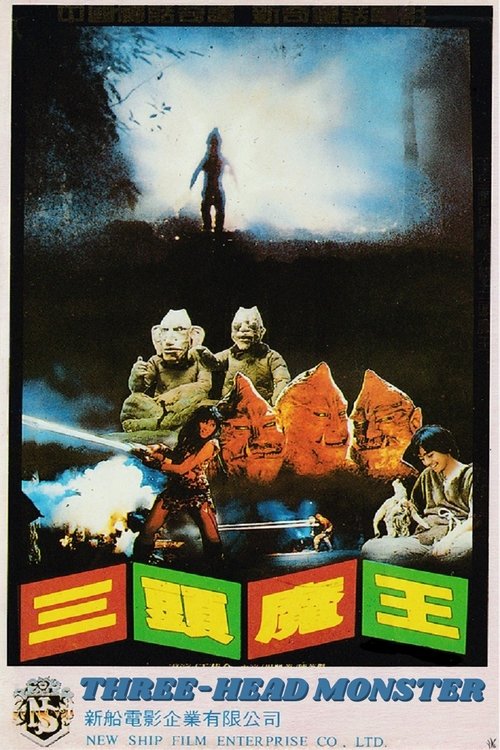
There's a one thousand year old Ginseng running around in the woods, and everyone is after it, including a boy with a sick mother, a beauty and her kung fu warriors, and the Three-Head Monster. Who will eat the Ginseng and gain its mystical powers?
Three-Head Monster

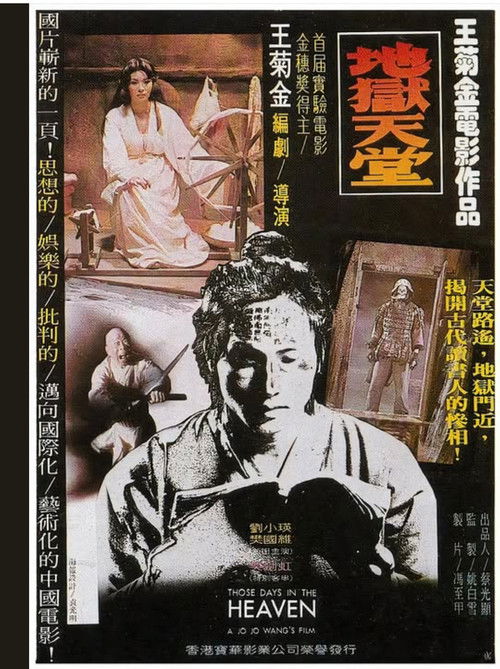
Visions of a ghostly woman compel Sze An, a poor scholar, to go on a trip which leads him to the mysterious Cherry Estate, whose carefree inhabitants know nothing of the rest of the world.
Those Days in the Heaven
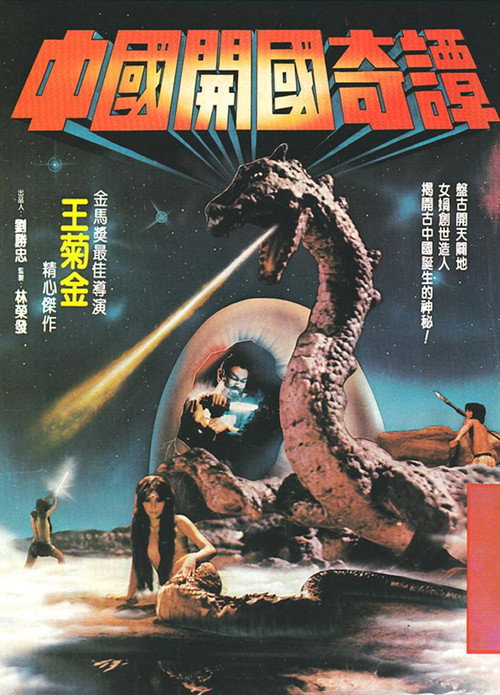
The film is composed of four unconnected Chinese myths, including how Pangu opened the sky, Nuwa created man, Kuafu chased the sun, and when Huangdi fights Chiyou, of which the latter occupies the longest section. Between the stories, the director connects them with narrations "full of sensibility and philosophy", thus forming a "picture of the founding of the ancestors" imagined by the director.
Zhong Guo kai guo qi tan

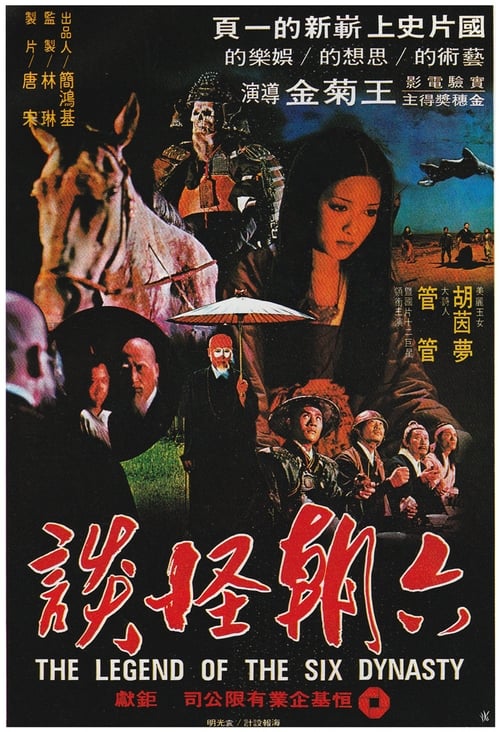
This film is in the style of Liaozhai, consisting of three ghost stories. The first story, "The Horse Girl," depicts the turbulent relationship between a young woman living alone in the suburbs and her beloved horse. The second story, "The Ancient Temple," tells of an assassin hunting down the exiled emperor of a previous dynasty in an ancient hall during a time of political upheaval. The third story, "The Child in the Mirror," portrays a hypocritical old monk who, unable to bear the guilt of his actions, meets a tragic end.
The Legend of the Six Dynasty

No description available.
卖妻
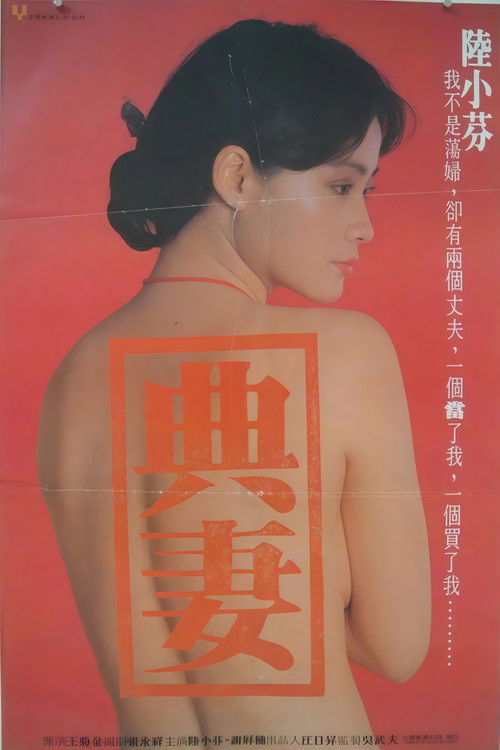
Taiwanese director Jo Jo Wang's 1985 adaptation of Ryunosuke Akutagawa's short story "The Christ of Nanking". Taiwan's Government Information Office demanded cuts to the erotic scenes, objected to the poster (depicting lead actress Lu Hsiao-fen crucified nude), and demanded a change of the Chinese title.
Jesus in Nanking (China 1913)
A young starving married couple leave their baby with mum to find better fortune. They stowaway on a train, but are caught by a guard. The husband kills the guard and is injured, then is shot by another railway employee. The couple find shelter and are helped by a young monk and hindered by his master. The young monk suggests that, in order to pay for medical treatment, that the woman follow the village custom and pawn herself. Presenting herself as having a sick brother instead of a husband, the woman is pawned to an ugly but sincere villager named Ox.
The Pawned Wife
A short film by Wang Chu-Chin. The first winner of Golden Harvest Award in Taiwan.