Directing
William E. Jones is known for Finished (1997), Tearoom (2008) and Massillon (1991).
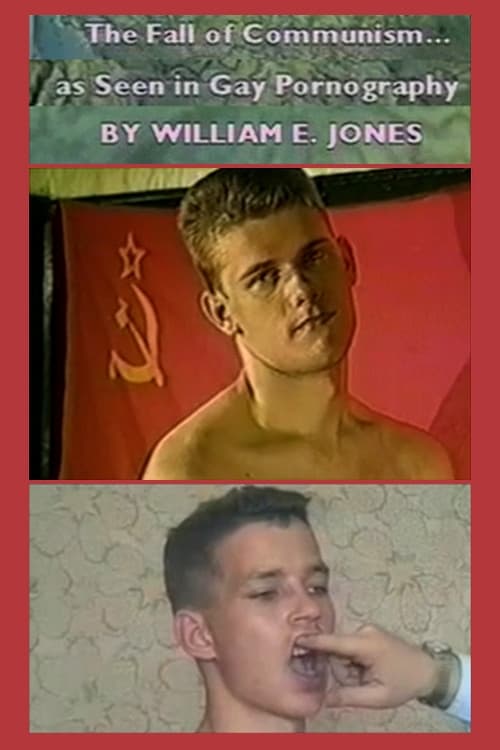
Every image in The Fall of Communism as Seen in Gay Pornography comes from gay erotic videos produced in Eastern Europe since the introduction of capitalism. The video provides a glimpse of young men responding to the pressures of an unfamiliar world, one in which money, power and sex are now connected.
Through voiceover and static San Francisco landscapes this experimental narrative short tells the melancholy story of a butch dyke pining over a one night stand with a straight girl.
The soundtrack of Discrepancy, read by the computer voice “Alex,” is adapted from the film Traité de bave et d’éternité (1951) by Isidore Isou. The film is Isou’s manifesto of cinéma discrepant. The fundamental principle of “discrepant cinema” is a disregard of the image in order to privilege written narration. There is no attempt to illustrate the text. The relation of sound and image can—indeed, should—be as arbitrary and opaque as possible. Furthermore, the images are often “chiseled,” i. e., scratched, dirtied, splattered with ink and distressed beyond recognition. Isou engaged in a perverse iconoclasm in a medium conventionally understood to be primarily visual. In his manifesto, he argued that he did violence to the image in order to renew the film medium. He also asserted that “any novelist can make a film without spending a penny.”
Inanimate includes 120 images of objects in a portrait format found in the Library of Congress. These portraits of inanimate objects are animated with zooms 120 frames in length.
Industry is composed of loops within loops, the repetitive motions of the factory, progressively simplified to fields of tones, until the images are as simple as possible without being monochromes. Human figures become gray geometric patterns. They perform tasks that seem antiquated in the digital age, yet the movie itself could not exist without digital technology.
What Have You Been Doing? is a response to the perpetual question asked during the COVID-19 lockdown. The source materials are extremely degraded found videos, plus on the soundtrack, an acting lesson from Tallulah Bankhead.
In a variation on what DJs call a “mash-up,” director William E. Jones combines segments of sound from classic foreign language films with segments of picture from gay porn films produced before 1985, making decisions based upon the length of the segments rather than their content. The somewhat arbitrary juxtaposition of diverse “found” materials often yields surprisingly appropriate results. v. o. suggests a new narrative space and pays tribute to a former era of gay life and cinephilia.
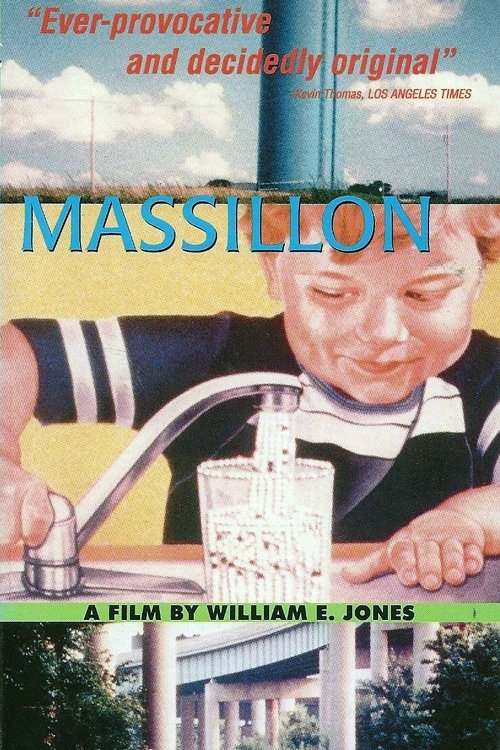
William E. Jones's autobiographical film about growing up gay in the small Ohio town of Massillon pushes the boundaries of documentary by offering a moving self-portrait within the context of gay political history. William E. Jones returns to his hometown to construct an unconventional and moving autobiography. Challenging some of the most firmly entrenched notions of filmmaking, Massillon tells its story without a single human actor, by combining beautiful images with a seductive voice-over narration.
3000 Killed consists of 2992 images, plus explanatory titles at the beginning and end, without zooms. During the Great Depression, the Historical Section of the Farm Security Administration documented American society in photographs. The director of this program, Roy Emerson Stryker, was a social scientist rather than a photographer, and he decided which pictures made under the program’s auspices from 1935 onward were rejected, or killed. Stryker and his assistants killed approximately 3000 black and white 35mm negatives by punching holes in them. This practice continued until 1939. The killed negatives remained unprinted and unseen for decades.
Tearoom consists of footage shot by the police in the course of a crackdown on public sex in the American Midwest. In the summer of 1962, the Mansfield, Ohio Police Department photographed men in a restroom under the main square of the city. The cameramen hid in a closet and watched the clandestine activities through a two-way mirror. The film they shot was used in court as evidence against the defendants, all of whom were found guilty of sodomy, which at that time carried a mandatory minimum sentence of one year in the state penitentiary. The original surveillance footage shot by the police came into the possession of director William E. Jones while he was researching this case for a documentary project. The unedited scenes of ordinary men of various races and classes meeting to have sex were so powerful that the director decided to present the footage with a minimum of intervention.
In Killed (2009) and Punctured (2010), Depression-era negatives deemed unfit for publication and summarily hole-punched at the order of the Farm Security Administration's Historical Section head Roy Emerson Stryker are displayed. Contains photos featured in Jones's earlier work Killed (2009).
Bay of Pigs makes use of a “captured” film from the CIA Film Library, Girón, a production of El Instituto Cubano de Arte e Industria Cinematográficos documenting the aerial bombardment of la Batalla de la Playa Girón, or as it is known in the United States, the Bay of Pigs Invasion. The soundtrack comes from a numbers station called “Atención” after the first word announcing the shortwave radio broadcast.
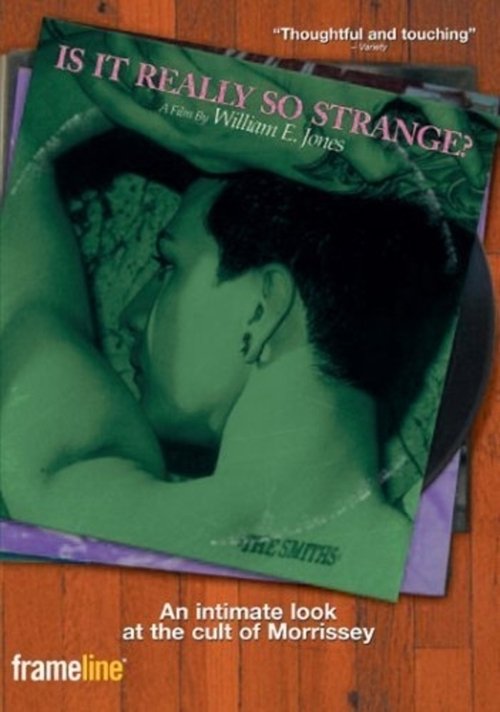
Making the connection between The Smiths' working-class, Manchester-raised, ethnic Irish experience and that of the sons and daughters of Latino immigrants in Los Angeles, Is It Really So Strange? is the first documentary that allows the fans themselves to speak at length about their lives, their loves and their brief encounters with their idol.
The evolution of an Ohio rust belt city is examined in this double-screen projection by Massillon-born, Los Angeles–based artist William E. Jones. The 1944 propaganda film Steel Town, which shows the booming wartime steel industry of Youngstown, Ohio, plays alongside contemporary footage of the city’s now-quiet empty streets and abandoned buildings, underscoring the bleak reality of this postindustrial city.
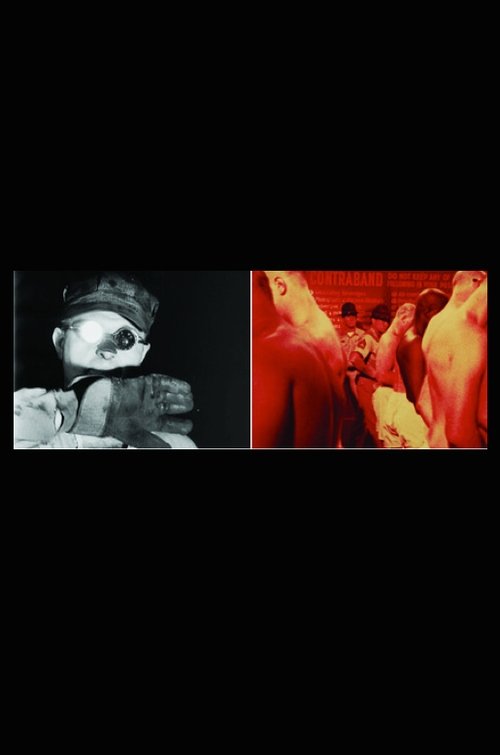
In More British Sounds images from The British Are Coming (1986) collide with dialogue from See You at Mao (1969) also known as British Sounds, produced by the Dziga Vertov Group under the direction of Jean-Luc Godard. “Workers have come to expect too much,” a narrator intones, as an English lad in a state of undress polishes the boots of a royal guard in full uniform. The soundtrack consists of a speech from British Sounds layered four times in the structure of a round. Gaps in the dialogue—filled by Godard’s heavy breathing in the original—allow certain key phrases to be heard in the chaos. The super-reactionary spouting venom must have seemed horrendous and absurd in the late 1960s, but his line was practically adopted as policy in early 21st Century America. The fetishistic sports underwear, skinhead tattoos, and bad boy snarls have been widely adopted as well.
The Soviet Army Prepares for Action in Afghanistan is derived from four shots of a Soviet film called Heirs of Victory (1975) which commemorates the Allied triumph over fascism in World War II. The original film celebrates the military might of the USSR in images of explosions and armed men leaping through flames. These images are subjected to such thorough manipulation that they become patterns flickering like a multitude of abstract paintings, with digital smears standing in for squeegee marks and brush strokes. Slowly the shots become less abstract until they are completely recognizable, though still somehow rather surreal.
All Male Mash Up makes use of the gay porn industry’s marginalia: establishing shots revealing urban landscapes of the recent past, charmingly inept dialogue scenes, and close-ups of performers, many now dead. This material, while of no particular commercial use, can be seen as an invaluable document of a lost world of eroticism and sociability.
In William E. Jones’ Psychic Driving, a 1979 television broadcast, in which the wife of a Canadian M.P. details her horrific ordeal during CIA-backed mind-control experiments, disintegrates into a psychedelic miasma of scan lines and video interference.
In this essay film, the narrator describes how his fixation on a gay pornographic model from a phone sex advertisement leads to a new project, an elegy for a complex, troubled man named Alain Lebeau.
During the Great Depression, the Historical Section of the Farm Security Administration documented American society in photographs. Thousands of the pictures made under the program’s auspices from 1935 to 1943 were rejected, or in Stryker’s term, killed. Roy Stryker and his assistants routinely killed 35mm negatives by punching holes in them, thereby rendering them unusable for publication. All killed negatives were preserved and filed away, but they remained unprinted, and until recently, unseen. When the Library of Congress began making high resolution digital scans of FSA negatives available on its website, it included many rejected images, and among them, a small number of killed negatives mutilated by a hole punch. In “Killed,” these suppressed images downloaded from the Library of Congress website have been reframed with the holes as the central feature, and edited in a quick montage showing glimpses of an unofficial view of Depression-era America.