Acting
Tatort is a long-running German/Austrian/Swiss crime television series set in various parts of these countries. The show is broadcast on the channels of ARD in Germany, ORF in Austria and SF1 in Switzerland.
Ein Fall für zwei is a German television series, which premiered on September 11, 1981 on ZDF. The series, located in Frankfurt am Main, features two main characters who solve crimes: a defense attorney and a private investigator. Josef Matula, a former German police officer, has gone into private business. His method of investigation is very effective and direct, and he sometimes even resorts to dirty tricks. Claus Theo Gärtner has portrayed the role since the start of the series.
No description available.
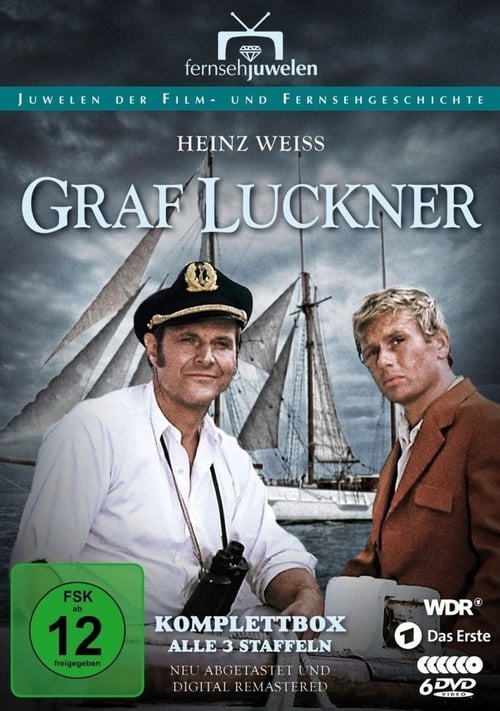
Between the first and second World Wars, we portray glorified and renown naval sea officer Felix Graf von Lucker and his fictitious ship Niobe, which is the 1887 built Amphitrite from Southampton. Von Luckner is famous for his tactical genius in the first World War, especially sinking 14 enemy ships and only losing one crewman, whilst always seeking a peaceful outcome - making him the ideal seaman.
In exploring sex offenses, particularly against children, this film reveals the inner workings of the Zurich police and INTERPOL as they pursue persons accused of voyeurism, rape, fetishism, sadism, and masochism. After the criminals are arrested and given psychological tests, they may be sentenced to an institution or undergo brain surgery (with their consent) in order to be rehabilitated.
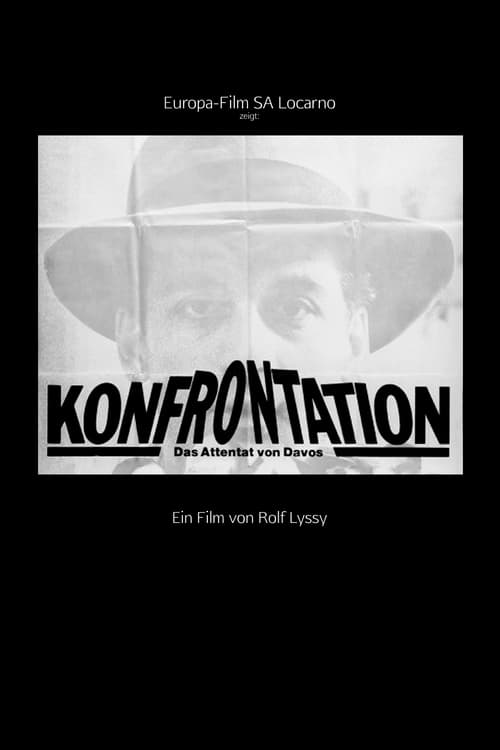
On February 4, 1936, Wilhelm Gustloff, leader of the NSDAP, was shot dead in Davos. His assassin, 27-year-old David Frankfurter, wanted to use the action to highlight the persecution of the Jews. This docudrama describes with great precision the events leading up to the fateful day and the trial that followed. The film was selected as the Swiss entry for the Best Foreign Language Film at the 48th Academy Awards, but was not nominated.
Die Deutschen is a German television documentary produced for ZDF that first aired from October to November 2008. Each episode recounts a selected epoch of German history, beginning with the reign of Otto the Great and ending with the collapse of the German Empire at the end of the First World War. In November 2010 the second season of Die Deutschen was published in German television, beginning with Charlemagne, the Frankish King, and ending with Gustav Stresemann, the Chancellor and Foreign Minister during the Weimar Republic. Historical events are recreated through a combination of live action scenes and computer generated animations. The series was filmed at over 200 different locations in Germany, Malta, and Romania at a cost of approximately €500,000 per episode.
Adrian der Tulpendieb was a 1966 German television series; the first that aired in full color. Six episodes were produced, which were based on the novel by Otto Rombach and directed by Dietrich Haugk.
Ann leaves Thomas and everything else behind when she catches him kissing another woman. With her music and help from Georges, she begins a journey to find herself.
The farmer Christen, his wife Änneli, their sons Resli and Christeli, and their daughter Annelisi live together harmoniously on the Liebiwyl farm. The harmony is disrupted when Christen allows himself to be persuaded by the deceitful village clerk to speculate with his ward's money. As a result, all the money is lost, and the defrauded farmer has to pay the community for the damage out of his own pocket. This angers Änneli, whose great willingness to help is thwarted by Christen, who is becoming increasingly stingy. One harsh word leads to another, and soon the couple is facing a shambles. The children also suffer from the unfriendly atmosphere at home. Only a visit to church on Pentecost and the corresponding sermon make reconciliation possible.
The composer Carl Maria von Weber is on his way to Prague with his bride Caroline Brandt when their carriage is attacked by bandits. Fortunately, Count Enzio von Schwarzenbrunn rushes to their aid and puts the villains to flight. However, the noble host who invites them to his castle is nowhere near as noble as he suspects, having staged the robbery himself in order to bring the enchanting Caroline to his aristocratic residence in this clever way and get to know her better in this luxurious setting.
Summer 1938: renowned Viennese surgeon Professor von Benda is summoned by Gauleiter Seyss-Inquart to attend the Evian Conference on Jewish refugees. Disguised as a loyal Nazi physician, von Benda’s “mission” is to propose that participating nations purchase German Jews for 250 Reichsmark each, ostensibly saving them from deportation. Over ten days in Evian-les-Bains, von Benda navigates tense negotiations with diplomats and relief workers, confronting the moral abyss behind his government’s plan. As alliances form and falter around him, he watches the fates of refugees - and of Europe itself - unfold without judgment, bearing witness to a tragedy that history cannot forget.