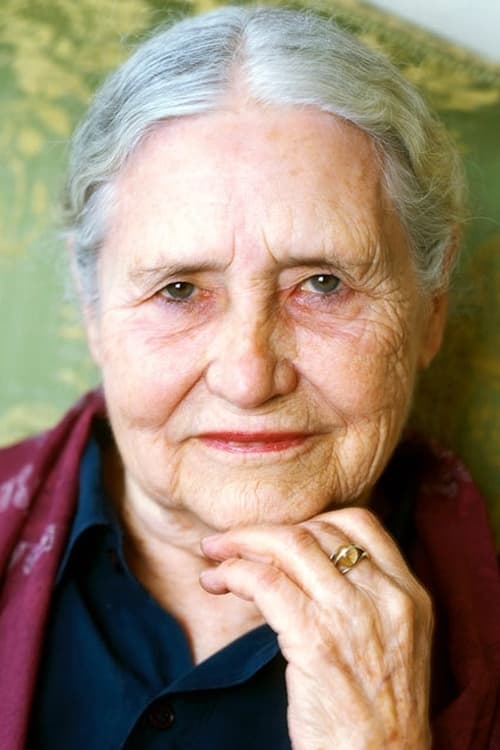
Doris Lessing
Writing
Biography
Doris May Lessing CH OMG (née Tayler; 22 October 1919 – 17 November 2013) was a British novelist. She was born to British parents in Iran, where she lived until 1925. Her family then moved to Southern Rhodesia (now Zimbabwe), where she remained until moving in 1949 to London, England. Her novels include The Grass Is Singing (1950), the sequence of five novels collectively called Children of Violence (1952–1969), The Golden Notebook (1962), The Good Terrorist (1985), and five novels collectively known as Canopus in Argos: Archives (1979–1983). Lessing was awarded the 2007 Nobel Prize in Literature. In awarding the prize, the Swedish Academy described her as "that epicist of the female experience, who with scepticism, fire and visionary power has subjected a divided civilisation to scrutiny". Lessing was the oldest person ever to receive the Nobel Prize in Literature, at age 87. In 2001 Lessing was awarded the David Cohen Prize for a lifetime's achievement in British literature. In 2008 The Times ranked her fifth on a list of "The 50 greatest British writers since 1945". Lessing was born Doris May Tayler in Kermanshah, Iran, on 22 October 1919, to Captain Alfred Tayler and Emily Maude Tayler (née McVeagh), both British subjects. Her father, who had lost a leg during his service in World War I, met his future wife, a nurse, at the Royal Free Hospital in London where he was recovering from his amputation. The couple moved to Iran, for Alfred to take a job as a clerk for the Imperial Bank of Persia. In 1925 the family moved to the British colony of Southern Rhodesia (now Zimbabwe) to farm maize and other crops on about 1,000 acres (400 ha) of bush that Alfred bought. In the rough environment, his wife Emily aspired to lead an Edwardian lifestyle. It might have been possible had the family been wealthy; in reality, they were short of money and the farm delivered very little income. As a girl Doris was educated first at the Dominican Convent High School, a Roman Catholic convent all-girls school in the Southern Rhodesian capital of Salisbury (now Harare). Then followed a year at Girls High School in Salisbury. She left school at age 13 and was self-educated from then on. She left home at 15 and worked as a nursemaid. She started reading material that her employer gave her on politics and sociology and began writing around this time. In 1937 Doris moved to Salisbury to work as a telephone operator, and she soon married her first husband, civil servant Frank Wisdom, with whom she had two children (John, 1940–1992, and Jean, born in 1941), before the marriage ended in 1943. Lessing left the family home in 1943, leaving the two children with their father. After the divorce, Doris's interest was drawn to the community around the Left Book Club, an organisation she had joined the year before. It was here that she met her future second husband, Gottfried Lessing. They married shortly after she joined the group, and had a child together (Peter, 1946–2013), before they divorced in 1949. She did not marry again. Lessing also had a love affair with RAF serviceman John Whitehorn (brother of journalist Katharine Whitehorn), who was stationed in Southern Rhodesia, and wrote him ninety letters between 1943 and 1949. ... Source: Article "Doris Lessing" from Wikipedia in English, licensed under CC-BY-SA 3.0.
Known For

Omnibus was an arts-based BBC television documentary series, broadcast mainly on BBC1 in the United Kingdom. The programme was the successor to the long-running arts-based series 'Monitor'. It ran from 1967 until 2003, usually being transmitted on Sunday evenings. During its 35-year history, the programme won 12 Bafta awards. Among the series' best remembered documentaries are Cracked Actor, a profile of David Bowie, and Rene Magritte, a graduate film by David Wheatley, 'Madonna: Behind the American dream', a film produced by Nadia Hagger, and a profile of the British film director Ridley Scott. For a season in 1982, the series was in a magazine format presented by Barry Norman. The series was replaced by 'Imagine' hosted by Alan Yentob.
Omnibus

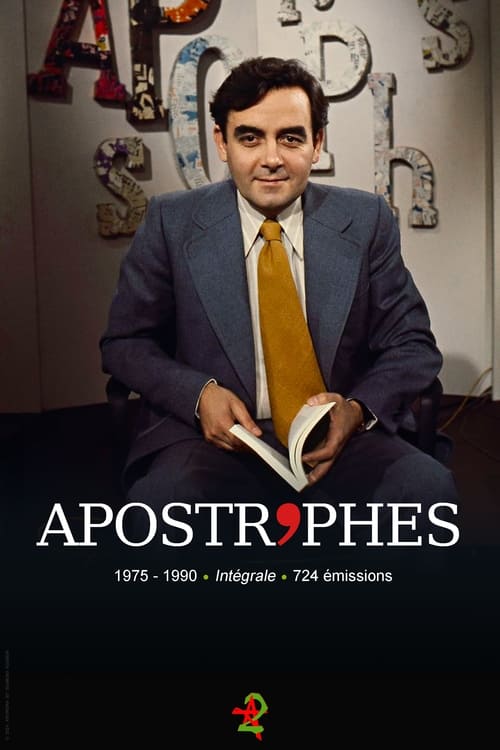
Apostrophes was a live, weekly, literary, prime-time, talk show on French television created and hosted by Bernard Pivot. It ran for fifteen years (724 episodes) from January 10, 1975, to June 22, 1990, and was one of the most watched shows on French television (around 6 million regular viewers). It was broadcast on Friday nights on the channel France 2 (which was called "Antenne 2" from 1975 to 1992). The hourlong show was devoted to books, authors and literature. The format varied between one-on-one interviews with a single author and open discussions between four or five authors.
Apostrophes

Theatre 625 is a British television drama anthology series, produced by the BBC and transmitted on BBC2 from 1964 to 1968. It was one of the first regular programmes in the line-up of the channel, and the title referred to its production and transmission being in the higher-definition 625-line format, which only BBC2 used at the time.
Theatre 625

Prisoners of Gravity was a Canadian public broadcasting television news magazine program that explored speculative fiction — science fiction, fantasy, horror, comic books — and its relation to various thematic and social issues. Produced by TVOntario, the show was the brainchild of former comic retail manager Mark Askwith and writer Daniel Richler, and was hosted by Rick Green. The series aired 139 episodes over 5 seasons from 1989 to 1994.
Prisoners of Gravity

Lil and Roz are two lifelong friends, having grown up together as neighbors in an idyllic beach town. As adults, their sons have developed a friendship as strong as that which binds their mothers. One summer, all four are confronted by simmering emotions that have been mounting between them, and each find unexpected happiness in relationships that cross the bounds of convention.
Adoration

Documentary series which ranges widely over Britain's social and cultural history, its narrative-led storytelling offering a richly immersive and varied window onto the past.
Timeshift
Studio 4 is an anthology drama series utilising BBC Television Centre's Studio Four, and running for two series in 1962 on BBC One. It was envisaged as a sequel to Storyboard, a similar anthology series which had been transmitted the previous year.
Studio 4

18 short plays written especially for TV, an opportunity for up-and-coming directors such as floor manager Alan Clarke, who ended up doing 10 of the episodes. Some top ranking performers were attracted to the series.
Half Hour Story

A docu-drama portrait of the early-20th-century French author Marcel Proust, based on Alain de Botton's updated analysis of his work as a modern-day self-help guide. Ralph Fiennes plays Proust, with Phyllida Law and Donald Sinden as his contemporaries, while commentators including de Botton, Louis de Bernières and Doris Lessing explain their enthusiasm for his work.
How Proust Can Change Your Life

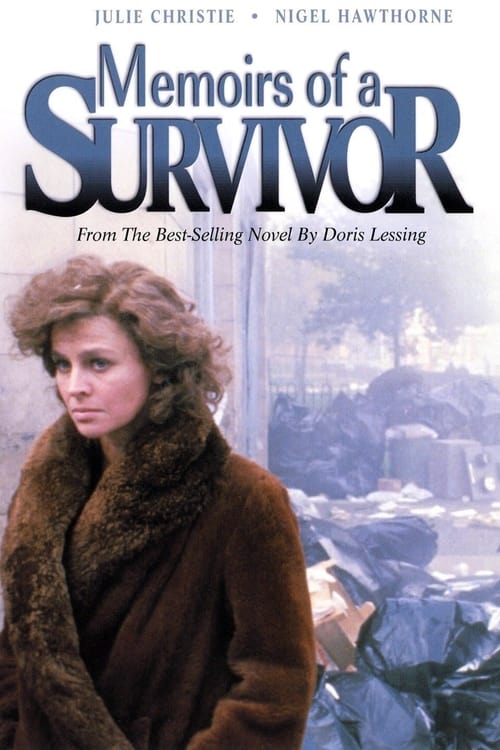
Based on the acclaimed novel by Doris Lessing, this dystopian science fiction tale concerns a woman struggling to make her way in a post-apocalyptic society. D (Julie Christie) is living in a city that's at the point of collapse following a catastrophic nuclear war; lawlessness and violence rule the day, and gangs of brutal youth roam the streets. With the help of her teenage companion Emily (Leonie Mellinger), D tries to make her way, and in order to cope, she often escapes into a fantasy world in which she lives in genteel Victorian surroundings in the 19th century.
Memoirs of a Survivor

Victoria, a little black girl aged 8 from a humble background, happens to spend the night with the bourgeois family of Thomas, one of her classmates. Years later, they see each other again and Marie is the fruit of their fleeting relationship. But Victoria decides not to tell Thomas and raises her child alone. When Marie turns seven, Victoria decides that her daughter must have a better future and again turns to this family that she lost sight of long ago.
My Friend Victoria

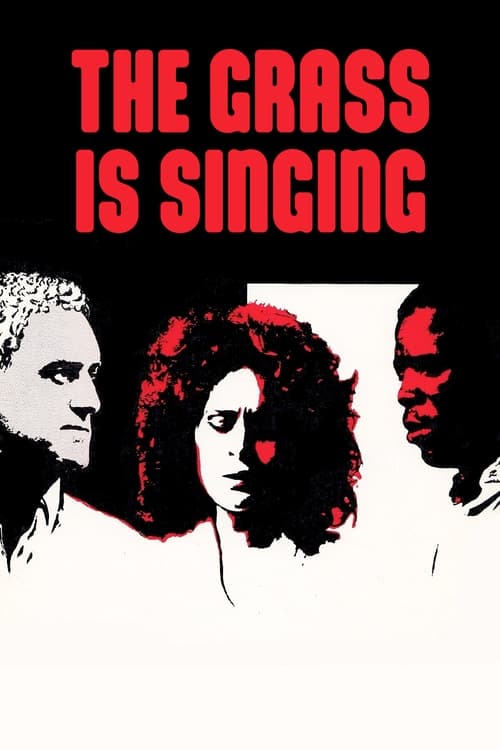
In Southern Rhodesia in the 1940s, city-dweller Mary marries farmer Dick Turner and is plucked from the comforts of her cosmopolitan life and forced to live on his unsuccessful farm. Mary slowly goes insane and has a sexual affair with her black servant, Moses. When the affair is discovered, Mary asks Moses to leave the farm, but he returns and murders her.
The Grass Is Singing
Rue du retrait is a film which is quite unique to René Féret for various reasons.Firstly,it is a film which he shot in his own area,near his own house.Rue de retrait is the name of the street in 20th arrondissement in Paris where Mr.Féret stays.So in a way the location afforded a lot of familiarity in terms of location to the cinéaste. Secondly,the making of this film will always remain a miracle of sorts for René Féret as no big production house was willing to finance such a brave,absolutely uncommon film in France.So this film was finally made due to René Féret's personal intervention and highly individual efforts. Its visual style was applauded by a great French filmmaker named Bertrand Tavernier who has long been one of René Féret's admirers.