Acting
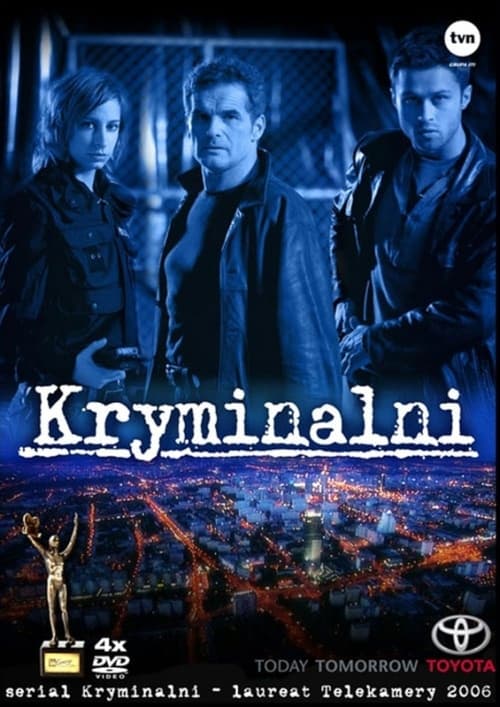
Kryminalni was a Polish crime drama television series that aired on TVN network from September 18, 2004 until May 24, 2008. It ran for 8 seasons and 101 episodes were broadcast in total. It was created by Polish director and screenwriter Piotr Wereśniak and produced by MTL Maxfilm studio. The series followed life and work of police officers from the elite Criminal Terror and Murders Division of the Warsaw Metropolitan Police; the title refers to police officers in the crime section. The three main characters were Adam Zawada, an experienced, tough cup, his younger colleague Marek Brodecki and Barbara Storosz, an ambitious female officer who in the first season joins the team just after graduating. Although none of the main actors had had star status before the series debuted, all three of them rose to prominence and popularity during the 5-year-long run. Many of Poland's best known actors guest starred, usually playing roles of people involved in just one particular investigation. The serial was one of the most popular in Poland: each week it had an audience of 4 million.
No description available.
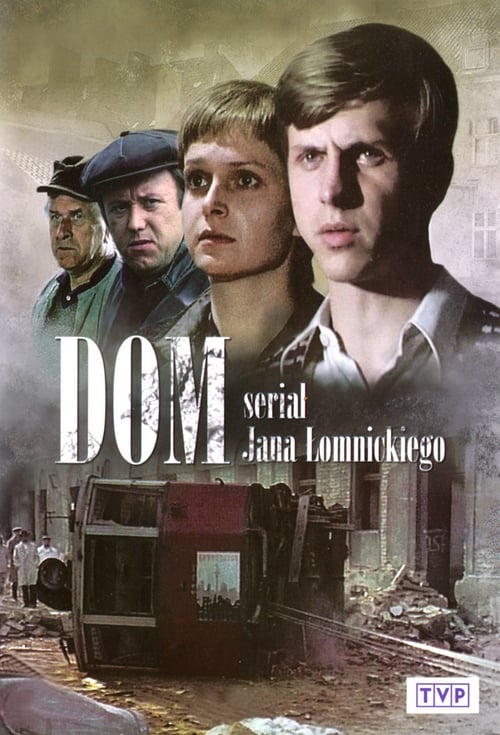
The story of the residents of a tenement house on Złota Street in Warsaw from 1945 to 1980.
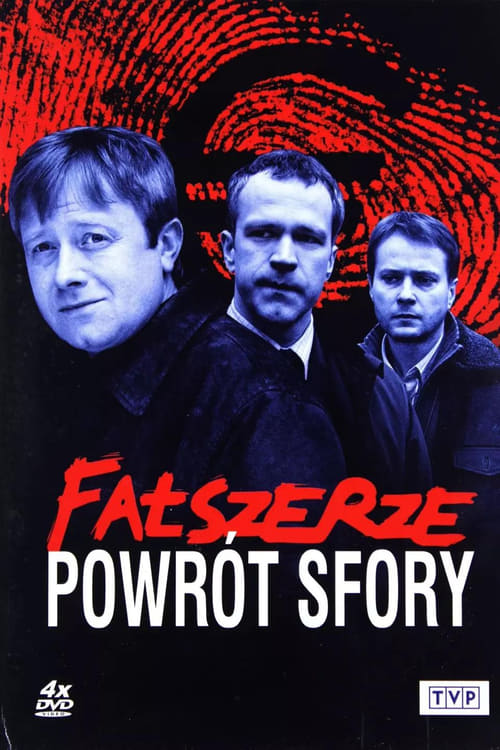
The dark world of crime: murders, racketeering, drugs, kidnappings. There are no rules here. Working in this world makes cops cynical and ruthless. There is a fine line between them and criminals - will any of them cross it? The main characters are officers from the Department for Counteracting Criminal Terror and Homicides. The action of the series is an extension of the threads that appear in the feature film. It presents in a realistic way the brutal and dark world of crime that officers encounter on a daily basis. They're not just tracking down murderers. They fight racketeering, kidnapping, drug trafficking while struggling with their own day to day life and problems.
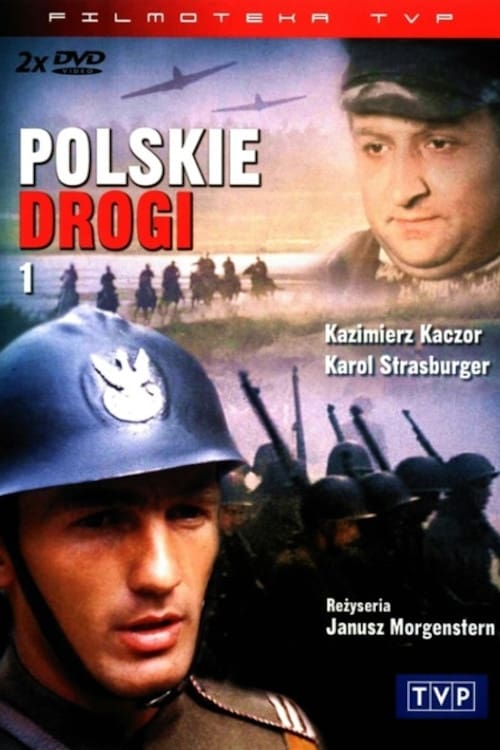
An epic, multi-threaded story about the fate of Poles during World War II. "Czas pogardy" was shown primarily from the perspective of two main characters - Lieutenant Władysław Niwiński and Leon Kuraś - a petty crook, but not without heroic traits. The authors of the series sought to show, in particular, everyday life under Nazi occupation in Poland.
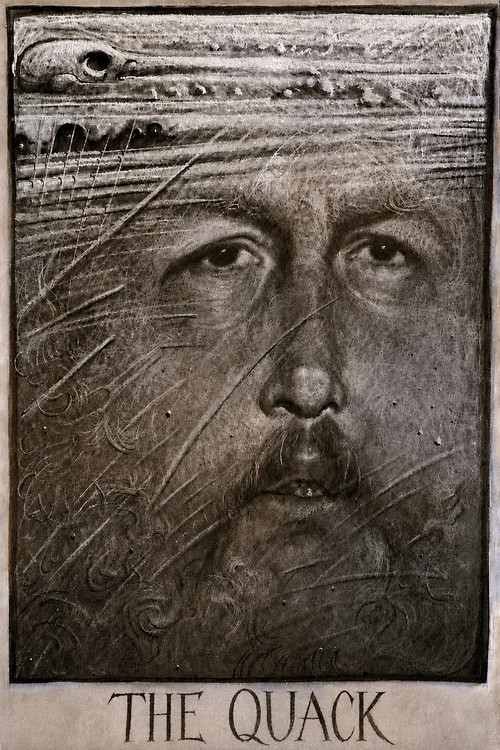
A famous surgeon is beaten by drunken bullies, loses his memory and cannot recollect who he was before. He gets to a village, lives in a not so well to do family and becomes the Quack - he slowly regains his talent for medicine and saves the lives of several village patients.
Jerzy Stuhr scripted, directed and plays four roles in this Polish comedy about four men -- an army officer, a college instructor, a priest, and a drug dealer -- and their relationships with four females. An attractive student puts the teacher in an awkward spot when she reveals her love for him. An 11-year-old informs the priest that she's his daughter. The army officer is pleased when confronted by a past lover. The drug dealer, taken prisoner, must decide whether or not to trust his wife with his hidden loot. In the wrap-up, the elderly accountant passes judgment on all four men. Stuhr acted in films by the late Krzysztof Kieslowski, who had some input here by offering advice to Stuhr on this screenplay.
A devout Catholic peasant girl is corrupted by two new friends when her family moves to the city. An allegory of traditional Polish values under threat from materialism and decadence in the post-Communist era.
Danka was an unwanted child. From an early age she had to cope on her own. Despite harsh conditions and difficult experiences, she has not lost her dignity, has remained true to her ideals, and has a sense of integrity and honesty. When the opportunity to conditionally shorten her sentence in a correctional institution by getting married hits her, she rejects the tempting offer. She doesn't want to hurt the man she doesn't love, who has shown her a lot of heart. Danka's friend has taken advantage of her conditional release, without hiding what her motives are, by the way.
Three Kościuszko Division soldiers, each of a different background, volunteer to take up the task of cutting German barbed wire before an offensive.
Bronek Pekosinski lives in Zamosc, Poland. He is probably 83 years old. He has no family and does not really know who he is. Everything about his life is fictitious: symbolic is the date of birth - the day World War II broke out, as well as his surname - after PKOS, an abbreviation of a charitable institution, and the place of birth - the Nazi concentration camp, from where his mother threw him over a barbed wire fence. Even his friends and guardians turned out to be false. Only his loneliness and his hump seem to be authentic. Two great powers have vied for young Bronek's soul: Roman-Catholic church and a totalitarian state. He fell into alcoholism. Partially paralyzed as the effect of cerebral hemorrhage, he is fired with an ambition of acquiring a mastery in a game of chess.
A man, after having abandoned his family to live in a monastery, goes back into the world after 17 years.
Mr. Aleksander regularly hosts three friends who are clearly poorer than himself. Nobody knows that he is stealing nylon in cafes and restaurants.
Two old friends meet at a mountain shelter and recall their university years. Midroń and Świdrycki are mature, intelligent men, experiencing a crisis of faith in the meaning of life, in their abilities, as well as fear of death. The next day, their wives join them. Although they have not had the opportunity to get to know each other so far, they become friends very quickly.
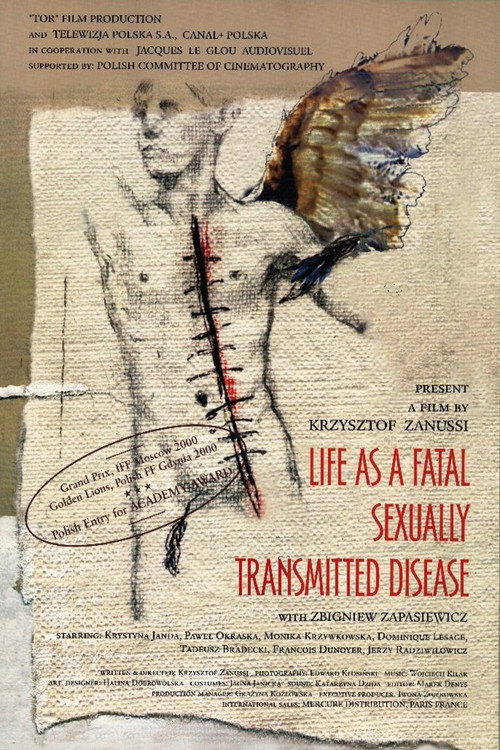
Tomasz, a doctor, and atheist, is diagnosed with cancer. His ex-wife offers him the money for treatment in Paris, but his lung cancer is past the operating stage. Facing imminent death, he questions the beliefs he has held all his life and starts experimenting with both his own life and those of others.
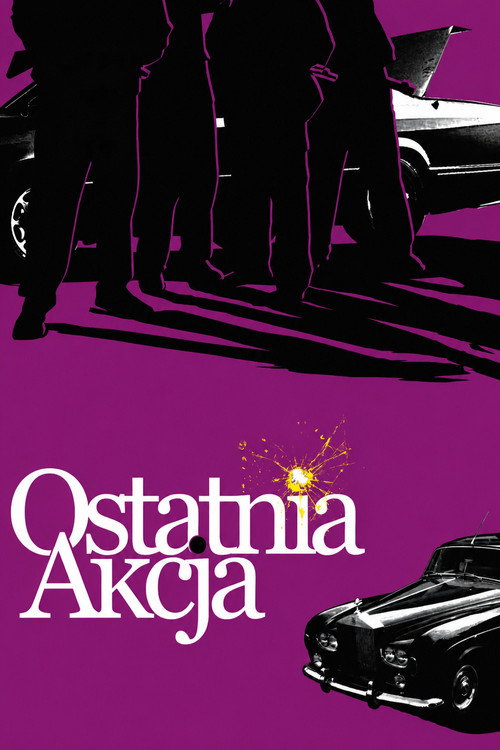
When his grandson is beaten by gangsters, a Warsaw veteran gathers his war buddies to take them on.
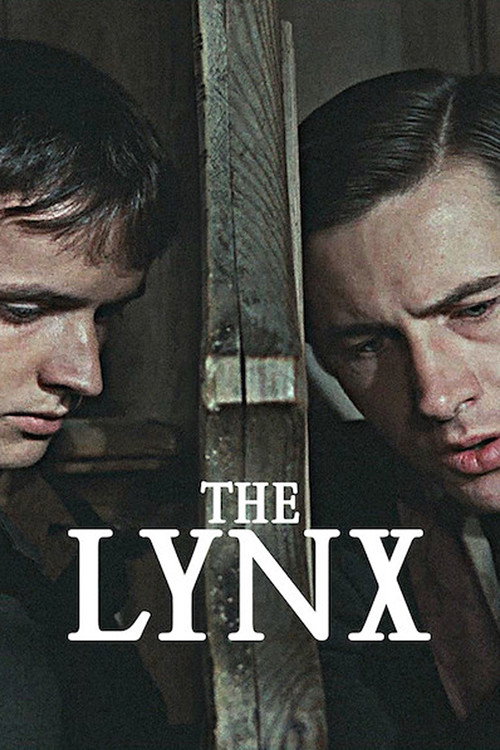
Set during the German occupation of Poland during WWII. A priest in a small village meets a revolutionary who is on an assignment to kill a supposed Nazi collaborator.