Patrícia Saramago
Editing
Known For

An impossible love. Two young people who love each other. Vera and João can’t find in this life the space, time, or identity to resolve their love story.
Fragile as the World
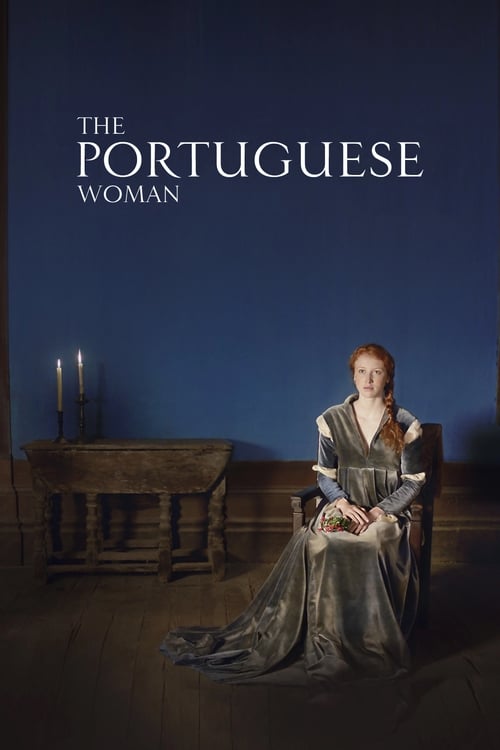
North of Italy, the von Kettens dispute the forces of the Episcopate of Trent. Herr Ketten seeks marriage in a distant country, Portugal. After their honeymoon journey back home, Ketten leaves again for the war. Eleven years elapsed… Rumours are running about the presence of that 'foreigner' in the castle. Some say she's a heretic. Until one day, the Bishop of Trento ends up dying and, with the signature of peace, falls the background of von Ketten's life. Will the Portuguese win, where death seems to be moving in?
The Portuguese Woman
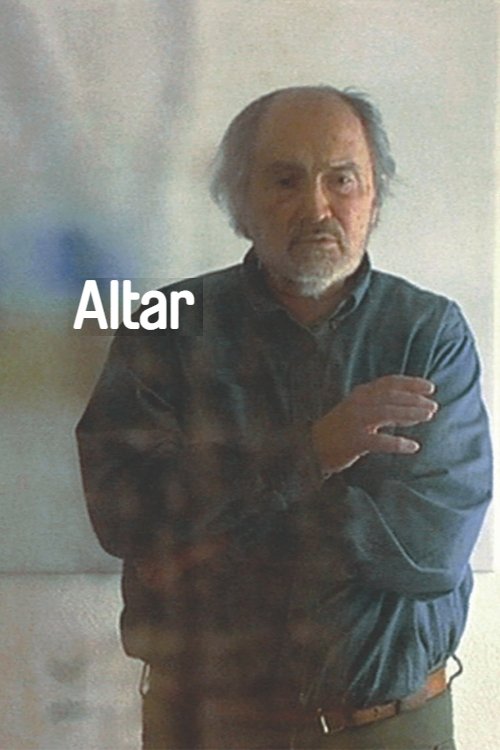
A widowed theater actor relives his memory of a young love.
Altar
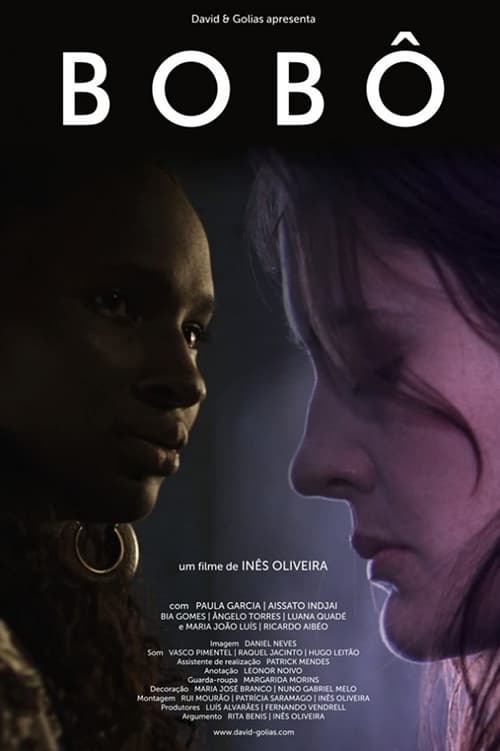
Sofia lives a strangely isolated life in the old apartment where she grew up in Lisbon. Mariama arrives from Guinea-Bissau, having been hired by Sofia’s mother to help take care of the house and her son. The appearance of Bobô, Mariama’s younger sister, awakens in Sofia the desire to take a stand. The forced cohabitation between Sofia and Mariama forces them to confront their own private ghosts.
Bobô

An unflinching, fragmentary look at a handful of self-destructive, marginalized people, but taking as main focus the heroin-addicted Vanda Duarte.
In Vanda's Room

40-year-old Daniel has been suspended from active police work and is under internal investigation for violence. When Sara, his internet love affair, stops answering his texts he decides to drive north in search of her, starting on what is apparently a fool's errand. He shows Sara's picture around, but nobody seems to recognize the woman. Until eventually one guy pops up, saying he can put the two in touch under very specific conditions.
Private Desert
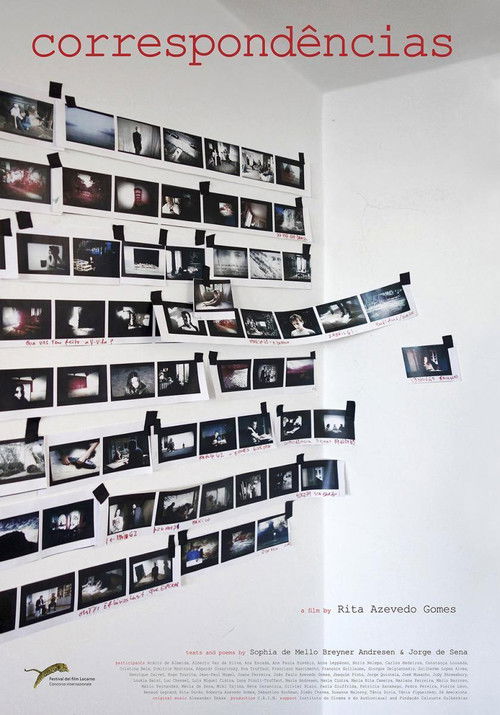
Jorge de Sena was forced to leave his country. First he moved to Brazil, and later to the USA. He never returned to Portugal. During his 20-year-long exile, he kept an epistolary correspondence with Sophia de Mello Breyner Andresen. These letters are a testimony of the profound friendship between the two poets, letters of longing and of desire to “fill years of distance with hours of conversation”. Through excerpts and verses, a dialog is established, revealing their divergent opinions but mostly their strong bond, and their efforts to preserve it until their last breaths.
Correspondences

Roberto is one of those men to whom simulation has become the greatest art. He is an unmoved, inscrutable, mysterious man. But the truth is that Robert feels an intimate, deep tedium. The boredom of those who have already exhausted all the pleasures of life. The only thing still surprising him is the fact that nothing surprises him anymore. One evening he has an overwhelming encounter with a woman. For his own bewilderment, he discovers the sublime horrors in which the woman has sank.
A Woman's Revenge
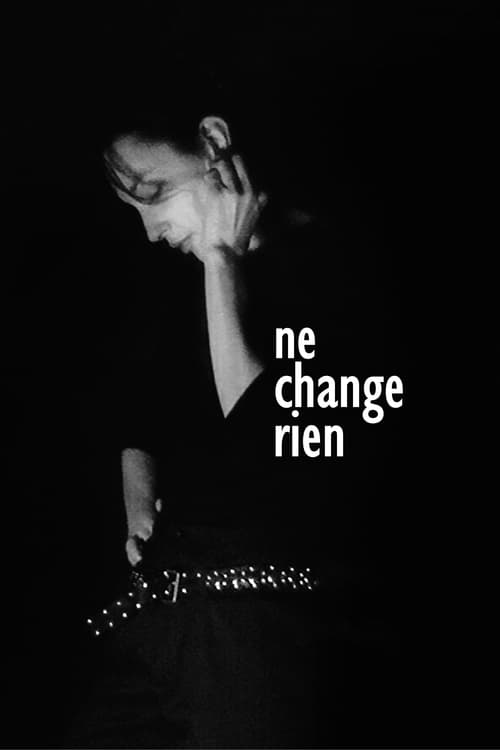
One of the most important figures in contemporary cinema, Pedro Costa's celebrated music documentary is a mesmerizing portrait of French actress-turned-singer Jeanne Balibar, a transfixing, cigarette-smoking chanteuse with an intense devotion to her craft. Photographed in shimmering black-and-white and featuring a soundtrack of jazz-inflected pop songs, the film is a luminous exploration of the creative process.
Change Nothing

The couple Laura and Israël have a five-year-old son, Lucas. They live together but seem to have lost interest in one another's thoughts and cares. Their relationship seems headed for the rocks, and the only one who seems to still be looking for something from life is Lucas.
Abandonment
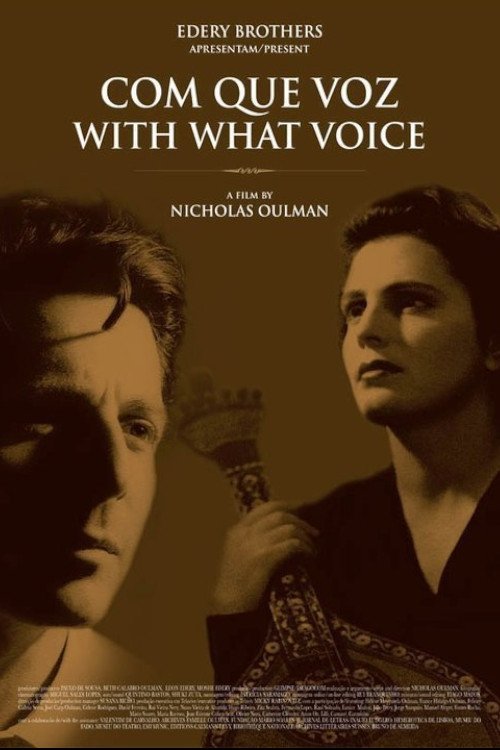
Com Que Voz is a documentary that recounts the life of Alain Oulman, an important cultural figure during the nineteen-sixties and seventies, who left an indelible mark on Portuguese and French society. The film, shot in Lisbon, Paris and Tel Aviv, features celebrated authors, politicians and musicians, such as: Patricia Highsmith, Amos Oz, Amalia Rodrigues and Mario Soares.
Com Que Voz
Laura doesn't know what to do with her loneliness. She gets involved in multiple games of seduction, unable to go home alone, without someone to share her affections with. She confides in her sister, Sara, they share dinners, they confide their fears. Laura feels she has to change, to escape the chaos that her life has become, especially when her children surprise her with a stranger in her bed. She then seeks out her mother, as if trying to reconcile with her.
Antes Que o Tempo Mude
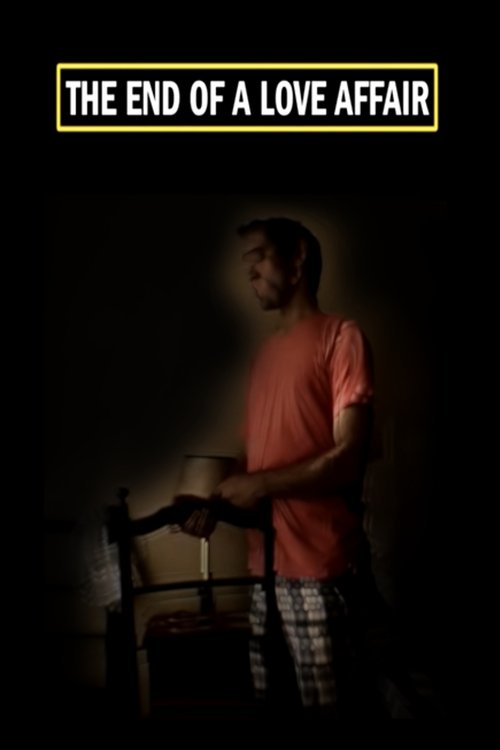
A man is standing at the window, holding a chair. There are wafts of street noise, and occasionally the curtain flutters. A dog is barking. Then, elegiac music sets in, a lavish string arrangement of Billie Holiday's The End of a Love Affair. With this one-shot film, Pedro Costa portrays the state of feeling of the afterwards of a love affair which led nowhere.
The End of a Love Affair
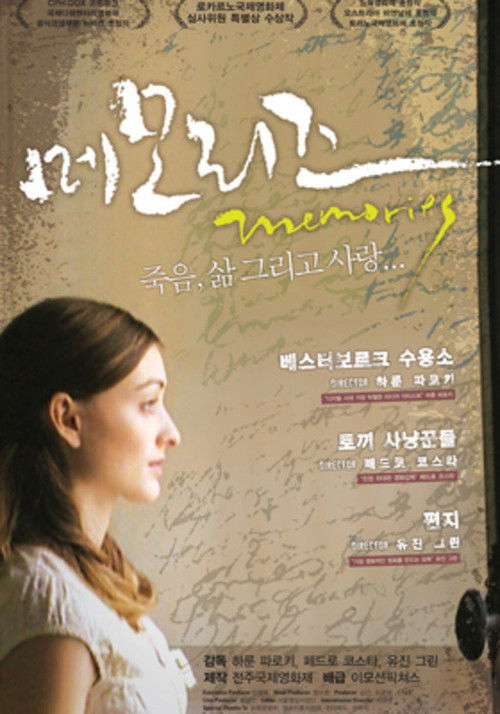
Previously focused on Asian directors, “Jeonju Digital Project 2007” takes a look at Europe. The Portuguese filmmaker Pedro Costa, the German filmmaker Harun Farocki, and the French filmmaker Eugène Green participated in this project.
Memories
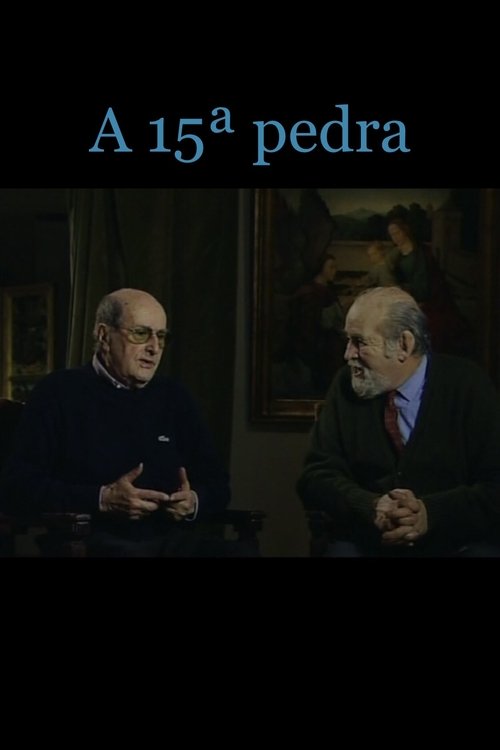
Joáo Bénard da Costa, director of the Portuguese National Film Archives [deceased in 2009], interviews the dean of contemporaneous film directors [96-years-old then]. Two humanists of different philosophical backgrounds, both with their long, entire lives dedicated to culture in general (music, painting, literature) and to film in particular, discuss freely, sometimes haltingly, the director's power as a creator or a magician, the philosophy beyond particular scenes in classic movies, film technique, the importance of color, sound and music to films, art versus entertainment, and much more. Their talk takes place in a museum room, seating in front of "The Annunciation" (a 1510 oil painting by João Vaz, a Portuguese artist), which eventually leads to a discussion of 'Leonardo da Vinci', and the relationship between a trend-setter master and his disciples.
The 15th Stone
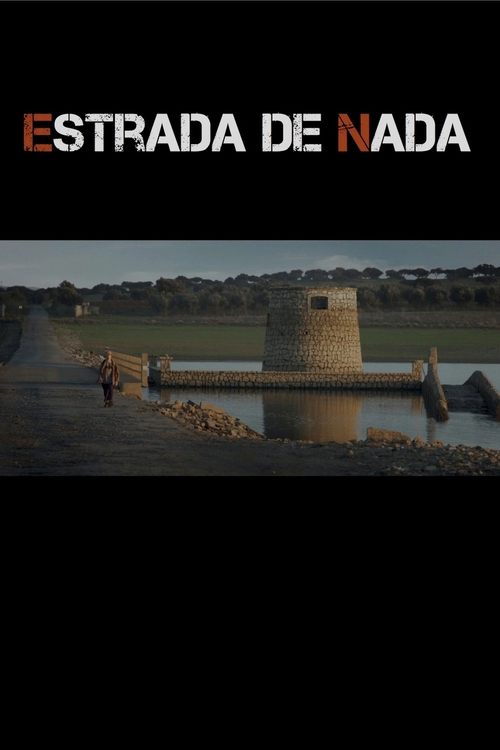
Life is as unchanging as ever in the village: the sun sets between memories. The arrival of a young outsider changes everything. The old are offered a new gift and they accept it. The dreams awaken an old song which pulses through the village. 'With Fate driving the cart of everything along the road of nothing.'
Road of Nothing
An artistic vision of a phenomenon in Spanish history, with repercussions in Europe and the West: the exile of 2,895 republican children in the Soviet Union due to the Spanish Civil War; the German invasion of the USSR in World War II; the 19 years spent in the USSR until his return to Spain (1937-1956). It is also autobiographical in nature, because this author revisits the memories of her mother and aunt, who were part of this group of children.
Where Do You Call Home?

Undaunted by a commission to make a film about his mentors and aesthetic exemplars, the filmmaking team of Jean-Marie Straub and Danièle Huillet, Costa records with great sensitivity and insight the exacting process by which the two re-edit their film Sicilia!, discussing and arguing over each cut and its effect. Incorporating comments about the influence of figures as diverse as Chaplin and Eisenstein, about the ethical and aesthetic implications of film technique and such matters as rhythm, sound mixing, and acting. The film becomes a tour de force, immersing us in the mysteries of cinema as practiced by some of its greatest creators. Costa calls the film both his first comedy and his first love story.
Where Does Your Hidden Smile Lie?
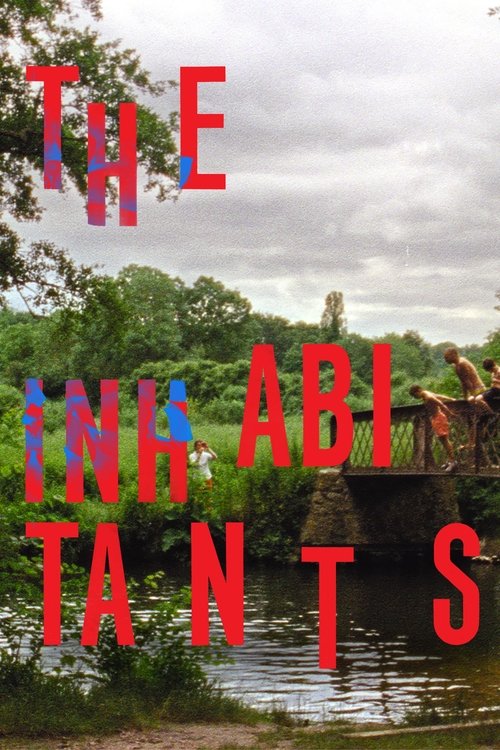
A town in the greater Parisian suburbs, its housing estates, its rose and vegetable greenhouses, its inhabitants. It is winter and a Roma camp has been set up. While most of the local residents are outraged and demand the expulsion of these new neighbors, a few women will try to help them live on the land they occupy.
Les Habitants
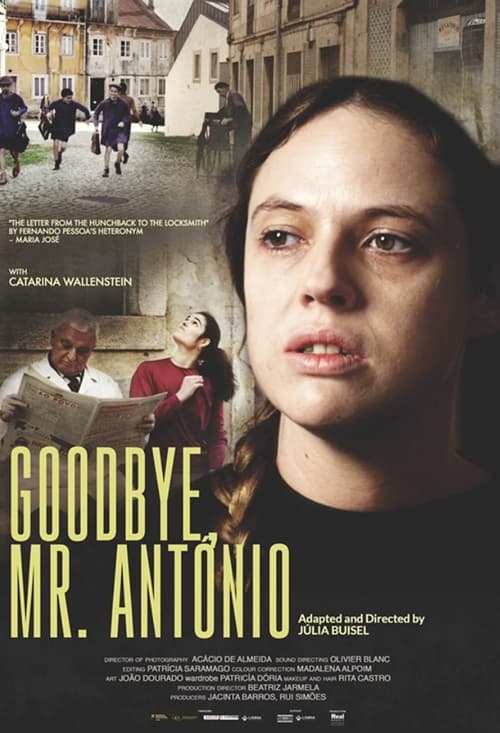
Film adaptation of "The letter from the hunchback to the locksmith" by Fernando Pessoa's heteronym Maria José.