FEEL IT.STREAM
Humberto Solás

Humberto Solás

Directing

Biography

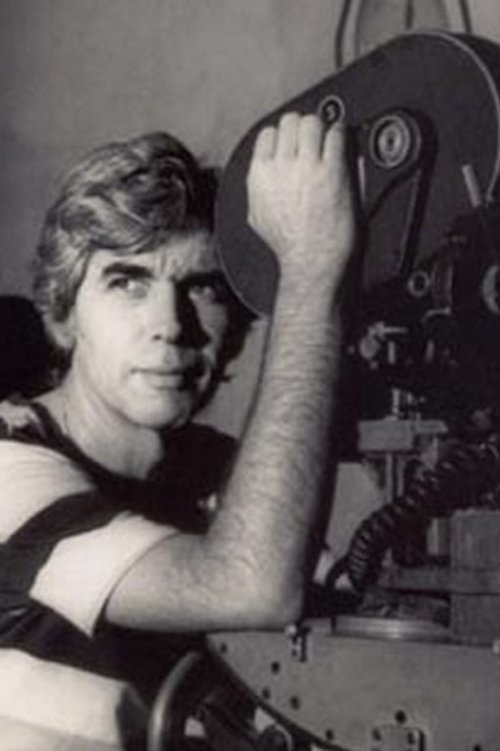
Humberto Solás (14 December 1941 – 18 September 2008) was a Cuban film director, credited with directing the classic film Lucía (1968), which explored the lives of Cuban women during different periods in Cuban history. His cinematic style borrows from Luchino Visconti's spectacular mise en scene and is permeated by sometimes heavy melodrama. He started making shorts at a very young age, before directing his first medium length film Manuela, in 1966. The success of this film led him to direct Lucía, an ambitious period piece told in three stories in different moments of Cuban history, all as seen through the eyes of a different woman, each named Lucia. He later directed many different projects over the course of his career. Solás has won 13 awards for filmmaking and been nominated for an additional 9. His 1968 film Lucía won the Golden Prize and the Prix FIPRESCI at the 6th Moscow International Film Festival. His 1985 film A Successful Man was entered into the 15th Moscow International Film Festival. In 1977 he was a member of the jury at the 10th Moscow International Film Festival. He has twice served on the jury at the Berlin International Film Festival, in 1977 and 1997. In 2003, he founded Gibara's Poor Cinema Festival, "open to filmmakers with limited funds". Solás was awarded Cuba's National Film Prize in 2005. Humberto Solás died of cancer on September 18, 2008, at the age of 66.

Known For

Cecilia
4.7

The story of Cecilia is a story of the society that dominated 19th-century Cuba, a society divided between whites, blacks, and those who were mixed, the mulattos. (Since the Spanish conquistadors killed off the Indian population in Cuba not long after they took over the island, there are no mestizos, or those of mixed-Indian blood in Cuba as in other Caribbean nations.) At any rate, the drama about the life and loves of Cecilia (Daisy Granados) takes place against the backdrop of graphically violent mistreatment of slaves and the rumors of a slave rebellion after the Cubans hear of slaves turning against their captors in Haiti.

Cecilia

1982
Lucía
6.5

Traces episodes in the lives of three Cuban women, each named Lucía, from three different historical periods: the 1890s, the 1930s, and the 1960s.

Lucía

1968
No image
2.0

A look at the life and work of Cuban filmmaker Tomas Gutierrez Alea.

Titón: From Havana to Guantanamera, 1928-1996

2008
No image
8.0

A mercenary from the Bay of Pigs invasion escapes in search of protection and is taken in by a peasant woman who ignores his identity.

El acoso

1965
Le siècle des lumières
10.0

Follows the story of three privileged Creole orphans from Havana, as they meet French adventurer Victor Hugues and get involved in the revolutionary turmoil that shook the Atlantic World at the end of the eighteenth century. The main characters are all members of one family: two siblings, Carlos and Sofia, and their cousin Esteban.

Le siècle des lumières

1993
Manuela
8.0

During the last days of the struggle against dictator Fulgencio Batista, a young peasant woman joins the guerrilla in the Sierra Maestra.

Manuela

1966
Cantata de Chile
10.0

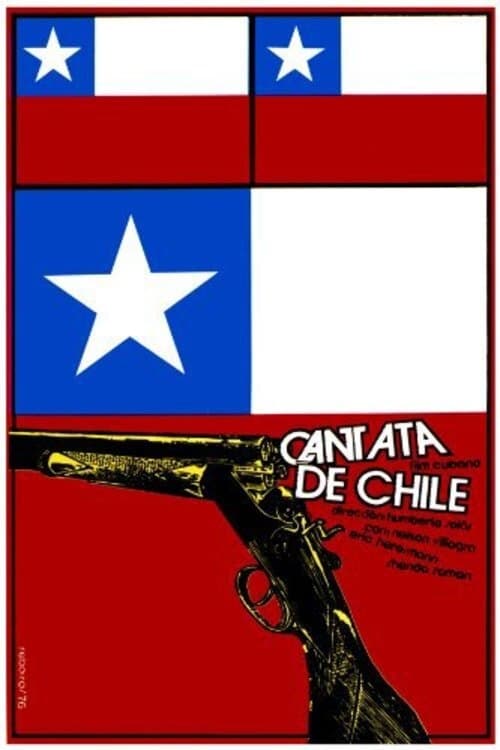
The story of the Santa María School massacre of miners in 1907.

Cantata de Chile

1976
A Successful Man
5.7

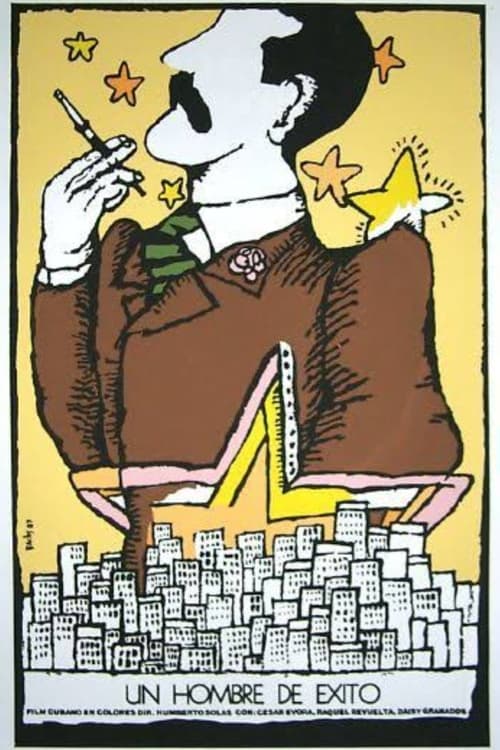
Javier Argüelles, an opportunistic young man from Cuban middle class, survives all kind of political changes in Havana, from 1932 to 1959, while his brother Darío is persecuted and killed because of his leftist ideas.

A Successful Man

1986
One Day in November
7.3

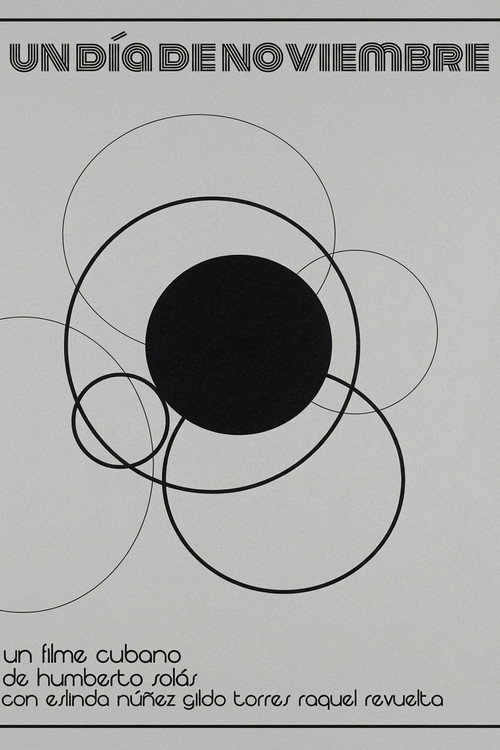
It is the story of a young man named Esteban, who was totally devoted to the cause of the Revolution against Fulgencio Batista. One day, Esteban is diagnosed with a cerebral aneurism, which causes him to take stock of his life as a revolutionary and to reconsider his relationships to his family--to his mother and brother, particularly--and his friends.

One Day in November

1976
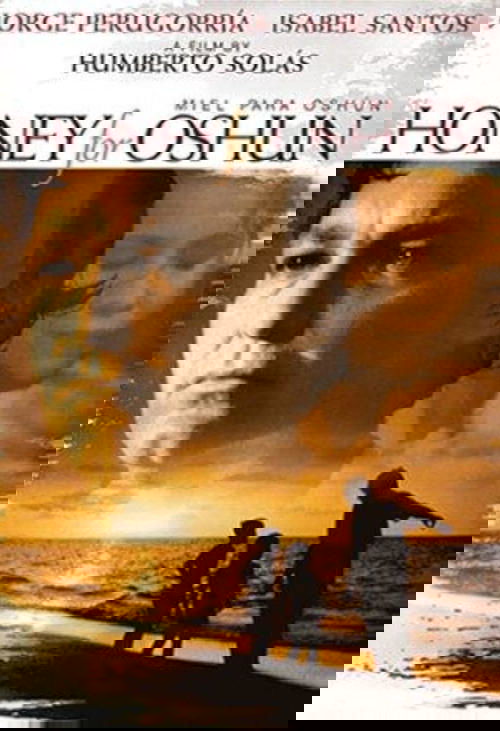
Honey for Oshun
7.3

When his father dies, a Cuban man who was raised in the United States, learns that he was not abandoned by his mother but illegally taken out of Cuba. He goes back to the island and is helped in his search by a cousin and a taxi driver.

Honey for Oshun

2003
Barrio Cuba
5.1

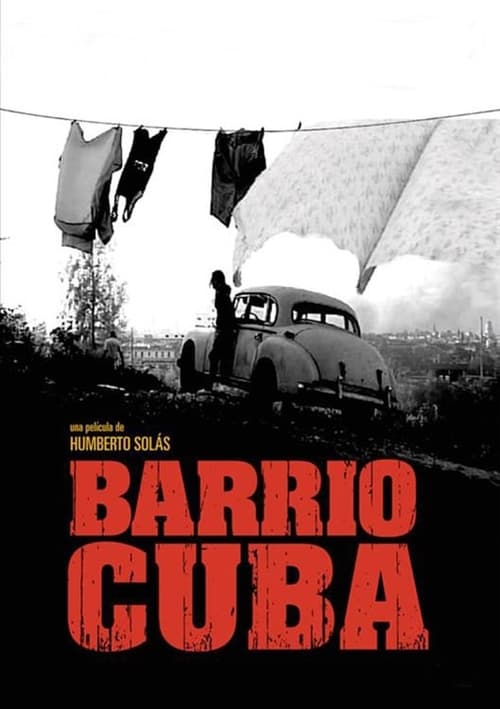
Over several years, we follow three households and their emotions in a barrio of Havana. Magalis is a nurse, rarely happy. An older man, Ignacio, professes his love for her; her father and her brother quarrel over her brother's sexual orientation; she thinks about leaving Cuba. Santo's wife Maria is expecting their first child. Tragedy strikes and Santo leaves, drowning sorrows in alcohol and crime while his son grows up in the care of an aunt wondering where dad is. Vivian and Chino are in love, passionate, but childless. The pressures of a society that demands grandchildren strain their relationship.

Barrio Cuba

2001
No image
6.8

In 1914, during World Ward I, Amada, a bourgeois wife, falls in love with her cousin Marcial, a young idealist who is fighting against the Cuban regime in power.

Beloved

1982
Humberto & “Lucía”
7.0

A documentary about the 1968 film Lucía, featuring its director, Humberto Solás, and members of his cast and crew.

Humberto & “Lucía”

2020
Claves, 4: Memories of Cuban cinema
N/A

Documentary in four parts on Latin American cinema. Fourth episode: in Cuba, the ICAIC, created in the aftermath of the Castro revolution, is at once a film school, a production company and a state cultural branch. Cuban filmmakers testify to the situation and themes specific to their national cinema.

Claves, 4: Memories of Cuban cinema

1984
Rocha Que Voa
6.5

Documentary about the relationship between filmmaker Glauber Rocha and Cuba.

Rocha Que Voa

2002
No image
10.0

A painter in search of inspiration pursues an imaginary woman whose portrait he finds in an abandoned house.

El Retrato

1963
Memorias de Lucía
6.0

Director Humberto Solás, along with the leading ladies Raquel Revuelta, Eslinda Núñez and Adela Legrá, recall important moments of this classic of Latin American cinema, 'Lucía' (1968).

Memorias de Lucía

2003
Simparelé
N/A

SIMPARELE is history interpreted through people's art. The film synthesizes the primary forms through which the Haitian people have expressed themselves in the centuries since the island's colonization by the French and the massive importation of African slaves to fuel its plantation economy. It is a composite of dance, theatrical tableaux, poetry, song, folk painting, legend and religious ritual. SIMPARELE acknowledges the powerful role which Afro-Haitian culture has played in these people's political struggle as both repository for people's history and the raw material from which that history can be reconstructed and transformed.

Simparelé

1974
No image
9.0

A short 1962 black & white gem by Cuban director Humberto Solás, with Hector Veita, about creating the Escuelas Nacionales de Arte (National Schools of Art) during the euphoric period after the victory of the Cuban Revolution. These art schools are the most outstanding architectural achievement of the Cuban Revolution. But for many years, and up to recently, stood abandoned, consumed by the jungle, outside the western suburbs of Havana. For more about the story of the schools see revolutionofforms.com. Solás' remarkable, taut, little film nevertheless captures the spirit of utopian optimism that characterized the early years of the Revolution.

Variaciones

1962
Obataleo
N/A

The music band Síntesis recreates the Yoruba music, a key part of Cuban cultural heritage, and fuses it with rock sounds. The result is a new rhythm with a contagious dancing character.

Obataleo

1989