Józef Gębski
Directing
Known For
No description available.
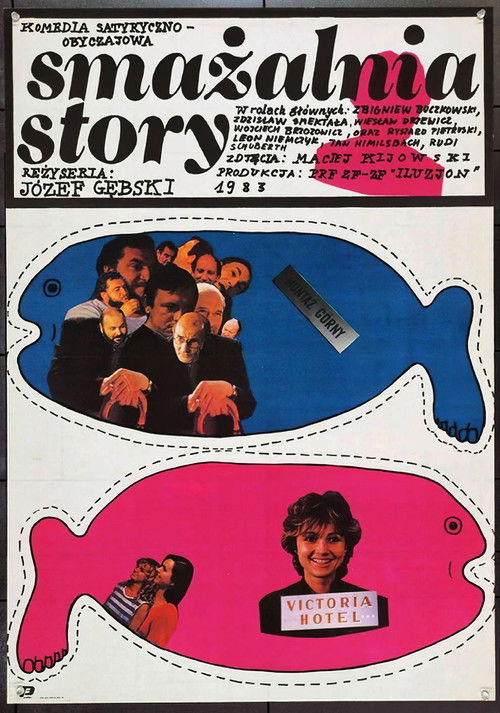
Smażalnia Story
No description available.
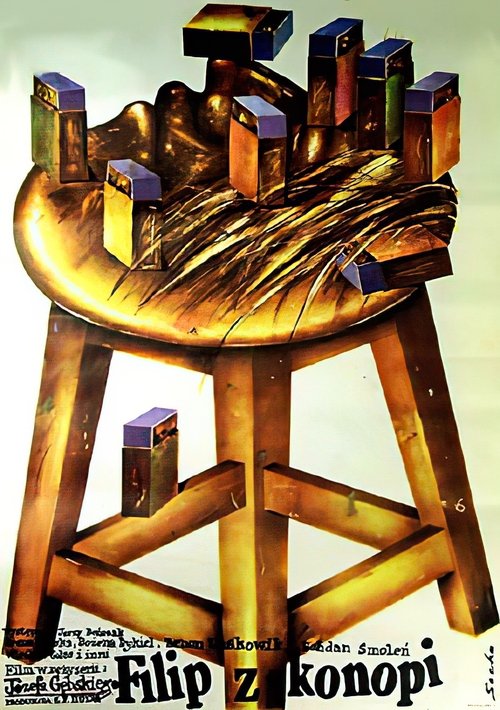
Filip z konopi
A group of ethnography students meet the enigmatic Mruk family while doing an internship at the Świętokrzyskie Mountains.
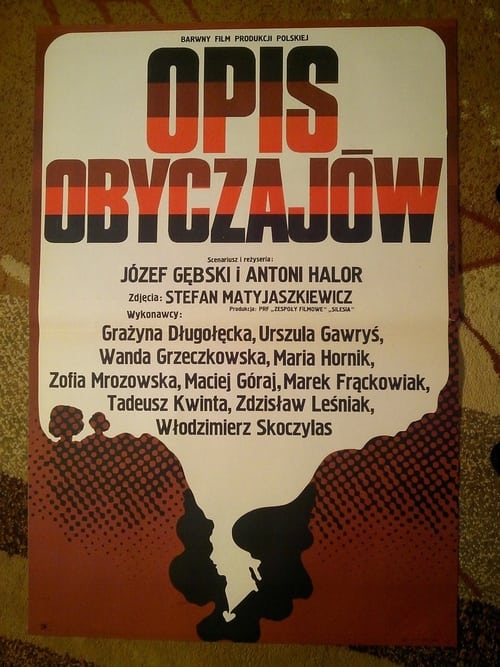
Opis obyczajów
An account of Halina Borek's long 52-year search for the grave of her bestially murdered father. Her recollections are accompanied by excerpts from an original film shot during the exhumation of the remains of Polish officers. The film is narrated by archaeologist Zdzislaw Sawicki, who was one of the first to uncover the secrets of the Katyn graves.
Film znaleziony w Katyniu
The film is inspired by the work of Wiech (Stefan Wiechecki), a humorist who has been depicting the peculiarities of Warsaw society since the 1930s. In his stories, he created his own image of Warsaw and, above all, of its inhabitants. From among the gallery of Wiech's characteristic characters, the filmmakers chose Mr. Piecyk, played here by Zbigniew Zamachowski.
Wiech moja miłość
On the basis of "Notes from the escape of Edmund K. (policeman)" and archival photos, the director reconstructed the "raid" in the Kielce-Katyn area in September 1939. The family of a policeman, along with a column of fugitives, loses their luggage, hopes and illusions along the way.
17 dni września
A recollection of events that took place in the village of Michniów near Kielce during the Nazi occupation. A military police unit commanded by Meier carried out a pacification of Michniów in retaliation for the blowing up of a train carrying Germans. The film's shocking message is reinforced by its formal aspects. The villagers who managed to survive talk about the tragedy today in the form of a prayer, begging God to remember those who were murdered. They list their names, first names, and the circumstances in which they died - tortured, tormented, burned in a barn. "There were 203 of them, remember... So remember Meier... Find him, wherever he is hiding... and bring him to justice..." The mournfully black screen is only partially filled with shots of people praying and photos of the murdered.
203 Sprawiedliwych
An impressionistic description of the camp experience of Xawery Dunikowski (1875-1964), sculptor, painter and educator, prisoner of the Auschwitz-Birkenau concentration camp (1940-45).
In Oświęcim
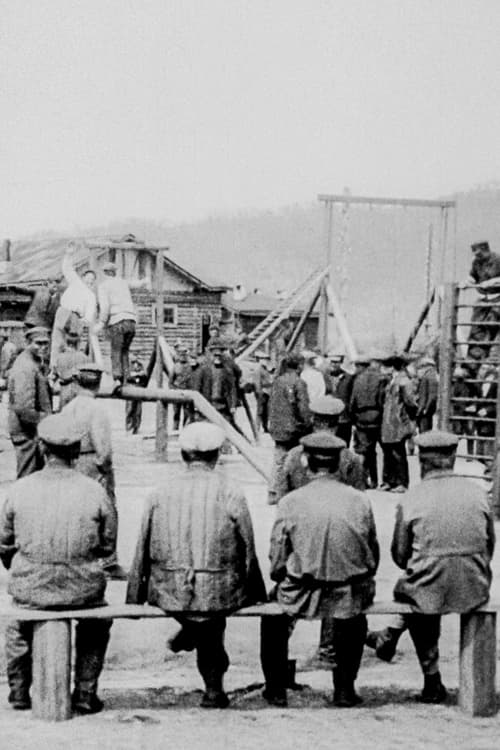
During the autumn of 1989 the director visited the territory of the USSR in search of the places where Polish citizens sent to labor camps had been executed. His route was marked out by diaries of former prisoners and the deportation chronology.
From the Gulag Archipelago
Professor Jerzy Węgierski, a Home Army officer and Siberian exile, recounts in the film the fate of soldiers from the Lviv District of the Home Army during the Soviet and then German occupation, during Operation Tempest and after its conclusion. The story is illustrated with unique photographs from the professor's collection. The film was made thanks to the cooperation of the Documentary Department of TVP 2 with the Home Army Film Foundation.
We Lwowie 1939-1945
The protagonist of the film "Klawisz" is Jan Doliński, a former guard of the Lublin Castle prison, who held his post during the German occupation and remained in it almost until the prison was liquidated in 1954. He was dismissed because he did not want to join the Polish United Workers' Party.
The Prison Guard
Józef Gębski's film is a documentary reconstruction of the crime committed by NKVD officers against Polish officers imprisoned in Starobielsk and Kharkov in 1940. Accounts of historians and prosecutors are juxtaposed with the testimony of the then heads of the central and regional NKVD board.
Thou Shalt Not Kill
A report on the exhumation of the remains of the victims of Stalinist repression in the 1930s. The bodies of the prisoners shot by the NKVD in a nearby prison were buried in the area adjacent to the present-day Irkutsk airport.
Exhumation
Produced to mark the 30th anniversary of Warsaw's Documentary Film Studio, the film recalls the achievements and successes of the studio, which has been associated with many outstanding documentary filmmakers for years. It also shows the work of the cameramen of the popular Polish Film Chronicle, who accompany all important events in the country with their cameras.
At Chelmska Street
The film devoted to Tadeusz Borowski's work has the form of a multi-part suite consisting of very short episodes, in which the fragments and poems read by Borowski are accompanied by photographs from the Auschwitz camp, reproductions of Andrzej Wróblewski's paintings, film archival and contemporary photographs. He presents Borowski's work in an extremely emotional way in the context of the artist's stay in the concentration camp, showing the influence of this experience on Borowski's writing and on the vision of the fate of his generation.
Testament
When the filmmakers heard from documentary and comedy filmmaker Józef Gębski that 'somewhere around the year 2000, the old cinema ended', they decided to set out in his footsteps in search of the 'new'. This is how they ended up in Paris, where Gębski met the great Jacques Tati in 1977. In this documentary, Jozef Gębski turns into a film theorist and historian. He traces its evolution from the beginnings of cinema and the works of the Lumière brothers, through the New Wave revolution, to the 21st century 'third cinema' in which anyone can be a filmmaker. It also looks at what kind of cinema is 'born before our eyes'.