Acting
Os Trapalhões was a Brazilian comedy group and also a Brazilian television series created by Wilton Franco. Its members were Dedé Santana, Zacarias, Mussum and their leader Didi Mocó, that was played by Renato Aragão. The name Trapalhões is derived from the Portuguese verb atrapalhar, which means the opposite of helping, to do something the wrong way or to Those that confuse. The name is translated "Tramps" in English DVD subtitles. It was aired by Rede Globo from 1977 to 1999. On March 18, 1990, Zacarias died due to respiratory failure, but the group and the series didn't come to an end until July 29, 1994, when Mussum died due to an unsuccessful heart transplant.
The fight for freedom and against oppression is the central theme of this soap opera that tells the story of the Coragem brothers: João, Jerônimo and Duda, in the city of Coroado.
Twin sisters with contrasting personalities, Ruth and Raquel, rival in the fictional Pontal D'Areia, on the coast of Rio de Janeiro.
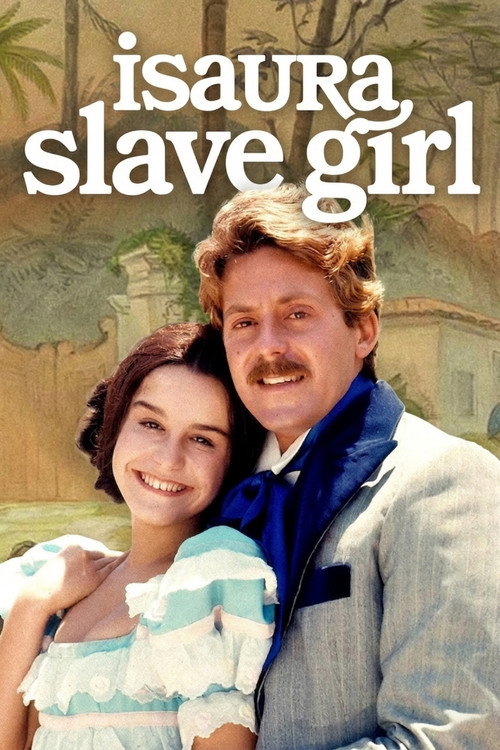
Set in 19th-century Brazil during the waning years of slavery, Escrava Isaura tells the story of Isaura, a white-skinned enslaved woman raised with the manners and education of a noble lady. Though treated with affection by her mistress, Isaura remains legally enslaved and becomes the object of obsessive desire by Leôncio Almeida, the cruel heir to the plantation. After the death of her protector, Isaura falls under Leôncio’s control. Despite his attempts to seduce and dominate her, she resists, determined to preserve her dignity and freedom. Her father, Miguel, helps her escape to Recife, where she adopts a new identity and meets Álvaro, a wealthy and principled abolitionist who falls in love with her. Leôncio eventually tracks her down, leading to dramatic confrontations. In the end, Álvaro rescues Isaura by purchasing Leôncio’s debts, securing her freedom and affirming the story’s central themes of justice, love, and resistance against oppression.
No description available.
Helena and Álvaro fall in love, but she marries someone else. Years later, they meet again and Helena becomes pregnant, but keeps it a secret because Álvaro is now the one who is engaged.
Amidst an unresolved crime, Simone protects Cristiano and falls in love with him. However, the couple faces ambition and betrayals that tear them apart. Presumed dead, she returns under a new identity seeking revenge.
Patricia, an orphan living in a traveling amusement park, believes the stars will bring her happiness. One day, an astrologer predicts the impossible: the young woman, an Aquarius, will fall in love with a Pisces boy, a sign initially incompatible with hers. The girl does, in fact, become enchanted by the wealthy student Renato, but he doesn't feel the same way. Patricia travels to Rio de Janeiro, where she befriends a gentleman whom she affectionately calls Mr. Pepe, unaware that he is Renato's great-uncle and the owner of the company where she begins working. Mr. Pepe discovers fraudulent activities committed by his family and decides to fake his death to observe the dispute over his inheritance.
Saramandaia is a Brazilian telenovela originally written by Dias Gomes in 1976. It's considered remarkable because of the Magic Realism (used by the author to subtly criticize the Military Regime of the time) and had 160 chapters. The story centers on the name change that the city undergoes, promoted by the younger citizens and reviled by the older ones. It also focuses on the lives of the city's quirky residents.
The routine of the quiet town of Rio Belo changes with the arrival of Carina, a traveling actress determined to discover who her father is. At the same time, a mysterious crime involving the powerful Donana shakes the town.
Herculano Quintanilha, after a failed coup and escape from prison, becomes a magician. He meets Márcio, a conflicted heir, and begins to influence his powerful family.
Seven high school friends reunite after 20 years. Memories of the past and coincidences of the present reveal the secrets and affections that bind the women and their families.
The soap opera critiques the power struggles among rural politicians in the 1920s. Joaquim is shocked when a doctor reveals that his son, Luís Jerônimo, has a lung lesion. To recover his health, the young man leaves Rio de Janeiro for Colonel Boanerges's farm in Vila da Mata, Espírito Santo. There, he meets Zuca, and the two fall in love. Zuca is the colonel's goddaughter and the fiancée of the fearless cowboy Tobias, who refuses to accept the possibility of losing her to the outsider. Zuca and Luís Jerônimo face numerous obstacles in pursuing their love. Their romance is also threatened by the arrival of Pepa in Vila da Mata; having been in love with Luís Jerônimo back when he lived in Rio, she tries by every means possible to drive the couple apart.
Manoela is employed in the home of Donato, an employee at a cosmetics factory, and Carolina. After her boss's death, Carolina finds herself unprepared to deal with the serious financial difficulties and fires Manoela, who agrees to work for free, becoming a kind of guardian angel, advisor, and administrator of the house. To pay the mortgage on the property, she suggests that Carolina rent out two of the vacant rooms. The new tenants are four students who have recently arrived in Rio to take the university entrance exam. During their studies, the young men meet Marcelo, nicknamed Belo, who falls in love with Manoela. The relationship gives her the opportunity, for the first time, to forget about other people's problems and live her own life.
Romantic and dreamy, Eliana works at a five-star hotel and becomes involved with unrequited love, a bumbling gang, and a complex police story.
The story follows the experiences of Marina, a young country bumpkin who marries the mysterious and charismatic widower Roberto Stein, a fabulously wealthy businessman living in 1920s Rio de Janeiro. As Marina attempts to acclimate to her new marriage and responsibilities, she discovers that Stein's late wife, Alice, still seems to have a strong hold over the household. Despite her new husband's affection for her, Marina is nonetheless threatened by Alice's presence, which is made conspicuous through her old maid Juliana's obsessions and her intimidating portrait.