Camera
An experimental documentary film of collective research into creolization, addressing its historical, ontological and cultural forces.
After decades abroad, Iona returns to her childhood home on Fiji, sensing that there she might find the answers to many questions she has about civilisation and its discontent.
Olga is a russian girl working as a prostitute in Germany, but one day - as she wishes - she’ll head towards Tirana for a better life...
Borrowing its title from an experimental text by Walter Benjamin. Many years ago, the cities by the river were gripped by a contagion. Things started to change and everything slowly became something else. It was not clear if transformation was a symptom of the disease or a way to escape it. The contagion touched everything and everyone: animals and plants, stones and soil, men, women and children, their thoughts, their dreams, their memories. An old woman once told me how all memories turn into trees, I could hardly make out what she was saying. She said she could hear the trees singing: To be a body, to be any body. After the years of contagion ended, the cities appeared untouched. One had to look hard to see the traces of the previous time. If one could listen to the trees, what would they say? A way out, a way out?
The first image is in black and white, upside down and projected into a black box that then becomes the frame. It now hovers like a time capsule near a man’s face. He looks down, listening in on a female guerrilla fighter and translating her words from Fulani. Within the capsule, money is counted and paid out as a new currency, the numbers of the years run backwards in the black box. A 16-mm film glides through the man's hands and is transferred to a laptop screen frame by frame.
Branko dwells on the fringes of Belgrade society. Isolated and unable to sleep, he speaks to no-one. His only obsession seems to be his younger brother, whose muddy shoes, bloodstained sheets, and murky whereabouts unsettle him. As paranoia sets in, Branko realises his brother isn't the strange one. He is.
The film approaches the biographies of two women whose personalities were forcibly hidden behind their roles as wives and homemakers. They remained invisible until they themselves became the aggressors.
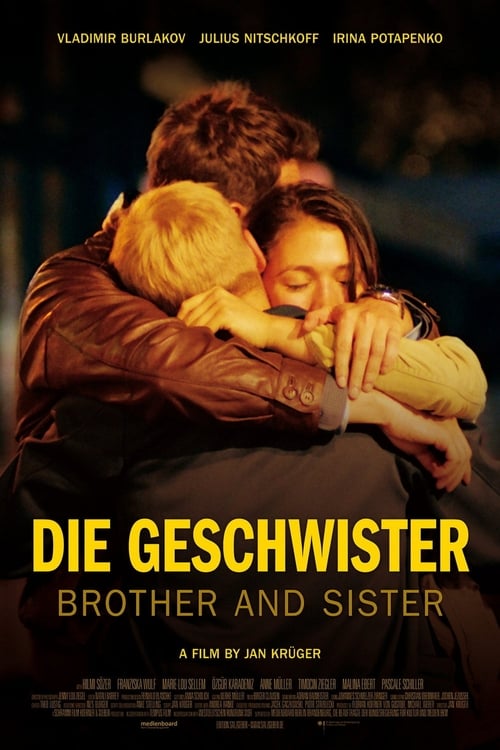
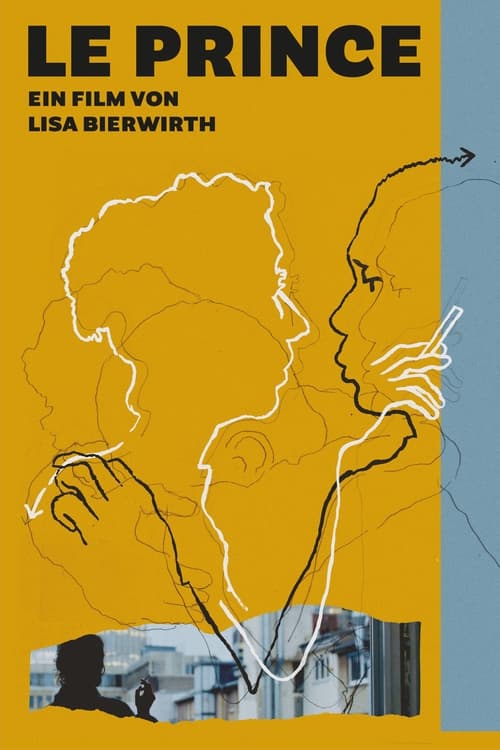
Neukölln, a trendy district in Berlin. Living space is scarce here. Without surety, proof of credit worthiness and salary there is no chance at all now. Thies knows this game; he works for a real estate management company and watches that the rules are upheld - until he meets Bruno and Sonja. He provides the dissimilar siblings with a flat free of charge on the quiet. And enters into an affair with the brother. Step by step he becomes more deeply immersed in the secret of the "siblings". A Berlin film about a loner who gets caught up. About a couple with unclear residency status. About a city everyone wants to live in.
A year in Berlin: Leonie wanders through the city and the texts of Anna Maria Ortese. Speaking with friends and translator Sigrid Vagt, she is also looking for the narrative threads of her own life. A film of reading shot in glowing, matter-of-fact 16mm.
Jonasz studies insects and fishes, Signe leaves and herbs. After a day spent in gardens and libraries, they meet, take the train and leave the city, pitching their tent on the shores of a lake. As they read, eat fruit, wander the forest and swim in the cold water, the outside world feels further and further away. A stranger appears and a trio is formed. But there are also other trios, other lakes, different places, different times.
Filipa César, in her films and installations, explores the post-colonial constellations that were spawned by the recent history of Portugal. Since 2011, her research is focused on the film production in Guinea-Bissau, the beginnings of which were closely linked to the struggle for liberation. In February 2014, in Birbam, about three hours north of the capital Bissau, for the period of three weeks she has been documenting, together with the filmmaker Suleimane Biai, the construction of a house that will serve the surrounding villages as a meeting space. Alongside his work as a filmmaker, Suleimane Biai is the régulo in this region and hence has assumed the duties of the head and conciliator of the community.
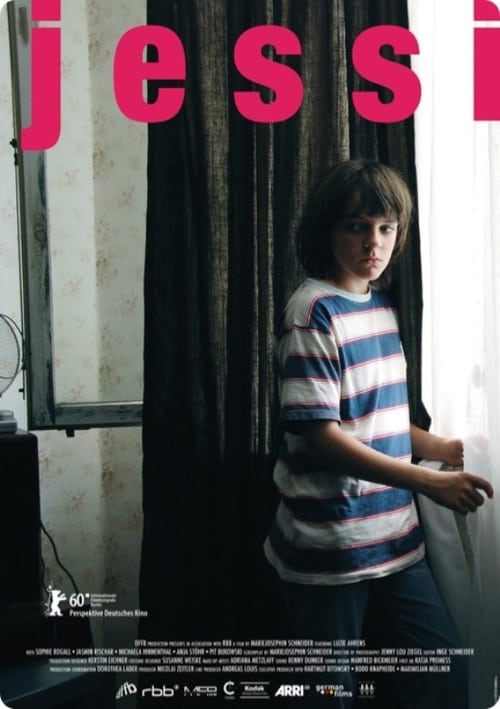
Jessi is eleven and longs to go back to the place where she spent her early childhood. She has an important role to play in the life of her mother, who has been in prison for several months. Since her older sister Bibi broke off all contact with their mother Jessi is now her mother’s only contact to the outside world.
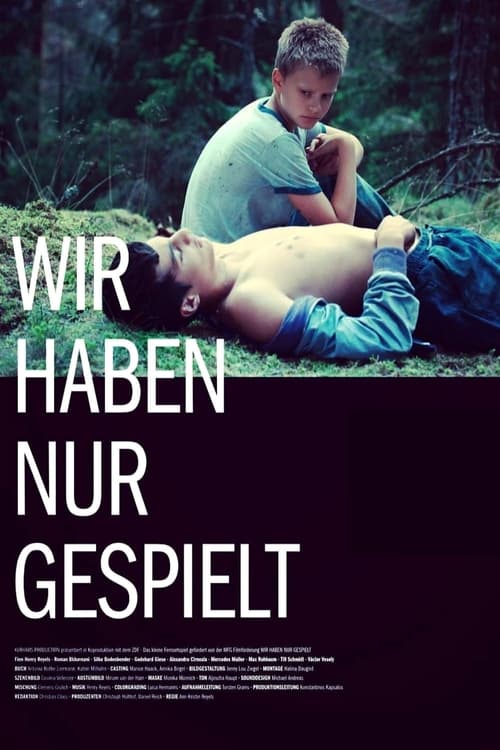
Two boys from different worlds. Of all possible times, the start of summer vacation is when 10-year-old Jona has to move away from Berlin to the German-Czech border with his mother and new stepfather. He's lonely and angry as he inspects his new surroundings. Across the border, he meets Miro, a 13-year-old Ukrainian boy. Jona is fascinated by the confident but taciturn boy, only slowly discovering the fate that's hidden behind Miro's grown-up façade.
To take care of his father’s estate, Ulrich Meinert has to go to a trailer park where his father used to live. He finds himself in a camping colony in eastern Germany which stirs up mixed feelings. Although he felt a lot of resentment towards his father, days go by without him taking care of any unsettled business. Instead, he starts to get involved with Anja, takes on one of his father’s old friends and settles into his father’s trailer. Against his own wishes, he starts to fill the void his father left behind ...
Perhaps they should never have met, but fate wanted otherwise. Monika and Joseph. She is a curator, he is an immigrant from Congo, a businessman with an unclear past and present. They meet during a police raid at a bar, when the first of many sparks flies between them. An understated love story, a melodrama without pathos, a fragile story about the ambiguous nature of love and the impossibility of overcoming it through reason.
A Danish summer: long days turn into blue nights. A tunnel is being built to connect Denmark and Germany. Three people meet and part ways again.
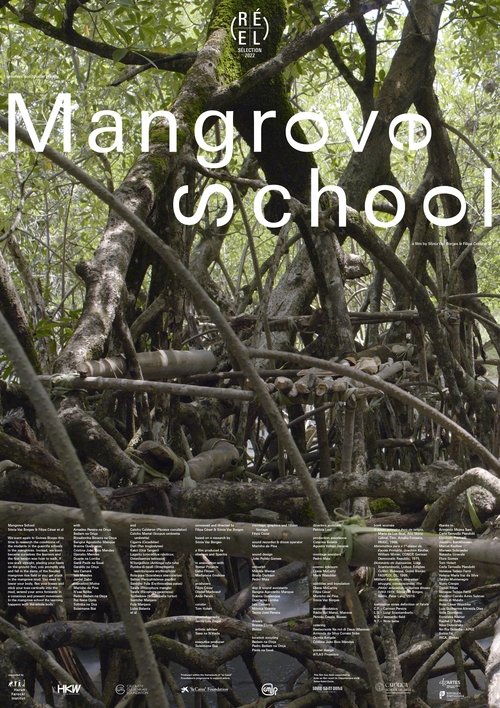
We went to research the conditions of the students in the guerrilla schools in the mangroves. Instead, we soon became ourselves the learners and the first lesson was how to walk. In the mangrove school the learning happens with the whole body.
Daniela is unsure about what to do next and where to live. Mia is finishing a master’s degree that she spontaneously started. Along with Natascha, another friend thinking of moving to Vienna, they wander around and talk.
All of a sudden, 16-year-old Martha vanishes. Her father Lothar, who for years has had no contact with her or his ex-wife, sets off unwilling to find her. He soon realises other young people are also vanishing from the city inexplicably. Lothar follows their trail across the country. He meets the occasional young person but the trail goes cold. In the next city he encounters militia groups and a reinforced police presence. Children are forbidden to be on the streets unless accompanied by adults. The world has changed...
Three women stage scenes for a philosophical film they are shooting.