Tony Conrad
Directing
Biography
Anthony Schmalz "Tony" Conrad was an American avant-garde video artist, experimental filmmaker, musician, composer, sound artist, teacher, and writer. Active in a variety of media since the early 1960s, he was a pioneer of both structural film and drone music. He performed and collaborated with a wide range of artists over the course of his career, most prominently La Monte Young's 1960s New York experimental music group Theatre of Eternal Music.
Known For
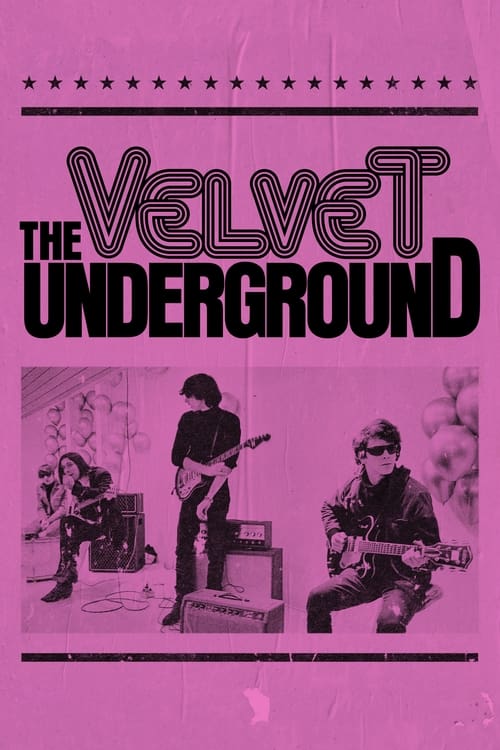
Experience the iconic rock band's legacy in the first major documentary to tell their story. Directed with the era’s avant-garde spirit by Todd Haynes, this kaleidoscopic oral history combines exclusive interviews with dazzling archival footage.
The Velvet Underground

This exhibition focuses on Jonas Mekas’ 365 Day Project, a succession of films and videos in calendar form. Every day as of January 1st, 2007 and for an entire year, as indicated in the title, a large public (the artist's friends, as well as unknowns) were invited to view a diary of short films of various lengths (from one to twenty minutes) on the Internet. A movie was posted each day, adding to the previously posted pieces, resulting altogether in nearly thirty-eight hours of moving images.
365 Day Project
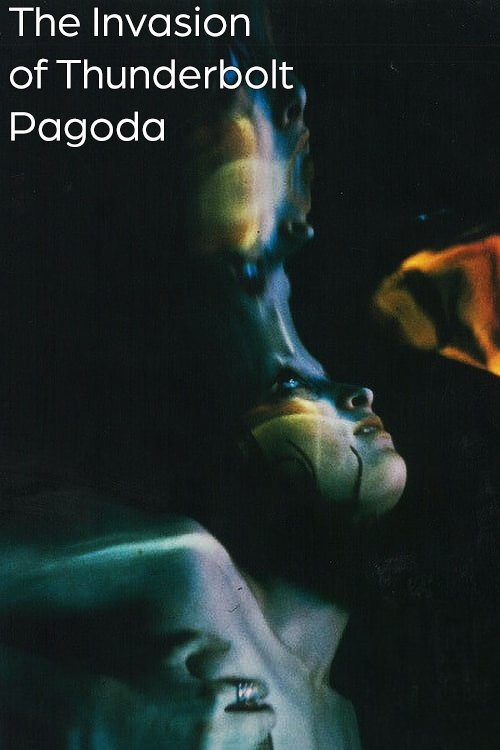
At the court of the Yellow Emperor, the Majoon Traveler & Lady Firefly appear in the Hall of Unconscious Magnetism.
The Invasion of Thunderbolt Pagoda
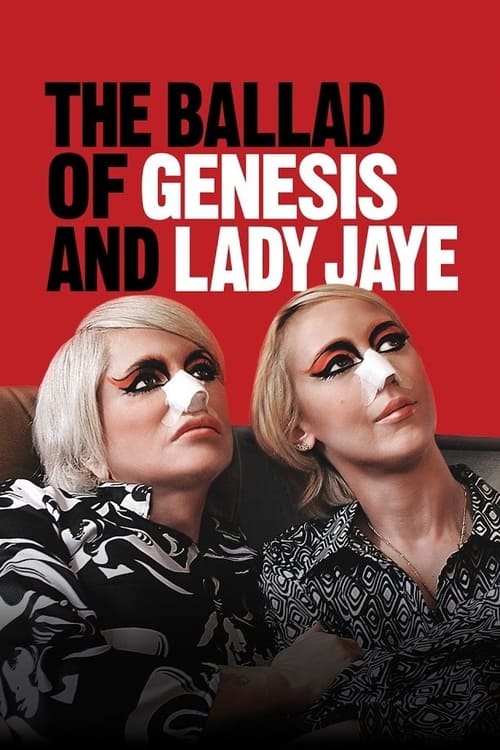
An intimate, affecting portrait of the life and work of ground-breaking performance artist and music pioneer Genesis Breyer P-Orridge (Throbbing Gristle, Psychic TV +) and their wife and collaborator, Lady Jaye, centered around the daring sexual transformations the pair underwent for their 'Pandrogyne' project.
The Ballad of Genesis and Lady Jaye
Also known as Walden, Jonas Mekas’s first diary film is a six-reel chronicle of his life in 1960s New York, interweaving moments with family, friends, lovers, and artistic idols. Blending everyday encounters with portraits of the avant-garde art scene, it forms an epic, personal meditation on community, creativity, and the passage of time.
Diaries, Notes, and Sketches

Initially titled "Books for all". A moving institutional commission in which the filmmakers lovingly portray New Jersey's public library system.
Library

In this entrancing documentary on performance artist, photographer and underground filmmaker Jack Smith, photographs and rare clips of Smith's performances and films punctuate interviews with artists, critics, friends and foes to create an engaging portrait of the artist. Widely known for his banned queer erotica film Flaming Creatures, Smith was an innovator and firebrand who influenced artists such as Andy Warhol and John Waters.
Jack Smith and the Destruction of Atlantis
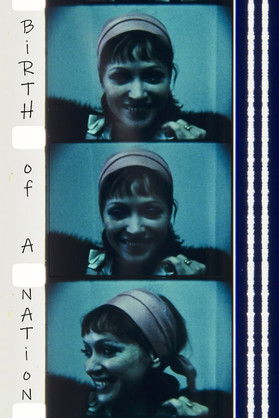
Jonas Mekas assembles 160 portraits, appearances, and fleeting sketches of underground and independent filmmakers captured between 1955 and 1996. Fast-paced and archival in spirit, the film celebrates the avant-garde as its own “nation of cinema,” a vital community existing outside the dominance of commercial film.
Birth of a Nation

Ron Rice's Chumlum is one of those films in which the conditions of its construction are integral to the experience of watching it. It is a record of a cadre of creative people having fun on camera, playing dress-up, dancing, flirting, lazing around.
Chumlum
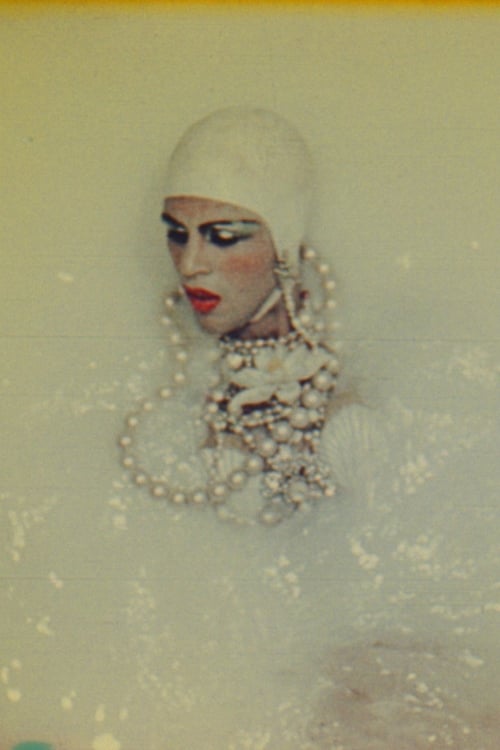
A follow-up to now legendary film Flaming Creatures. This vivid, full-color homage to B-movies is a dizzying display of camp that clearly affirms Smith’s role as the driving force behind underground cinema and performance art of the post-war era. The director was known to constantly re-edit the film, often during screenings as it was still unspooling from the projector.
Normal Love
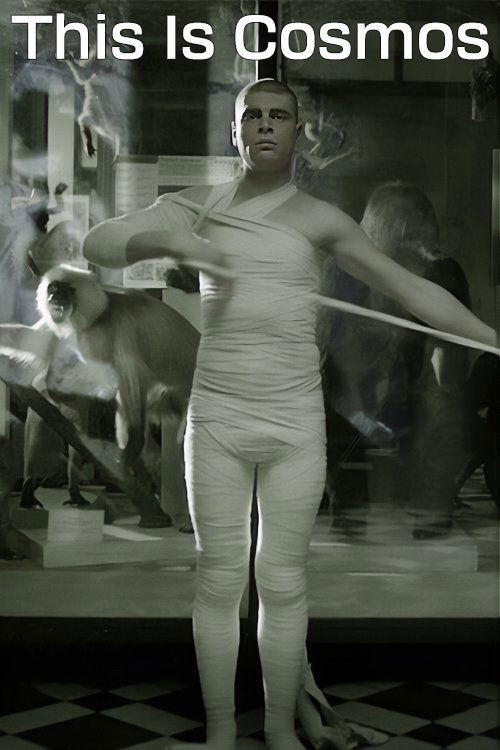
Based on the ideas of Russian philosopher, Nikolai Fedorov, Anton Vidokle’s film was shot in Siberia, Crimea, and Kazakhstan. Fedorov, like others, believed that death was a mistake, “because the energy of cosmos is indestructible, because true religion is a cult of ancestors, because true social equality is immortality for all.” Fedorov was one of the Cosmo-Immortalists, a surge of thinkers that emerged in Russia in the late 19th and early 20th centuries. They linked Western Enlightenment with Russian Orthodoxy and Eastern philosophical traditions, as well as Marxism, to create an idiosyncratically concrete metaphysics. For the Russian cosmists, cosmos did not mean outer space: rather, they wanted to create “cosmos” on earth. “To construct a new reality, free of hunger, disease, violence, death, need, inequality – like communism.”
This Is Cosmos
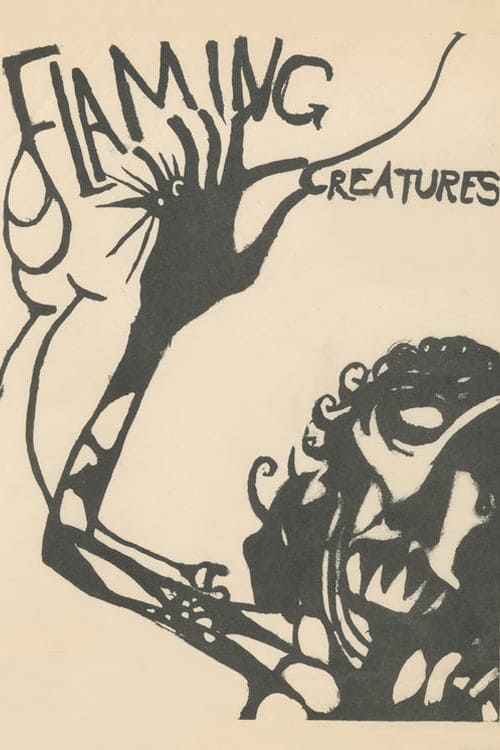
Filmmaker and artist Jack Smith described his own film as a “comedy set in a haunted movie studio.” Flaming Creatures begins humorously enough with several men and women, mostly of indeterminate gender, vamping it up in front of the camera and participating in a mock advertisement for an indelible, heart-shaped brand of lipstick. However, things take a dark, nightmarish turn when a transvestite chases, catches and begins molesting a woman. Soon, all of the titular “creatures” participate in a (mostly clothed) orgy that causes a massive earthquake. After the creatures are killed in the resulting chaos, a vampire dressed like an old Hollywood starlet rises from her coffin to resurrect the dead. All ends happily enough when the now undead creatures dance with each other, even though another orgy and earthquake loom over the end title card.
Flaming Creatures
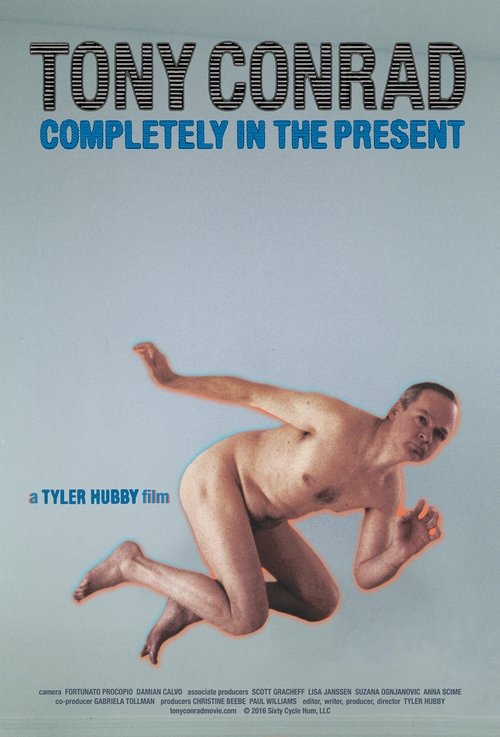
Feature documentary on the pioneering life and work of iconoclastic filmmaker/musician/composer/artist Tony Conrad.
Tony Conrad: Completely in the Present

The story of Joan of Arc as applied to the present revolution in arts and more. The Gothic is applied to the War in Vietnam. The film is experimental in the sense that in it the visual becomes tactile.
Joan of Arc
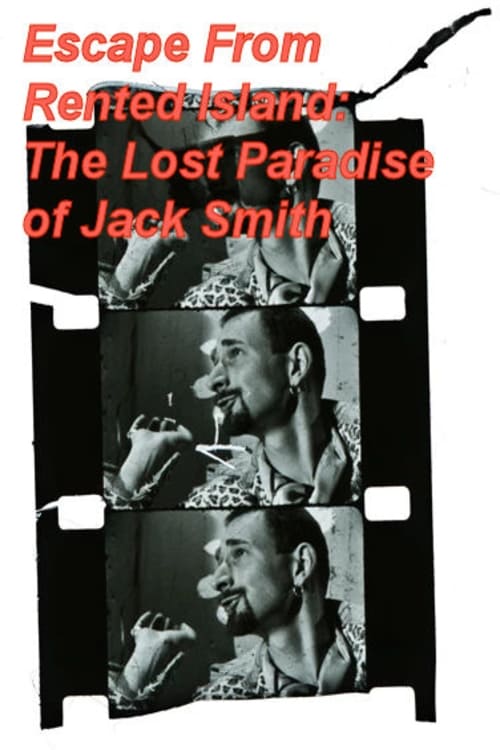
In his essay film, Jerry Tartaglia, longtime archivist and restorer of the film estate of queer New York underground, experimental film, and performance legend Jack Smith, deals less with Smith’s life than with his work, analyzing Smith’s aesthetic idiosyncrasies in 21 thematic chapters. It's a film essay about the artist’s work, rather than a documentary about his life. An unmediated vision of Jack Smith, an invitation to join him in his lost paradise.
Escape From Rented Island: The Lost Paradise of Jack Smith
If the intersection of desire and authority is phallus, the intersection of absence and vigilance is vagina. The tape’s laconic title (I saw, I conquered—but I didn’t come) encodes its vaginal pretense. In effect, Vidi Vici is a male artist exploring a vaginal posture. By interleafing different gender characterizations with various narrative impulses, it circumvents linearity while emptying our gaze into the interstices between action and incapacity. —Tony Conrad
Vidi Vici: Narrative and the death of desire
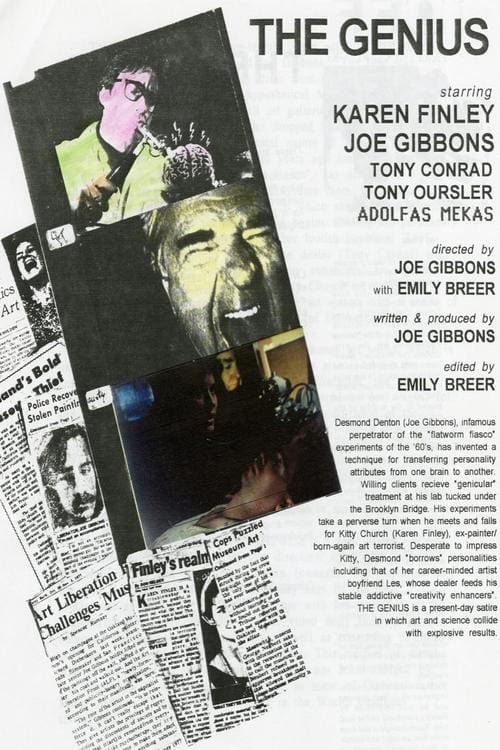
A ramshackle underground SF satire set and shot in the self-absorbed art world of lower Manhattan, written, produced, and directed by Joe Gibbons, who also plays one of the lead parts. Gibbons plays a mad scientist who's developed a technique for transferring personalities from one person's body to another; he becomes obsessed with an outlaw artist (played by performance artist Karen Finley) who destroys paintings in various galleries as a form of anarchist, anticapitalist protest.
The Genius
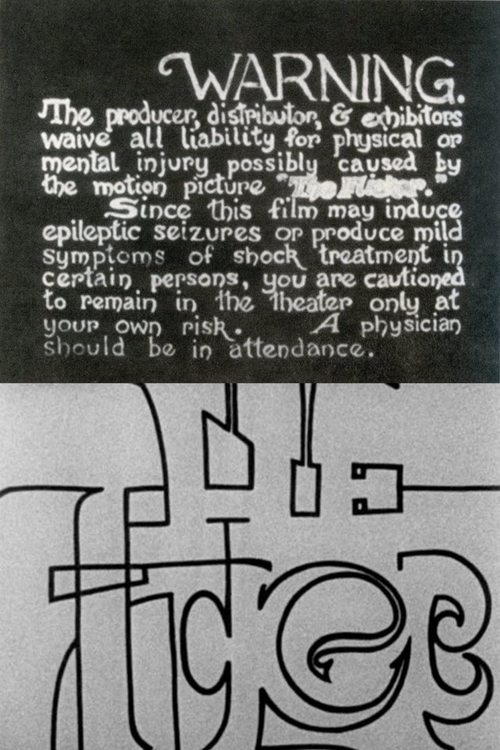
A film consisting of alternating black and white frames.
The Flicker
Straight and Narrow is a study of subjective colour and visual rhythm, although it is printed on black and white film, the hypnotic pacing of the images will cause most viewers to experience a programmed gamut of hallucinatory colour effects. Through the intermediary of rhythm, the maximal impact is drawn from the simplest of universal human images: straight horizontal and vertical lines. Set to a strong percussive musical background, rapidly alternating images of black and white straight lines are juxtaposed in precise rhythmic patterns to create specific colours... if you can watch without becoming hypnotised...
Straight and Narrow
“Coming Attractions” looks backward into the memories and forward into the future of Francis Francine, an elegantly dowdy transvestite of, and indeed beyond, a certain age. The memories, haunted by a Spirit of Seductions Past (played by a quite glorious naked young lady who fortunately bears absolutely no resemblance to Francis Fran cine) suggest a generally lurid life of sumptuous sex and questionable liaisons. The future, presented by an ancient fortune teller with a wonderful crystal ball that holds a lively go‐go dancer and that seems to mediate between interchanging black and white halves of the screen, follows Francis Francine through the reactivation of an ancient affair, to her death (a jealous ex‐lover) and her triumphant entrance into a pastoral paradise that looks like a cross between several scenes from “81/2” and “The Embarkation for Cythera” in drag.