Directing
No description available.
Six-part series for Rai 3 Campania, each episode dedicated to a person who, in their own way, is both a part of and an embodiment of one of the many hidden worlds that make up the Neapolitan metropolis.
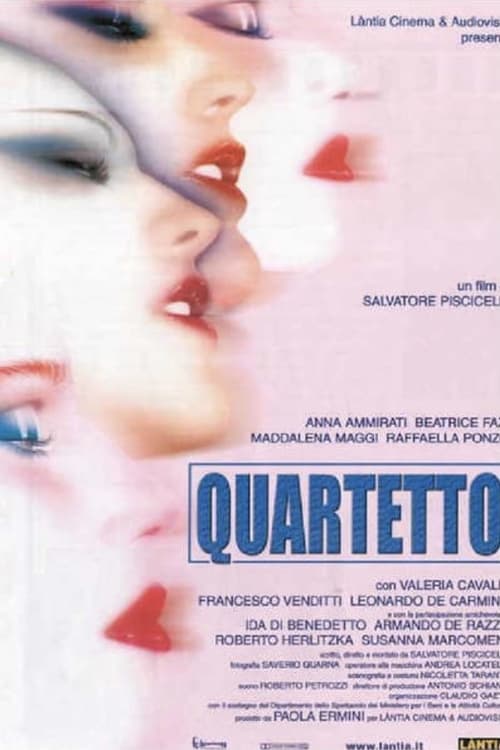
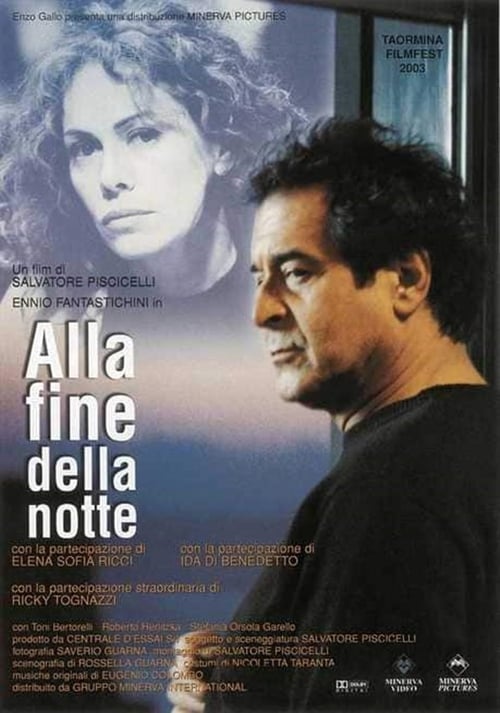
The film begins on New Year’s Eve 2001 when Angelica attempts suicide by somewhat theatrically cutting her wrists in the bath. Over the weeks that follow we learn all about the complexities of her life and her three best friends, the quartet of the title.
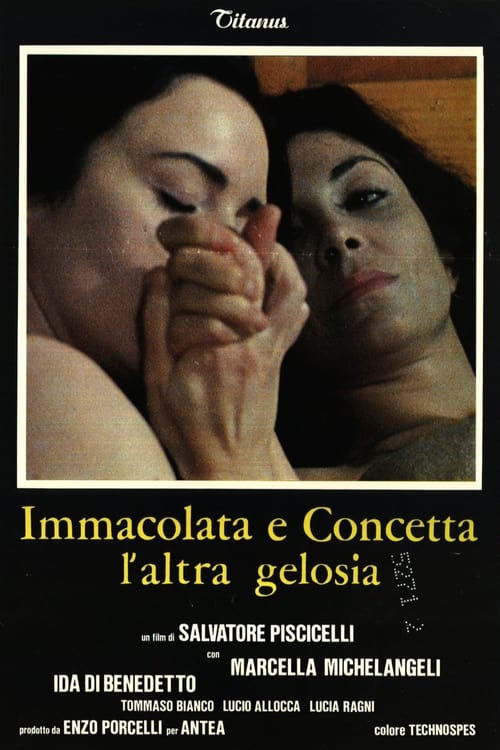
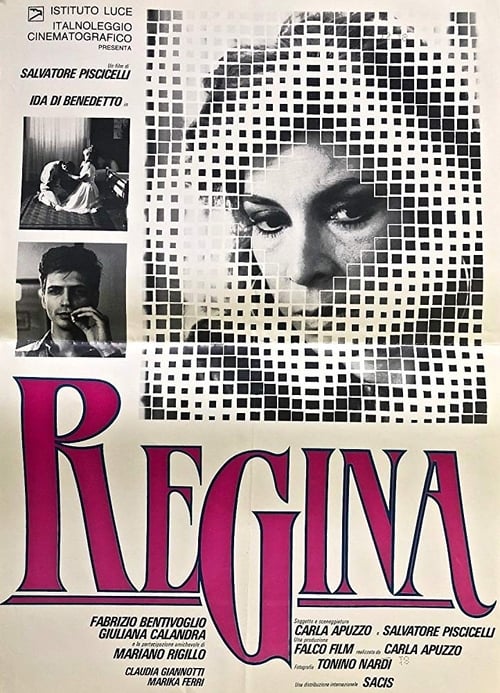
A love story between two women in the Naples outskirts, a universe so far away from the glare of modernity, turbid, rural, completely naked in its ugliness and sorrow, where "people are talking".
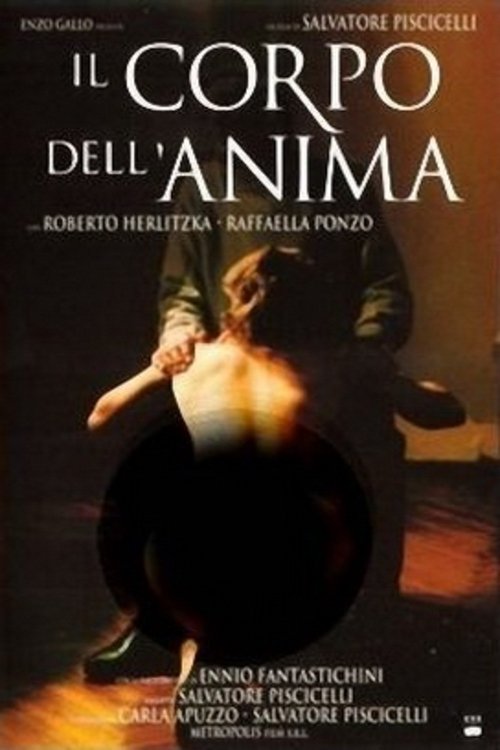
Ernesto is doomed to loneliness since the loss of his wife. He is a writer who lives alone without any children, and is an antisocial person. However, he is as satisfied with his life. Although he has not been working for a while, a film director asks him to prepare a scenario on the life of "Teresa of Ávila". Meanwhile, a young peasant girl, Luana starts working with him as a maid. Now the time has come for an affair which he has ignored for some years.
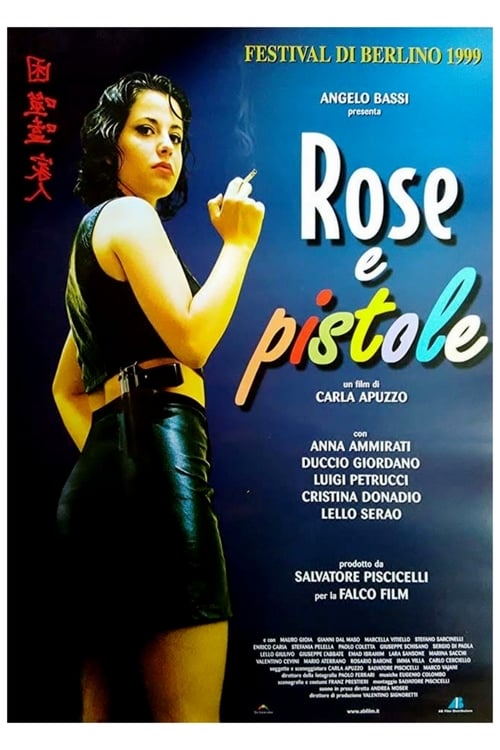
Maria married an honest worker at a very young age, works as a part-time beautician and has three children. Her life is like many others in the working-class suburbs of Naples, where the daily struggle to make ends meet makes you get used to everything. When her husband is diagnosed with a terminal illness, Maria accepts the help of Gennaro, a rich owner of a car dealership. She lets him court her until she becomes his lover. One day he suggests that she become a business partner: he will transport a load of cocaine to Switzerland. Once she becomes a widow, her relationship with Gennaro will make her fall into a criminal vortex, which will finally allow her to experience new possibilities and fulfill old dreams. But the path chosen by Maria for her personal revenge will leave its inevitable victims in its wake, just like in a war that does not look anyone in the face.
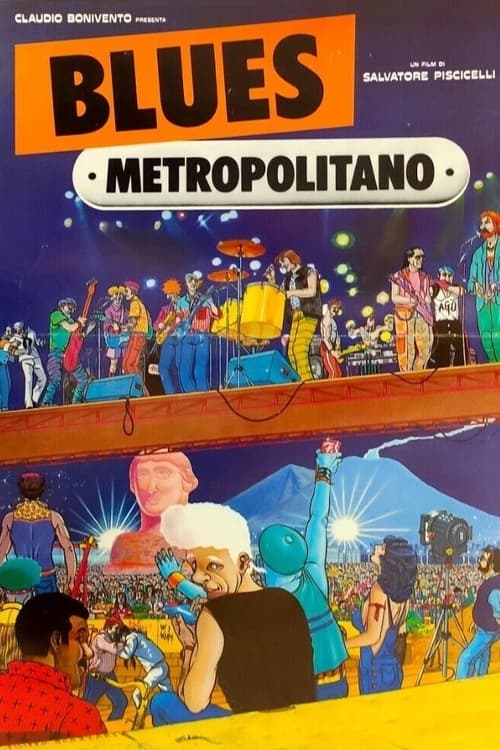
Tony is a young Neapolitan musician. He has a lot of problems and a past with drugs, but also with women. He is engaged to Susy, but he betrays her with a university professor, who has an invalid husband, but also with other young aspiring singers, who try in every way to break into the world of music. Among these there is Elena, engaged in various difficulties to organize a concert with the best names of Neapolitan music.
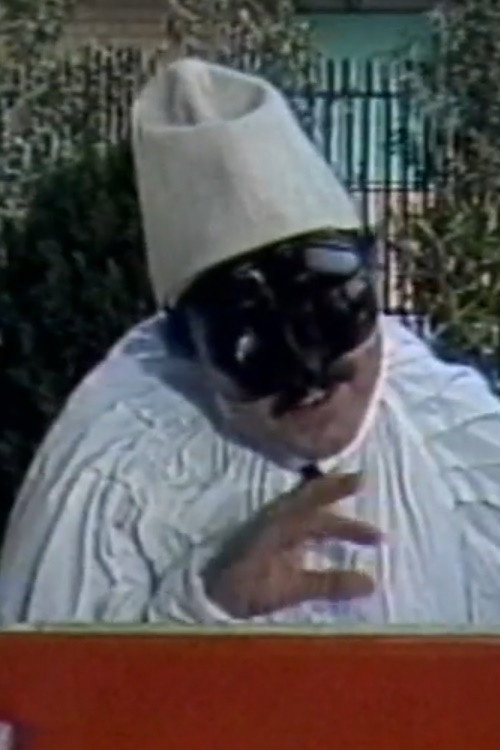
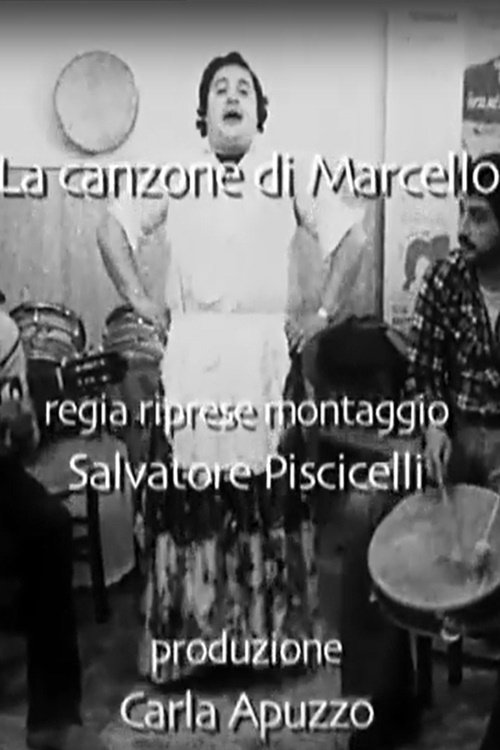
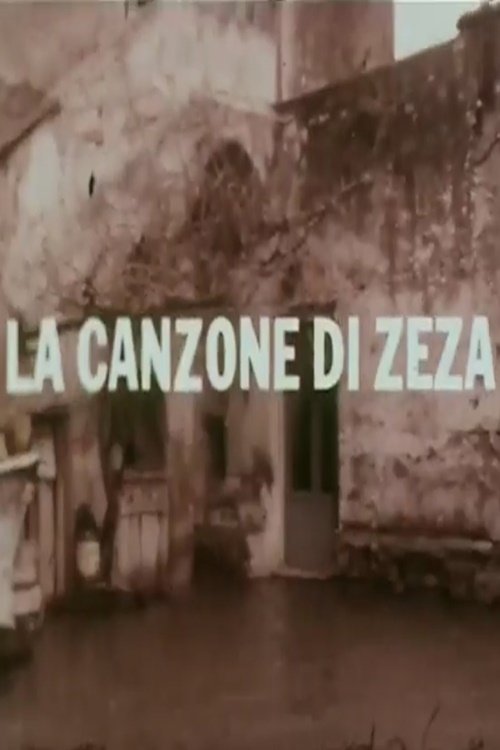
Piscicelli made this piece for the programme *Cronaca* – an investigative feature whose protagonists are the same as those involved in social struggles – though he did not credit himself. The director filmed the latest carnival in Pomigliano d’Arco on 16mm, where tradition blends with workers’ struggles. We see Marcello Colasurdo and E’ Zezi again, who had previously starred in the medium-length film La canzone di Zeza, shot the previous year. Divided into two parts, it was never broadcast in full in 1977; in subsequent years, a 66-minute version was shown, corresponding to one of the two episodes.
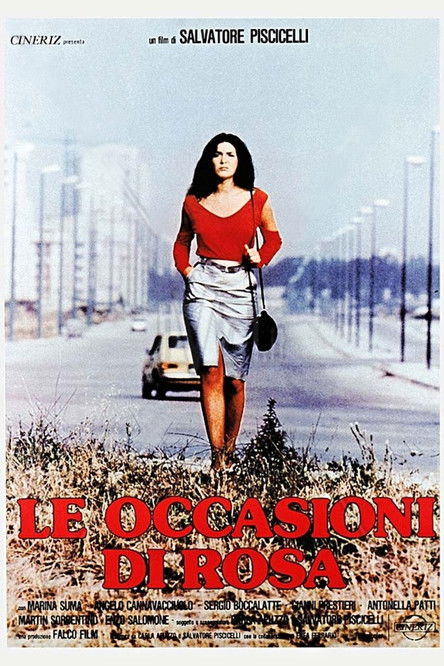
Rosa (Marina Suma) is a low-level worker who decides to quit a nowhere job and turn to prostitution instead, all the while living with a boyfriend who is dealing drugs for his financial support. Entering into the picture is a homosexual friend who wants a child of his own and is willing to donate a good apartment to the couple if Rosa will marry her boyfriend and bear a child. She does get pregnant, but by that time has had it with the constant presence of the homosexual, and is having second thoughts about her pregnancy.